
Results
-
 £50.00
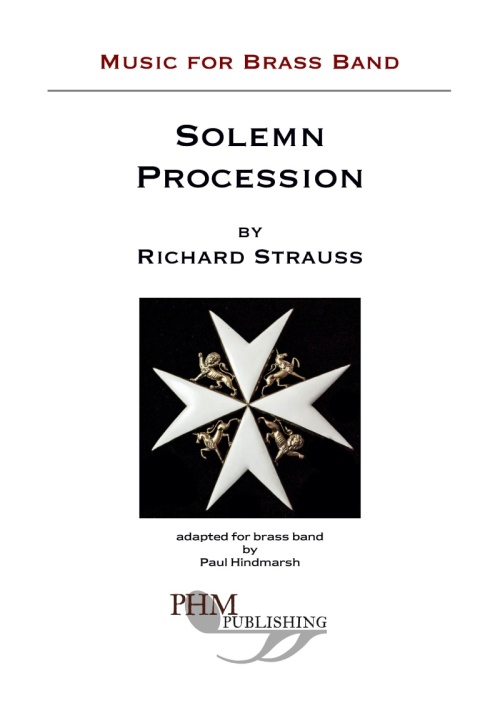
Solemn Procession (Brass Band - Score and Parts)
Richard Strauss (1864 - 1949) was a famous conductor and composer when he wrote Feierlicher Einzug der Ritter des Johanniter-Ordens (Solemn Entrance of the Knights of the Order of Saint John) in 1909. One of only a handful of his works written exclusively for winds, Strauss composed Feierlicher Einzug for the investiture ceremonies of the Order of St. John, a Christian military order that was founded in Jerusalem in 1023 to care for poor, sick, or injured pilgrims journeying to the Holy Land.Strauss scored Feierlicher Einzug (TrV 224) for a large ensemble of fifteen trumpets, four horns, four trombones, two tubas and timpani. He saw enough potential in its stately character and majestic conclusion to produce a version for symphony orchestra with organ and it has been arranged for a variety of brass ensembles with or without organ since then.This version for British style brass band was adapted from the original in 1990 by Paul Hindmarsh for the exclusive use of Besses o' th' Barn Band, of which he was then the musical director. Now that the music of Richard Strauss published in his lifetime is in the public domain, Solemn Procession, as it has been rendered in English, can be enjoyed by all brass bands and their audiences.- Paul HindmarshDuration: 6.00
Estimated dispatch 7-14 working days
-
 £29.99
Titan's Progress (Brass Band - Score Only)
Commissioned by Austria's leading brass band, Brass Band Oberoesterreich, Titan's Progress is a series of descriptive, virtuoso episodes based on the principal character of the novel by Jean Paul. This was also the original subject of Mahler's Symphony No.1, from which Hermann Pallhuber derives much of his material. The work has proved an exceptionally popular test piece all over the world.Titan's Progress was the selected test piece for the British Open Brass Band Championship, held at Symphony Hall, Birmingham on Saturday 12th September 2009.Suitable for Championship BandsDuration: 17 minutes
Estimated dispatch 7-14 working days
-
 £42.00
The Very Best Time of Year (Euphonium Solo with Brass Band - Score and Parts)
This new arrangement for Solo Euphonium & brass band by David Griffiths, truly evokes that feeling of nostalgia and longing anticipation of the joyous season and is a true celebration of all that we love about Christmas time! Suitable for 4th Section Bands and above
Estimated dispatch 7-14 working days
-
 £39.95
Judd: Glory Hallelujah - March 2018
This bright and fun setting of the classic Salvation Army song 'Glory, Hallelujah!', which first appeared in 1899, stylistically embraces music associated with Hollywood. Behind all the 'razzmatazz', the direct message is always clear: 'The devil and me we don't agree, Glory, Hallelujah! I hate him and he hates me. Glory, Hallelujah!'
Estimated dispatch 7-14 working days
-
 £24.95
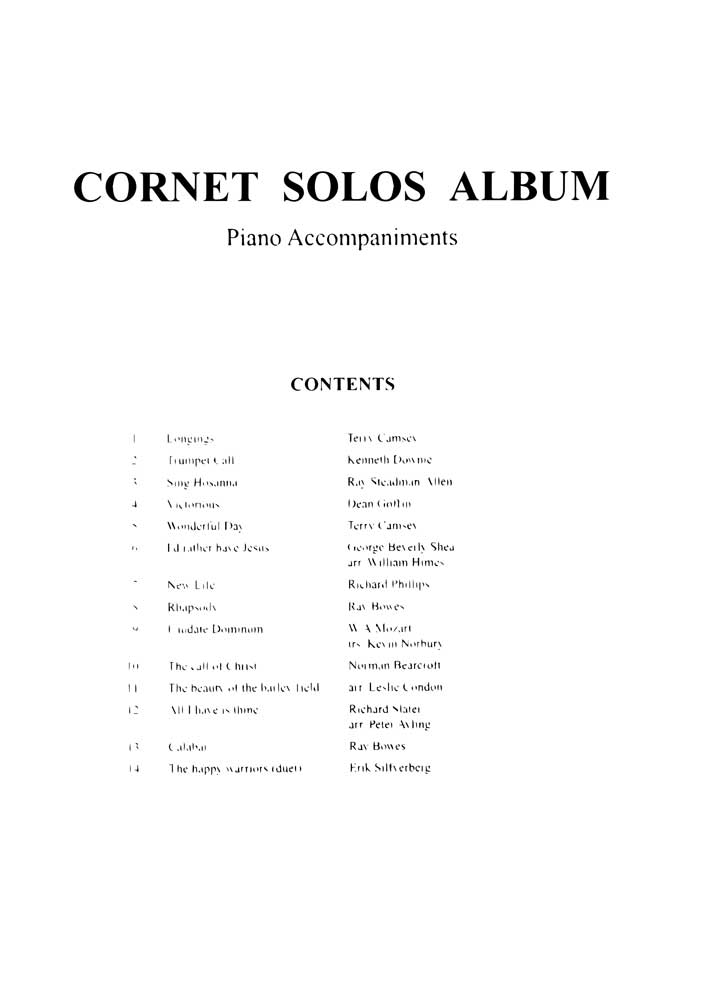
Cornet Solos Album
Includes: Longings; Trumpet Call; Sing Hosanna; Victorious; Wonderful Day; I'd rather have Jesus; New Life; Rhapsody; Laudate Dominum; The call of Christ; The beauty of the barley field; All I have is thine; Calabar; The happy warriors (duet)Instrumentation: Cornet with Piano Accompaniment
Estimated dispatch 7-14 working days
-
 £14.95
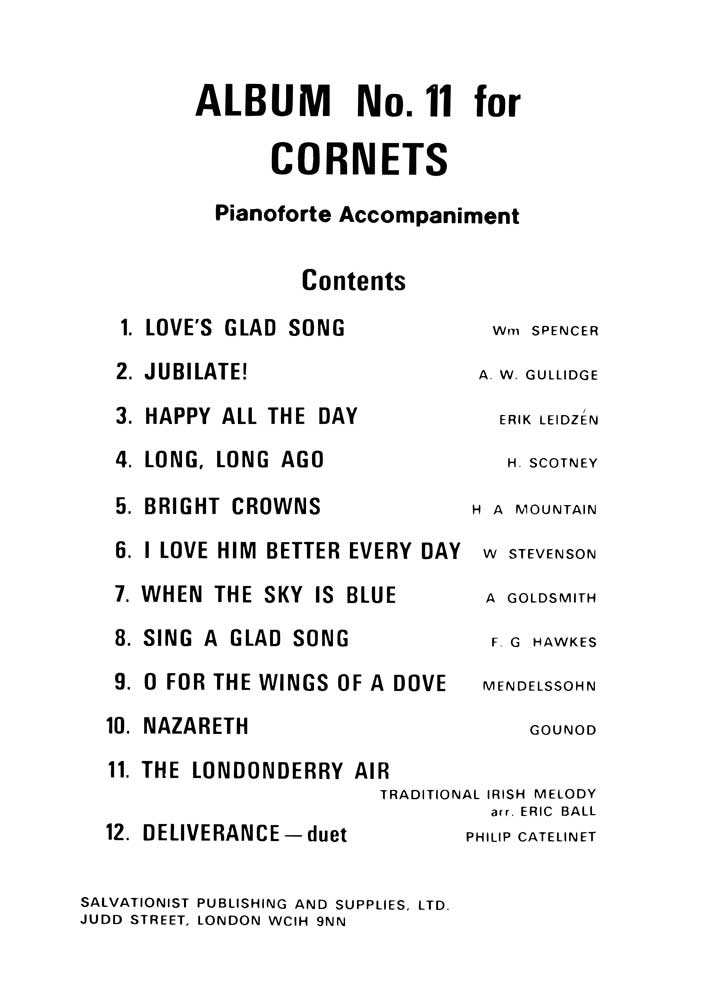
Instrumental Album No.11 - Cornet Solos
Includes: Love's glad song; Jubilate!; Happy all the day; Long, long ago; Bright crowns; I love him better every day; When the sky is blue; Sing a glad song; O for the wings of a dove; Nazareth; Deliverance - DuetInstrumentation: Cornet with Piano Accompaniment
Estimated dispatch 7-14 working days
-
 £14.95
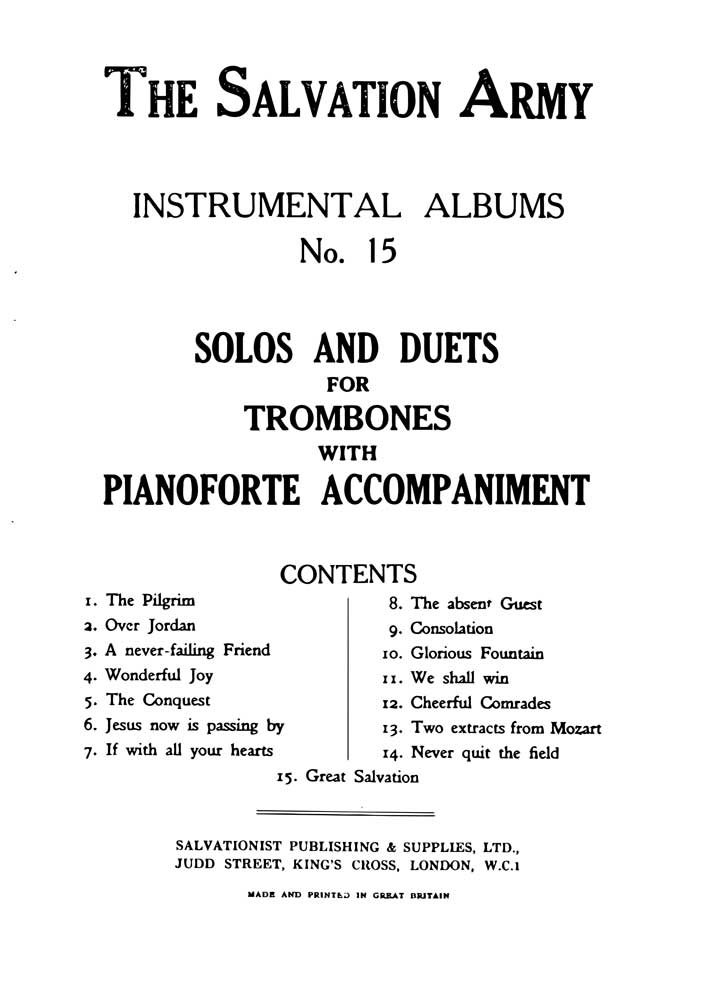
Instrumental Album No.15 - Solos & Duets Trombone
Includes: The Pilgrim; Over Jordan; A never-failing friend; Wonderful Joy; The Conquest; Jesus now is passing by; If with all your hearts; The absent guest; Consolation; Glorious Fountain; We shall win; Cheerful Comrades; Two extracts from Mozart; Never quit the field; Great SalvationInstrumentation: Trombone with Piano Accompaniment
Estimated dispatch 7-14 working days
-
 £44.95
Pyrotechnic Variations on 1812 (Brass Band - Score and Parts)
Pyrotechnic Variations on 1812 was composed for Brass Band Schoonhoven, and used as part of their programme for Brass in Concert in November 2016.'Pyrotechnic Variations' is a modern day twist on Tchaikovsky's famous '1812' Overture. A heraldic opening introduces some familiar themes, before leading into a frantic virtuosic passage (especially for euphonium!), where quotes can be heard all through the band. This subsides into the central 'slow' section (via the unusual route of a bass and drum kit feature). After a whisper quiet reintroduction of the main theme, we build to the 'canon' finale - ending in a glorious celebratory style!
Estimated dispatch 7-14 working days
-
 £14.95
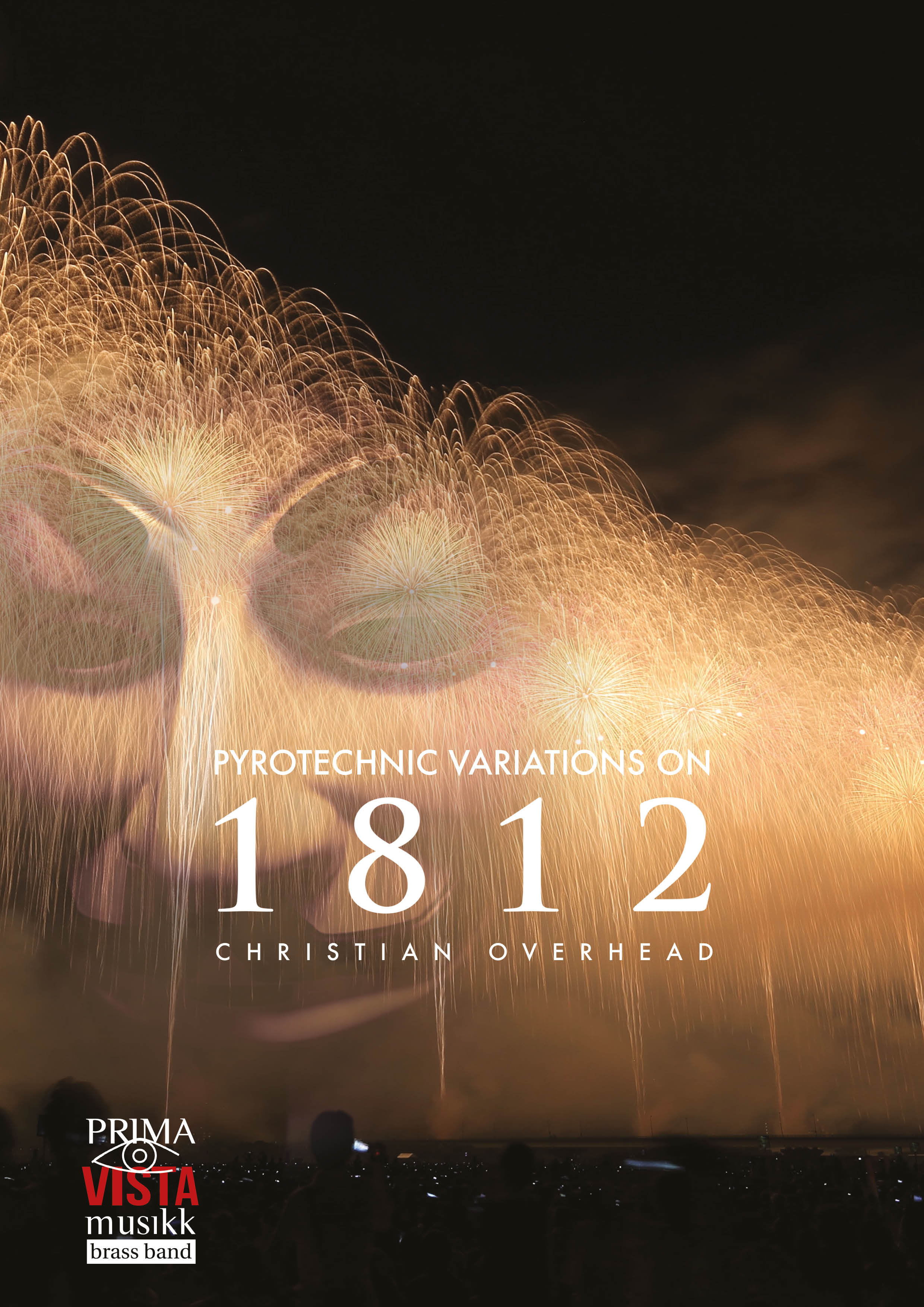
Pyrotechnic Variations on 1812 (Score Only)
Pyrotechnic Variations on 1812 was composed for Brass Band Schoonhoven, and used as part of their programme for Brass in Concert in November 2016.'Pyrotechnic Variations' is a modern day twist on Tchaikovsky's famous '1812' Overture. A heraldic opening introduces some familiar themes, before leading into a frantic virtuosic passage (especially for euphonium!), where quotes can be heard all through the band. This subsides into the central 'slow' section (via the unusual route of a bass and drum kit feature). After a whisper quiet reintroduction of the main theme, we build to the 'canon' finale - ending in a glorious celebratory style!
Estimated dispatch 7-14 working days
-
 £44.99
Keystone Kops (Brass Band - Score and Parts)
The Keystone Kops was a series of silent comedies featuring an incompetent group of policemen. They first appeared in the 1912 film Hoffmeyer's Legacy but it was the 1913 feature The Bangville Police that confirmed their popularity. The Keystone Kops were renowned for making mistakes, particularly with a great deal of energy and activity, and all done with a major lack of coordination. Carl Davis's 3-minute tour de force is a fine encore piece!Recorded on Polyphonic QPRL218D Master Brass (Volume Fourteen)Duration: 3:00
Estimated dispatch 7-14 working days