
Results
-
 £59.05
Variations on 'Sine Nomine' (Brass Band) Andrew Wainwright
This magnificent work was written in 2019 for the London Central Fellowship Band and Bandmaster David Rudd. It is based on the hymn tune by Ralph Vaughan Williams, which is also known as For all the Saints. Its release in the summer of 2022 marks the 150th anniversary of Vaughan Williams' birth. The work is set in four contrasting movements, which follow an opening statement of the hymn in its full form. Variation I (Leggiero) is based on the first few notes of the chorale and is lively and sprightly in nature, with regular time changes permeating throughout. There are regular statements of the hymn, with the movement closing with a full statement of the tune in its full glory. Variation II (Andante Espressivo) derives its material from the final strain of the verse. The music is generally calm and ethereal in nature before building to an impassioned fortissimo featuring the full band, and finally dying away. Variation III (Allegro Vivace) is in compound time and, like Variation I, is based on the first few notes of the hymn. The music is joyful and playful, epitomised by syncopated rhythms, and snippets of the tune are heard throughout. Variation IV (Allegro Giocoso) is in the form of a fugue which commences with the cornets, before the theme is handed to each section of the band at various points. After several statements of the theme, the music grows into the final strain of the chorale, which is given a grandiose setting. A frenzied Presto coda leads into organ-like chords, before a series of upward major scales bring the work to its final chord. To view a video of the Canadian Staff Band performing the work please visit https://www.youtube.com/watch?v=QZ1pYH0ftv0 Sheet music available from: UK - www.brassband.co.uk USA - www.solidbrassmusic.com Difficulty Level: Second Section + Instrumentation: Soprano Cornet Eb Solo Cornet Bb 1st Cornet Bb 2nd Cornet Bb Flugel Horn Bb Solo Horn Eb 1st Horn Eb 2nd Horn Eb 1st Baritone Bb 2nd Baritone Bb 1st Trombone Bb 2nd Trombone Bb Bass Trombone Euphonium Bb Bass Eb Bass Bb Timpani Percussion 1-2
In Stock: Estimated dispatch 1-3 working days
-
 £33.21
Viva la Banda! (Brass Band) Dave Collins
Viva la Banda is fun, high energy and has some wonderfully catchy melodies for all members of the band to enjoy. In places it is harmonically surprising, taking us through the twists and turns of a Latin adventure. Imagine the sights and sounds of a hot plaza, and transport your audiences across the sea from your local bandstand! To view a rolling score video of the work please visit www.youtube.com/watch?v=uawvYv2-INU Duration: Approx. 4.15 minutes Difficulty Level: 3rd Section + PDF download includes parts and score. Sheet music available from www.brassband.co.uk (UK) or https://satradecentral.org (USA) Instrumentation: Soprano Cornet Eb Solo Cornet Bb Repiano Cornet Bb 2nd Cornet Bb 3rd Cornet Bb Flugel Horn Bb Solo Horn Eb 1st Horn Eb 2nd Horn Eb 1st Baritone Bb 2nd Baritone Bb 1st Trombone Bb 2nd Trombone Bb Bass Trombone Euphonium Bb Bass Eb Bass Bb Drum Set Congas Agogo
In Stock: Estimated dispatch 1-3 working days
-
 £36.90
Whodunnit? Murder Mystery for Brass & Percussion (Brass Band) Karl Whelan
The composer writes: 'One of my all time favourite films is Clue (1985) based on the board game of the same name (Cluedo, if you're from the UK). Clue follows the night of six guests who are invited to a mansion for dinner. The host, Mr. Boddy is murdered, and the guests must work together to find the killer before any more lives are lost. I implore you to give it a watch if you haven't already, even if it's just for Tim Curry's magical performance as The Butler. Running at 82 minutes, the film is over before you know it. I wanted to create a similar story here with Whodunnit?, which like it's inspiration, Clue, moves at an incredible pace as it follows a dinner party, to which our guests have been invited. This work is rather dark throughout and full of intentional cliches, for which, I make no apology!' To view a rolling score video please visit www.youtube.com/watch?v=hdviJUrCvOE Sheet music available from: UK - www.brassband.co.uk USA - https://satradecentral.org Difficulty Level: 2nd Section + Length: 6.00 minutes Instrumentation: Soprano Cornet Eb Solo Cornet Bb Repiano Cornet Bb 2nd Cornet Bb 3rd Cornet Bb Flugel Horn Bb Solo Horn Eb 1st Horn Eb 2nd Horn Eb 1st Baritone Bb 2nd Baritone Bb 1st Trombone Bb 2nd Trombone Bb Bass Trombone Euphonium Bb Bass Eb Bass Bb Timpani Percussion 1 (Suspended Cymbal**, Shaker, Drum Kit, Vibraslap) Percussion 2 (Bass Drum, Suspended Cymbal**, Wood Blocks, Tam-tam) Percussion 3 (Glockenspiel, Xylophone, Tubular Bells, Vibraphone) * Doubling on Trumpet (if possible) ** Shared
In Stock: Estimated dispatch 1-3 working days
-
 £36.90
Fanfares and Proclamations (Brass Band) Steven Ponsford
Fanfares and Proclamations was originally written in 2015 by Steven Ponsford for the massed bands of the International Staff and Melbourne Staff Bands of The Salvation Army. This piece of music, suitable as a concert opener, makes use of the hymn tunes Miles Lane and Diadem, both of which are associated with the words 'All hail the power of Jesus name'. To view a video of the International Staff and Melbourne Staff Bands performing the work please visit: www.youtube.com/watch?v=kzm4Mn1tdw8 PDF download includes score and full set of parts. Sheet music available from: UK - www.brassband.co.uk USA - www.solidbrassmusic.com Difficulty Level: Third Section + Instrumentation: Soprano Cornet Eb Solo Cornet Bb 1st Cornet Bb 2nd Cornet Bb Flugel Horn Bb Solo Horn Eb 1st Horn Eb 2nd Horn Eb 1st Baritone Bb 2nd Baritone Bb 1st Trombone Bb 2nd Trombone Bb Bass Trombone 1st Euphonium Bb 2nd Euphonium Bb Bass Eb Bass Bb Timpani Percussion 1-2
In Stock: Estimated dispatch 1-3 working days
-
 £29.52
This is my Father's World (Brass Band) arr. William Himes
The vibrant hymn of Maltbie D. Babcock (1858-1901) has been linked for more than a century to the English folk melody, Terra Beata. This colourful and climactic setting by William Himes emulates the concept of 'text painting', wherein the music strives to reflect the literal meaning of the lyrics. This is my Father's world, and to my listening ears All nature sings and round me rings the music of the spheres. Sheet music available from: UK - www.brassband.co.uk USA - www.solidbrassmusic.com Difficulty Level: 4th Section + Instrumentation: Soprano Cornet Eb Solo Cornet Bb 1st Cornet Bb 2nd Cornet Bb Flugel Horn Bb Solo Horn Eb 1st Horn Eb 2nd Horn Eb 1st Baritone Bb 2nd Baritone Bb 1st Trombone Bb 2nd Trombone Bb Bass Trombone Euphonium Bb Bass Eb Bass Bb Percussion 1-2
In Stock: Estimated dispatch 1-3 working days
-
£37.50
Brass Monkey's Occasions - Gavin Somerset
Never be caught out again on a concert with this selection that caters for just about every occasion. Your training band will be prepared to perform anything from a Fanfare to the National Anthem and even 'He's A Jolly Good Fellow'. The music included in this publication is used all over the world, all year around. "Land Of Hope & Glory" is also included, in the same key as the popular senior band arrangement (by J. Ord Hume) so your training band can join in with the senor band in a proms concert finale. This release puts well-known, often requested tunes in one publication letting your training band shine, whatever the occasion. Music included isaAFANFARENATIONAL ANTHEM (God Save The Queen/King)ROYAL NAVY HYMN (Melita)HARVEST HYMN (St. George's Windsor)ONWARD CHRISTIAN SOLDIERS (St. Gertrude)DANNY BOY (Londonderry Air)HE'S A JOLLY GOOD FELLOWF.A. CUP THEME (Eventide)LAND OF HOPE & GLORY (Pomp & Circumstance March No.1)
In Stock: Estimated dispatch 1-3 working days
-
£44.50
Brass Monkey's Ensemble Workout - David White
This selection of music is the perfect all-in-one workout for your training band. Each piece contained within the selection serves a definite purpose (all of which are given below and are printed in the score). The "Ensemble Workout" balances musical exercises and pieces of music to ensure that the end result is a better ensemble performance over all. The pieces keep the players entertained whilst ensuring they listen and work with the other players around them. Drum Kit and Percussion parts are also included. The pieces (and their objectives) included areaA UNISON WARM UP & HYMN TUNEA MINOR TUNE - no key or time signature, no dynamics, accidentals for some (sharp)PLODDING ON - time signature but no key signature, no dynamics, accidentals for some (sharp, flat natural) staccato / legato playingLITTLE WALTZ - time signature & key signature, accidentals & dotted minims & ties D.S. al Fine & repeats with 1st & 2nd time bars no dynamicsLAZY LATIN - time & key signature, dynamics & accidentals, staccato / legato playing styles, sectional repeats with 1st & 2nd time barsTHE AIKIN DRUM - 6/8 compound time, March style playing, D.C. al Coda
In Stock: Estimated dispatch 1-3 working days
-
 £29.50
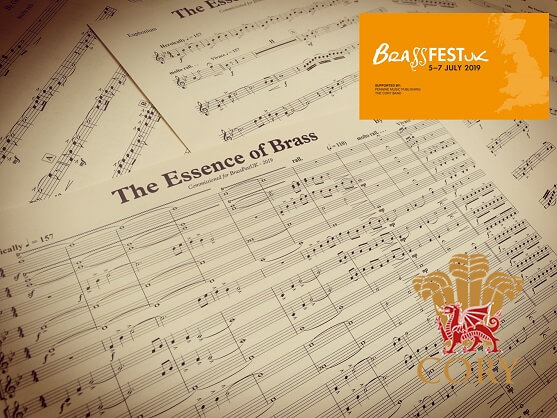
The Essence of Brass - Gavin Somerset
Two years after the inaugural BrassFestUK event comes the anthem for 2019, 'The Essence of Brass'. Composer Gavin Somerset has revisited many of the ideas contained within the very popular work written for the inaugural BrassFestUK, The Spirit of Brass two years ago, to deliver once again, an uplifting original work for Brass Bands that will keep both players and audiences entertained. The piece opens with the work's heroic theme which has a genuine feel-good factor throughout, making this year's anthem a sure hit with all bands once again. NB. A Youth Band version is also available which works as a standalone item or alongside the senior band edition.
In Stock: Estimated dispatch 1-3 working days
-
 £29.50
The Essence of Brass (Youth Band) - Gavin Somerset
Two years after the inaugural BrassFestUK event comes the anthem for 2019, 'The Essence of Brass'. Composer Gavin Somerset has revisited many of the ideas contained within the very popular work written for the inaugural BrassFestUK, The Spirit of Brass two years ago, to deliver once again, an uplifting original work for Brass Bands that will keep both players and audiences entertained. The piece opens with the work's heroic theme which has a genuine feel-good factor throughout, making this year's anthem a sure hit with all bands once again. NB. This Youth Band edition also works alongside the original senior band version.
In Stock: Estimated dispatch 1-3 working days
-
 £199.95
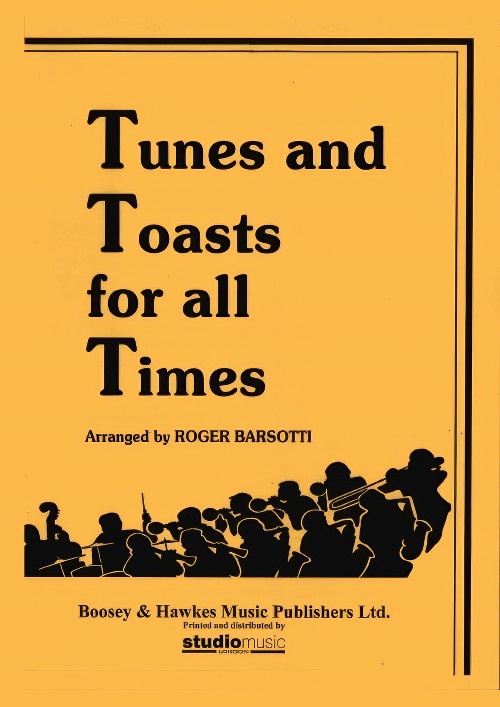
Tunes and Toasts for all Times (Brass Band Value Set) - Barsotti, Roger
Brass Band set includes:Eb Soprano Cornet x1Solo Bb Cornet x4Repiano Bb Cornet x12nd Bb Cornet x23rd Bb cornet x2Bb Flugel Horn x1Solo Eb Horn x11st Eb Horn x12nd Eb Horn x11st Bb Baritone x12nd Bb Baritone x11st Bb Trombone (TC) x12nd Bb Trombone (TC) x1Bass Trombone x1Bb Euphonium (TC) x2Eb Bass x2Bb Bass x2The Piano Conductor Score and Drums are available separately.Titles:ENGLISH AIRSA fine old English GentlemanA-hunting we will goBritish GrenadiersCherry ripeClementineCome, lassies and ladsDrink to me onlyDulce DomumDrunken sailor (The)For he's a jolly good fellowFarmer's boy (The)Floral DanceFrothblowers' AnthemGirl I left behind me (The)Here's a health to all good ladiesHere's a health unto her MajestyHere's to the maidenJohn PeelKeel row (The)Love's old sweet songMarch of the Fire BrigadesMistletoe bough (The)On Ilkla MoorPrincess Royal's Red Cross marchRoast beef of old EnglandSir Roger de CoverleySee the conquering hero comesSoldiers of the QueenThere is a tavern in the townNAUTICALHeart of oakHornpipeLife on the ocean waveShenandoahRed, white and blue (The)Rule, BritanniaSCOTTISH AIRSAnnie LaurieAuld lang syneBonnie banks of LochBonnie DundeeBlue-bells of ScotlandCampbells are coming (The)Charlie is my darlingFlowers of the forestHundred pipers (The)Highland LaddieRobin AdairScotch ReelScots wha haeWill ye no come back againYe banks and braesIRISH AIRSCome back to ErinDanny boy (Londonderry air)Harp that once through Tara's hallIrish Washerwoman (The)KillarneyMinstrel boy (The)Oft in the stilly nightOff to PhiladelphiaSt. Patrick's DayWELSH AIRSAll through the nightAsh grove (The)Bells of AberdoveyDavid of the white rockLand of my fathersMen of HarlechAMERICAN AIRSCarry me back to old VirginnyDixieGood-night (shine, shine, moon)John Brown's bodyMarching thro' GeorgiaOld folks at home (The)Star Spangled BannerTramp, tramp, tramp, the boys are marchingWhen Johnny comes marching homeYankee doodleCANADA AlouetteMaple leaf (The)O CanadaAUSTRALIAWaltzing MatildaSACRED AIRS & CAROLS Abide with meEternal Father strong to saveO God our help in ages pastFirst Nowell (The)Good King WenceslasO come all ya faithfulWhile shepherds watchedJerusalemSupreme sacrifice (The)Dead march in SaulPARADES (All organisations)General saluteSlow march or troop "Scipio"Troop "May-blossom"FANFARES, etcDeclamatory No. 1Occasoinal Fanfare No. 2"Reveille""Retrear""Last Post"Galop from "Orpheus in the Underworld"God save the Queen (in B flat)God save the Queen (in F)
Estimated dispatch 7-14 working days
 Watch video
 View Music