
Results
-
 £29.95
Intrada - Jonathan Bates
DURATION: 2'30. DIFFICULTY: 2nd+. 'Intrada for Brass Band' was composed for my great friends at Orskog Brass, Norwayin celebration of their 50th anniversary. The work is a short celebratory fanfare used to open their anniversary concert, making use of antiphonal cornet choirs and marimba (with which the band had only recently been able to source, hence it's inclusion!).
In Stock: Estimated dispatch 1-3 working days
-
 £85.00
The Cotton Phoenix - Alex Poelman
The Cotton Phoenix is the first part of the two-part work "Metropolis of the East" and describes the influence of the textile industry on the development of Enschede. The composition begins introducing the Enschede-theme. After a big fire, the city rises from the ashes and the textile industry reaches a peak. The second part describes the liberation after the war, where Enschede, thanks to the industry, is able to recover. The piece ends with the Enschede-theme; the city in its present form.
Estimated dispatch 10-14 working days
-
 £36.30
Carpe Diem - Josiah Walters
An exuberant, original composition from Josiah Walters, with lots of musical innovation, variety of styles and tempo, and extremely listenable. Seize the day with this inspiring piece as a concert feature or item in your own choice entertainment programme.It was premiered to much acclaim by The National Youth Brass Band of Scotland as part of their end of course gala concert in 2011, and has since received further positive reviews together with many further public performances including a radio broadcast feature on BBC Radio 2.This was the inaugural publication by one of our youngest members of The Music Company (UK) Ltd family at the time, and we are delighted to be able to present such an exciting piece from this talented writer.Look and Listen (courtesy of NYBBS 2011):
In Stock: Estimated dispatch 3-5 working days
-
 £90.75
De Profundis - john wallace, Tony George
An original composition for massed brass bands and brass quintet devised by John Wallace, Tony George and Svend McEwan-Brown. A cross-genre production work, including scene setting, lighting and the spoken word reciting associated poems, De Profundis was given its world premiere at the East Neuk Festival on 1 July 2017 at The Bowhouse, performed by The Wallace Collection, Tullis Russell Mills Band and friends.If you would like to perform this work, The Wallace Collection are able to provide production consultancy and supply the brass quintet elements of the production - if you would like to discuss potential performances, please contact them direct on [email protected] NotesDe Profundis is a large scale brass band performance piece created by John Wallace and Tony George, based upon an original idea by Svend McEwan-Brown. It was developed in sessions with members of the Tullis Russell Mills Band, commissioned and premiered at East Neuk Festival 2017 at The Bowhouse, St Monans, on 1st July 2017.It was supported by Creative Scotland, Fife Council, Toby and Kate Anstruther, Shields and Carol Henderson, Donald and Louise MacDonald.This project remembers and celebrates the lives and music of miners. It is designed to give brass bands a performance piece that uses elements of improvisation and participation, to offer the players a stimulating and inspiring experience beyondthe normal run of brass band repertoire.All the music is drawn from two settings of the psalm 'Out of the Deep" (De Profundis).Look and Listen (courtesy of Tullis Russell Mills Band and The Wallace Collection at 2017 East Neuk Festival):More InformationMore details about the De Profundis project is available on a dedicated web-page on The Wallace Collection website.
In Stock: Estimated dispatch 3-5 working days
-
 £36.30
Reach - S Club 7
When the group S Club 7, (an able bunch with a wide appeal to all ages), released the song Reach in the year 20, it soon became a hit with many people, and still is. My wife Julie and myself were at a large event recently, and saw the effect of this song on a mixed audience - it brought the house down! Besides more serious projects, I am a great believer in entertaining the brass band's largest audience, the general public, which is why I have been very happy to produce this arrangement of a song which is full of fun.
In Stock: Estimated dispatch 3-5 working days
-
 £59.95
Judd: Caelum Corona - Stephen Bulla
Stephen Bulla's 'Caelum Corona' ('Crown of Heaven') portrays, in sound, a Christian's walk in faith, intended metaphorically via a musical narrative reminiscent of the early church pilgrims, their struggles and triumphs. The composer initially evokes the atmosphere of Rome at the time of St. Paul and other martyrs, thus the Latin title. Bulla marks his imaginative tone poem with dark, brooding music in the first two of three parts, in each of which he has embedded an appropriate hymn or song reference as thematic material. The first of these sounds in a minor key following a symphonic exposition made up primarily of fanfare-like motives, the music at times quite harsh and abrasive. The song is Paul's statement of exuberant faith (2 Timothy 1:12) in the midst of prison and persecution: 'For I know whom I have believed, and am persuaded that he is able to keep that which I've committed unto him against that day.' More challenging, aggressive music returns until a further point of reflection on Christ's sacrifice is reached. The music graphically evokes the barren landscape of Golgatha, the horror of the crucifixion, including stark wind sounds, a loss of stability via eerie, dissonant chord clusters, and even the nails being driven into Christ's body. The Baritones and then Flugel Horn softly play 'He died of a broken heart.' Yet the Christian life, despite its perils - both at the time of Paul and now - is a victorious life, and the composer resolves the tensions of the work in a scintillating finale, a brilliant setting of the old song about spiritual warfare and the ultimate triumph of Christ the King: 'Victory for me!' (T.B. 841). The chorus of that tune proclaims: 'No retreating, hell defeating, shoulder to shoulder we stand; God look down, with glory crown our conq'ring band.' That crowning is the same one sought and claimed by St. Paul (2 Timothy 4:8): 'Now there is in store for me a crown of righteousness, which the Lord, the righteous judge, will award me on that day, but also to all who have longed for his appearing.' Believers look forward to participating in the final coronation of their Saviour - King of Kings and Lord of Lords - while humbly desiring their own 'crown of heaven.'
Estimated dispatch 7-14 working days
-
 £69.95
Judd: Dance Music
The music takes the form of a suite in four movements. The ever-changing spirit of the dance is reflected in the contrasting styles of each movement, ranging from the gentle lullaby to more boisterous and lively moods. Careful listeners will be able to identify references to dance-associated tunes in each movement, concluding with the much-loved Christmas carol, Tomorrow shall be my dancing day. The music is planned to be versatile, and any one movement could be performed as a stand-alone item if required.
Estimated dispatch 7-14 working days
-
£50.00
Castell Beaumaris - Wareham, A
Composed in the style of the great Welsh March King, T.J Powell, this brilliant new march, by Andy Wareham, was the winning entry of the Eisteddfod Mn March Composition Competition in 2025 and is dedicated to Seindorf Beaumaris Band. T. J Powell wrote the iconic series of 'Castle' marches -- 'Castell Coch', 'Castell Caerffili' and 'Castell Caerdydd', and Andy's new march is deliberately written in his bravura style.As publishers of the original T.J Powell marches we are delighted to be able to add a new Castell to the series. 2nd Section +Duration 3 mins 30 seconds
In Stock: Estimated dispatch 1-3 working days
-
£25.00
Castell Beaumaris (Score) - Wareham, A
Composed in the style of the great Welsh March King, T.J Powell, this brilliant new march, by Andy Wareham, was the winning entry of the Eisteddfod Mn March Composition Competition in 2025 and is dedicated to Seindorf Beaumaris Band. T. J Powell wrote the iconic series of 'Castle' marches -- 'Castell Coch', 'Castell Caerffili' and 'Castell Caerdydd', and Andy's new march is deliberately written in his bravura style.As publishers of the original T.J Powell marches we are delighted to be able to add a new Castell to the series. 2nd Section +Duration 3 mins 30 seconds
In Stock: Estimated dispatch 1-3 working days
-
 £73.00
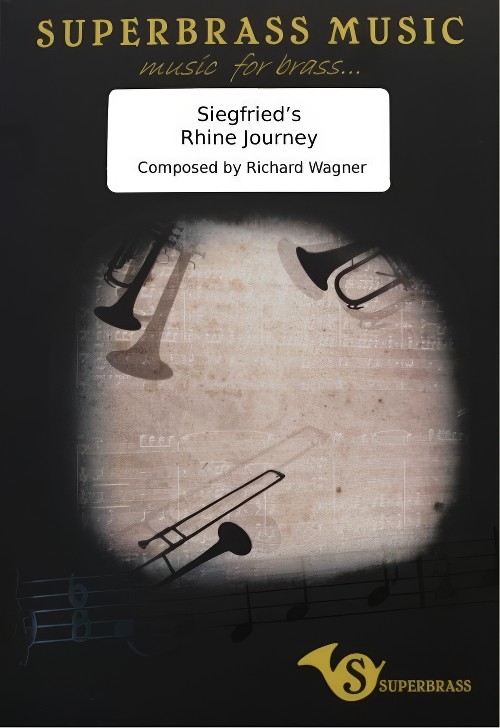
Siegfried's Rhine Journey (Brass Band - Score and Parts) - Wagner, Richard - Wilson, Duncan
Arranged by Duncan Wilson, this extended orchestral selection from "G?tterd?mmerung", is one of the epic four-opera's called "Der Ring des Nibelungen" by Wagner. "Siegfried's Rhine Journey" is often presented outside the opera house and is published separately. This excerpt includes especially composed endings by Richard Wagner himself so that the work is better able to stand on its own as a complete composition. Duration: 11.00. Suitable for Championship Section Bands.
Estimated dispatch 7-14 working days
 View Music