
Results
-
 £77.00
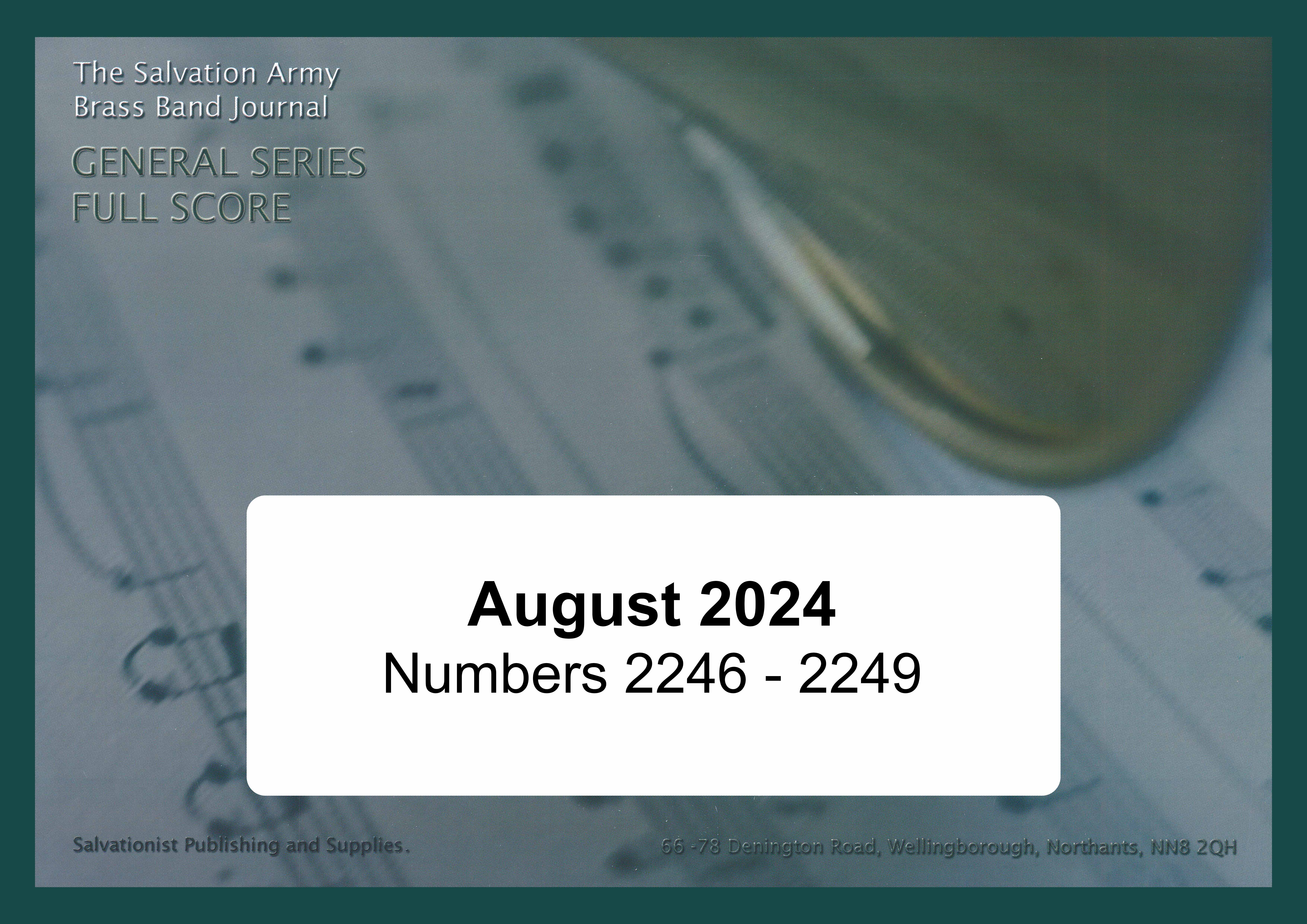
General Series Brass Band Journal, Numbers 2246 - 2249, August 2024
2246: Christmas Prelude - David's City (Noel Jones)In 2 Samuel 5, we read of David's anointing as King of Israel at the age of thirty, a reign that lasted for forty years. Bethlehem was known as 'David's city' because he was born there and worked as a shepherd on the nearby hills. Verses 1, 2 and 5 of Once in Royal David's City (C.C. 68) are featured in this Christmas Prelude. There are also brief references to the carols O come, all ye faithful and O little town of Bethlehem between verses.2247: Cornet and Euphonium Duet - This Kingdom (Stephen Bulla)Geoff Bullock's song, This Kingdom, has been made well known by the American gospel singer Ron Kenoly. Stephen Bulla wrote this duet for a Brass Spectacular concert held in Basel, Switzerland, in May 2019.2248: Wonder (Stephen Gibson)When we stop to consider the mystery of God's love for each one of us, its enormity can only cause us to wonder. The opening bars of this music create an atmosphere, using a rolling accompaniment underneath sustained, music and chromatic Cornets, setting the style for the entire piece. Occasional references to Albert E. Webber's chorus Can you wonder? are heard throughout.2249: O to love thee! (Michael Davis)This piece takes its title from the first verse of Francis Bottome's words, Precious Jesus, O to love thee! The introduction establishes the baroque form of a prelude which leads into the tune Glory to the lamb (T.B. 327). Following a brief interlude, the melody is passed through several sections of the band, with delicate countermelodies in the Flugel and Horns. The majestic ending eventually comes to rest on the final tonic chord.
Estimated dispatch 7-14 working days
-
 £40.00
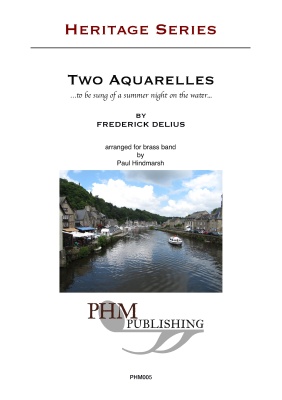
Two Aquarelles (Euphonium Feature with Brass Band - Score and Parts)
In the late spring of 1917, the Bradford born composer, Frederick Delius (1856 - 1934) composed two short part-songs at his home in Grez-sur-Loing. The river ran along the bottom of his garden and he called the two miniatures To be sung of a summer night on the water. The First World War was at its height, but one would never guess that from the languid and serene quality of these richly textured nocturnes. The songs were first heard in London on 28 June, sung by the Oriana Madrigal Society, conducted by Charles Kennedy Scott. In 1932 Delius's amanuensis, Eric Fenby, arranged them for string orchestra as Two Aquarelles. While I have taken Fenby's title, my arrangement is a note-for-note transcription of the choral original. It was prepared in early in 1993 for Besses o' th' Barn Band, of which I was Musical Director at the time. In the second song, the prominent tenor solo has been given to the solo euphonium, who should stand apart from the band in performance.- Paul HindmarshDuration: 5.00
Estimated dispatch 7-14 working days
-
 £40.00
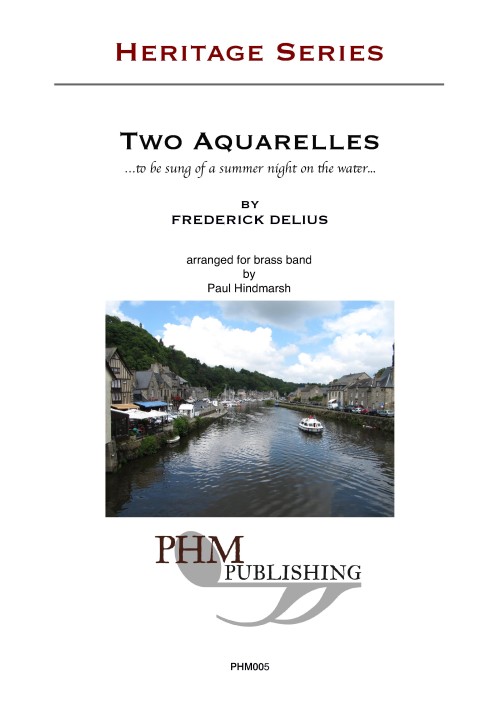
Two Aquarelles (Euphonium Feature with Brass Band - Score and Parts) - Delius, Frederick - Hindmarsh, Paul
In the late spring of 1917, the Bradford born composer, Frederick Delius (1856 - 1934) composed two short part-songs at his home in Grez-sur-Loing. The river ran along the bottom of his garden and he called the two miniatures To be sung of a summer night on the water. The First World War was at its height, but one would never guess that from the languid and serene quality of these richly textured nocturnes. The songs were first heard in London on 28 June, sung by the Oriana Madrigal Society, conducted by Charles Kennedy Scott. In 1932 Delius's amanuensis, Eric Fenby, arranged them for string orchestra as Two Aquarelles. While I have taken Fenby's title, my arrangement is a note-for-note transcription of the choral original. It was prepared in early in 1993 for Besses o' th' Barn Band, of which I was Musical Director at the time. In the second song, the prominent tenor solo has been given to the solo euphonium, who should stand apart from the band in performance.- Paul HindmarshDuration: 5.00
Estimated dispatch 7-14 working days
 View Music