
Results
-
 £54.99
House of Dance - John Emerson Blackstone
In imitation of the huge 'House rage' (at the end of the eighties) John Emerson Blackstone composed 'House of Dance' for youth orchestra. It proved to be a success. House owes its name to the place where this music was 'developed', i.e. an old night club called 'The Warehouse' in Chicago. Many subcultures followed. Whether you like the style or not, one thing is certain: House music (also called Dance music) for many provides the basis for hours of fun on the dance floor.
Estimated dispatch 5-14 working days
-
 £109.99
Modern Times - Etienne Crausaz
Modern Times is a concert suite from the musical and theatrical show Le Temps de Lyre, written and directed by Nicolas Bussard. The work was commissioned for the 100th anniversary of the Lyre de La Roche, directed by Marc-Olivier Broillet, with the premiere taking place in July 2024 in front of an audience of over 2,000.This suite highlights three of the dozen tableaux in the show. After an introduction evoking a sort of journey back in time, the first tableau (bar 20) illustrates various disasters that have occurred in the village over the years. The sky darkens, the thunder rumbles, the rain lashes down, and violent gusts of wind are unleashed on this corner of the country. The storm finally calms down, giving way to great desolation.The second tableau (bar 117) describes the resilience of the villagers, who summon up all their courage to repair the damage. The music is soft, calm, and hopeful.On the strength of this new beginning, the village can embrace modernity: motor vehicles replace horses, a dam is built, and tourism develops, encouraging a society open to other cultures. The third tableau in this suite illustrates all these advances (bar 177). Musically, this final section pays tribute to George Gershwin and Leonard Bernstein, two of the 20th century's great musicians and composers, who worked during the fascinating period of modern times and well beyond.
Estimated dispatch 5-14 working days
-
 £52.50
Broadheath - Philip Sparke
Broadheath was commissioned by the Elgar International Brass Band Summer School for their 2024 course. The premiere took place in the Routh Hall at Bromsgrove School on Friday 26 July.It is in conventional march form, opening with a brief fanfare before the horns take up the main theme. This is then repeated by the full band before euphoniums and baritone announce the second subject. This builds to a stirring tutti passage utilising elements of the opening theme, which brings the opening section to a close.In honour of the summer school's tribute to Sir Edward Elgar (it is held in 'Elgar country'), the trio uses the opening melody of his 1st symphony as its main theme, decorating it with filigree work from the cornets. This is repeated on the full band and leads to a varied recapitulation of the opening material to bring the march full circle.
Estimated dispatch 5-14 working days
-
 £154.60
The Labyrinth - Hans Offerdal
This piece was commissioned by Movig og Sjostrand skolemusikk to their 50th anniversary in 2017. Premiere performance took place at Kilden in Kristiansand, 17. november 2017, conducted by Sofie E. Ringen. Originally written for concert band, this is an instrumentation for Brass Band. The piece is about being trapped in a labyrinth - and fighting to get out!
Estimated dispatch 5-14 working days
-
 £104.99
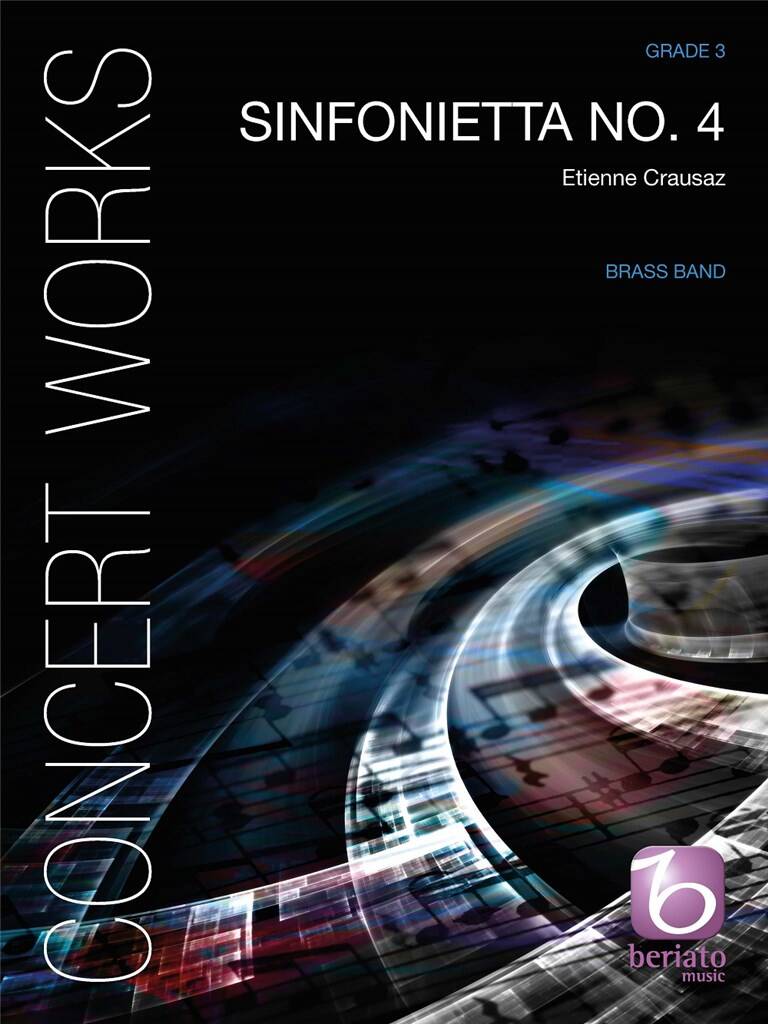
Sinfonietta No. 4 - Etienne Crausaz
This work was composed for the occasion of the 28. Fete Cantonale des Musiques Vaudoises (28th Music Festival of the Canton Vaud), taking place in the Valley of Joux in June 2018. The music begins with a very simple fanfare consisting of five ascending legato notes which constitute the fundamental framework of the piece. This contrasts with the more cantabile sounding theme we hear after. The following Allegro section uses the sequence in a contrapuntal style reminding us of the Renaissance period, but with more modern day harmonies. Two solo cadenzas played by cornet and euphonium initiate the middle section, in which a theme also based on the sequence builds uptowards the climax of the piece. The sequence in the last section is played in time but gives the feeling of a "one to the bar" beat. Shortly before the festive finale, the music heard in the middle part resumes.
Estimated dispatch 5-14 working days
-
 £119.99
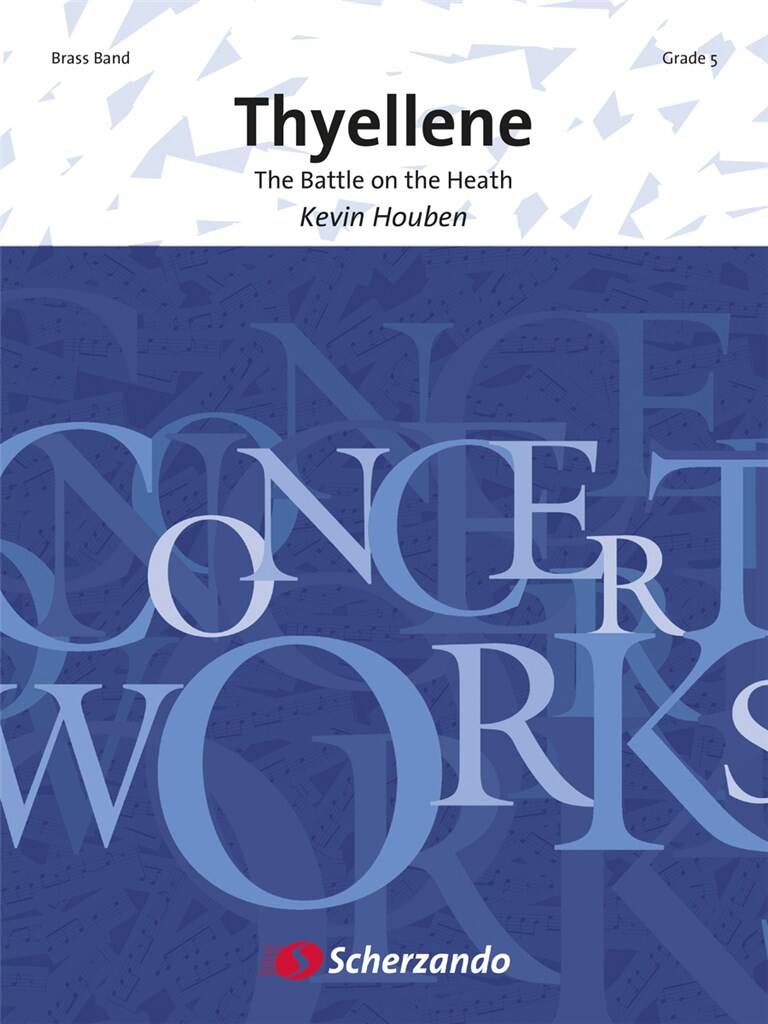
Thyellene - Kevin Houben
Thyellene depicts of a battle that took place on the 'Tielenheide' - a stretch of moorland near the Belgian village of Tielen in 1597. In that memorable battle Prince Maurice of Nassau, commander of the Dutch army, defeated Count Varax, a general of the Spanish army - with a considerably smaller troop than the enemy. This great heroic subject has been transformed into this equally great work for brass band, which won the third prize at the 2009 European Composers Competition.
Estimated dispatch 5-14 working days
-
 £60.99
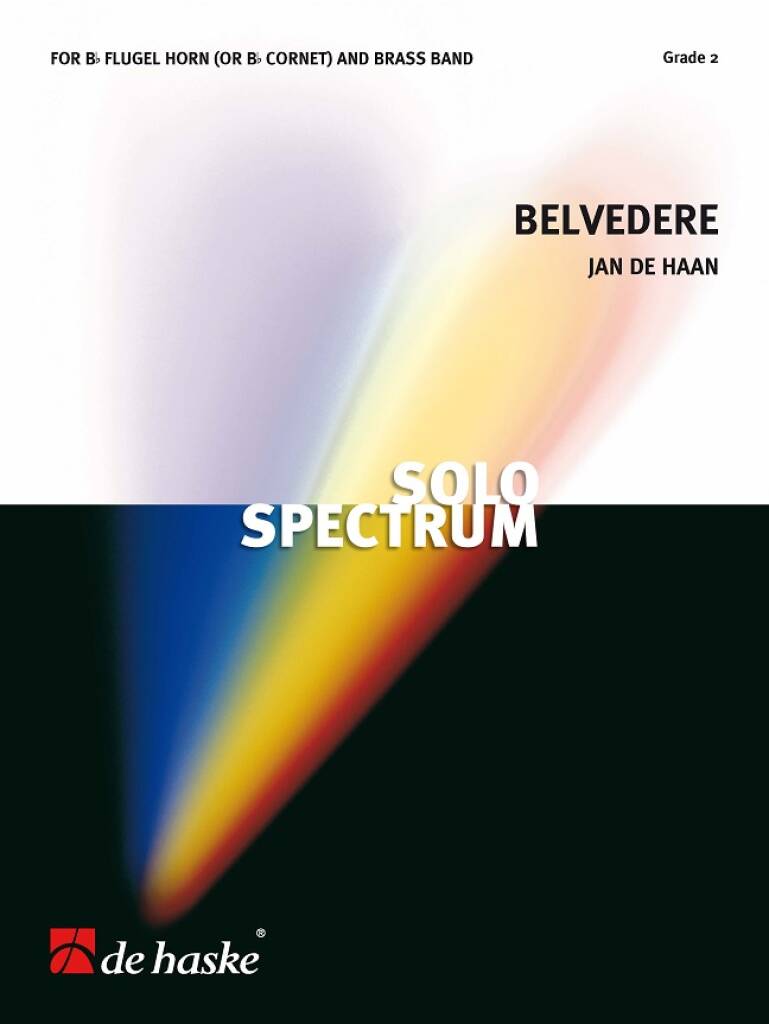
Belvedere - Jan de Haan
Belvedere is a beautiful solo for Flugel Horn or Cornet and is partly taken from City Scapes, a concert work that was inspired by Central Park in New York City. The title Belvedere refers to 'Belvedere Castle', erected in 1869, and radiates the peaceful atmosphere of this place.
Estimated dispatch 5-14 working days
-
£105.20
Marche pour la ceremonie des Turcs - Jean-Baptiste Lully - Haakon Esplo
Jean-Baptiste Lully (1632-1687) moved from Italy to Paris and started as a kitchen boy. Alongside he also composed music and was a dancer and actor. He soon became leader of the court orchestra, and wrote music for the parties at the court. At aconcert in 1687 he hit his foot with his conductor pole, got gangrene in the wound and died three months later. Lully is the first known composer of French baroque operas and had great influence on the development of the European musictowards the end of the 1600s.Turkish march is used in the 1991 movie "All the mornings of the world" (Tous les matins du monde) starring Gerard Depardieu. The action takes place in France in seventeenthcentury where we follow the relationshipbetween the viol player Marin Marais and his mentor Sainte Colombe.
Estimated dispatch 5-14 working days
-
 £115.60
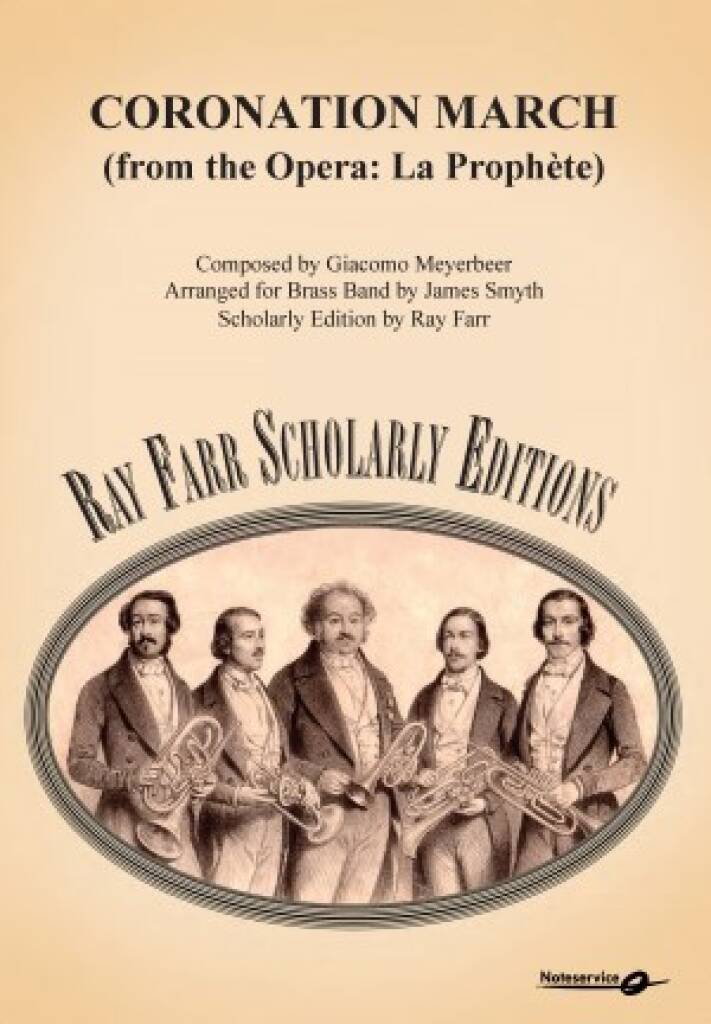
Coronation March - Giacomo Meyerbeer - Ray Farr
This Coronation March is from the opera Le Prophete (The Prophet) by Giacomo Meyerbeer and was arranged for brass band by James Smyth. The march was performed during a series of brass band events which took place at the Crystal Palace, London 1860 - 1863. Enderby Jackson was the organiser of these historically important occasions and also conducted the massed band concerts.The purpose of this scholarly edition is to produce a performing version, clearing ambiguities and errors, that can be enjoyed by today's performers and listeners, bearing in mind the original function and context. At the same time the edition is an analytical, musicological study of one of the rare treasures of the brass band repertory.
Estimated dispatch 5-14 working days
-
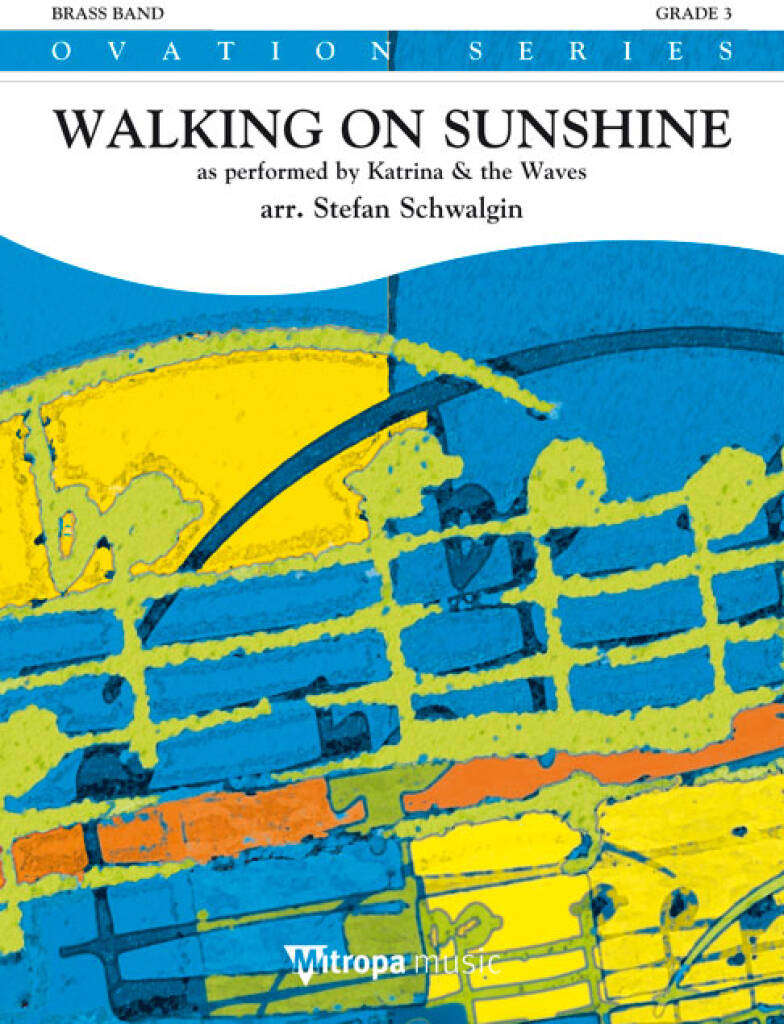 £60.99
Walking on Sunshine - Kimberley Rew - Stefan Schwalgin
Walking on Sunshine has earned its place among the all-time favorite summer classics. Kimberley Rew, lead guitarist for the pop group Katrina and the Waves, wrote the song in 1985 and never looked back.Whether at a club or a cafe, everybody seems to smile when this song is heard. Bring sunshine to your next concert with Sefan Schwalgin's arrangement of this unforgettable classic!
Estimated dispatch 5-14 working days
 View Music