Results
-
 £30.00
KirkFeld - Grant Kirkhope
Grant Kirkhope is a BAFTA nominated British composer who has created the soundtrack for video games that have sold in excess of 30 million copies. From "GoldenEye" to "Banjo-Kazooie", "Viva Pinata" to "Donkey Kong", "Kingdoms of Amalur: Reckoning" to "Civilization: Beyond Earth" and "Perfect Dark" to "Castle of Illusion starring Mickey Mouse". He has also recently scored the feature film "The King's Daughter" starring Pierce Brosnan and William Hurt and is currently working on "Yooka Laylee" and "Dropzone". Grant's score for "Viva Pinata" was nominated by BAFTA in the Original Score category in its 2007 awards. Grant is represented by the prestigious Gorfaine/Schwartz Agency by Cheryl Tiano and Kevin Korn. Grant has a degree in music from the Royal Northern College of Music, Manchester, where he majored in classical trumpet, is a green card holder and now lives in Agoura Hills, LA with his wife and two children.
-
 £48.56
Euryanthe Overture (Brass Band) von Weber arr. Barrie Gott
This expert arrangement for brass band by Barrie Gott of Carl Maria von Weber's popular overture, 'Euryanthe' will be a terrific addition to concert programmes.'Euryanthe' is acknowledged as one of Weber's most important operas and is based on the 13th-century French romance L'Histoire du tres-noble et chevalereux prince Gerard, comte de Nevers et la tres-virtueuse et tres chaste princesse Euriant de Savoye, sa mye.Only the overture, an outstanding example of the early German Romantic style (heralding Richard Wagner), is regularly played today.This transcription for brass band attempts to realise the orchestral score as closely as possible. There are many technical challenges that will provide opportunities for the expert level of player and ensemble. It will be and exciting addition to a concert programme. To view a follow-the-score video of the work please visit https://www.youtube.com/watch?v=wMePX1rVigk PDF download includes score and parts. Sheet music available from: UK - www.brassband.co.uk USA - www.solidbrassmusic.com Difficulty Level: 1st Section + Instrumentation: Soprano Cornet Eb Solo Cornet Bb Repiano Cornet Bb 2nd Cornet Bb 3rd Cornet Bb Flugel Horn Bb Solo Horn Eb 1st Horn Eb 2nd Horn Eb 1st Baritone Bb 2nd Baritone Bb 1st Trombone Bb 2nd Trombone Bb Bass Trombone Euphonium Bb Bass Eb Bass Bb Timpani
In Stock: Estimated dispatch 1-3 working days
-
£55.00
The Brigand's Orgy - Berlioz, H - Harper, P
In his memoirs the composer wrote: 'I long to go to the mountains and put myself in the service of a brigand chief. That's the life I crave: volcanoes, rocks, rich piles of plunder in mountain caves, a concert of shrieks accompanied by an orchestra of pistols and carbines, blood and wine, a bed of lava rocked by subterranean tremors: voil la vie!'Championship SectionDuration 7 minsListen to Cory BandCourtesy of World of Brass
In Stock: Estimated dispatch 1-3 working days
-
 £152.99
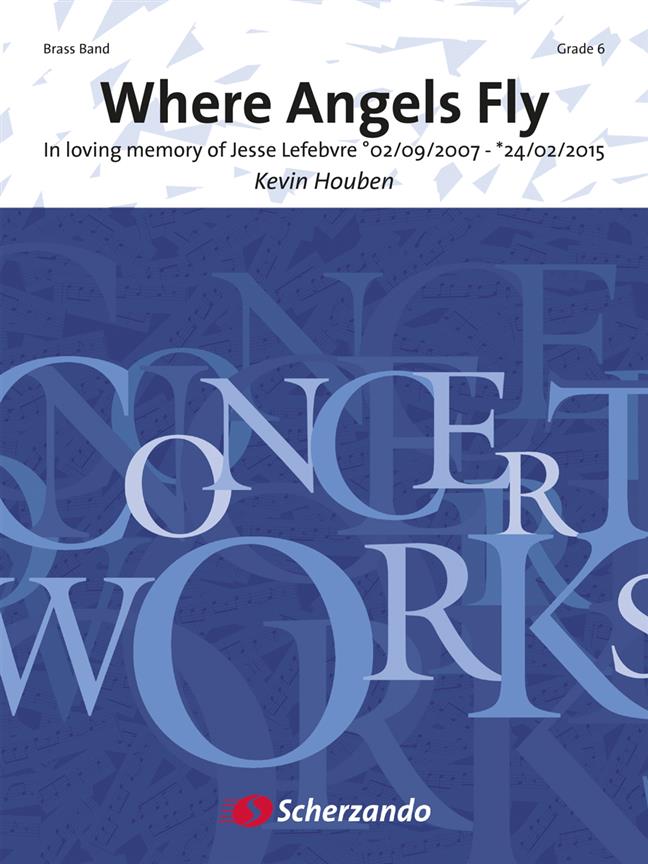
Where Angels Fly (Brass Band - Score and Parts)
Where Angels Fly was commissioned by VLAMO (Flemish Band Association). Kevin Houben wrote this work for the 2017 European Brass Band Championships in Ostend, Belgium. This is a very technical, powerful and virtuosic work with a rather fragile and soft introduction in which the main motif " derived from the Belgian composer Paul Gilsons (1865-1942) La Priere from Le Retour au Pays " is developed and also includes Houbens own musical signature HBE(N). Where Angels Fly is a challenging, impressive and virtuosic contest piece. Duration: 16.00
Estimated dispatch 7-14 working days
-
£105.00
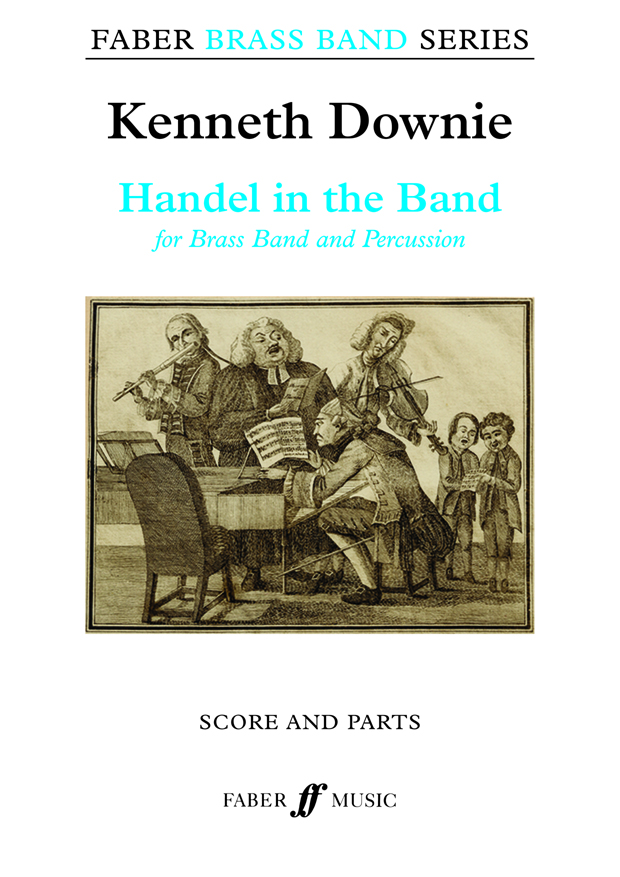
Handel in the Band - Kenneth Downie
Handel in the Band is a virtuoso set of symphonic variations on one of Handel's best known keyboard dances, the Sarabande from his Suite in D minor, HWV 437, based on the Spanish traditional dance La Folia. Kenneth Downie's work was commissioned by Brass Band Treize Etoiles, for performance at the 2013 Swiss National Brass Band Championships, where it was conducted by James Gourlay. The title is a reference to Percy Grainger's popular Handel in the Strand, and is indicative of the witty and theatrical nature of the music, which is more playful than conventional competition pieces and as such offers different challenges to brass bands as well as being thoroughly entertaining for audiences. Kenneth Downie is one of the most respected and experienced brass band composers. His music has been widely performed and published throughout the brass band world since the 1960s. Handel in the Band has been selected as the set work for the Championship Section final of this year's National Brass Band Championships of Great Britain, which takes place at the Royal Albert Hall, London, on 6th October 2018.
In Stock: Estimated dispatch 1-3 working days
-
 £85.00
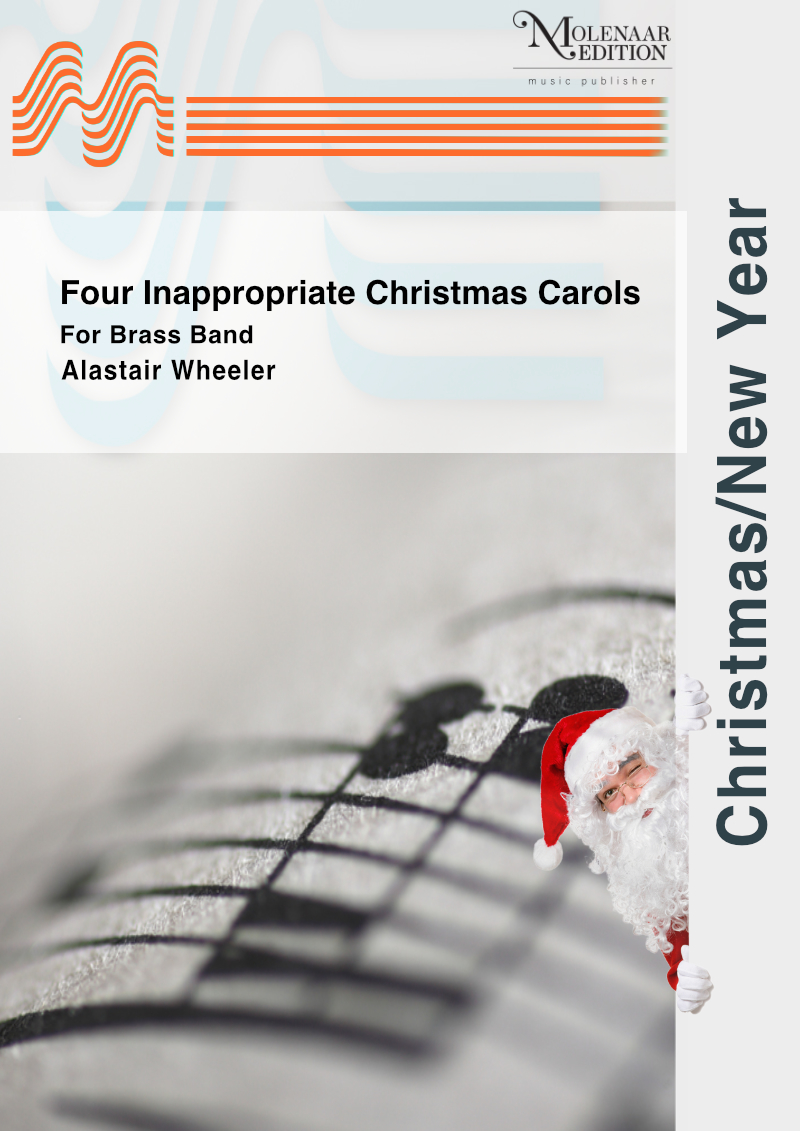
Four Inappropriate Christmas Carols - Traditional/Alastair Wheeler
Four Inappropriate Carols presents some familiar Christmas tunes in unexpected styles. Silent Night Rag, Coventry Tango, L'enfant de la promesse (Away in a Manager as a gymnopedie from Erik Satie) and Yiddish Bells to bring the house down!
Estimated dispatch 10-14 working days
-
£67.00
Ungarsk marsj - Hector Berlioz - Bjorn Morten Kjaernes
The "Rakoczi March" (Hungarian March) was the unofficial state anthem of Hungary before Ferenc Kolcsey wrote the Himnusz which is today the official national anthem of Hungary.The first version of this march-song was probably created around 1730 by one or more anonymous composers, although tradition says that it was the favorite march of Francis Rakoczi II. That early version called back Francis Rakoczi II to save his people. It was very popular in the 18th century but in the 19th century the more refined Rakoczi March became prevalent.Hector Berlioz included the music in his composition "La Damnation de Faust" in 1846, and Franz Liszt wrote a number of arrangements, including his Hungarian Rhapsody No. 15, based on the theme. The march gave its name to a 1933 Austrian-Hungarian feature film - Rakoczy-Marsch This arrangement is based on Berlioz instrumentation and phrasing from his Hungarian March, but in the form of the 19th century Rakoczi March
Estimated dispatch 7-14 working days
-
£35.00
Scene From the Silver Plate - Peter Meechan
Scene From the Silver Plate takes itas title from the Rio de la Plata, the literal translation being Silver River.This piece, using some of the traditional music from the region (Variants on the tango etc.), is quasi-incidental music from a fictional film, involving some kind of chase from the silver mountains to the estuary. Our fictional hero also has a romantic interest - will he make it away with his silver, and his lady?The trombone duets with various members of the band, including solo horn, euphonium and cornet.
Estimated dispatch 12-14 working days
-
£60.00
Enchantment in Paris - Offenbach, J - Harper, P
To commemorate the 200th Anniversary of the famous cornetist Jean-Baptiste Arban's birth in 2025, Philip Harper arranged this pastiche cornet solo in the style of great air-varies of the 19th century.Using a lilting melody from Offenbach's La Vie Parisienne, there are four variations of increasing complexity.A great challenge for your principal cornet, and an absolute knock-out in your concerts.2nd section + (accompaniment) Championship (soloist)Duration 5 minutes
In Stock: Estimated dispatch 1-3 working days
-
£30.00
Enchantment in Paris (Score) - Offenbach, J - Harper, P
To commemorate the 200th Anniversary of the famous cornetist Jean-Baptiste Arban's birth in 2025, Philip Harper arranged this pastiche cornet solo in the style of great air-varies of the 19th century.Using a lilting melody from Offenbach's La Vie Parisienne, there are four variations of increasing complexity.A great challenge for your principal cornet, and an absolute knock-out in your concerts.2nd section + (accompaniment) Championship (soloist)Duration 5 minutes
In Stock: Estimated dispatch 1-3 working days
 View Music