
Results
-
 £33.62
King Lily of the Valley (Euphonium & Baritone Feature w/Brass Band) Espen Haukas
Based on a poem by Gustaf Froding, King Lily of the Valley is a poetic and regal musical tribute to the delicate flower that, in Froding's verse, appears as a young king surrounded by both sorrow and beauty. Originally composed by David Wikander and arranged for male choir (TTBB) by Rasmus Krigstrom, this evocative work has been masterfully reimagined for brass band by Norwegian arranger and composer Espen Wallacher Haukas and created for Bjorsvik Brass's performance at Siddis Brass 2025. The brass band version retains the choral character and emotional depth of the original, weaving lush harmonies and lyrical phrasing into a rich soundscape. A deeply expressive addition to any brass band repertoire - blending Nordic choral tradition with the grandeur and warmth of the brass band sound. Scoring: Standard brass band instrumentation.(Note: Solo Cornets are marked TACET, providing a welcome opportunity for rest in longer programmes.) To view a rolling score video of the work please visit https://www.youtube.com/watch?v=AK5YPW4t3Oo Duration: Approx. 3.30 minutes Difficulty Level: 3rd Section + This PDF download includes the full score and parts. Sheet music available at www.brassband.co.uk (UK) or https://satradecentral.org (USA) Instrumentation: 1st Baritone Bb 1st Euphonium Bb 2nd Baritone Bb 2nd Euphonium Bb Soprano Cornet Eb Repiano Cornet Bb 2nd Cornet Bb 3rd Cornet Bb Flugel Horn Bb Solo Horn Eb 1st Horn Eb 2nd Horn Eb 1st Trombone Bb 2nd Trombone Bb Bass Trombone Bass Eb Bass Bb Timpani Percussion 1-2
In Stock: Estimated dispatch 1-3 working days
-
 £33.62
Les Chasseresses from 'Sylvia' (Brass Band) Delibes arr. Rob Bushnell
Clement Philibert Leo Delibes was a French composer, best known for his ballets and operas, including works such as Lakme (with its famous "Flower Duet"), Coppelia and Sylvia (both key works in the development of modern ballet). The latter started as a play, Aminta, by the Italian poet Torquato Tasso, which Delibes set to music. It was then adapted for the Paris Opera with rehearsals starting in August 1875. The premiere took place on 14 June 1876 and was the first ballet to be shown at the newly-built Opera Garnier. Whilst the scenery and costumes were created by top artists and designers (Cheret and Lacoste), it was Delibes's music that shown thrown, being said to have saved the production, preventing the ballet from drifting into obscurity.Sylvia is said to be one of the first modern ballets, with Tchaikovsky remarking to composer Sergei Taneyev upon its ingenuity: "... the first ballet, where the music constitutes not only the main, but the only interest. What charm, what elegance, what richness of melody, rhythm, harmony." Although Swan Lake, a contemporary to Sylvia, is considered one of the best ballets there is, Tchaikovsky preferred Sylvia to his own work, saying Swan Lake was "poor stuff in comparison". Tchaikovsky said to Taneyev, "I was ashamed. If I had known this music early then, of course, I would not have written Swan Lake". The music to Sylvia, rather than setting only the mood, also sets the action and is noted for its use of leitmotifs - Delibes was an admirer of Wagner - and more dominant use of brass and wind. The most famous piece from this ballet is the Pizzicati in the third act.Act I of the ballet takes place in sacred wood, where creatures are worshipping before Eros when Sylvia arrives with her huntresses to mock the god of love. Aminta, a lowly shepherd and infatuated with Sylvia, protects the deity and Sylvia is wounded by Eros's arrow. The hunter Orion kidnaps Sylvia, whilst Eros revives Aminta. Act II takes place in Orion's Island cave, where Sylvia tries to bribe Orion with jewels and wine. Unsuccessful, she appeals to Eros for help, who arrives and takes her to the temple of Diana (where the final act takes place). Orion and Aminta fight, Sylvia and Orion cause the goddess of the hunt, Diana, to be outraged, smiting Orion and denying the love of Aminta and Sylvia. Eros shows Diana a vision, which changes her mind and the couple finally come together.This brilliant and lively fanfare that introduces the huntresses in the first act is arranged here for the UK-style brass band, with alternative parts for horns in F and bass-clef lower brass. The piece has been lowered by a tone compared to the original. A recording of the original composition can be found here https://youtu.be/6yoGrUH38PI?si=0L0bFa1qXnYNvkR3 Duration: Approx. 3.10 minutes Difficulty Level: 1st Section + This PDF download includes the full score and parts. Includes alternative parts for soloist in Eb, horns in F and lower brass in bass clef. Sheet music available at www.brassband.co.uk (UK) or https://satradecentral.org (USA) Instrumentation: Soprano Cornet Eb Solo Cornet Bb Repiano Cornet Bb 2nd Cornet Bb 3rd Cornet Bb Flugel Horn Bb Solo Horn Eb 1st Horn Eb 2nd Horn Eb 1st Baritone Bb 2nd Baritone Bb 1st Trombone Bb 2nd Trombone Bb Bass Trombone Euphonium Bb Bass Eb Bass Bb Timpani Percussion - Triangle, Cymbal & Bass Drum
In Stock: Estimated dispatch 1-3 working days
-
 £29.88
Fanfare from La Peri(Brass Band) Dukas arr. Rob Bushnell
La Peri is a one-act ballet by the French composer Paul Dukas, best known for The Sorcerer's Apprentice (L'apprenti sorcier) as in the 1940 Disney film Fantasia. Dukas was commissioned to write La Peri by the Ballets Russes, producing a Poeme danse en un tableau ('dance poem in one scene') in 1911; this become his last published work. With Natalia Trouhanova due to play the Peri and Vaslav Nijinsky to play Iskender (the name of Alexander the Great in Persian, who is scouting around Iran in search of the Flower of Immortality), the production was ultimately cancelled because Serge Diaghilev feel Trouhanova was not a skilled enough dancer to be partnered to Nijinsky. Trouhanova later hired Ivan Clustine to choreograph the music, with the ballet premiering at the Theatre du Chatelet in Paris on 22 April 1912.The brilliant fanfare that precedes the ballet is often performed separately and is the arrangement available here. Arranged for British-style brass band, it has optional percussion parts as well as alternative parts for horns in F and bass-clef lower brass. The piece has been lowered by a tone compared to the original. A recording of the original composition can be found here: www.youtube.com/watch?v=7EDekMos1ok. Duration: Approx. 2 minutes Difficulty Level: 2nd Section + Duration: 4 or 5 minutes (depending on tempo and without any cuts) PDF download includes parts and score. Sheet music available at www.brassband.co.uk (UK) or https://satradecentral.org (USA) Instrumentation: Soprano Cornet Eb Solo Cornet Bb Repiano Cornet Bb 2nd Cornet Bb 3rd Cornet Bb Flugel Horn Bb Solo Horn Eb 1st Horn Eb 2nd Horn Eb 1st Baritone Bb 2nd Baritone Bb 1st Trombone Bb 2nd Trombone Bb Bass Trombone Euphonium Bb Bass Eb Bass Bb Timpani Percussion 1 - Snare Drum Percussion 2 - Bass Drum & Cymbal
In Stock: Estimated dispatch 1-3 working days
-
Covent Garden - Len Jenkins - Len Jenkins
Cast your mind back to the Covent Garden of Eliza Doolittle and the activity of the dealers, porters, costermongers, and other staff around the market. In cinematographic terms the ideal setting for a set-piece dance routine to reflect the hustle and bustle of trade in the early morning. The market may have moved to Nine Elms, but the activity is still just as vibrant, so we called this piece Covent Garden to reflect the activity which we rarely see, but know exists, in a busy commercial flower, vegetable and food market. The music has a good strong theme which carries the activities, numerous and varied, not always without hindrance but always coming good at the end so that we have food on our plates, flowers to enjoy and a tradition preserved.
-
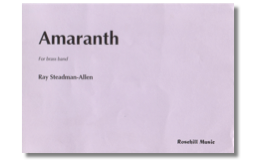 £32.00
Amaranth (Score only) - Ray Steadman-Allen
The title of the work refers to a legendary imaginary purple flower, mysterious in that it never fades or dies. In an extended single movement the music explores the colours and textures of the brass band. Duration: 10:00
Estimated dispatch 7-9 working days
-
 £42.00
Amaranth (Parts only) - Ray Steadman-Allen
The title of the work refers to a legendary imaginary purple flower, mysterious in that it never fades or dies. In an extended single movement the music explores the colours and textures of the brass band. Duration: 10:00
Estimated dispatch 7-9 working days
-
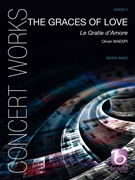 £18.99
GRACES OF LOVE (Le Gratie d'Amore) (Brass Band Extra Score) - Waespi, Oliver
2015 National Championships Finals Testpiece - Third Section - Extra Score only. The Graces of Love (Le Gratie d'Amore) is the title of a book published in 1602 by Cesare Negri, the famous dance master of the Milan court in the Renaissance. It contains numerous dance tunes and precise descriptions of courtly dances. It also includes the tune Il bianco fior (The White Flower) on which the first movement of the present piece is based. A vigorous dance in three-four, it leads to an acceleration and a sudden shift to an even meter towards the end. The second movement, calm and contemplative in character, features the tune Vaghe bellezze ... (Veiled Beauty ...). Widely spaced melodic parts surround two solos during which the tune is varied and developed. Finally, the third movement contains a saltarello with a hypnotic rhythm, ending the work with flair and gusto. Duration: 11:30
Estimated dispatch 7-14 working days
-
£118.99
GRACES OF LOVE (Le Gratie d'Amore) (Brass Band Set) - Waespi, Oliver
2015 National Championships Finals Testpiece - Third Section. The Graces of Love (Le Gratie d'Amore) is the title of a book published in 1602 by Cesare Negri, the famous dance master of the Milan court in the Renaissance. It contains numerous dance tunes and precise descriptions of courtly dances. It also includes the tune Il bianco fior (The White Flower) on which the first movement of the present piece is based. A vigorous dance in three-four, it leads to an acceleration and a sudden shift to an even meter towards the end. The second movement, calm and contemplative in character, features the tune Vaghe bellezze ... (Veiled Beauty ...). Widely spaced melodic parts surround two solos during which the tune is varied and developed. Finally, the third movement contains a saltarello with a hypnotic rhythm, ending the work with flair and gusto. Duration: 11:30
Estimated dispatch 7-14 working days
-
 £24.95
SNARING OF THE SUN, The (Brass Band Extra Score) - Roberts, Stephen
2015 National Championships Finals Testpiece - Second Section - Extra Score. The Graces of Love (Le Gratie d'Amore) is the title of a book published in 1602 by Cesare Negri, the famous dance master of the Milan court in the Renaissance. It contains numerous dance tunes and precise descriptions of courtly dances. It also includes the tune Il bianco fior (The White Flower) on which the first movement of the present piece is based. A vigorous dance in three-four, it leads to an acceleration and a sudden shift to an even meter towards the end. The second movement, calm and contemplative in character, features the tune Vaghe bellezze ... (Veiled Beauty ...). Widely spaced melodic parts surround two solos during which the tune is varied and developed. Finally, the third movement contains a saltarello with a hypnotic rhythm, ending the work with flair and gusto. Duration: 11:30
Estimated dispatch 7-14 working days
-
£99.95
SNARING OF THE SUN, The (Brass Band Set) - Roberts, Stephen
2015 National Championships Finals Testpiece - Second Section. The Graces of Love (Le Gratie d'Amore) is the title of a book published in 1602 by Cesare Negri, the famous dance master of the Milan court in the Renaissance. It contains numerous dance tunes and precise descriptions of courtly dances. It also includes the tune Il bianco fior (The White Flower) on which the first movement of the present piece is based. A vigorous dance in three-four, it leads to an acceleration and a sudden shift to an even meter towards the end. The second movement, calm and contemplative in character, features the tune Vaghe bellezze ... (Veiled Beauty ...). Widely spaced melodic parts surround two solos during which the tune is varied and developed. Finally, the third movement contains a saltarello with a hypnotic rhythm, ending the work with flair and gusto. Duration: 11:30
Estimated dispatch 7-14 working days
 View Music