
Results
-
 £4.99
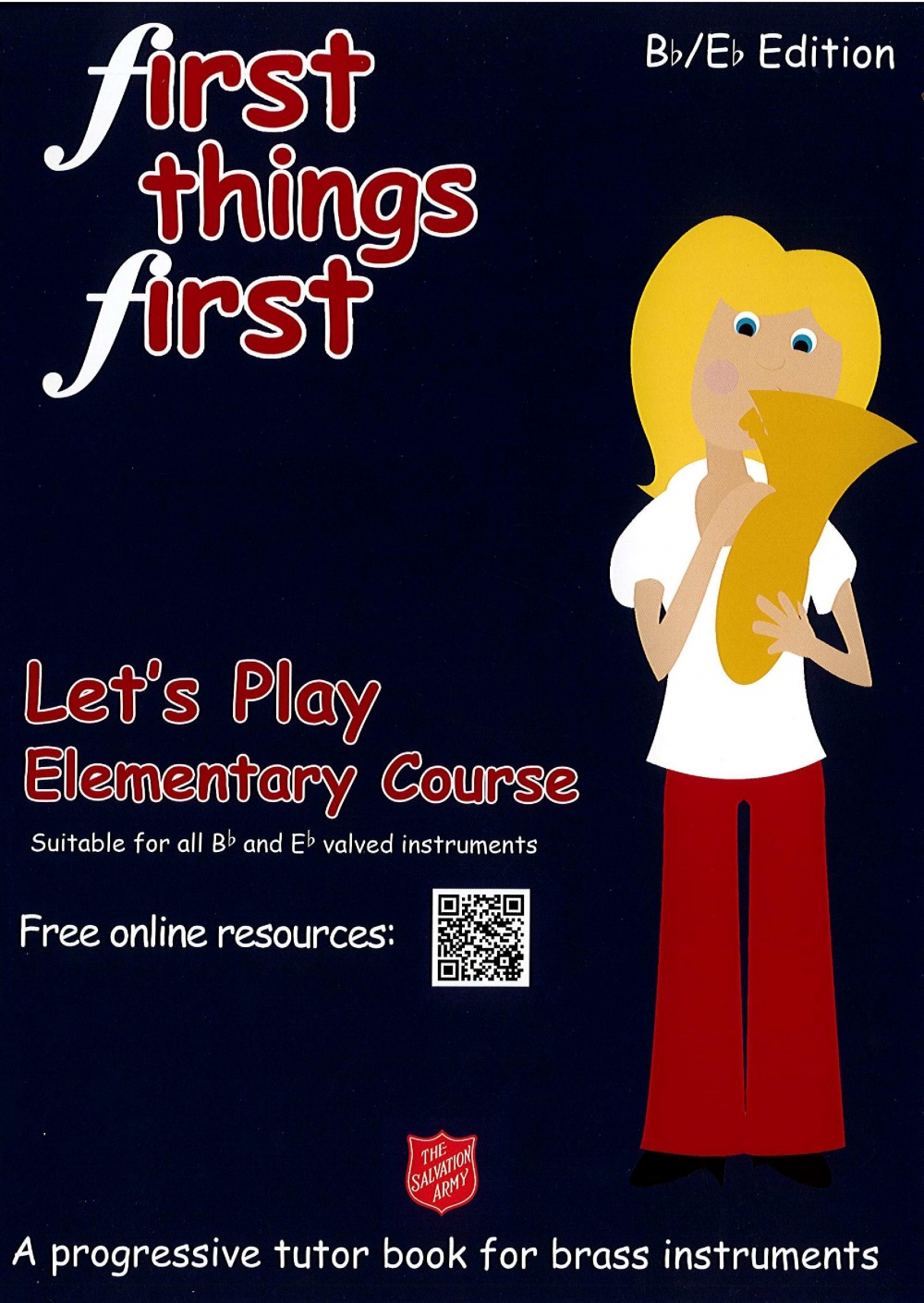
£4.99First Things First - Let's Play (Elementary Course) Bb/Eb Edition
Let's Play (Elementary Course) provides an exciting and challenging early introduction to brass playing. Intentionally, using just the first 5 noes (C-G), the course allows and encourages the important early development of a brass player's most vital commodity, the lips!Includes link to downloadable resources including backing and demonstration tracks, online course assessment sheets and personalised course certificates.In this book you willlearn how to hold the instrument and how to breath properly!learn how to buzz your lips and how to use your tongue to start notesmeet lots of well known tunes, but using just 5 notes (C, D, E, F & G)learn many of the rhythm patterns possible in 4/4 timeimprove your listening skills as you play along with the downloadable tracks.
Estimated dispatch 7-14 working days
-
 £45.00
First Things First - Let's Play (Elementary Course) Bb/Eb Edition (Pack of 10)
Let's Play (Elementary Course) provides an exciting and challenging early introduction to brass playing. Intentionally, using just the first 5 noes (C-G), the course allows and encourages the important early development of a brass player's most vital commodity, the lips!Includes link to downloadable resources including backing and demonstration tracks, online course assessment sheets and personalised course certificates.In this book you willlearn how to hold the instrument and how to breath properly!learn how to buzz your lips and how to use your tongue to start notesmeet lots of well known tunes, but using just 5 notes (C, D, E, F & G)learn many of the rhythm patterns possible in 4/4 timeimprove your listening skills as you play along with the downloadable tracks.
Estimated dispatch 7-14 working days
-
 £33.00
Fat Bottomed Girls
Again from the Jazz album, Fat- Bottomed Girls has been brilliantly arranged for brass band to maintain its heavy rock feel. The trombones provide that edgy, raw sound whilst the soprano has a virtuosic solo which powers the piece to an awe inspiring f
Estimated dispatch 7-14 working days
-
 £44.95
Princethorpe Variations (Brass Band - Score and Parts) - Downie, Kenneth
Colourful harmony, rhythmic flair and melodic invention are the hallmarks of this excellent set of variations by Kenneth Downie, based on the well known church tune, Princethorpe.This major work demonstrates the well-known characteristics of the composer: colourful harmony, rhythmic flair and melodic invention, all encapsulated in scoring which is engulfing both to players and listeners alike. Following a presentation of the theme there are five variations culminating in what can be described as either a finale or coda.Theme. The composer shows his originality in the harmonic sense of this introduction. Perhaps it could be suggested that over-indulgence of rubato may be a temptation to be avoided.Sections A to F. Relentless rhythmic drive is of paramount importance in this first variation. Conscientious observance of dynamics is of course an essential requirement in conveying the exciting quality of the music; there are moments of sudden contrast of which all will need to be aware. Moving between the time-signatures of 5/4 and 6/4 these sections are built from strong easily-identifiable fragments of the theme. These is a significant increase in temp at letter F which will further the exciting impact of the music.Sections G & H. In a pastorale style this short, gentle variation affords a contrast in style between the previous and succeeding ones. The gentle undulating character of the melodic lines is governed by the Allegretto grazioso directive.Sections I to M. Commencing two bars before letter I the music is now exuberant and the tempo and style is that of a march in compound time. In this exhilarating movement there are moments of contrast and indeed of delicacy which are a foil to the more energetic moments. Rhythmic control will be essential to maintain a consistent tempo. As elsewhere in the work, the percussion section will contribute much to the success of the performance there are bars where this section alone is heard and there are important entries for glockenspiel.Sections N & O. With emotional content this Adagio variation has the first two notes of the melody as its melodic impetus. Apart from just over two bars at O (where there is an interpolatory phrase from Cornets and Trombones), the melodic line is entrusted to the plaintive sounds of the horn section. Cornets and Trombones provide a change of tone colour at the beginning of section O. Under a poco rall, this very expressive variation is concluded; there is an important link supplied by Eb Bass.Sections P & Q. A lively march-tempo is launched immediately and these sections are in the nature of an introduction to the final variations. There is a quickening of pace at Q which assists the generation of excitement which should be an essential part of the performance. Solo Cornets introduce a melodic line at Q which anticipates the compound time of the following section.Sections R & S. The Solo Cornet theme of the previous section is now a contrapuntal line accompanying the theme tune. With an elongation of the notes in the melody, the conductor will need to call on the sustaining powers of the band and at no time should the interesting accompanying lines be allowed to detract from the sonorous presentation of the basic theme.Sections T, U & V. Following a poco rit, the finale begins at letter T with the directive, molto vivace. There is much detail to be rehearsed, not least being the dynamic contrasts which are encountered. As throughout the work, the listener should have no difficulty in identifying the thematic sources of the composer's music.
Estimated dispatch 7-14 working days
-
£22.50
Princethorpe Variations (Brass Band - Score only) - Downie, Kenneth
Colourful harmony, rhythmic flair and melodic invention are the hallmarks of this excellent set of variations by Kenneth Downie, based on the well known church tune, Princethorpe.This major work demonstrates the well-known characteristics of the composer: colourful harmony, rhythmic flair and melodic invention, all encapsulated in scoring which is engulfing both to players and listeners alike. Following a presentation of the theme there are five variations culminating in what can be described as either a finale or coda.Theme. The composer shows his originality in the harmonic sense of this introduction. Perhaps it could be suggested that over-indulgence of rubato may be a temptation to be avoided.Sections A to F. Relentless rhythmic drive is of paramount importance in this first variation. Conscientious observance of dynamics is of course an essential requirement in conveying the exciting quality of the music; there are moments of sudden contrast of which all will need to be aware. Moving between the time-signatures of 5/4 and 6/4 these sections are built from strong easily-identifiable fragments of the theme. These is a significant increase in temp at letter F which will further the exciting impact of the music.Sections G & H. In a pastorale style this short, gentle variation affords a contrast in style between the previous and succeeding ones. The gentle undulating character of the melodic lines is governed by the Allegretto grazioso directive.Sections I to M. Commencing two bars before letter I the music is now exuberant and the tempo and style is that of a march in compound time. In this exhilarating movement there are moments of contrast and indeed of delicacy which are a foil to the more energetic moments. Rhythmic control will be essential to maintain a consistent tempo. As elsewhere in the work, the percussion section will contribute much to the success of the performance there are bars where this section alone is heard and there are important entries for glockenspiel.Sections N & O. With emotional content this Adagio variation has the first two notes of the melody as its melodic impetus. Apart from just over two bars at O (where there is an interpolatory phrase from Cornets and Trombones), the melodic line is entrusted to the plaintive sounds of the horn section. Cornets and Trombones provide a change of tone colour at the beginning of section O. Under a poco rall, this very expressive variation is concluded; there is an important link supplied by Eb Bass.Sections P & Q. A lively march-tempo is launched immediately and these sections are in the nature of an introduction to the final variations. There is a quickening of pace at Q which assists the generation of excitement which should be an essential part of the performance. Solo Cornets introduce a melodic line at Q which anticipates the compound time of the following section.Sections R & S. The Solo Cornet theme of the previous section is now a contrapuntal line accompanying the theme tune. With an elongation of the notes in the melody, the conductor will need to call on the sustaining powers of the band and at no time should the interesting accompanying lines be allowed to detract from the sonorous presentation of the basic theme.Sections T, U & V. Following a poco rit, the finale begins at letter T with the directive, molto vivace. There is much detail to be rehearsed, not least being the dynamic contrasts which are encountered. As throughout the work, the listener should have no difficulty in identifying the thematic sources of the composer's music.
Estimated dispatch 7-14 working days
-
 £29.95
SOUNDS OF CHRISTMAS (Full Score)
Sounds of Christmas is a brand new collection of 36 Christmas arrangements and compositions that can be played by groups as small as five players, with the parts available as follows: Part 1: Bb and C; Part 2: Bb, Eb and F; Part 3: Bb, Eb, F and C BC; Part 4: Bb TC and C BC; Part 5: Eb TC, Bb TC and C BC. The full score does not contain all the instruments available, only the Bb and Eb pitched instruments (except the optional Eb Soprano cornet) and Percussion. Sounds of Christmas is sure to add interest to your Christmas carol playing and offers interesting additions to your Christmas concert repertoire. Includes: A Holly Waltz (The Holly and the Ivy); A Starry Night; Away in a Manger; Chiming Bells (Sweet Chiming Christmas Bells); Christmas Joy (March); Christmas Praise (March); Coventry Carol; Ding Dong! (Ding Dong! Merrily on High); God Rest You Merry, Gentlemen; Good Christian Men, Rejoice; Good King Wenceslas; Hark! THe Herald Angels Sing; Have Yourself a Merry Little Christmas; Infant Holy; It Came Upon a Midnight Clear; Jesus, Good Above All Other; Joy to the World; Mary's Boy Child; Mid-Winter (In the Bleak Mid-Winter); Normandy Carol (Away in a Manger); O Come, All Ye Faithful; O Little Town of Bethlehem; Once in Royal David's City; Rudolph, the Red-Nosed Reindeer; Silent Night; Sounds of Christmas (March Medley); The Andel Message (While Shepherds Watched); The Everlasting Light (O Little Town of Bethlehem); The First Nowell; The Infant King; The Manger Scene; The Virgin Mary had a Baby Boy; Three Kings' March; To Celebrate His Birth (March); We Wish You a Merry Christmas; Yuletide Rag (Deck the Hall).
Estimated dispatch 7-14 working days
-
 £99.95
Carols for Band (Brass Band Set) - Sparke, Philip
Designed to be playable by any combination from quartet to full brass band, wind band or orchestra, the arrangements in this book with provide a practical solution to all your carolling needs. Parts are divided into Soprano, Alto, Tenor and Bass so that any suitable instrumentation will sound well, providing an equal balance of players per voice is maintained. The carols are printed in alphabetical order so they are easy to find, and comprehensively indexed under both first line and name of tune.Score, Timpani and Percussion parts are available separately.Instrumentation is as follows: Brass BandWind BandStringsSopranoEb Soprano CornetSolo Bb CornetBb Repiano & Flugel1st Flute & Piccolo2nd FluteOboe1st Bb Clarinet1st Bb Trumpet/Cornet1st ViolinAlto2nd & 3rd Bb CornetSolo Eb Horn1st Bb Trombone2nd & 3rd Bb ClarinetsEb Alto Saxophone2nd Bb Trumpet/Cornet1st F Horn2nd ViolinTenor1st & 2nd Eb Horns1st & 2nd Bb Baritones2nd Bb Trombone1st Bb EuphoniumEb Alto ClarinetBb Tenor Saxophone2nd F Horn1st & 2nd TrombonesViolaBassBass Trombone2nd Bb EuphoniumEb BassBb BassBassoonBb Bass ClarinetEb Baritone SaxophoneBass TromboneEuphoniumTubaCello/BassTitles included:Angels from the Realms of GloryAs with Gladness Men of OldAway in a MangerBrightest and BestChristians AwakeCoventry CarolDeck the HallsDing Dong, Merrily on HighFirst NowellGod Rest ye Merry, GentlemenGood King WenceslasHark the Glad SoundHark, the Herald Angels SingHolly and the IvyI Saw Three ShipsIn Dulci JubiloIn the Bleak Mid-WinterInfant HolyInfant KingIt Came Upon a Midnight ClearJingle BellsLo, He Comes with Clouds DescendingLove Came Down at ChristmasO Come, All ye FaithfulO Come, O Come, EmmanuelO Little Town of BethlehemOf the Father's Love BegottenOnce in Royal David's CitySans Day CarolSee Amid the Winter's SnowSilent NightSussex CarolThou Didst Leave Thy ThroneUnto Us is Born a SonWe Wish You a Merry ChristmasWhile Shepherds WatchedThe Brass Band Set consists of 25 Parts:1 x Eb Soprano Cornet4 x Solo Bb Cornet2 x Bb Repiano & Flugel4 x 2nd & 3rd Bb Cornet1 x Solo Eb Horn2 x 1st & 2nd Eb Horn2 x 1st & 2nd Bb Baritone1 x 1st Bb Trombone1 x 2nd Bb Trombone1 x Bass Trombone1 x 1st Bb Euphonium1 x 2nd Bb Euphonium2 x Eb Bass2 x Bb Bass
Estimated dispatch 7-14 working days
-
 £15.00
Symphony in Two Movements (Brass Band - Study Score) - Gregson, Edward
Selected as the Championship Section test piece for the National Brass Band Championships of Great Britain 2025This work was jointly commissioned by the National Youth Brass Band of Great Britain (NYBBGB) and the National Youth Brass Band of Wales (NYBBW), the latter with funding from T Cerdd (Music Centre Wales), to celebrate their 60th and 30th anniversaries respectively. The first performances were given at Cadogan Hall, London, in April 2012, by the NYBBGB, conducted by Bramwell Tovey; and at the Great Hall, Aberystwyth University, in July 2012, by the NYBBW, conducted by Nicholas Childs.When I was approached about a joint commission to write a new work to celebrate the anniversaries of these two outstanding youth bands I was delighted to accept, and decided to respond by writing a work apposite for the magnitude of these special occasions, namely a 'symphony for brass'.Through a long journey of writing music for brass band, which commenced with Connotations (1977), and continued with Dances and Arias (1984), Of Men and Mountains (1991), The Trumpets of the Angels (2000) and Rococo Variations (2008), I arrived at what I regard as the most important work of the cycle to date, combining as it does serious musical intent with considerable technical demands. It is perhaps my most abstract work for brass band, avoiding any programmatic content.The symphony lasts for some 19 minutes and is structured in two linked movements. The form is based on that used by Beethoven in his final piano sonata (Op.111), which is in two movements only: a compact sonata-form allegro, followed by a more expansive theme and four variations. Prokofiev also adopted this model in his 2nd Symphony of 1925.The opening Toccata of this Symphony is highly dramatic but compact, whilst still retaining the 'traditional' structural elements of exposition, development and recapitulation; indeed, it also has the 'traditional' element of a contrasting second subject - a gentle, lyrical modal melody first heard on solo cornets.In contrast, the longer and more substantial second movement Variations is built around a theme and four variations. The slowly unfolding chorale-like theme accumulates both added note harmony and increasing instrumentation, whilst the four variations which follow are by turn mercurial (fast, starting with all the instruments muted), march-like (menacing, with short rhythmic articulations underpinning an extended atonal melody), serene (a series of 'romances' for solo instruments alongside echoes of the chorale) with an emerging theme eventually bursting into a climax of passionate intent; whilst the final variation is a dynamic scherzo (concertante-like in its series of rapid-fire solos, duets, trios and quartets) with the music gradually incorporating elements of the main ideas from the first movement, thus acting as a recapitulation for the whole work. It reaches its peroration with a return to the very opening of the symphony, now in the 'home' tonality of F, and thus creating a truly symphonic dimension to the music.Most of the melodic material of the symphony is derived from the opening eleven-note 'row', which contains various intervallic sets, and although the work is not serially conceived it does use some typical quasi-serial procedures, such as canons, inversions, and retrogrades. The symphony uses somewhat limited percussion, in line with a 'classical' approach to the sound world of the brass band, alongside a use of multi-divisi instrumentation, whereby each player has an individual part rather than the traditional doubling within certain sections of the band.- Edward GregsonDuration: 19.00
Estimated dispatch 7-14 working days
-
 £107.95
Symphony in Two Movements (Brass Band - Score and Parts) - Gregson, Edward
Selected as the Championship Section test piece for the National Brass Band Championships of Great Britain 2025This work was jointly commissioned by the National Youth Brass Band of Great Britain (NYBBGB) and the National Youth Brass Band of Wales (NYBBW), the latter with funding from T Cerdd (Music Centre Wales), to celebrate their 60th and 30th anniversaries respectively. The first performances were given at Cadogan Hall, London, in April 2012, by the NYBBGB, conducted by Bramwell Tovey; and at the Great Hall, Aberystwyth University, in July 2012, by the NYBBW, conducted by Nicholas Childs.When I was approached about a joint commission to write a new work to celebrate the anniversaries of these two outstanding youth bands I was delighted to accept, and decided to respond by writing a work apposite for the magnitude of these special occasions, namely a 'symphony for brass'.Through a long journey of writing music for brass band, which commenced with Connotations (1977), and continued with Dances and Arias (1984), Of Men and Mountains (1991), The Trumpets of the Angels (2000) and Rococo Variations (2008), I arrived at what I regard as the most important work of the cycle to date, combining as it does serious musical intent with considerable technical demands. It is perhaps my most abstract work for brass band, avoiding any programmatic content.The symphony lasts for some 19 minutes and is structured in two linked movements. The form is based on that used by Beethoven in his final piano sonata (Op.111), which is in two movements only: a compact sonata-form allegro, followed by a more expansive theme and four variations. Prokofiev also adopted this model in his 2nd Symphony of 1925.The opening Toccata of this Symphony is highly dramatic but compact, whilst still retaining the 'traditional' structural elements of exposition, development and recapitulation; indeed, it also has the 'traditional' element of a contrasting second subject - a gentle, lyrical modal melody first heard on solo cornets.In contrast, the longer and more substantial second movement Variations is built around a theme and four variations. The slowly unfolding chorale-like theme accumulates both added note harmony and increasing instrumentation, whilst the four variations which follow are by turn mercurial (fast, starting with all the instruments muted), march-like (menacing, with short rhythmic articulations underpinning an extended atonal melody), serene (a series of 'romances' for solo instruments alongside echoes of the chorale) with an emerging theme eventually bursting into a climax of passionate intent; whilst the final variation is a dynamic scherzo (concertante-like in its series of rapid-fire solos, duets, trios and quartets) with the music gradually incorporating elements of the main ideas from the first movement, thus acting as a recapitulation for the whole work. It reaches its peroration with a return to the very opening of the symphony, now in the 'home' tonality of F, and thus creating a truly symphonic dimension to the music.Most of the melodic material of the symphony is derived from the opening eleven-note 'row', which contains various intervallic sets, and although the work is not serially conceived it does use some typical quasi-serial procedures, such as canons, inversions, and retrogrades. The symphony uses somewhat limited percussion, in line with a 'classical' approach to the sound world of the brass band, alongside a use of multi-divisi instrumentation, whereby each player has an individual part rather than the traditional doubling within certain sections of the band.- Edward GregsonDuration: 19.00
Estimated dispatch 7-14 working days
-
 £57.95
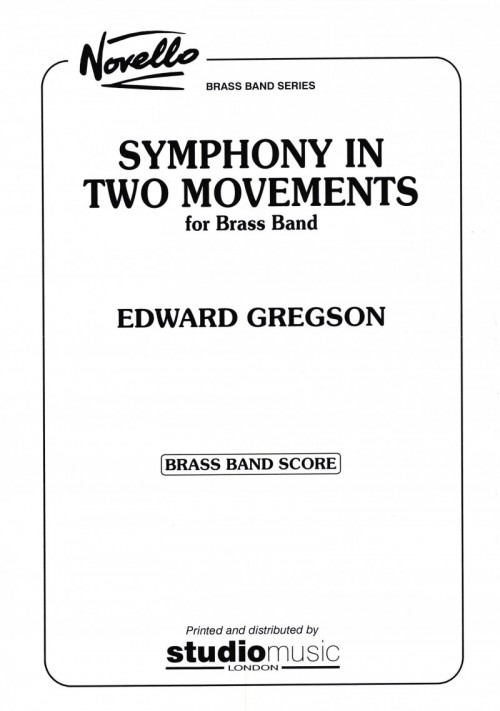
Symphony in Two Movements (Brass Band - Score only) - Gregson, Edward
Selected as the Championship Section test piece for the National Brass Band Championships of Great Britain 2025This work was jointly commissioned by the National Youth Brass Band of Great Britain (NYBBGB) and the National Youth Brass Band of Wales (NYBBW), the latter with funding from T Cerdd (Music Centre Wales), to celebrate their 60th and 30th anniversaries respectively. The first performances were given at Cadogan Hall, London, in April 2012, by the NYBBGB, conducted by Bramwell Tovey; and at the Great Hall, Aberystwyth University, in July 2012, by the NYBBW, conducted by Nicholas Childs.When I was approached about a joint commission to write a new work to celebrate the anniversaries of these two outstanding youth bands I was delighted to accept, and decided to respond by writing a work apposite for the magnitude of these special occasions, namely a 'symphony for brass'.Through a long journey of writing music for brass band, which commenced with Connotations (1977), and continued with Dances and Arias (1984), Of Men and Mountains (1991), The Trumpets of the Angels (2000) and Rococo Variations (2008), I arrived at what I regard as the most important work of the cycle to date, combining as it does serious musical intent with considerable technical demands. It is perhaps my most abstract work for brass band, avoiding any programmatic content.The symphony lasts for some 19 minutes and is structured in two linked movements. The form is based on that used by Beethoven in his final piano sonata (Op.111), which is in two movements only: a compact sonata-form allegro, followed by a more expansive theme and four variations. Prokofiev also adopted this model in his 2nd Symphony of 1925.The opening Toccata of this Symphony is highly dramatic but compact, whilst still retaining the 'traditional' structural elements of exposition, development and recapitulation; indeed, it also has the 'traditional' element of a contrasting second subject - a gentle, lyrical modal melody first heard on solo cornets.In contrast, the longer and more substantial second movement Variations is built around a theme and four variations. The slowly unfolding chorale-like theme accumulates both added note harmony and increasing instrumentation, whilst the four variations which follow are by turn mercurial (fast, starting with all the instruments muted), march-like (menacing, with short rhythmic articulations underpinning an extended atonal melody), serene (a series of 'romances' for solo instruments alongside echoes of the chorale) with an emerging theme eventually bursting into a climax of passionate intent; whilst the final variation is a dynamic scherzo (concertante-like in its series of rapid-fire solos, duets, trios and quartets) with the music gradually incorporating elements of the main ideas from the first movement, thus acting as a recapitulation for the whole work. It reaches its peroration with a return to the very opening of the symphony, now in the 'home' tonality of F, and thus creating a truly symphonic dimension to the music.Most of the melodic material of the symphony is derived from the opening eleven-note 'row', which contains various intervallic sets, and although the work is not serially conceived it does use some typical quasi-serial procedures, such as canons, inversions, and retrogrades. The symphony uses somewhat limited percussion, in line with a 'classical' approach to the sound world of the brass band, alongside a use of multi-divisi instrumentation, whereby each player has an individual part rather than the traditional doubling within certain sections of the band.- Edward GregsonDuration: 19.00
Estimated dispatch 7-14 working days
 View Music