
Results
-
 £104.99
Sinfonietta No. 4 - Etienne Crausaz
This work was composed for the occasion of the 28. Fete Cantonale des Musiques Vaudoises (28th Music Festival of the Canton Vaud), taking place in the Valley of Joux in June 2018. The music begins with a very simple fanfare consisting of five ascending legato notes which constitute the fundamental framework of the piece. This contrasts with the more cantabile sounding theme we hear after. The following Allegro section uses the sequence in a contrapuntal style reminding us of the Renaissance period, but with more modern day harmonies. Two solo cadenzas played by cornet and euphonium initiate the middle section, in which a theme also based on the sequence builds uptowards the climax of the piece. The sequence in the last section is played in time but gives the feeling of a "one to the bar" beat. Shortly before the festive finale, the music heard in the middle part resumes.
Estimated dispatch 5-14 working days
-
 £70.00
Smoke Sketches - Daniel Hall
Smoke Sketches is Daniel Hall's first original work to be published in the Faber Music Brass Band Series. Daniel is one of the most gifted of the rising generation of composers writing for brass bands. Smoke Sketches was composed at the invitation of Brass Bands England for the Intermediate Section of the 2017 National Youth Brass Band Championships of Great Britain. This colourful, jazzy suite draws inspiration from the ancient art of gazing into smoke from fire to find stories through the act of divination. Into the Blaze suggests someone briskly fire-walking, barefoot, with unexpected sparks fizzling from the ground. A Lonesome Ember capturesthe fleeting life of a small ember, beginning insignificantly and gradually evolving into a larger being before disappearing into ash, while Spark of Light bristles with life and energy. Band Grade 3/4, duration 8 minutes.
Estimated dispatch 5-14 working days
-
 £115.60
Bekken (Fra Lyriske stykker opus 62) - Edvard Grieg - John Brakstad
Brooklet is one of the movements from Grieg's Lyric Pieces for Solo Piano opus 62. Information for the conductor: Brooklet is an technically advanced work for solo piano. In this arrangement, technical passages are simplified by overlapping and doubling some of the parts. To master the technical challenges and make it sound effortless, it is important to pay close attention to balance and precision. Some of the parts also have alternative parts added which can lower the technical challenges a bit.
Estimated dispatch 5-14 working days
-
 £134.99
Sinfonietta: The Town Beneath the Cliff - Philip Sparke
Sinfonietta: The Town Beneath the Cliff was commissioned by Holmestrand Ungdomskorps from Vestfold in Norway. The work is in four movements: a spectacular fanfare followed by a 'moto perpetuo'-like toccata. The third movement Hymn is a beautiful piece of music allowing the band to show its musicality and sound. The last movement Scherzo Finale opens with a short phrase from Holmestrand's own 'town song' Holmestrandsangen, which comes again in full at the end of the piece, accompanied by a florid passage based on the opening theme.
Estimated dispatch 5-14 working days
-
 £118.99
Lions of Legends - Thierry Deleruyelle
This work was commissioned by Eurofestival. Ever since antiquity, mankind has been fascinated by the lion: symbolising courage, strength and temperance. Many have made use of the lion to represent themselves in symbols and emblems. In five movements the composer describes both the history of the lion throughout centuries, as well as the characteristics. A challenging idea to turn into music! The final movement 'King of Kings' is extremely spectacular. A great choice for thematic concerts or as a main piece in your concert or contest.
Estimated dispatch 5-14 working days
-
 £82.80
The Cotton Phoenix - Alex Poelman
The Cotton Phoenix is the first part of the two-part work "Metropolis of the East" and describes the influence of the textile industry on the development of Enschede. The composition begins introducing the Enschede-theme. After a big fire, the city rises from the ashes and the textile industry reaches a peak. The second part describes the liberation after the war, where Enschede, thanks to the industry, is able to recover. The piece ends with the Enschede-theme; the city in its present form.
Estimated dispatch 5-14 working days
-
 £69.99
A Hymn to New England - John Williams
Written in 1987 as the accompaniment to New England Time Capsule, an Omnimax travelogue, and recently recorded by the Boston Pops, this three minute concert work adapts wonderfully for band. With true Williams craftmanship, it features brassy fanfares and a rich, sonorous hymn, all based on the same melodic intervals. John Williams' brilliant orchestration is successfully captured, making this a superb concert opener for brass bands.
Estimated dispatch 5-14 working days
-
 £105.00
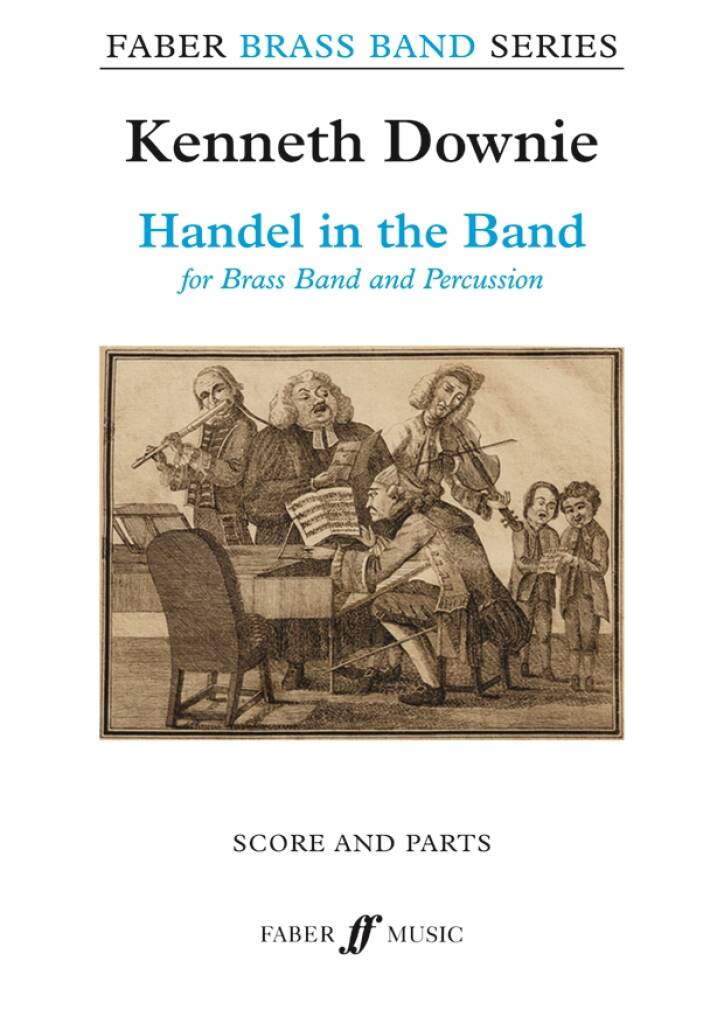
Handel in the Band - Kenneth Downie
Handel in the Band is a virtuoso set of symphonic variations on one of Handel's best known keyboard dances, the Sarabande from his Suite in D minor, HWV 437, based on the Spanish traditional dance La Folia. Kenneth Downie's work was commissioned by Brass Band Treize Etoiles, for performance at the 2013 Swiss National Brass Band Championships, where it was conducted by James Gourlay. The title is a reference to Percy Grainger's popular Handel in the Strand, and is indicative of the witty and theatrical nature of the music, which is more playful than conventional competition pieces and as such offers different challenges to brass bands as well as beingthoroughly entertaining for audiences. Kenneth Downie is one of the most respected and experienced brass band composers. His music has been widely performed and published throughout the brass band world since the 1960s.
Estimated dispatch 5-14 working days
-
 £125.00
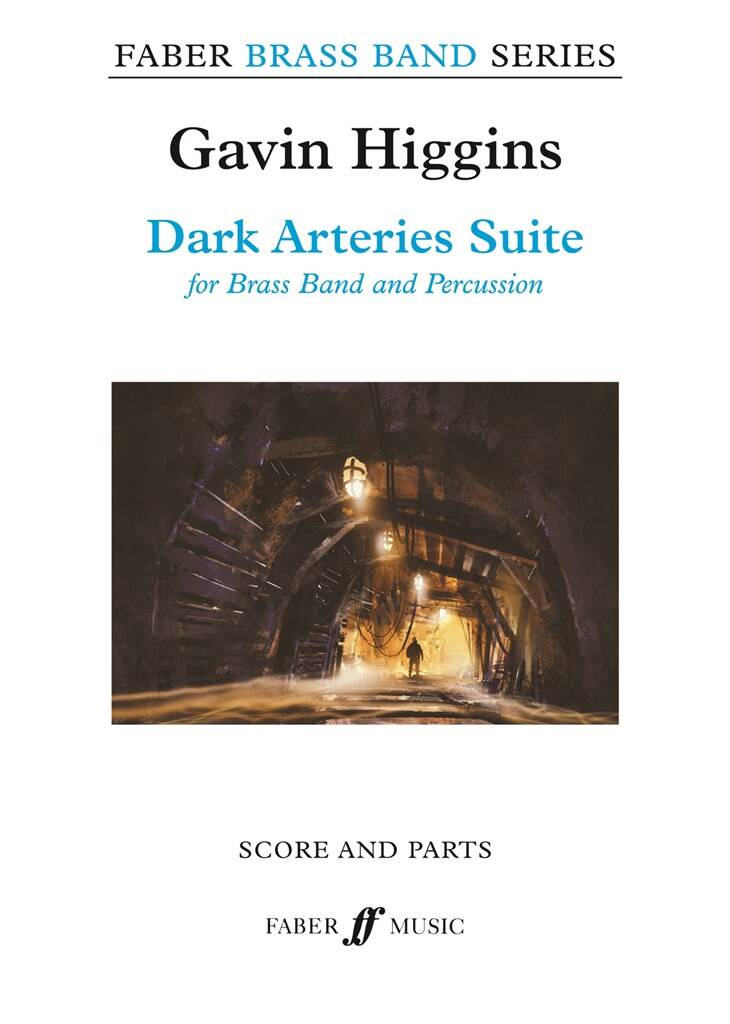
Dark Arteries - Gavin Higgins
Dark Arteries was commissioned by Rambert Dance Company and first performed in May 2015 with the Tredegar Town Band sharing the stage with Rambert dancers. Dark Arteries is a personal and at times highly wrought response to the Miners' Strike and its aftermath. It is in three movements, the first and last are expansive, with widely contrasting sound worlds, from dark, brooding melodies and the haunting sounds of solo flugel horn to wild syncopations on cornets, suggestive of an imposing, but often bleak mining landscape.In 2016 Higgins re-worked Dark Arteries into a virtuoso concert suite, which captures the essence of the work in three connected movements.Dark Arteries Suite was premiered by the National Youth Brass Band of Great Britain, conducted by Bramwell Tovey at the Barbican Centre, London, 22 April 2017.
Estimated dispatch 5-14 working days
-
 £127.30
Joyful Joyful - Ludwig van Beethoven - Bjorn Morten Kjaernes
Beethoven's everlasting melody keeps popping up in different arrangements. This one is inspired by the version made to the movie "Sister Act". Gospel at its best!You may use this piece both in church concerts and entertainments shows.This is a fine number to practice sixteenths syncopations. Often, most players have similar rhythm and phrasing, but with different pitches. Extended harmonies and ensemble balance are also elements to work on. Two groups have special roles:- If you perform the arrangement instrumental, 1st Solo Cornet and Solo Horn are both important. The solos may be played as written or improvised. There is also an optional womens choir arrangement (SSAA)included in the set. - The bass line is also challenging and very important. Make it groove!
Estimated dispatch 5-14 working days
 View Music