
Results
-
 £36.89
A Friend I Have (Brass Band) Fendall Hill
The composer writes: 'This work is a personal interpretation of the well known hymn What a Friend We Have in Jesus. This piece is autobiographical in that it reflects the friendship I have with Jesus, and some of the moods, nature and outcomes of many of those conversations. For example, the Blues section is representative of times where I present my 'blues' to him, and he turns them around. It's very personal and hard to describe the full nature of my relationship, but this music provides a good window. He is certainly my Lord, my Saviour, and my most precious friend.' PDF download includes score and full set of parts. Sheet music available from: UK - www.brassband.co.uk USA - www.solidbrassmusic.com To view a performance video of the work please visit: https://www.youtube.com/watch?v=cN-zYhdwaxM Difficulty Level: 1st Section + Instrumentation: Soprano Cornet Eb Solo Cornet Bb 1st Cornet Bb 2nd Cornet Bb Flugel Horn Bb Solo Horn Eb 1st Horn Eb 2nd Horn Eb 1st Baritone Bb 2nd Baritone Bb 1st Trombone Bb 2nd Trombone Bb Bass Trombone Euphonium 1-2 Bb Bass Eb Bass Bb Drum Kit Temple Blocks Timbales
In Stock: Estimated dispatch 1-3 working days
-
 £51.65
A Renaissance Christmas (Brass Band) Kevin Norbury
VIEW SCORE PDF This magnificent festive suite was written by Kevin Norbury for the Pierre Elliott Trudeau High School Wind Symphony and features several well known carols set in a Renaissance style. Here it has been set for brass band. Three contrasting movements comprise the work: i. Processional (Personent hodie - On this day earth shall ring) This is a short piece imagining a torchlight Yuletide procession (perhaps bearing the traditional roasted wild boar), using a well-known Christmas melody from the large collection of music compiled in the 16th century called Piae Cantiones (1582). The tune is presented twice with accompanying, related melodic material. ii. Pastorale (Quem pastores laudavere - Shepherds sang their praises o'er him) This is a 14th-century melody which was originally collected by Michael Praetorius at the end of the 16th-century. The treatment throughout is very lyrical without overly complex harmonies. The melody is heard three times with brief linking episodes and a short coda. iii. Celebration! (In dulci jubilo - In sweet celebration - Ding-dong merrily on high)) This magnificent 13th-century melody was also a part of Michael Praetorius's collection. It is traditional associated with the words 'Good Christian men, rejoice!' The opening is a straight transcription of the great chorale prelude for organ by J.S.Bach. After the grandeur of the opening, the tune is heard in more of a 'folky' style. A lot of related melodic material is then presented before the tune Ding-dong merrily on high is heard. After another episode of previously used music In dulci jubilo reappears in a joyful conclusion to the piece. Sheet music available from: UK - www.brassband.co.uk USA - www.solidbrassmusic.com Difficulty Level: 3rd Section + Instrumentation: Soprano Cornet Eb Solo Cornet Bb Repiano Cornet Bb 2nd Cornet Bb 3rd Cornet Bb Flugel Horn Bb Solo Horn Eb 1st Horn Eb 2nd Horn Eb 1st Baritone Bb 2nd Baritone Bb 1st Trombone Bb 2nd Trombone Bb Bass Trombone Euphonium Bb Bass Eb Bass Bb Percussion 1-4
In Stock: Estimated dispatch 1-3 working days
-
 £44.27
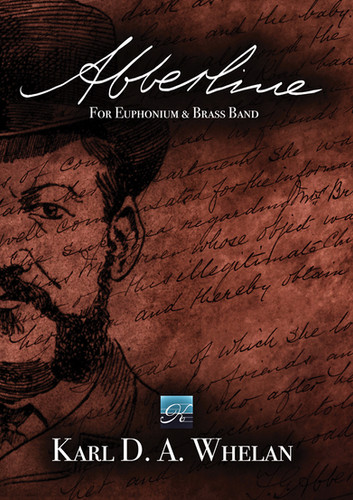
Abberline (Euphonium Solo with Brass Band) Karl Whelan
Inspired by the infamous investigation into Jack the Ripper, Abberline follows Detective Inspector Frederick Abberline through the mist-shrouded streets of Victorian London in his desperate pursuit of a killer who remains forever just out of reach. Scored for brass band and solo euphonium, the piece blends atmospheric textures, shifting musical identities, and virtuosic demands to capture a narrative that is as haunting as it is unresolved. The piece opens in a world of shadows - the foggy alleys of Whitechapel - where tension simmers beneath the surface. The euphonium enters cautiously, as if stalking unseen figures, echoing the danger and uncertainty that cloaked the city in fear. This eerie calm is broken suddenly: the Ripper strikes. The moment is brief but brutal, leaving only silence and horror in its wake. From here, the music shifts into an uneasy, angular waltz: the figure of Abberline takes center stage, portrayed by the soloist as he investigates the aftermath. The waltz is melodically off-kilter and harmonically unstable, capturing both the grotesque nature of the crime and the detective's mental burden. The scene then returns to the streets - but this time, the musical material is more intricate, fragmented, and tense. The threat has deepened, and again the silence is shattered by violence. A second, slightly altered waltz follows, further reflecting Abberline's obsessive descent into the case. In the final section, the chase begins in earnest. Themes from earlier return in quick succession, intensified and overlapping as time runs out. The ancient Dies Irae chant is woven into the texture, evoking fate and judgment. In a final, erratic surge, the euphonium and band race toward an ending that is breathless and unresolved - a reflection of history's unanswered questions and the ghost that always stayed one step ahead. To view a rolling score video of the work please visit https://www.youtube.com/watch?v=i59xYzJRMaI Duration: approx. 7.30 minutes This PDF download includes parts and score. Sheet music available at www.brassband.co.uk (UK) or https://satradecentral.org (USA) Instrumentation: Euphonium Soloist Bb Soprano Cornet Eb Solo Cornet 1-2 & 3-4 Bb Repiano Cornet Bb 2nd Cornet Bb 3rd Cornet Bb Flugel Horn Bb Solo Horn Eb 1st Horn Eb 2nd Horn Eb 1st Baritone Bb 2nd Baritone Bb 1st Trombone Bb 2nd Trombone Bb Bass Trombone Euphonium (tutti) Bb Bass Eb Bass Bb Timpani Percussion 1-3
In Stock: Estimated dispatch 1-3 working days
-
 £33.20
Adagietto from Symphony No.5 (Brass Band) Mahler arr. Keith M. Wilkinson
Gustav Mahler's Symphony No. 5 is arguably his best known and most loved composition. The Adagietto from that symphony, often performed on its own, is scored for strings and harp only and is widely regarded as one of the most beautiful tunes ever written. It is marked sehr langsam (very slow) and is immensely serene and tranquil, often performed at commemorative events such as the concert following the events of September 11th, 2001. It has been said that the movement is a love song to the composer's wife, Alma. The symphony was composed in 1901 and 1902 and this movement received its British premiere in 1909 at a Promenade concert directed by Henry Wood. The Adagietto received additional popularity when used in the 1971 film Death In Venice. This arrangement by Keith M. Wilkinson shortens the movement slightly and now gives brass bands the opportunity to programme this delightful work. To view a rolling score video of the work please visit https://www.youtube.com/watch?v=PxQRQy534lM Duration: Approx. 5.20 minutes Difficulty Level: 4th Section + PDF download includes parts and score. Sheet music available from www.brassband.co.uk (UK) or https://satradecentral.org (USA) Instrumentation: Soprano Cornet Eb Solo Cornet Bb Repiano Cornet Bb 2nd Cornet Bb 3rd Cornet Bb Flugel Horn Bb Solo Horn Eb 1st Horn Eb 2nd Horn Eb 1st Baritone Bb 2nd Baritone Bb 1st Trombone Bb 2nd Trombone Bb Bass Trombone Euphonium Bb Bass Eb Bass BbTimpani Percussion 1-2
In Stock: Estimated dispatch 1-3 working days
-
 £29.51
Alegria (Cornet Feature with Brass Band) Barrie Gott
This foot-tapping Latin-style cornet feature showcasing the front row was written by Barrie Gott for the Brisbane Excelsior Band. The composer writes: 'I had wanted to write something in this genre after the success of the third movement of the Jazz Suite. Entertainment numbers are always needed for park and popular concerts. It is important that the rhythm section maintains a consistent tempo. They can be featured also. The samba rhythm and feel should be maintained throughout. The occasional sombrero would not be out of place. Enjoy!' To view a follow-the-score video of the work please visit www.youtube.com/watch?v=TpFZPX3glxo PDF download includes score and parts. Sheet music available from: UK - www.brassband.co.uk USA - https://satradecentral.org Difficulty Level: 3rd Section + Length: 2.40 minutes Instrumentation: Soprano Cornet Eb Solo Cornet Bb Repiano Cornet Bb 2nd Cornet Bb 3rd Cornet Bb Flugel Horn Bb Solo Horn Eb 1st Horn Eb 2nd Horn Eb 1st Baritone Bb 2nd Baritone Bb 1st Trombone Bb 2nd Trombone Bb Bass Trombone Euphonium Bb Bass Eb Bass Bb Drum Kit Claves Maracas Cowbell Xylophone
In Stock: Estimated dispatch 1-3 working days
-
 £47.96
Allegro Marcato from Symphony No.5 (Brass Band) Prokofiev arr. Fendall Hill
The premiere of Prokofiev's 5th Symphony took place on January 13, 1945, with Prokofiev himself conducting the USSR State Symphony Orchestra. During the performance, artillery fire could be heard in the distance, celebrating the Red Army's victory over German forces and providing a stark reminder of the ongoing conflict. Prokofiev's Symphony No. 5 emerged as a symbol of hope and human resilience. The 2nd movement is the Allegro marcato, a lively scherzo. The piece is energetic, full of contrasts and dynamic melodies, and embodies a spirit of defiance. It is one of the arranger's favourite pieces, and translates brilliantly to brass band for an orchestral transcription. To view a rolling score video of the work please visit www.youtube.com/watch?v=kM642RBFO2E PDF download includes score and parts. Sheet music available from: UK - www.brassband.co.uk USA - https://satradecentral.org Difficulty Level: 1st Section + Length: 8.45 minutes Instrumentation: Soprano Cornet Eb Solo Cornet Bb Repiano Cornet Bb 2nd Cornet Bb 3rd Cornet Bb Flugel Horn Bb Solo Horn Eb 1st Horn Eb 2nd Horn Eb 1st Baritone Bb 2nd Baritone Bb 1st Trombone Bb 2nd Trombone Bb Bass Trombone Euphonium Bb Bass Eb Bass Bb Timpani Percussion 1-3
In Stock: Estimated dispatch 1-3 working days
-
 £40.58
Allegro Spirito from Symphony No.2 (Brass Band) Borodin arr. Harold Burgmayer
Alexander Borodin's Second Symphony in B minor dates from the years 1869-76, a time when he was also working on his enduring opera Prince Igor. Flavors of the exotic and outdoor celebration seemed to have spilled over from the opera in this brilliant sonata movement. Borodin seldom quotes Russian folk tunes, but his graceful melodic lines are permeated with the spirit of his native song, supported by iridescent harmonies and bright colors. This arrangement for brass band was premiered by The Salvation Army's New York Staff Band, with Ronald Waiksnoris conducting, at Alice Tully Hall in New York City on 11 April 2001. This complete transcription of the Finale movement of Borodin's Second Symphony has an approximate duration of 6.40 minutes. To alternatively utilize the piece as an opener, a cut from bar 173 to 272 is indicated with Coda signs, reducing the piece to 4.30 seconds. To view a rolling score video of the work please visit www.youtube.com/watch?v=x4SqSXLopRo Difficulty Level: 2nd Section + PDF download includes parts and score. Sheet music available at www.brassband.co.uk (UK) or https://satradecentral.org (USA) Instrumentation: Soprano Cornet Eb Solo Cornet Bb Repiano Cornet Bb 2nd Cornet Bb 3rd Cornet Bb Flugel Horn Bb Solo Horn Eb 1st Horn Eb 2nd Horn Eb 1st Baritone Bb 2nd Baritone Bb 1st Trombone Bb 2nd Trombone Bb Bass Trombone Euphonium Bb Bass Eb Bass Bb Timpani Percussion 1-3
In Stock: Estimated dispatch 1-3 working days
-
 £33.20
Alleluia (Brass Band) Ralph Manuel arr. Mark Ford
In composing Alleluia, Ralph Manuel created a masterwork for a capella choir. Through its melodic simplicity and warm harmonic textures, it beautifully expresses the sentiments of "Alleluia," its only word of text. The numerous timbral possibilities of brass and percussion provides an exciting palette of sound for this arrangement. This arrangement for brass band is from the pen of Mark Ford in a delightful setting sure to be popular with audiences. To view a rolling score video of the work please visit www.youtube.com/watch?v=Cg4MDGVBpns Duration: 5.00 minutes Difficulty Level: 3rd Section + This PDF download includes the full score and parts. Sheet music available at www.brassband.co.uk (UK) or https://satradecentral.org (USA) Instrumentation: Soprano Cornet Eb Solo Cornet 1&2 Bb Solo Cornet 3&4 Bb Repiano Cornet Bb 2nd Cornet Bb 3rd Cornet Bb Flugel Horn Bb Solo Horn Eb 1st Horn Eb 2nd Horn Eb 1st Baritone Bb 2nd Baritone Bb 1st Trombone Bb 2nd Trombone Bb Bass Trombone Euphonium Bb Bass Eb Bass Bb Timpani Percussion 1-2 Tuned Percussion
In Stock: Estimated dispatch 1-3 working days
-
 £66.42
Armistice at Flanders Fields (Brass Band) Dwayne Bloomfield
This poignant and powerful work for brass band by Dwayne Bloomfield describes the day peace was announced to end World War I. The piece was written in 2023 to be played by bands around the world to mark Armistice Day. The composer writes: 'Unless you were there, it's impossible to imagine what it must have been like the day peace was announced ending World War I. The feelings soldiers experienced, who after years of fighting and suffering, to know it was over and they would return home to see family and loved ones again. This piece tries to tell their story. The work begins by approaching the front, distant artillery and battle sounds heard while the carnage and loss of lives was already known to the world. The band builds as we enter the thick of battle, the death and destruction, the conditions faced and the loss of hope of ever surviving. The next section, in 7/8 time, reflects the two sides fighting - both sides attacking and defending with mostly little result, but for the loss of more lives. Two euphoniums then depict the news and hope of peace talks. However, fighting did continue right up to the very end and on the last day there would be another 2,738 casualties. The Canadians were still battling to capture the town of Mons that morning. A song is sung in reflection of the estimated 5.5 million allied soldiers who lost their lives during World War I, then a clock ticks down the final minutes. The last three known casualties are depicted with French soldier Augustin Trebuchon, killed at 10:45am by a single shot as he rushed down the trenches to spread the news of coming peace; Canadian George Lawrence Price killed by a sniper round at 10:58am at the battle of Mons, and lastly a machine gun burst that killed American Henry Gunther, who is believed to have fallen on the 11th hour. Bells then toll ringing around the world announcing the end of the war. After years of war, it must have been jubilation for the families at home knowing their loved ones would be returning to them. The band builds with a hymn for peace as a final tribute to those who fought, before the piece resides with one of the most dreaded sounds at that time, the knock on the door from a telegram delivery boy or better known then as the Angels of Death. It wasn't just the 2,738 families from the casualties of the last day who would receive such a knock, but many more who expected their loved ones to be returning home would instead find out they were instead killed in the last weeks. So close. Driving around the battlefields today one comes across many intersections in the countryside which have cemetery signposts pointing in every direction. While the last post sounds in ceremonies today, this last bugle call instead depicts the horrors, devastation and death the soldiers faced during the war and right up the 11th hour of the 11th day of the 11th month, Armistice at Flanders Fields.' To view a video of Dallas Brass Band performing the work please visit https://www.youtube.com/watch?v=ljfyVz3cMgk Duration: Approx. 15.00 minutes Difficulty Level: 2nd Section + PDF download includes parts and score. Sheet music available from www.brassband.co.uk Instrumentation: Soprano Cornet Eb Solo Cornet Bb Repiano Cornet Bb 2nd Cornet Bb 3rd Cornet Bb Flugel Horn Bb Solo Horn Eb 1st Horn Eb 2nd Horn Eb 1st Baritone Bb 2nd Baritone Bb 1st Trombone Bb 2nd Trombone Bb Bass Trombone Euphonium Bb Bass Eb Bass Bb Percussion 1-3
In Stock: Estimated dispatch 1-3 working days
-
 £40.58
At the Going Down of the Sun (Brass Band) Mike Fitzpatrick
At The Going Down Of The Sun is a deeply moving musical tribute dedicated to the courage, resilience, and ultimate sacrifice of those who have defended the nation of Australia. Inspired by the heroic legacy of the 2/25th Battalion and their storied defense of the Kokoda Track during World War II, this composition serves as a solemn reminder of the immense gratitude owed to its fallen heroes. This piece is born from a legacy of service. It was composed in honor of Keith Fitzpatrick, who enlisted in the AIF on November 28, 1941. Keith served two tours in New Guinea, spending 359 days on the treacherous Kokoda Track. Keith Fitzpatrick lived to celebrate his 100th birthday in 2023, leaving behind a profound legacy through his wife of 67 years, Valda, and three generations of descendants. At The Going Down Of The Sun captures this spirit of endurance and devotion. It is an ideal addition to any program focused on: Anzac Day & Remembrance Day services Military Commemorations Historical Tributes To view a rolling score video of the work please visit www.youtube.com/watch?v=ydO9PKOKTpk Duration: 7.00 minutes Difficulty Level: 3rd Section + This PDF download includes the full score and parts. Sheet music available at www.brassband.co.uk (UK) or https://satradecentral.org (USA) Instrumentation: Soprano Cornet Eb Solo Cornet 1&2 Bb Solo Cornet 3&4 Bb Repiano Cornet Bb 2nd Cornet Bb 3rd Cornet Bb Flugel Horn Bb Solo Horn Eb 1st Horn Eb 2nd Horn Eb 1st Baritone Bb 2nd Baritone Bb 1st Trombone Bb 2nd Trombone Bb Bass Trombone Euphonium Bb Bass Eb Bass Bb Percussion Tubular Bells
In Stock: Estimated dispatch 1-3 working days
 Watch video