
Results
-
£50.00
Cottonopolis - Harper, E
Commissioned as a signature march for Greater Manchester Youth Brass Band, Cottonopolis is the 19th Century nickname for Manchester.The trio section incorporates Ewan MacColl's well-known folk tune 'Dirty Old Town', reflecting the industrial heritage of the area.3rd Section +Duration 4 mins 30 seconds
In Stock: Estimated dispatch 1-3 working days
-
£50.00
King Kong March - Steiner, M - Harper, P
From the original 1933 King Kong movie, this hidden gem of a march is sure to become a big favourite in the band world.Philip Harper has woven Gerschwin's Rhapsody in Blue into the Trio theme to enhance the throwback to the time of the Great Depression in the USA.1st Section +Duration 4 mins Click to listen - Courtesy of Cory Band
In Stock: Estimated dispatch 1-3 working days
-
£40.00
The Mariner - Harper, M
Composed by upcoming talent Morris Harper at the age of 17, this is a traditional brass band march with a seafaring twist, partially using the shanty 'Blow the Man Down' as its TRIO theme.3rd Section +Duration 3 mins 'The Mariner' courtesy of Cory Band.
In Stock: Estimated dispatch 1-3 working days
-
 £39.95
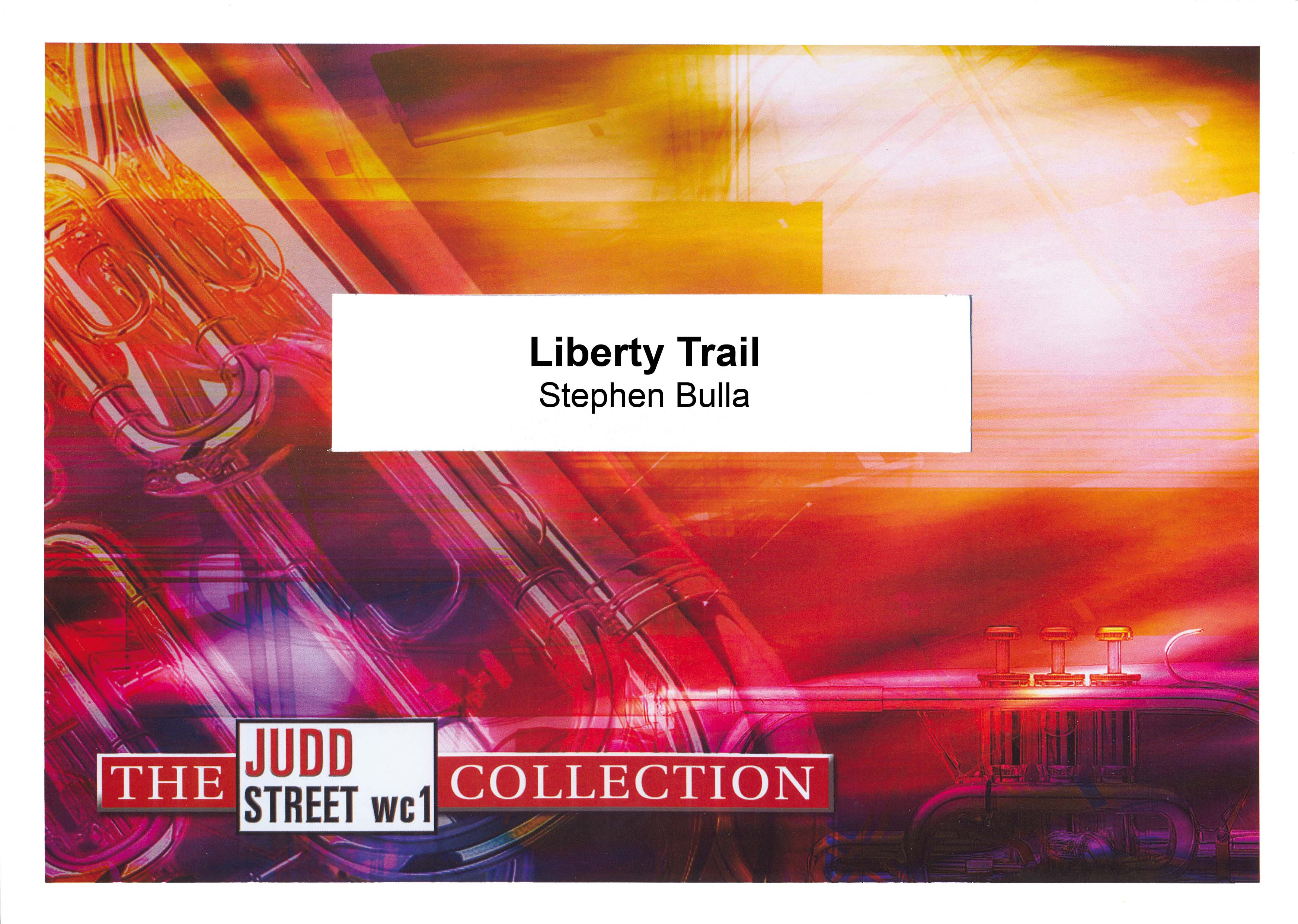
Liberty Trail (Brass Band - Score and Parts)
The Melbourne Staff Band celebrated its 125th anniversary in 2015 and this work was commissioned by Staff Bandmaster Ken Waterworth to feature in their programmes throughout the year.The music opens with fiery rhythmic figures, drawing on the band's technical brilliance. As the music progresses there are hints of traditional marches from early years, both in form and the minor key harmony used.The Trio section features The Homeward Trail, a song from the pen of Colonel Arthur Arnott, a Salvation Army officer who spent the majority of his career serving in Australia. The tune is then developed thematically and, following an interlude and key change, receives another treatment filled with fanfare and flourish that leads into the concluding moments of the work.Just prior to the closing bars, the music pays a brief homage to Australian composer Arthur Gullidge with a quote from his classic march Liberty (G.S. 1296), published in 1948, as a final salute to the great music that has come from this country.
Estimated dispatch 7-14 working days
-
 £42.95
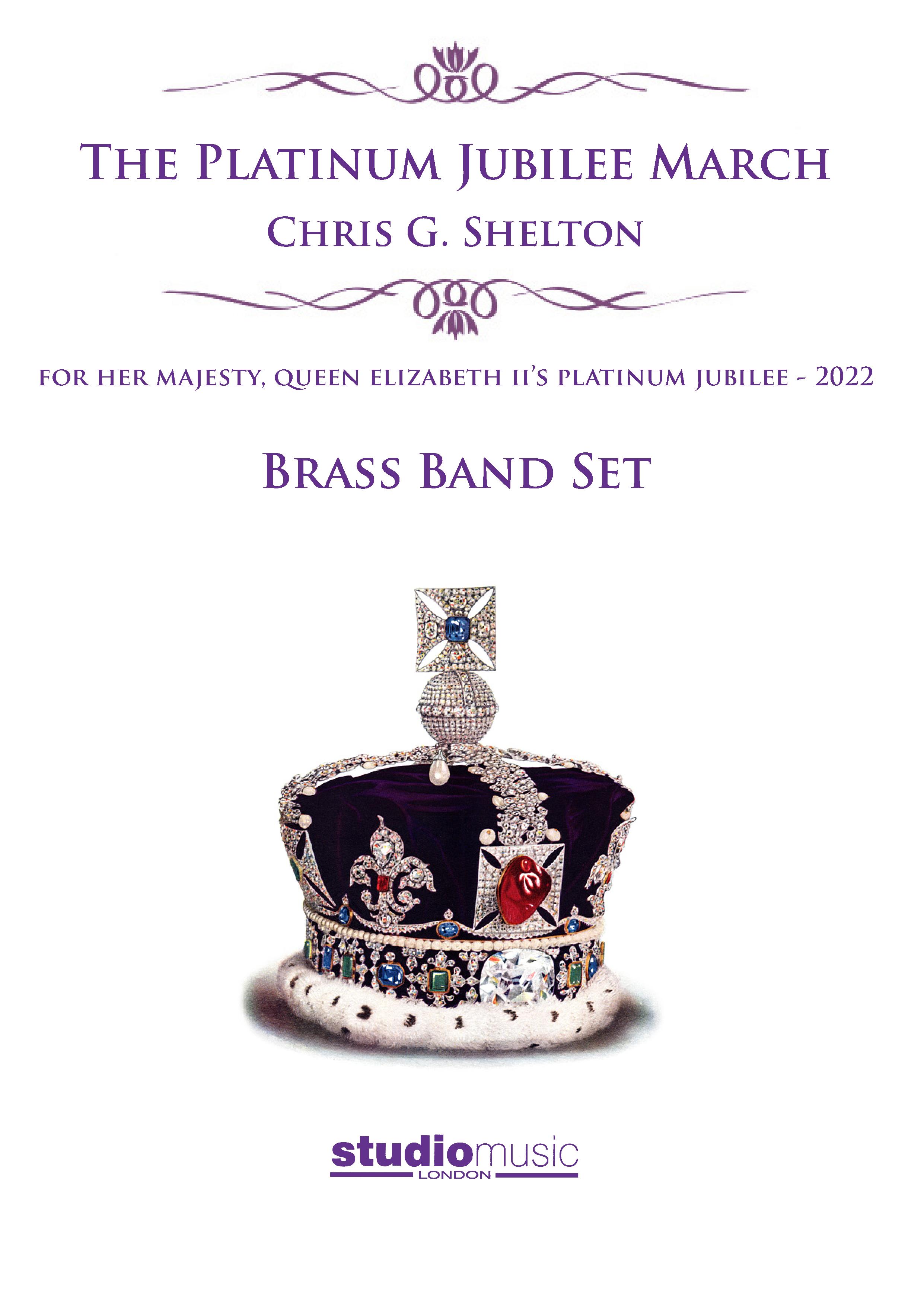
The Platinum Jubilee March (Brass Band - Score and Parts)
The Platinum Jubilee March was written to celebrate Her Majesty, Queen Elizabeth II's seventy-year reign as monarch of the United Kingdom. Its premiere was televised live around the world as part of the Queen's Birthday Parade which marked the start of the national Platinum Jubilee celebrations.The Queen's Birthday Parade 2022 saw the First Battalion of the Irish Guards trooping their colour. To reflect this, the march begins in a celebratory style and features a melody based around the opening motif of Let Erin Remember - the regimental slow march of the Irish Guards. In traditional style, the march develops excitement both harmonically and melodically, creating a strong sense of drive before reaching a stately trio. This section has a very regal and noble feel, lending subtle harmonic nods to two of the most quintessentially British composers, Gustav Holst, and Sir William Walton. The march culminates in a bold grandioso, featuring semi-quaver lines that are underpinned by a driving trombone countermelody. A forthright restatement of the introductory fanfare brings the march to a very definite and resolved ending.
Estimated dispatch 7-14 working days
-
 £24.95
Judd: Unconquered
Those familiar with the composers compositions will know that his style of march writing was quite individualistic, being characterised by a rather aggressive and syncopated first part, generally in the minor mode, contrasting with a broad legato melody at the trio. Unconquered is no exception to this pattern and it is felt that it will prove useful for both festival and processional use.
Estimated dispatch 7-14 working days
-
 £49.99
Salute to the Victor (Brass Band - Score and Parts)
Salute to the Victor is in traditional march form and contains, as a tribute to Victor Grieve who was a devotee of English music (in particular that of Sir Edward Elgar), a short quote from Elgars Sea Pictures in the trio. Salute to the Victor was commissioned by Helen, Alex and James Grieve for the Golden Kangaroos (Hornsby Concert Band) from Sydney, Australia, in memory of their parents, Louise and Victor Grieve, Founder and Director.
Estimated dispatch 7-14 working days
-
 £44.95
Follow the Flame (from the Torchbearer) (Flugel Horn or Cornet Solo with Brass Band)
The Torchbearer was commissioned as the test piece for the 2009 National Brass Band Championships of Great Britain and the FABB Open Contest respectively and pays musical tribute to Eric Ball, considered by many to be the 20th century's most influential composer of brass band music. The thematic material is derived from the first phrase of the trio from Eric Ball's Salvation Army march, Torchbearers.Follow the Flame is a main theme from the larger work, now fully metamorphosised and mirroring in music a concept at the centre of Ball's broader philosophy, that of transformation.
Estimated dispatch 7-14 working days
-
 £95.00
A Wartime Sketchbook (Brass Band - Score and Parts)
Early in 1941 William Walton, 39, received his call-up papers. He was by then one of the most eminent of British composers and was exempted from military service on condition that he provided music for films deemed to be of 'national importance'. Scoring Lawrence Olivier's Shakespeare epic Henry V in 1943 was the most substantial of these wartime projects. His role in patriotic films from 1941 and 42 like The Foreman went to France, Next of Kin, Went the day Well and The First of the Few was to provide appropriate title music and some underscoring at key moments. Walton extracted the most substantial portions of the latter as the popular Spitfire Prelude and Fugue for orchestra. The remaining music remained unpublished until 1990, when Christopher Palmer assembled the highlights into A Wartime Sketchbook. I was intrigued to hear these examples of Walton's wartime music and having discovered that they would fit naturally and idiomatically onto the brass band, I arranged six of the numbers into a suite for Besses o' th' Barn Band, which I was conducting at the time.In 1995 the brass band suite was recorded by the famous Black Dyke Mills Band as part of an all Walton album which I produced for the ASV label (ASV CD WHL 2093). This award- winning CD also included Walton's First Shoot, in the edition by Elgar Howarth, my transcription of movements from Music for Children and two substantial brass versions by Edward Watson of the suite from Henry V (with narrator) and the March and Siegfried Music from The Battle of Britain music.Prologue: This is the stirring title music from Went the day Well, a screen play by Graham Greene about a German airborne invasion of an English village. The main theme leads toBicycle Chase: Characteristic musical high-jinks for J.B.Priestley's The Foreman went to France.Refugees: From the same film, this is a poignant accompaniment to the long march of refugees. As Ernest Irving, the film's musical director, put it, "this really makes your feet sore and your knees sag."Young Siegfrieds: This lively movement comes from the music that Walton composed for The Battle of Britain in 1968, with the assistance of Malcolm Arnold, but which the film's producer rejected. It portrays first the Berliners, cheerfully ignoring the black-out and then, in the trio, the Young Siegfrieds of the Luftwaffe, courtesy of a parody of Siegfried's horn call from Wagner's opera.Romance: A soldier and a Dutch refugee snatch a few tender moments together in Next of Kin.Epilogue: At the end of The Foreman went to France, the French look forward with hope and optimism to eventual liberation.- Paul HindmarshDuration: 14.00
Estimated dispatch 7-14 working days
-
£40.00
A Wartime Sketchbook (Brass Band - Score only)
Early in 1941 William Walton, 39, received his call-up papers. He was by then one of the most eminent of British composers and was exempted from military service on condition that he provided music for films deemed to be of 'national importance'. Scoring Lawrence Olivier's Shakespeare epic Henry V in 1943 was the most substantial of these wartime projects. His role in patriotic films from 1941 and 42 like The Foreman went to France, Next of Kin, Went the day Well and The First of the Few was to provide appropriate title music and some underscoring at key moments. Walton extracted the most substantial portions of the latter as the popular Spitfire Prelude and Fugue for orchestra. The remaining music remained unpublished until 1990, when Christopher Palmer assembled the highlights into A Wartime Sketchbook. I was intrigued to hear these examples of Walton's wartime music and having discovered that they would fit naturally and idiomatically onto the brass band, I arranged six of the numbers into a suite for Besses o' th' Barn Band, which I was conducting at the time.In 1995 the brass band suite was recorded by the famous Black Dyke Mills Band as part of an all Walton album which I produced for the ASV label (ASV CD WHL 2093). This award- winning CD also included Walton's First Shoot, in the edition by Elgar Howarth, my transcription of movements from Music for Children and two substantial brass versions by Edward Watson of the suite from Henry V (with narrator) and the March and Siegfried Music from The Battle of Britain music.Prologue: This is the stirring title music from Went the day Well, a screen play by Graham Greene about a German airborne invasion of an English village. The main theme leads toBicycle Chase: Characteristic musical high-jinks for J.B.Priestley's The Foreman went to France.Refugees: From the same film, this is a poignant accompaniment to the long march of refugees. As Ernest Irving, the film's musical director, put it, "this really makes your feet sore and your knees sag."Young Siegfrieds: This lively movement comes from the music that Walton composed for The Battle of Britain in 1968, with the assistance of Malcolm Arnold, but which the film's producer rejected. It portrays first the Berliners, cheerfully ignoring the black-out and then, in the trio, the Young Siegfrieds of the Luftwaffe, courtesy of a parody of Siegfried's horn call from Wagner's opera.Romance: A soldier and a Dutch refugee snatch a few tender moments together in Next of Kin.Epilogue: At the end of The Foreman went to France, the French look forward with hope and optimism to eventual liberation.- Paul HindmarshDuration: 14.00
Estimated dispatch 7-14 working days
 View Music