
Results
-
The Giddy Goat - Traditional Swiss - Daniel von Siebenthal
The Giddy Goat is a silly folk song that everyone knows in Switzerland. It is about a white goat that does not want to get milked, so she kicks the milker. Thinking that this is because the goat is white, the owner decides that he will buy a brown one instead. From there on, people make up their own verses in which the goat is often replaced with past loves, enemies, and anyone or anything worthy of ridicule. Daniel, the arranger, lives in Gstaad in the Saanen district and the "Saanen goat" is a breed of white goat known throughout the world. As a farm boy, he did his share of goat milking and received the occasional hoof under his chin for his trouble. So, this piece is a tribute to a local breed that became world-famous, especially in America where the tune also meets its counterpart Billy Grogan's Goat (a similar silly song). The Giddy Goat should always be played as a "silly song" reflecting the goat's nature; capricious and cantankerous. The low bass line is important in Swiss folk music and should approximate to a plucked string-bass whose strings are dampened, to give it a pulsating feel. For those who would like to yodel we include the following Swiss tongue twister:- Holeduli duliduli, holeduli duli duli duuli, Holeduli duliduli, holeduli duli duli duu
-
 £42.00
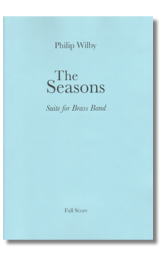
The Seasons (Score only) - Philip Wilby
Composer Philip Wilby writes... "The music of this little suite of pieces traces the year's change; from a cold, late autumn to an indoor winter; though a spring waltz to a final open-air march. My aim was to provide music which is both enjoyable to rehearse and perform but not forbiddingly difficult to play". The work's popularity among brass bands the world over suggests that he hit the nail on the head - audiences love it, too!
Estimated dispatch 7-9 working days
-
 £52.00
The Seasons (Parts only) - Philip WIlby
Composer Philip Wilby writes... "The music of this little suite of pieces traces the year's change; from a cold, late autumn to an indoor winter; though a spring waltz to a final open-air march. My aim was to provide music which is both enjoyable to rehearse and perform but not forbiddingly difficult to play". The work's popularity among brass bands the world over suggests that he hit the nail on the head - audiences love it, too!
Estimated dispatch 7-9 working days
-
 £33.62
Fanfare for the Future (Brass Band) Robbert Vos
Fanfare for the Future is a stirring and optimistic piece of music that celebrates the possibilities of the future. The piece is scored for brass band and percussion, and it features two contrasting themes: an exciting fanfare and a hymn-like melody. Written during Covid, the fanfare represents the challenges and obstacles that we face in the world, while the hymn represents our hopes and dreams for the future. The two themes come together in a grand finale, which represents our determination to overcome the challenges of the present and build a better future for ourselves and for generations to come. To view a follow-the-score video of the work please visit www.youtube.com/watch?v=tBbFpNFd3I4 PDF download includes score and full set of parts. Sheet music available from: UK - www.brassband.co.uk USA - www.solidbrassmusic.com Difficulty Level: 2nd Section + This title is also available for brass choir with percussion here. Instrumentation: Soprano Cornet Eb Solo Cornet Bb Repiano Cornet Bb 2nd Cornet Bb 3rd Cornet Bb Flugel Horn Bb Solo Horn Eb 1st Horn Eb 2nd Horn Eb 1st Baritone Bb 2nd Baritone Bb 1st Trombone Bb 2nd Trombone Bb Bass Trombone Euphonium Bb Bass Eb Bass Bb Percussion 1-3
In Stock: Estimated dispatch 1-3 working days
-
 £45.00
Believe (From 'The Polar Express')
ABOUT THIS PIECE: Capture the magic and wonder of Christmas with this beautiful arrangement of Believe, from the beloved film The Polar Express. Composed by the award-winning songwriter Glen Ballard and legendary film composer Alan Silvestri, Believe is a heartwarming ballad that celebrates the themes of faith, hope, and the spirit of Christmas. Originally performed by Josh Groban, the song earned an Academy Award nomination and has become a seasonal favourite around the world. This arrangement brings the enchanting melody and emotional depth of the original to life, making it a perfect choice for Christmas concerts. Believe offers a wonderful opportunity for your band to connect with audiences and celebrate the magic of the holiday season. ENSEMBLE: Standard British Brass Band WHEN YOU BUY THIS PRODUCT, YOU GET: High-quality printed score and parts LEVEL: 1 LISTEN: DURATION: 4-minutes 40-seconds EXAMPLE SCORE: Click here LEVEL GUIDE: Level 1- Accessible to all Level 2 - c. UK third section and higher Level 3 - c. UK second section and higher Level 4 - c. UK first section and higher Level 5 - c. UK championship section level
Estimated dispatch 5-7 working days
-
 £45.00
This is the Moment
ABOUT THIS PIECE: Capture the drama and passion of Broadway with this stunning arrangement of This Is the Moment from the musical Jekyll and Hyde. Originally composed by Frank Wildhorn with lyrics by Leslie Bricusse, this powerful ballad has become a defining anthem of triumph and self-realisation, performed by countless artists around the world. This arrangement brings the emotional intensity of the original, offering a rich and rewarding experience for both players and audiences. With an unforgettable melody, This Is the Moment is a perfect choice for concerts, entertainment contests, or special occasions where you want to make an unforgettable impact. Whether you're a fan of musical theatre or simply looking for a piece that showcases the full expressive range of your band, this arrangement of This Is the Moment is sure to inspire and captivate. ENSEMBLE: Standard British Brass Band (with adaptations) WHEN YOU BUY THIS PRODUCT, YOU GET: High-quality printed score and parts LEVEL: 2 LISTEN: Click here (Cornet Solo Version) DURATION: 4 minutesEXAMPLE SCORE: Coming soon Looking for the cornet solo version of this piece? Click here. LEVEL GUIDE: Level 1- Accessible to all Level 2 - c. UK third section and higher Level 3 - c. UK second section and higher Level 4 - c. UK first section and higher Level 5 - c. UK championship section level
Estimated dispatch 5-7 working days
-
£100.00
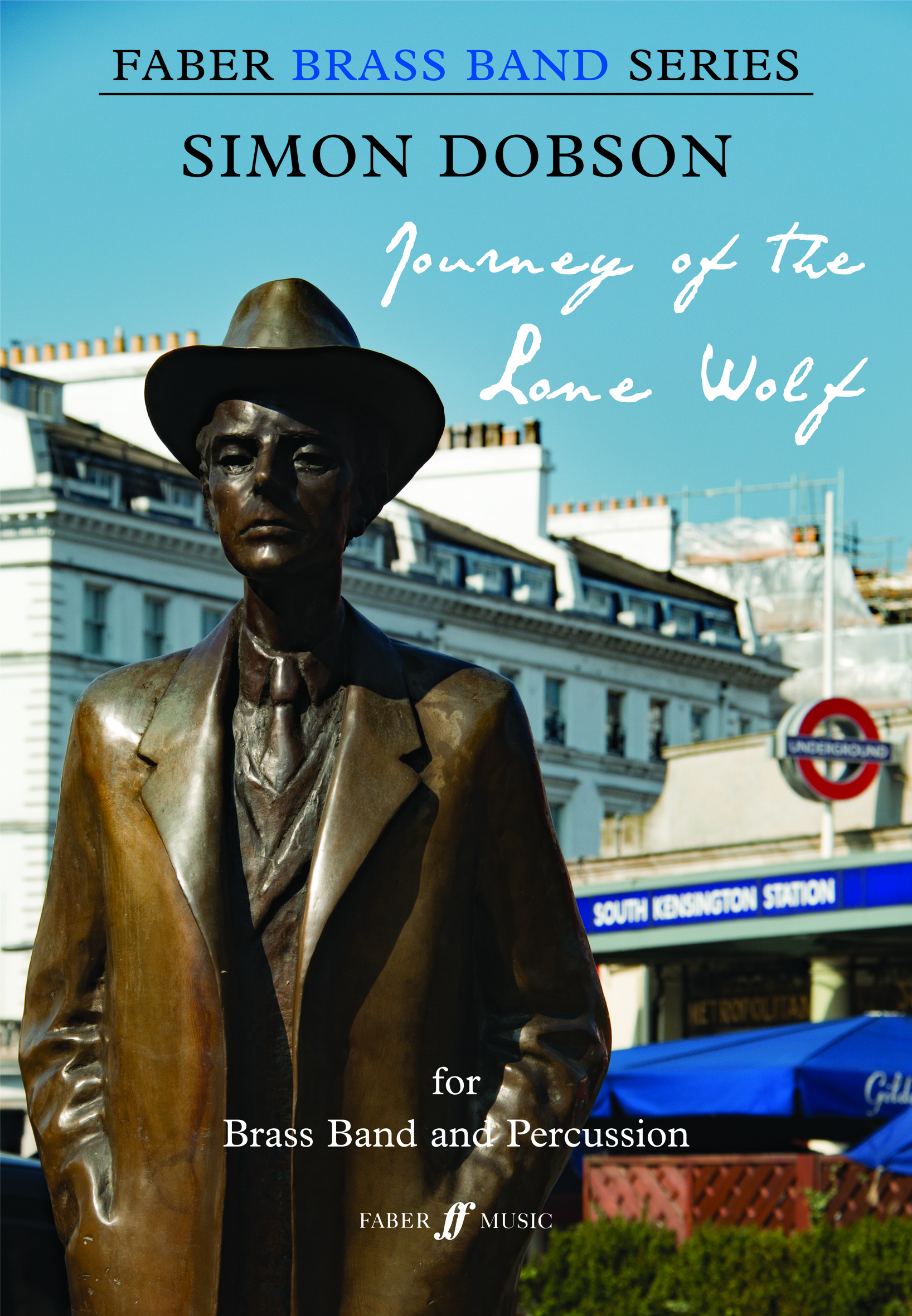
Journey of the Lone Wolf (score & parts) - Simon Dobson
Journey of the Lone Wolf tells the story of the hungarian composer Bla Bartk. It was commissioned by Dr. Nicholas Childs for Black Dyke Band, who gave the first performance on Sunday 26 January 2014 at the Bridgewater Hall, Manchester as part of the Royal Northern College of Music Festival of Brass.The composer's programme notes for each movement: 1. Capturing the Peasants' SongAfter the upheaval of moving to Budapest the young Bla Bartk meets Zoltn Kodly and the pair embark on summertime adventures throughout the Hungarian countryside to collect and catalogue the astonishing variety (both harmonically and rhythmically) of gypsy and folk music heard in the Balkans. The arrival of WW1 plunges Bartk's beloved Hungary into chaos.2. Night MusicBartk was at times a cold man, aloof and lonely. The odd moments of tenderness he showed are portrayed here in a series of evocative solos. His brief but intense affairs speak of a love he could only long for. Jazz is my night music and here there are hints of what Bartk may have heard in the USA later in his life.3. Flight and FightHaving been forced by the world's evils to leave his homeland of Hungary for America, Bartk, the anti-fascist, felt isolated and angry. In this movement we hear his longing for a simpler time of gypsy folk dances as well as his maturity and depth as a composer finally exploring deeper colours and darker themes. Duration: 15 minutes.Level: Championship
In Stock: Estimated dispatch 1-3 working days
-
£35.00
B of the Bang - Peter Meechan
B of the Bang has a double reference point for its title, both of which are very closely related.A quotation from the legendary British Sprinter, Linford Christie, was the initial starting point for the piece. Christie used to say that he started his races not merely at the abanga of the starting pistol, but at aThe B of the Banga.B of the Bang (Again named after the Christie quote) is also the name of a prominent sculpture in the composersa home city, Manchester. Designed by Thomas Heatherwick, it is the tallest self-supporting sculpture in the United Kingdom and was constructed close to the City of Manchester Stadium in order to commemorate the success of the 2002 Commonwealth Games.B of the Bang was commissioned by Luc Vertommen and Brass Band Buizingen, Belgium, for the Kerkrade World Brass Band Championships.First performance:Brass Band BuizingenLuc Vertommen - ConductorKerkrade, Holland.
Estimated dispatch 12-14 working days
-
£34.95
HIGH COUNCIL, The (Brass Band Set) - Ray Steadman-Allen
This march was written at the request of the then Chief of the Staff, Commissioner Arnold Brown for the welcome meeting of the 1974 High Council, a gathering of The Salvation Army's top leaders from around the world who meet to elect a new General. The scintillating music is filled with many wonderful and surprising shifts of key, rhythm and instrumental colour. Evangeline Booth's song 'The world for God' provides the international reference while at the trio's peak, the composer joins three tunes in impressive counterpoint; 'We're the Army' (cornets), 'A Robe of White' (horns and baritones) and 'Bound for Canaan's Shore' (trombones). The march ends with a dazzling shift into triple time and an impressive molto allargando codetta.
Estimated dispatch 7-14 working days
-
£45.00
Finale from Symphony No. 2 (The Resurrection) - Mahler, G - Harper, P
One of the most life-affirming pieces of music ever composed, Mahler's 2nd Symphony, subtitled 'The Resurrection', was first performed in Berlin in 1895. Mahler's interest in the mysteries of the afterlife is well-known and is a recurring theme throughout all his nine symphonies. Philip Harper has arranged the final passages of the 2nd Symphony, which begins with a profound hymn set to the words of Friedrich Klopstock-- 'Rise again, yea, thou shalt rise again'.The music contains one of Mahler's magical transitionary passages, building in intensity, before the hymn is restated in all its majesty at the moment of glorious resurrection. This arrangement was performed as the finale to Cory Band's winning Brass in Concert programme in 2012.Listen to Cory BandCourtesy of World of Brass
In Stock: Estimated dispatch 1-3 working days
 View Music