
Results
-
 £59.99
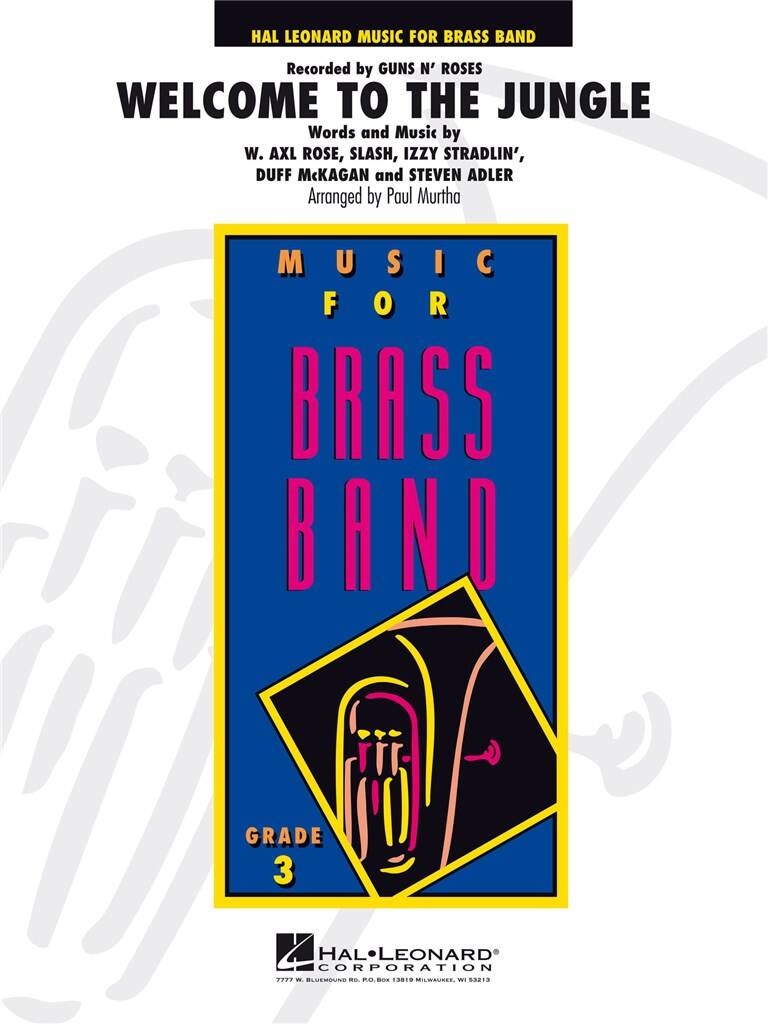
Welcome to the Jungle - Paul Murtha
Named the greatest hard rock song of all time by VH1, Guns N' Roses' signature hit was introduced back in 1987 and remains as popular and recognizable today as ever. Featuring plenty of musical variety and excitement, this version will challenge young players but is guaranteed to inspire them to practice!
Estimated dispatch 5-14 working days
-
 £59.99
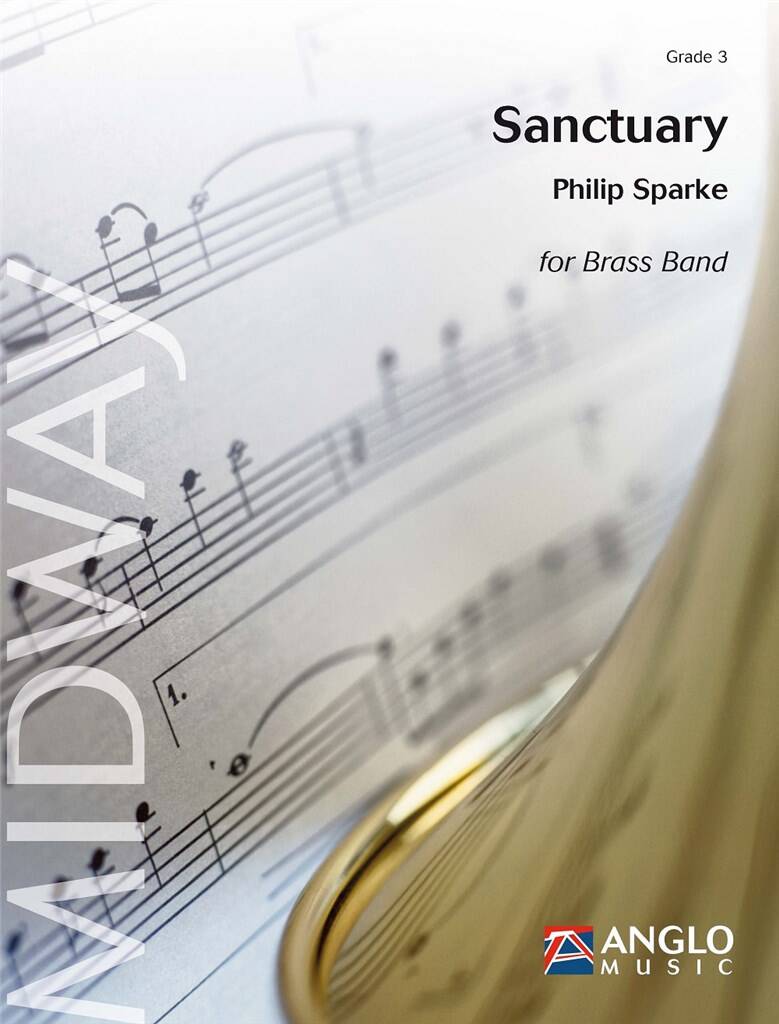
Sanctuary - Philip Sparke
Sanctuary was commissioned by Eastern Bay of Plenty Brass from New Zealand and was performed as an own choice piece at the 2018 New Zealand National Brass Band Championships. It opens with an expressive cornet solo, hymn-like in mood. A slightly faster central section builds to a change of key and an expansive return of the opening melody, this time scored for full band. After an emotional climax the mood subsides, leading to a quiet close.
Estimated dispatch 5-14 working days
-
£59.99
Carnival of Venice - Harry James - Mark Freeh
The jazz cornet legend Harry James was synonymous with taking classical works and crafting versions in his own inimitable style. Carnival of Venice was one of his most famous features and here you have a true-to-the-original arrangement to feature your cornet soloist created by one of the greatest arrangers of jazz for Brass Band, Mark Freeh.A Brass Band classic given the jazz treatment, Carnival of Venice will astound and amaze your audiences every time. Not to be missed.
Estimated dispatch 5-14 working days
-
 £104.99
High Flyers - Andrew R. Mackereth
From the composer: High Flyers are regarded as people with promise and potential.They are winners. This is music for winners.The title, as well as being a play-on-words, implies the nature of the work. It is a bright, optimistic, and upbeat piece attempting to depict an exhilarating ride on flying carpet. The opening rising chords immediately suggest the gentle elevation of the carpets' ascent towards unknown heights, leading to a hint of a first theme in the horns at Fig. B. The first four notes provide the thematic material for the whole work: C F G A.A perpetual sense of movement is achieved through accented quaver chords punctuating the melodicmaterial of the first main theme. Fig. E sees the music of the opening bars fully realised, with flourishes from the euphonium and baritones representing swirling clouds, shooting stars, or passing birds in flight.The same subject is developed into a lyrical second theme with a new lush harmonic treatment, evocative of gliding over an expanse of sparse countryside.This section ends with a note of serenity but is shattered by the urgent insistence of the percussion rhythms.The third section introduces a new idea with a slightly distorted fanfare in the cornets and trombones. This figure suggests for the first time that there may be trouble ahead. In fact, there is no need to fear and the journey can continue without aggravation. This fanfare returns near the end to signal a final note of triumph.A new rhythmic variant of the cell motif emerges as the third theme now transformed by the addition of a triplet figure. The music steadily gains momentum before moving inexorably towards the climactic return of the music and tonality of the opening bars of the piece.
Estimated dispatch 5-14 working days
-
 £60.99
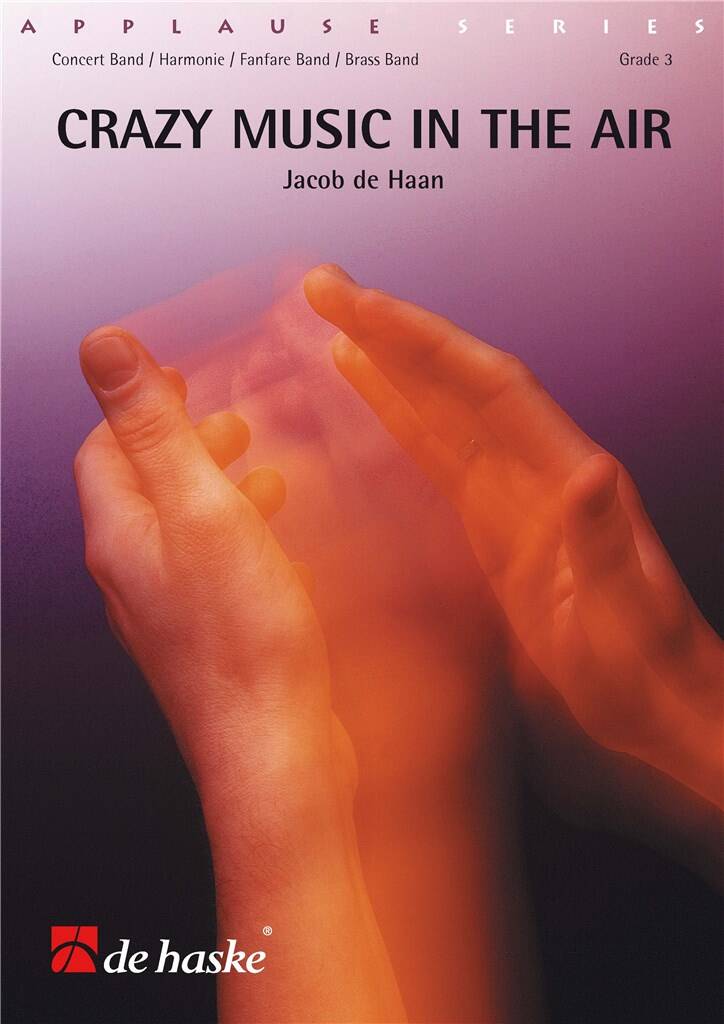
Crazy Music in the Air - Jacob de Haan
This composition in two parts is one of the first successful works Jacob de Haan published for Brass Band. Somewhat under the influence of Ted Huggen's Choral and Rock Out which was an overwhelming success at the time, the still very young Jacob de Haan wrote this composition. The first part (Air) exists of a choral melody with baroque grace notes, supported by a pop rhythm in the drums. The second part (Crazy Music) is a swinging bossa nova, in which various instrument groups present themselves in the continuously varying themes. The famous Black Dycke Mills Band contributed to the success of Crazy Music in the Air by regularly puttingthe piece on its tour programmes.
Estimated dispatch 5-14 working days
-
 £74.99
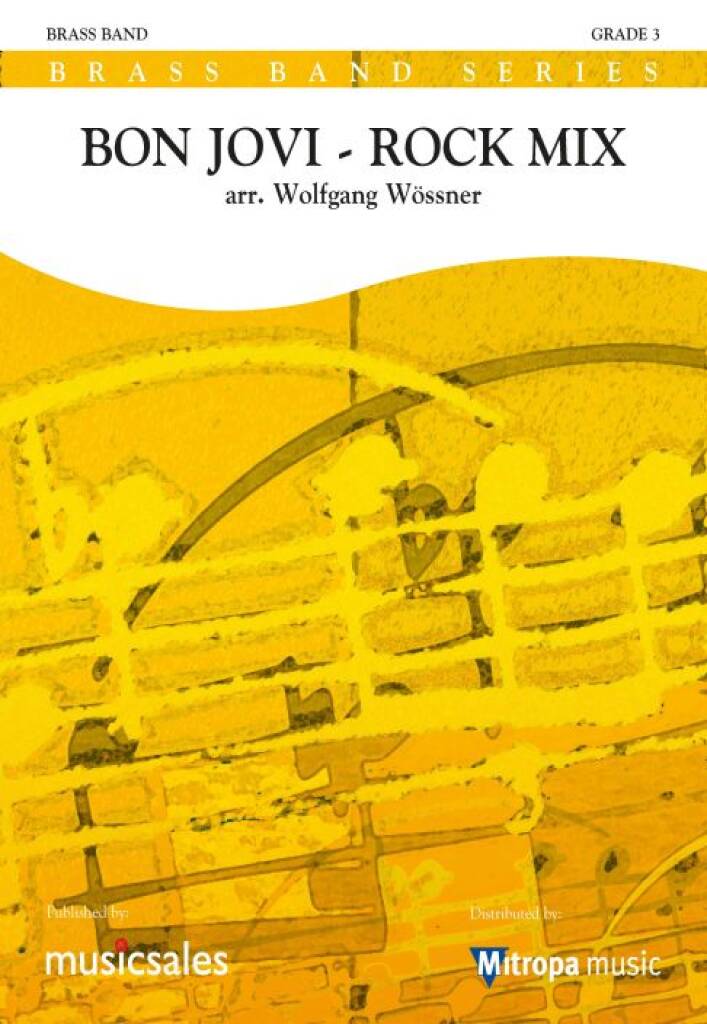
Bon Jovi - Rock Mix - Jon Bon Jovi - Wolfgang Wössner
Wolfgang Wssner has created yet another energetic and exciting medley for concert band, following in the footsteps of his previous successful medley, Bryan Adams - The Best of Me.This time Wssner has moulded four hits by the American rock band Bon Jovi into one sensational work. Combining Runaway, It's My Life, Livin' On a Prayer and You Give Love a Bad Name, creates an incredibly fun medley that will rock your next concert!
Estimated dispatch 5-14 working days
-
 £59.99
MacArthur Park - Philip Sparke
Over a period of four decades Jimmy Webb (b. 1946) has written hits for a number of singers including Glen Campbell, Art Garfunkel, Frank Sinatra, Willie Nelson, Johnny Cash and Linda Ronstadt. His songs are often epic in character and include By the Time I Get to Phoenix; Up, Up and Away; Didn't We; Wichita Lineman and Galveston. MacArthur Park (1968) was unlike anything that had gone before it. Running at over 7 minutes, it is 2 or 3 times the length of most pop songs and has an extended orchestral interlude. Richard Harris' seminal recording topped the music charts in Europe, while peaking at number two on the U.S. charts. Philip Sparke has made this excellentarrangement for brass band, which is sure to become a regular feature on your concert programme.
Estimated dispatch 5-14 working days
-
 £89.99
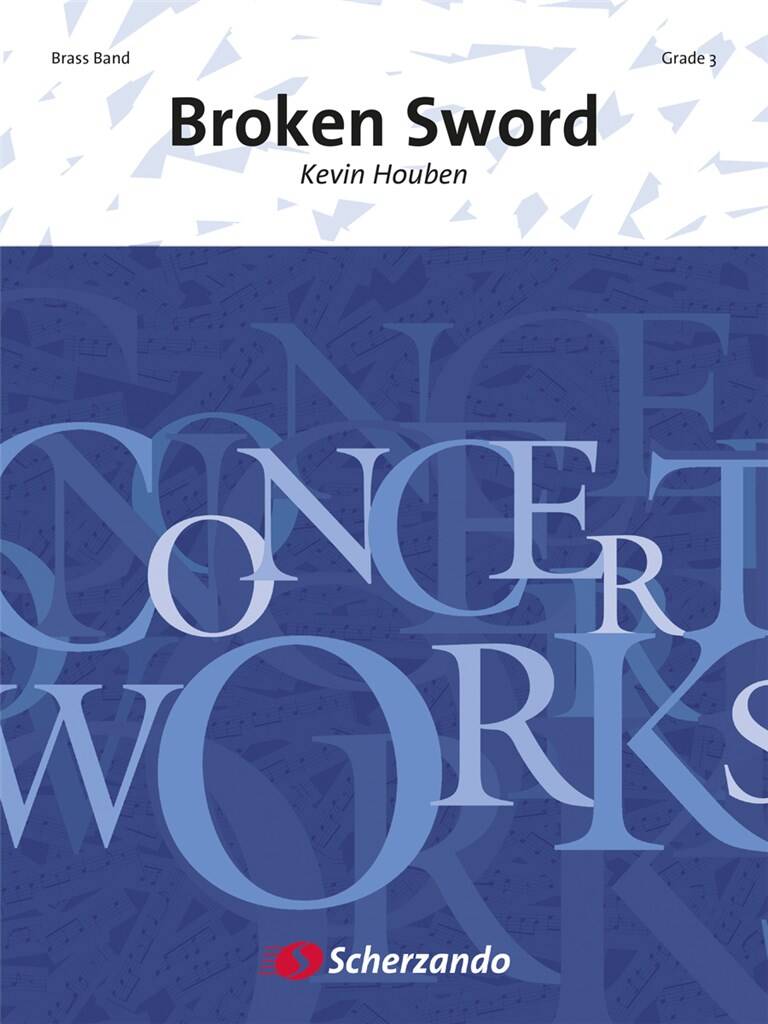
Broken Sword - Kevin Houben
The Broken Sword is one of the five ceremonial swords kept in the Tower of London and is used during the coronation of a new king or queen. Legend has it that an angel broke off the tip of the sword in an effort to prevent an unjust killing. Composer Kevin Houben lets his music retell this intriguing legend. Broken Sword resembles a film score in many ways and will paint vivid images as the band plays its way through the legend. Many different moods create a contrast-rich work that makes for an exciting listening and playing experience every time!
Estimated dispatch 5-14 working days
-
 £30.00
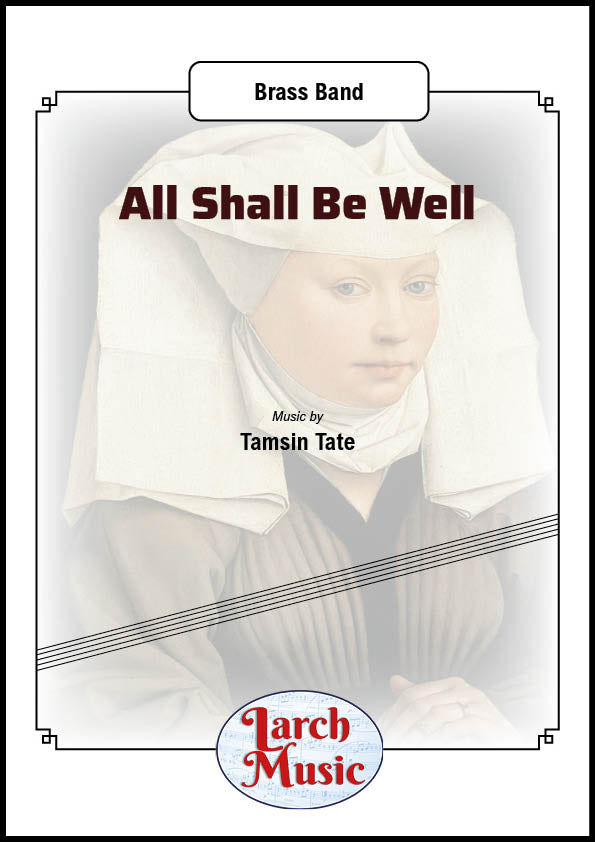
All Shall Be Well - Brass Band Sheet Music Full Score & Parts - LM931
COMPOSER: Tamsin TateCOMPOSERS NOTE"All shall be well" was composed during the first lockdown of the Covid crisis, from May 2020.This was a worrying time for many and a time of great anxiety and sadness for some.I have always tried to be practically optimistic in trying times, but still I needed hope.I am lucky to have a faith in God which gives me hope and assurance that things will be better,and I also know that music, particularly playing it, can help express some of these emotions.Certainly, music through the crisis was a wonderful, enjoyable escape for meand one I shared with my family and my band family through our online recordings.Julian of Norwich was an anchoress in the 14th Century.She set herself apart for God and spent a lot of time in prayer.Interestingly, she was the first published woman in the English language.Julian of Norwich is quoted as saying "all shall be well, all shall be well,and all manner of thing shall be well." The paraphrase of this spurred me on to develop this piece for brass band.Hopefully you will also find that the music portrays the worries and trials of this uniquetime through the natural minor key, with the rhythm hinting towards the phrase"All shall be well" and then the dawning transition to the major keyfollowed by a triumphant ending with the whole band joining together.Thanks to Adam Cable and the Martlesham Brass family for support and encouragement always.Thanks also to Alan Fernie and his supportive critique of my initial efforts.LM931 - ISMN : 9790570009312
In Stock: Estimated dispatch 3-5 working days
-
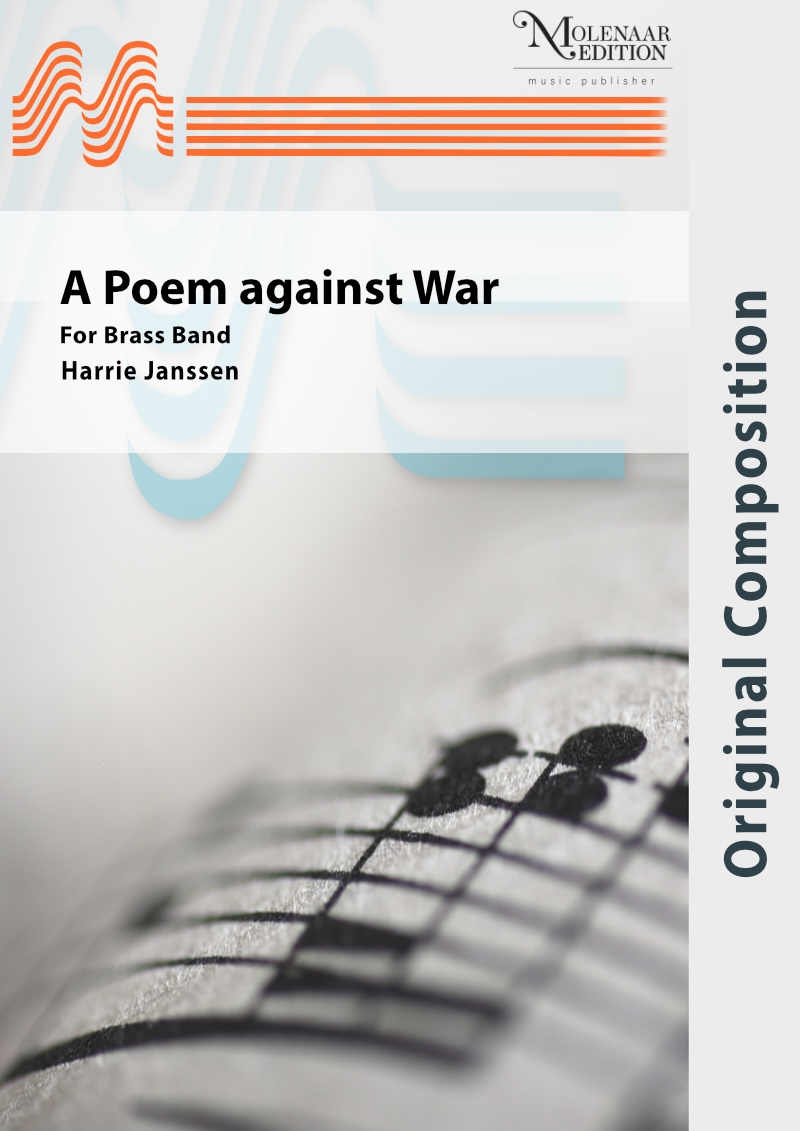 £229.00
A Poem Against War - Harrie Janssen
A Poem against War A Poem against War was commissioned by Psalm 150, Dinxperlo for the project Leven in Vrijheid!.Starting point of the composition of this piece was the poem A Poem against War from the American poet Karen Kapowich. The poem tells of young lives that are broken in their start because of war.A monument - founded in memory of the soldiers who gave their lives - is hardly noticed and even ignored. Children find the tree-sheltered memorial place rather scary and even the narrator speeds up his stride when passing. Underlying theme is the otiosity of war.The musical piece is composed of two parts that are being played without interruption. The first part explains the drama of the battle. The second part is based on the poem of Karen Karpowich in which we look back on the sacrifices that have been made. The text is sung by a Mezzo Soprano and emphasizes the bloodshed that comes along with every war. The opening theme returns at the end of the piece but in a complete metamorphosis, wherein optimism and vigor take place for resignation knowing that history repeats itself time and time again. A Poem against War had its premiere on 25th November 2012 in de DRU Cultuurfabriek in Ulft by Fanfare-orchestra Psalm 150, Dinxperlo led by Tijmen Botma. The Mezzo Soprano was Elske ter Lindert.commissioned by Psalm 150, Dinxperlo for the project Leven in Vrijheid!.Starting point of the composition of this piece was the poem A Poem against War from the American poet Karen Kapowich. The poem tells of young lives that are broken in their start because of war.A monument - founded in memory of the soldiers who gave their lives - is hardly noticed and even ignored. Children find the tree-sheltered memorial place rather scary and even the narrator speeds up his stride when passing. Underlying theme is the otiosity of war.The musical piece is composed of two parts that are being played without interruption. The first part explains the drama of the battle. The second part is based on the poem of Karen Karpowich in which we look back on the sacrifices that have been made. The text is sung by a Mezzo Soprano and emphasizes the bloodshed that comes along with every war. The opening theme returns at the end of the piece but in a complete metamorphosis, wherein optimism and vigor take place for resignation knowing that history repeats itself time and time again. A Poem against War had its premiere on 25th November 2012 in de DRU Cultuurfabriek in Ulft by Fanfare-orchestra Psalm 150, Dinxperlo led by Tijmen Botma. The Mezzo Soprano was Elske ter Lindert.
Estimated dispatch 10-14 working days
 View Music
 Listen to MP3