
Results
-
£60.99
The New Covenant - James Curnow
Throughout The New Covenant the composer seeks to portray through programmatic music the sensitivity, love and understanding of a compassionate Christ and the strength and wisdom of the Son of God who gave Himself to become the new covenant between God and man. This descriptive work creates a word painting by use of fragments from John Newton's beautiful hymn 'How Sweet The Name of Jesus'. An ideal work for any concert but especially for those taking place in Churches or Cathedrals.
Estimated dispatch 5-14 working days
-
 £60.99
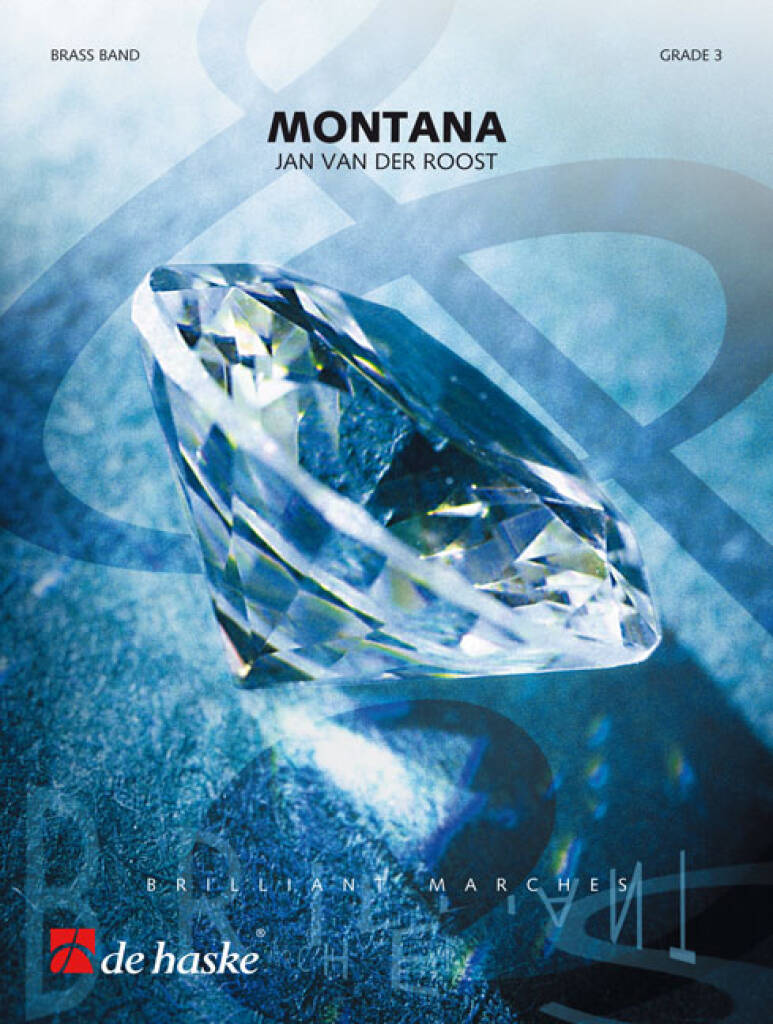
Montana - Jan Van der Roost
From the first bars the stately character of this solemn, yet celebratory, march is clearly heard. The introduction of the main theme takes place in the medium register, immediately resulting in a noble tone. A lyrical trio melody provides contrast, but the march closes in a festive and imposing mood. A march worthy of any concert program.
Estimated dispatch 5-14 working days
-
 £104.99
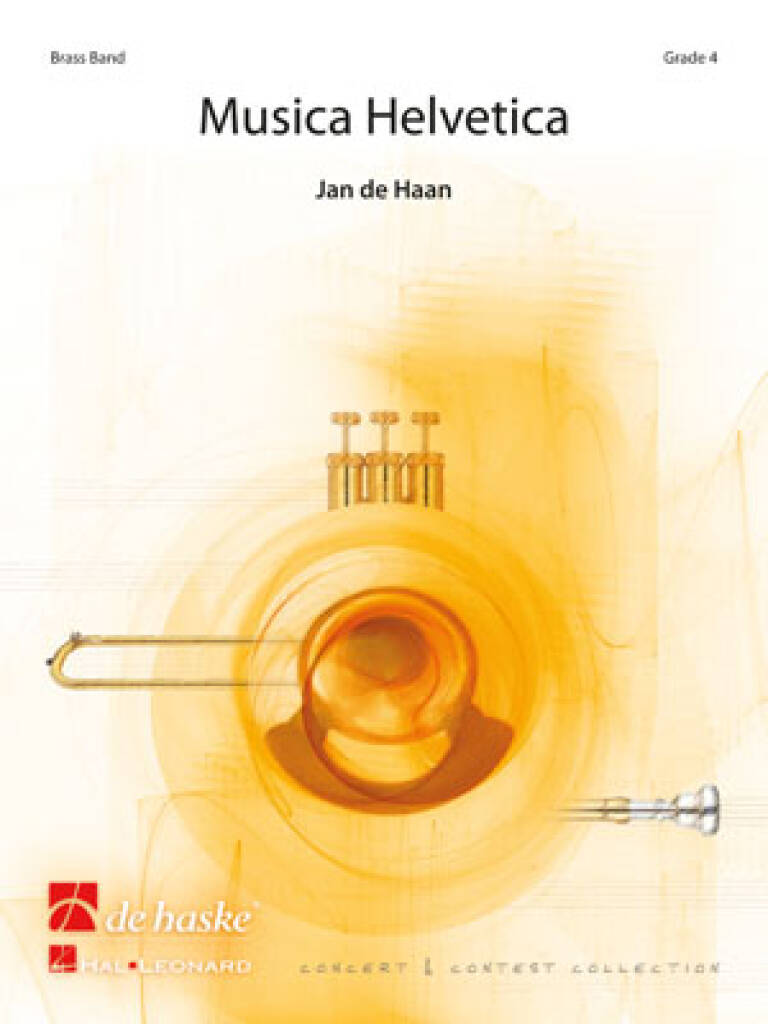
Musica Helvetica - Jan de Haan
Every year a competition for wind orchestras and brass bands takes place in Wallberg, Switzerland. Apart from a hymn and a solo piece, all orchestras also have a compulsory piece to play. The commission to create a compulsory piece for the 2012 competition fell to Jan de Haan. The composition is entitled Musica Helvetica. It takes the form of a three-part concert work, in which the last two parts flow directly from one to the other. The first part, Musica Prima, is a brisk virtuoso opening with jazz flavours woven in. The following section, Musica Sacra, offers a contrast with an extraordinarily colourful instrumentation for the gorgeous main theme. Thefinal part, Musica Alpina, is inspired by the great variety of scenery in Switzerland. With its witty humour it makes a worthy conclusion to this beautiful tryptich.
Estimated dispatch 5-14 working days
-
 £69.99
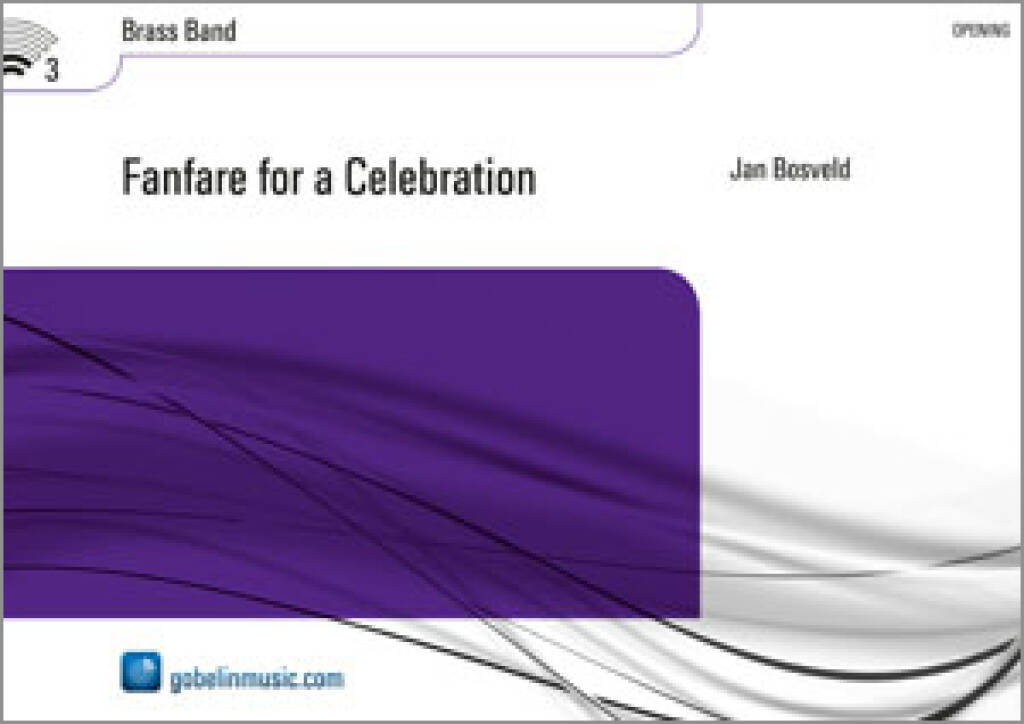
Fanfare for a Celebration - Jan Bosveld
This festive fanfare sets the tone for your concert or festival and is suitable for all sorts of occasions. The premiere took place in 2001 and was written for the special 70th anniversary of the PTT Brass Band from Apeldoorn(Holland). The visiting-card for your band! Deze feestelijke fanfare zet de toon voor uw concert of een festival en is geschikt voor allerlei gelegenheden. De premi?re vond plaats in 2001 en werd geschreven voor het 70 jarig jubileum van de PTT Brass Band uit Apeldoorn. Het visitekaartje voor uw band!
Estimated dispatch 5-14 working days
-
 £54.99
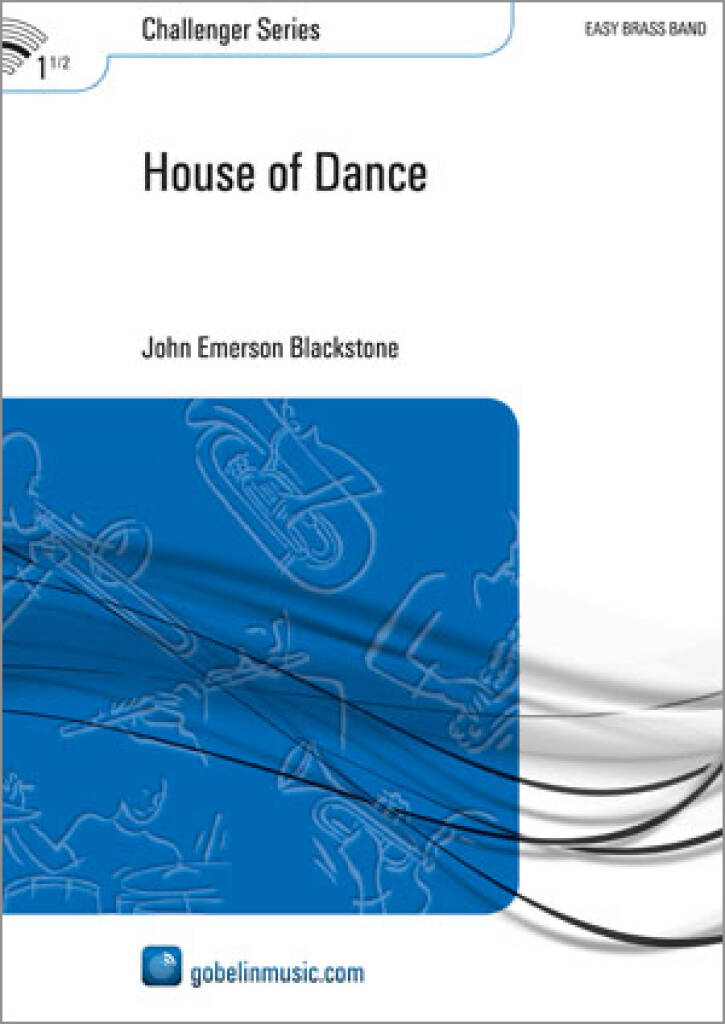
House of Dance - John Emerson Blackstone
In imitation of the huge 'House rage' (at the end of the eighties) John Emerson Blackstone composed 'House of Dance' for youth orchestra. It proved to be a success. House owes its name to the place where this music was 'developed', i.e. an old night club called 'The Warehouse' in Chicago. Many subcultures followed. Whether you like the style or not, one thing is certain: House music (also called Dance music) for many provides the basis for hours of fun on the dance floor.
Estimated dispatch 5-14 working days
-
 £69.99
Sons of Jorwerd - Gawan Roberts
Gawan Roberts wrote this march in 2001 on the occasion of the play Brassed Off, which took place in the Frisian village of Jorwert. The march has been written in the virtuosic English brass band style. Gawan Roberts schreef deze mars in 2001, ter gelegenheid van de opvoering van het toneelstuk Brassed Off, wat plaats vond in het Friese dorpje Jorwerd.De mars is geschreven in de virtuoze Engelse brass band stijl.
Estimated dispatch 5-14 working days
-
 £84.99
Voyage with the VOC - William Vean
The Netherlands have been an important trading nation for a long time partly as a result of their geographical situation. One of the first multinationals in The Netherlands was the 'Verenigde Oostindische Compagnie' (VOC). The aim of the VOC was to send ships to Asia in order to buy pepper and spices, and to take over the Portuguese monopoly in this field. The Company was successful. An era of great prosperity resulted, in which the art of painting (Rembrandt van Rijn) as well as science (Constantijn Huygens) flourished alongside a thriving economy. 1. The Sails are set : There is a lot of hustle and bustle on the quay. The crew are preparing fordeparture. Goodbyes are said and once the sails have been hoisted the ship sets out to sea.2. A Visit to the Rajah of Yogyakarta: After a voyage of many months the place of destination is reached. A visit to the Radja, the king of the area around Yokyakarta, follows. The dishes and beverages and the native culture in general are very pleasant after having been on a diet of ship's biscuit and water for such a long time.3. The Holds have been loaded: The holds have been loaded to the brim, and the voyage home can be begin!4. Death sails along: Life at sea is rough. not seldom did a sailor die of a tropical disease or scurvy. After a memorial service, the Captain would speak the words 'One, two, three, in God's name ...' and the body, wrapped in canvas, would be committed to the sea.5. A joyful homecoming: After many months of hardship coming home is perhaps the best part of the entire voyage. The quay is filled with people eager to give the crew a warm welcome.
Estimated dispatch 5-14 working days
-
£107.80
Arctic Funk (Introduction no. 3) - Torstein Aagaard-Nilsen
After composing "Introduction" in 1989 and "Entrada" in 1990, Aagaard-Nilsen received a new commission for a "concert-opener", this time from Tromso Brass in 1991.Tromso is a city in the north of Norway, but despite the cold and snowywinters, the city is famous for it's night-life.In "Arctic Funk" you might get a feeling of a part that take place between ice-rocks and snow-wrapped mountains.
Estimated dispatch 5-14 working days
-
 £44.99
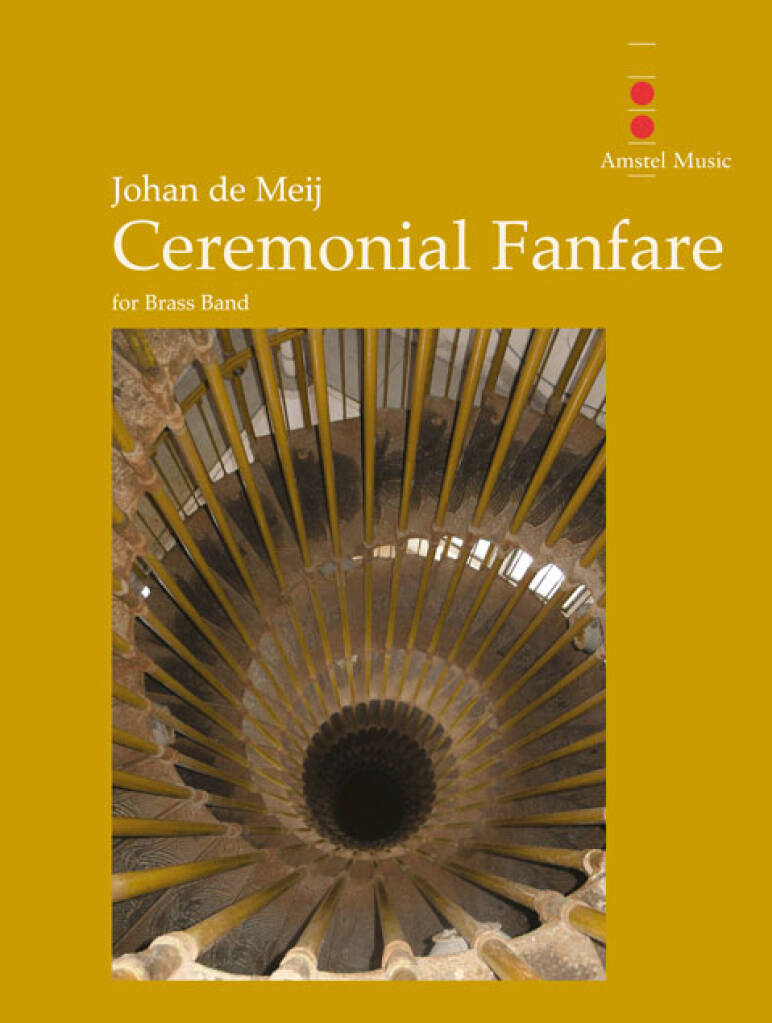
Ceremonial Fanfare - Johan de Meij
The Ceremonial Fanfare was originally written for orchestral brass and percussion, commissioned by The Orchestra Osaka Symphoniker from Osaka, Japan. The world premiere performance took place on April 12, 2005 at The Symphony Hall in Osaka, conducted by maestro Heiichiro Ohyama.In April 2009, the combined brass sections of the New York Philharmonic and the Royal Concertgebouw Orchestra gave an impressive performance in New York City. The concert commemorated the Henry Hudson Quadricentennial and 400 years of friendship between The United States and The Netherlands.This version for brass band was written at the request of EBBC, the European Brass Band Contest 2012in Rotterdam, to serve as the opening fanfare of the festival.
Estimated dispatch 5-14 working days
-
 £33.62
Les Chasseresses from 'Sylvia' (Brass Band) Delibes arr. Rob Bushnell
Clement Philibert Leo Delibes was a French composer, best known for his ballets and operas, including works such as Lakme (with its famous "Flower Duet"), Coppelia and Sylvia (both key works in the development of modern ballet). The latter started as a play, Aminta, by the Italian poet Torquato Tasso, which Delibes set to music. It was then adapted for the Paris Opera with rehearsals starting in August 1875. The premiere took place on 14 June 1876 and was the first ballet to be shown at the newly-built Opera Garnier. Whilst the scenery and costumes were created by top artists and designers (Cheret and Lacoste), it was Delibes's music that shown thrown, being said to have saved the production, preventing the ballet from drifting into obscurity.Sylvia is said to be one of the first modern ballets, with Tchaikovsky remarking to composer Sergei Taneyev upon its ingenuity: "... the first ballet, where the music constitutes not only the main, but the only interest. What charm, what elegance, what richness of melody, rhythm, harmony." Although Swan Lake, a contemporary to Sylvia, is considered one of the best ballets there is, Tchaikovsky preferred Sylvia to his own work, saying Swan Lake was "poor stuff in comparison". Tchaikovsky said to Taneyev, "I was ashamed. If I had known this music early then, of course, I would not have written Swan Lake". The music to Sylvia, rather than setting only the mood, also sets the action and is noted for its use of leitmotifs - Delibes was an admirer of Wagner - and more dominant use of brass and wind. The most famous piece from this ballet is the Pizzicati in the third act.Act I of the ballet takes place in sacred wood, where creatures are worshipping before Eros when Sylvia arrives with her huntresses to mock the god of love. Aminta, a lowly shepherd and infatuated with Sylvia, protects the deity and Sylvia is wounded by Eros's arrow. The hunter Orion kidnaps Sylvia, whilst Eros revives Aminta. Act II takes place in Orion's Island cave, where Sylvia tries to bribe Orion with jewels and wine. Unsuccessful, she appeals to Eros for help, who arrives and takes her to the temple of Diana (where the final act takes place). Orion and Aminta fight, Sylvia and Orion cause the goddess of the hunt, Diana, to be outraged, smiting Orion and denying the love of Aminta and Sylvia. Eros shows Diana a vision, which changes her mind and the couple finally come together.This brilliant and lively fanfare that introduces the huntresses in the first act is arranged here for the UK-style brass band, with alternative parts for horns in F and bass-clef lower brass. The piece has been lowered by a tone compared to the original. A recording of the original composition can be found here https://youtu.be/6yoGrUH38PI?si=0L0bFa1qXnYNvkR3 Duration: Approx. 3.10 minutes Difficulty Level: 1st Section + This PDF download includes the full score and parts. Includes alternative parts for soloist in Eb, horns in F and lower brass in bass clef. Sheet music available at www.brassband.co.uk (UK) or https://satradecentral.org (USA) Instrumentation: Soprano Cornet Eb Solo Cornet Bb Repiano Cornet Bb 2nd Cornet Bb 3rd Cornet Bb Flugel Horn Bb Solo Horn Eb 1st Horn Eb 2nd Horn Eb 1st Baritone Bb 2nd Baritone Bb 1st Trombone Bb 2nd Trombone Bb Bass Trombone Euphonium Bb Bass Eb Bass Bb Timpani Percussion - Triangle, Cymbal & Bass Drum
In Stock: Estimated dispatch 1-3 working days
 View Music