
Results
-
 £104.99
A View at the Zoo - Carl Wittrock
Everybody is familiar with the zoo. Remember all those animals? Big ones, small ones. Water dwellers, air-bound birds, long legged hoppers, creeping bugs. All animals seem to have their own peculiarities. Now, Carl Wittrock (who also composed the world-famous master piece 'Lord Tullamore') invites you to join him in a musical exploration of the animal kingdom. An invitation you must not reject! In his 'A view at the Zoo', Wittrock presents ten distinctly different animals as compositions of music. You may be familiar with some of those animals, such as the white swan or the butterfly, but there are also more exotic breeds, like the lion, the monkey, or theelephant. The composition as a whole is built around a structure of shorter fragments reminiscent of 'The Paintings Exhibition' by Moussorgsky. The parts are decorated with recognizable illustrations of the different animals. At each composition, Wittrock looks for something that can fascinate both musicians and listeners. In this he succeeded extremely well.
Estimated dispatch 5-14 working days
-
 £105.20
I Don't Know How to Love Him - Andrew Lloyd Webber - Øystein Sjøvaag Heimdal
This is a ballad from the rock-opera "Jesus Christ Superstar" written by Andrew Lloyd Webber (Music) and Tim Rice (Lyrics). Together with the title song, this ballad is the most popular tune from Jesus Christ Superstar. It's recorded and performedlive by many artists since the music saw the light of day in 1971.This arrangement can be performed with a vocal- or instrumental solist. In addition to the vocal solo part, there are also solo-options for the followinginstruments:Eb-Cornet Bb-Cornet Eb-Horn Flugelhorn Baritone - Euphonium - Trombone
Estimated dispatch 5-14 working days
-
 £60.99
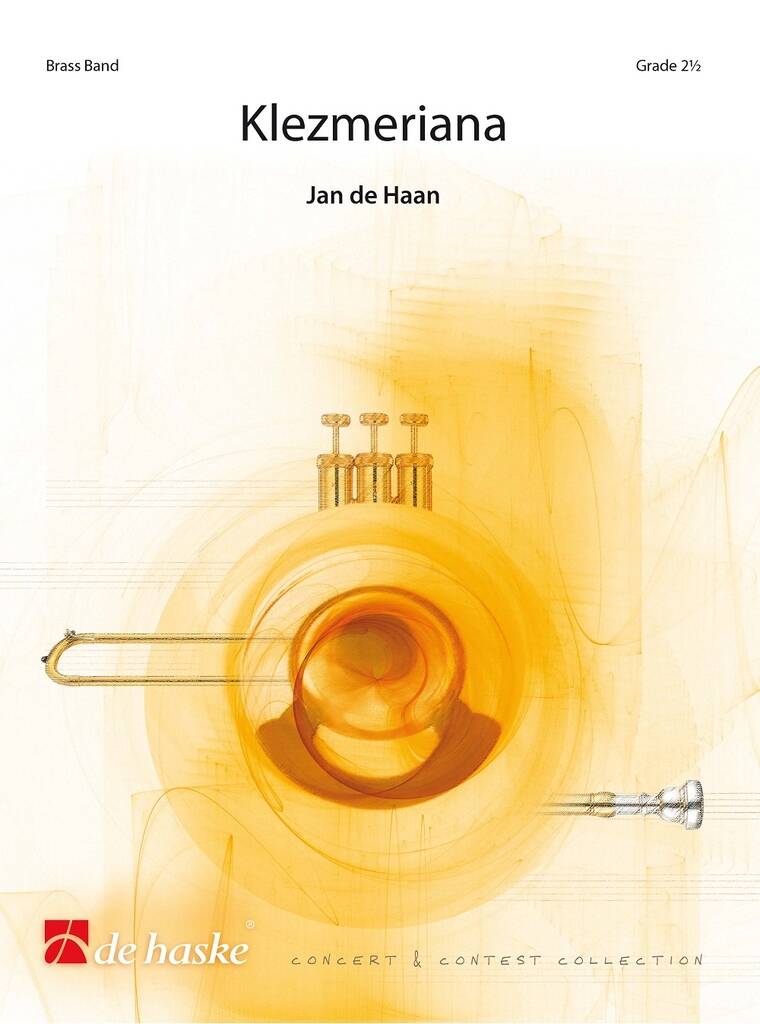
Klezmeriana - Jan de Haan
The instrumental music of the Yiddish-speaking Jews, especially those of Eastern Europe, is known as klezmer. This terminology was originally used in Jewish cultural life as the name of a musician who played at weddings. At Jewish weddings, which usually last several days, klezmer musicians played not only dance music but also ceremonial music - for example during the wedding ceremony, and also music that was listened to during the wedding feast. Originally, there was no special term for this style of music. It was simply referred to as 'Jewish wedding music'. In the 1970s, the music - which is actually a fusion of different influences - enjoyed a resurgence in popularity and came to be known as klezmer. This music contains not only the sounds of the Balkans, but also influences of oriental and gypsy music too. Jan de Haan used no original klezmer melodies for Klezmeriana, but composed a series of sound-alike in an instrumentation for brass band.
Estimated dispatch 5-14 working days
-
 £131.00
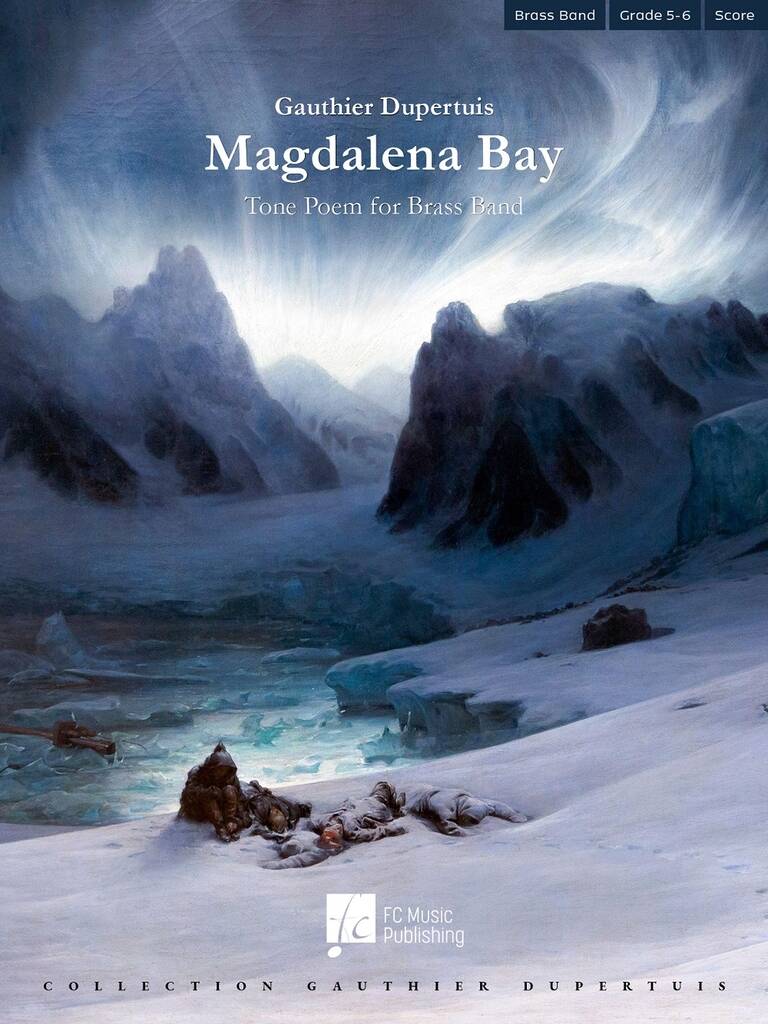
Magdalena Bay - Gauthier Dupertuis
While admiring many masterpieces at the Louvre Museum in Paris, Gauthier Dupertuis' attention was drawn to a less famous painting: Magdalena Bay, by French painter Francois-Auguste Biard (1799-1882).The work depicts a magnificent snowy landscape on the Norwegian island of Spitsbergen. However, in the foreground, the presence of the wreckage of a ship, bodies covered in snow and a visibly dying character make us understand that tragic events took place there. Thus, a strong contrast is formed between death and the sublime, between the desolation of the survivors of the shipwreck and the magnificence of the landscape. When we look in more detail at the painting, we notice that footprints have been made in the snow: so, could someone have gone to get help? This little glimmer of hope makes the picture even more touching. In this work, Gauthier Dupertuis tried to describe the different elements of the painting, using contrasting sections and dissonances (in particular, the conflict between the minor and the major) to convey the duality between death and the sublime. The work also attempts to highlight a wide palette of orchestral colors, from the most shimmering lines to the darkest low brass colours. In 2024, Magdalena Bay was awarded the first Prize as well as the band Prize at the 9th European Composition Competition for Brass Band, which was held in Palanga (LT). It was premiered on May 2, 2024 by The Cory Band, conducted by Philip Harper.
Estimated dispatch 5-14 working days
-
 £183.20
The Junction Point - John Brakstad
The railway between Oslo and Bergen, "Bergensbanen", was built in the years 1895 1909. This piece is dedicated to the railway labourers, the navvies, who did the hard work across the mountains. Most of the work, even in the tunnels, were done by hand. The official opening of the railway was in 1909, but there was also a celebration and a dynamite salute when the two teams of labourers and locomotives from East and West met in the mountains in October 1907. At this point, the rails were joined together with a joint in the national colours: "The Junction Point"!
Estimated dispatch 5-14 working days
-
 £74.99
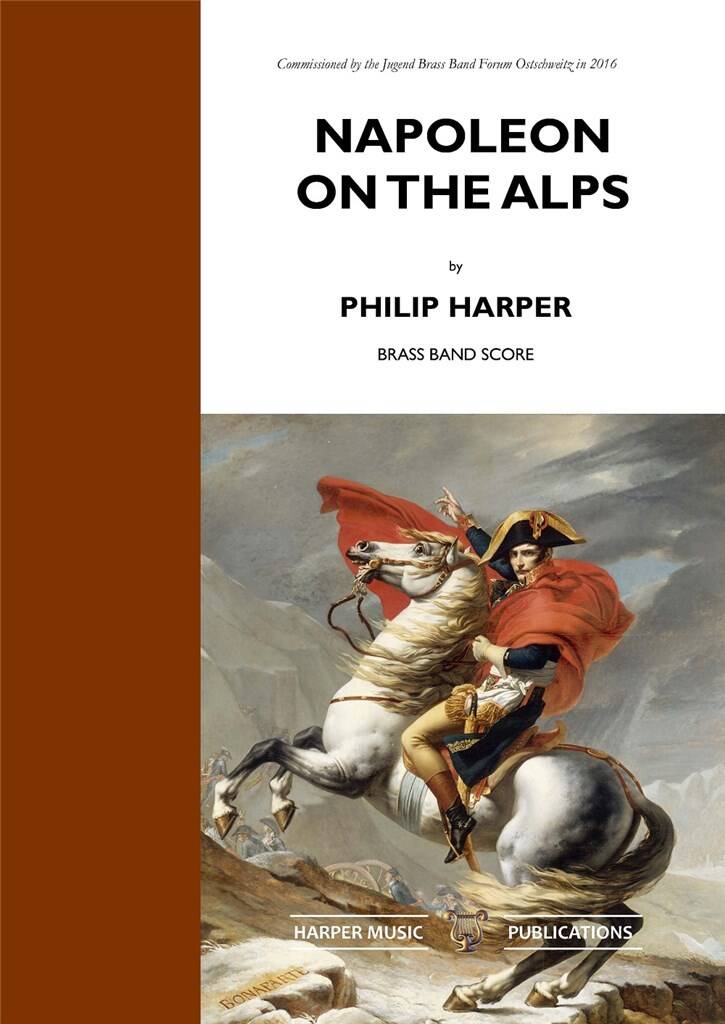
Napoleon on the Alps - Philip Harper
This dramatic piece is based on the famous oil painting by Jacques-Louis David, 'Napoleon Crossing the Alps'. There are three parts: Approaching the Great Saint-Bernard Pass depicting snowy mountains and the determined march of the NapoleonicArmy: The Emperor Napoleon a noble and heroic theme, accompanied by stately fanfares with an exotic flavour: and Onwards, to the Empire! describing Napoleon's relentless drive to expand the French empire across the globe at. This piecewas first performed directly in front of the Napoleon Museum in Arenenberg, Switzerland in Summer 2016.
Estimated dispatch 5-14 working days
-
 £54.99
Polish Christmas Lights - Traditional - Henk Hogestein
Polish Christmas Lights is a collection of three traditional Polish Christmas carols arranged for brass ensemble with flexible instrumentation. These three themes are used throughout the composition, with some variation here and there. Add a little sparkle to your Christmas concert with Polish Christmas Lights.
Estimated dispatch 5-14 working days
-
 £110.40
Three Inventions - Pi Scheffer
Dr. J (Pi) Scheffer was the leader of the famous Dutch AVRO Radio Big Band 'The Skymasters' in the 50's, as well as also being an English teacher. He also had a huge success with his composition for wind band 'Three Inventions', not only in Europe but also in the USA. At the time of publication (1971) there was no promotion with sound sample of this work, so for this reason now Molenaar Edition has a complete new score and parts available in their 'Creative Compositions' (c) series. The work is in the movements. 'Flippant', 'Whimsical' and 'Sorta Mixed Up'. A recent edition of the American magazine publication 'The School Musician' even compared Scheffer with Leonard Bernstein.
Estimated dispatch 5-14 working days
-
 £49.10
Happy Go Lucky - Willy Hautvast
The public love the xylophone, so for all you xylophonists out there, here is a fresh and fun new composition for those of you who want a piece that doesn't require a top level of technique.
Estimated dispatch 5-14 working days
-
 £74.60
Samba De Janeiro - Ramon Zenker - Henk Ummels
The infernal and extremely rhythmical 'Samba di Janeiro' was a hit made popular by the group Bellini years ago. A driving and exotic sounding percussion introduction is followed by a most compelling theme that everybody recognises at once and that will make you jump up and dance. The rather quiet, mesmerising, middle part aims to let you catch your breath, but soon that cintoxicating rhythm returns and there you go again.
Estimated dispatch 5-14 working days
 View Music