
Results
-
Paint It Black - Mick Jagger & Keith Richards - Len Jenkins
"Paint It Black" (originally released as "Paint It, Black") was written by Mick Jagger and Keith Richards, and first released as a single on 6 May 1966. It became the Rolling Stones' sixth number one in the UK and has remained influential as the first number one hit featuring a sitar. The song came at a pivotal period in The Rolling Stones' recording history, a time that saw the song-writing collaboration of Jagger and Richards assert itself as the principal composers of the band's original material. Its lyrics are for the most part meant to describe bleakness and depression and describe the extreme grief suffered by one stunned by the sudden and unexpected loss of wife, lover or partner. It famously plays during the end credits of the film Full Metal Jacket. Beginning in the style of an ironic minuet, which can be by-passed by starting at bar 54 where the heavy rock beat takes over, the piece is interesting and within the capabilities of 3rd or 4th section bands. For those bands with a drummer and one percussionist, an alternative percussion part is provided.
-
Covent Garden - Len Jenkins - Len Jenkins
Cast your mind back to the Covent Garden of Eliza Doolittle and the activity of the dealers, porters, costermongers, and other staff around the market. In cinematographic terms the ideal setting for a set-piece dance routine to reflect the hustle and bustle of trade in the early morning. The market may have moved to Nine Elms, but the activity is still just as vibrant, so we called this piece Covent Garden to reflect the activity which we rarely see, but know exists, in a busy commercial flower, vegetable and food market. The music has a good strong theme which carries the activities, numerous and varied, not always without hindrance but always coming good at the end so that we have food on our plates, flowers to enjoy and a tradition preserved.
-
 £42.00
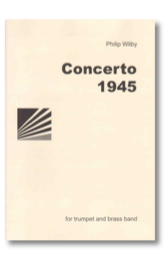
Concerto 1945 (Score only) - Philip WIlby
At a time when we are being encouraged to survey the recent past, its title aims to catch a flavour of that spirit of optimistic vision which coloured the British psyche at the end of the Second War, at once heroic, elegiac, and confident. The concerto's three movements are arranged in a circular pattern around a reflective slow movement. At the heart of that movement is a Cadenza, marked to be played off-stage, where the soloist is surrounded and supported by an additional group of fanfare players. By contrast, the outer movements are energetic and brisk, at times heroic, and at times virtuosic. Also available with piano accompaniment.
Estimated dispatch 7-9 working days
-
 £54.00
Concerto 1945 (Parts only) - Philip WIlby
At a time when we are being encouraged to survey the recent past, its title aims to catch a flavour of that spirit of optimistic vision which coloured the British psyche at the end of the Second War, at once heroic, elegiac, and confident. The concerto's three movements are arranged in a circular pattern around a reflective slow movement. At the heart of that movement is a Cadenza, marked to be played off-stage, where the soloist is surrounded and supported by an additional group of fanfare players. By contrast, the outer movements are energetic and brisk, at times heroic, and at times virtuosic. Also available with piano accompaniment.
Estimated dispatch 7-9 working days
-
 £40.00
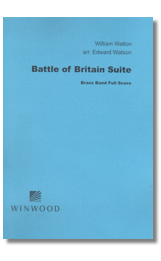
Battle of Britain Suite (Score only) - William Walton
It takes a special ability to compose film scores which serve the images perfectly yet translate into first class concert music. William Walton was such a talent as the continuing popularity of his brilliantly evocative film music shows. This suite includes the famous Dog Fight and majestic March - used for the end titles of the film - along with the Siegfried Music which parodies Wagner's horn call. You can practically feel the buzzing of Spitfires in the air! Winwood Music are delighted to make this music available to the brass band world in a fabulous arrangement by Edward Watson which captures the essence of the original while translating it seamlessly to the new idiom. Duration: 12:15
Estimated dispatch 7-9 working days
-
 £50.00
Battle of Britain Suite (Parts only) - William Walton
It takes a special ability to compose film scores which serve the images perfectly yet translate into first class concert music. William Walton was such a talent as the continuing popularity of his brilliantly evocative film music shows. This suite includes the famous Dog Fight and majestic March - used for the end titles of the film - along with the Siegfried Music which parodies Wagner's horn call. You can practically feel the buzzing of Spitfires in the air! Winwood Music are delighted to make this music available to the brass band world in a fabulous arrangement by Edward Watson which captures the essence of the original while translating it seamlessly to the new idiom. Duration: 12:15
Estimated dispatch 7-9 working days
-
 £34.95
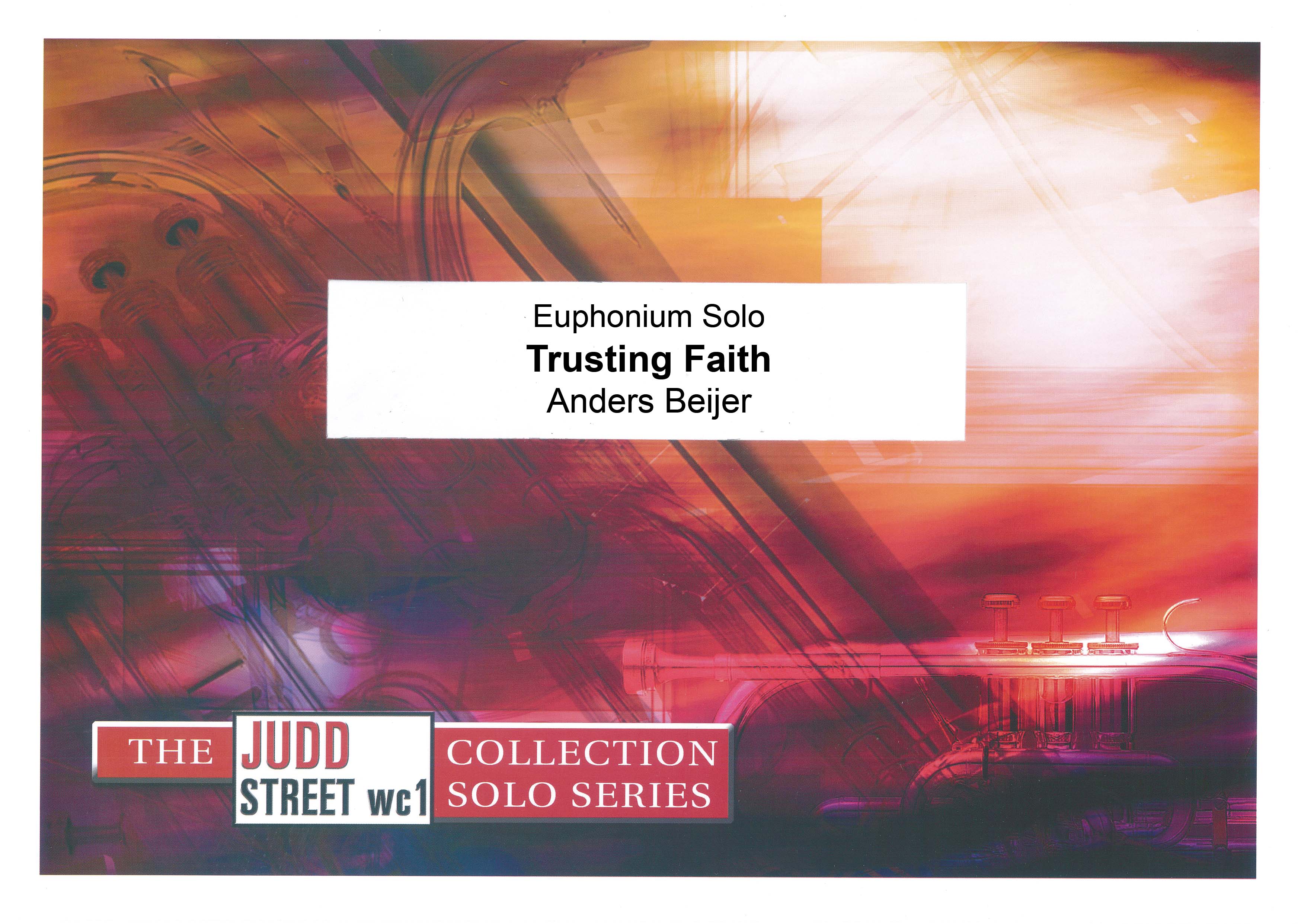
Trusting Faith (Euphonium Solo with Brass Band - Score and Parts)
This piece is based on the melody Faith is the victory (T.B. 128) and throughout the solo we follow a person's journey of faith. In the first movement, the bold and confident opening depicts a seemingly strong and certain faith, although perhaps a little naive and immature. The music suggests that if we are certain enough, then we will see our prayers immediately answered and will witness miracles. But what happens when we don't see those miracles happen, or our prayers seem unanswered? Doubt creeps in and the music quickly becomes a full struggle continuing through to the end of the moment.What do you do when you faith amounts to something other than what you thought it to be? The beginning of the second movement reflects this questions and starts hesitantly and full of doubt. Soon, a new melody is introduced, Trusting as the moments fly (T.B. 263). The words of the chorus remind us that true faith should bot be affected by fears or disappointments, that our trust in God should remain. Realising that a faith that holds firm, though being tested over time, becoming deeper and stronger, is a liberating truth. We no longer need to struggle in our strength alone, but can lean on God instead.When we lean on God, reset in his care, and feel. safe in his hands, then faith has really become our victory. We will then become strong disciples who can meet life's various challenges without wavering or being afraid. This is depicted in the final movement of the solo when both melodies, whose messages complement each other, are woven together in an explosive finale.
Estimated dispatch 7-14 working days
-
 £55.00
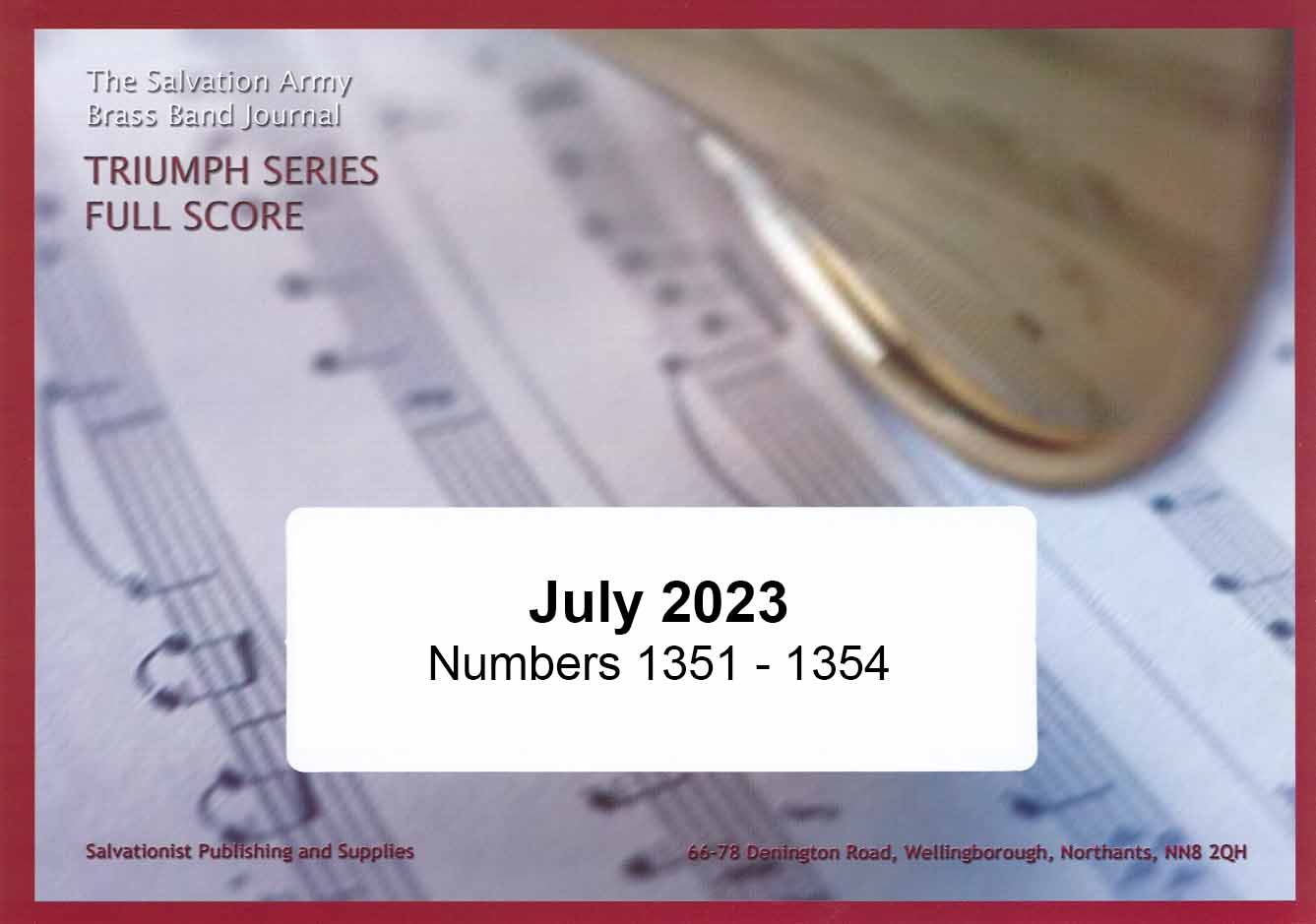
Triumph Series Brass Band Journal, Numbers 1351 - 1354, July 2023
1351: The anointed King (Marcus Venables)This piece was originally written as a massed band item for the Ontario Central-East Divisional Music Day in 2019. The updated version includes two songs, King of kings, majesty (S.A.S.B. 376) and O worship the King (S.A.S.B. 52) to a rhythmic setting of the tune Laudate Dominum (T.B. 481). Both songs present the contrasting characteristics of God; the powerful King and gentle, loving Saviour.1352: A suite of English Christmas carols (Kenneth Downie)This suite is the result of a request for a piece of music featuring exclusively English Christmas carols.The first movement features The holly and the ivy (C.C. 87). In sharp contrast, the second movement calls for a broad, sensitive, song-like approach. Using The cherry tree carol (C.C. 85), a much slower tempo than is normally applied to encourage the listener to see this beautiful tune in a new light. The rumbustious arrival of the finale is based on I saw three ships come sailing in (C.C. 44) with the festive mood prevailing until the end.1353: Nothing but thy blood (Norman Bearcroft)This two-verse setting of Richard Slater's much-loved hymn Nothing but thy blood (S.A.S.B. 769) appears straight-forward in nature, but requires a careful sense of the musical line across all parts.1354: Meditation - Reflections on Advent (Andrew Blyth)Two well-known carols, Away in a manger (C.C. 12) and Silent Night! (C.C. 77) are featured alongside original material. The piece attempts to convey a sense of reflection and meditation on the wonderful and awe-inspiring Advent story.
Estimated dispatch 7-14 working days
-
 £19.99
Brass Quintet (Score Only)
Programme NoteThe piece relies heavily on a steady, energetic pulse, closer to the articulation in a jazz/rock context than that of the classical. In hoquetus fashion the piece starts out with the musicians throwing short motifs between each other, giving the music a playful, rocking character. In between the pulse-driven sections, there are also parts with floating textures, notably some moments where the sound of music being played backwards in mimicked. Toward the end, the hoquetus-music from the opening returns, and the piece fades out in a lyrical chorale.
Estimated dispatch 7-14 working days
-
 £44.95
Bravura (A Fantasy on British Folk Songs) (Euphonium Solo with Brass Band)
Bravura is a companion piece to the composer's earlier euphonium display piece Brillante, utilising the same traditional 19th century "fantasy variation" structure, familiar to generations of brass soloists. Folk songs from the four corners of Great Britain are featured; Oranges and Lemons, (England), The Blue Bells of Scotland, The Minstrel Boy (Ireland) and the famous Welsh anthem Men of Harlech.The solo is a conflation of the original version, written for the 2002 Royal Albert Hall Gala Concert, which followed the National Brass Band Championships of Great Britain. On that occasion the combined talents of virtuosi David Childs, Derick Kane, Steven Mead and David Thornton (with guests Robert and Nicholas Childs) were on display, each personalising the cadenza section towards the end. This version incorporates a published cadenza, though soloists should feel free to improvise their own material at this point.
Estimated dispatch 7-14 working days