
Results
-
 £35.00
One Small Step
Commissioned by The Flowers Band, helping to lead them to their 'Most Entertaining Band' award-winning performance at the 2013 Butlins Mineworkers Brass Band contest, the piece has also just received the 'Best New Composition' award at the 2013 West Lothian Festival of Brass with its performance by The Co-operative Funeralcare Band.Emotive and programmatic in its content, it is an ideal concert feature and, as displayed by its commissioners and award-winning performances, perfect for entertainment contests; opening up opportunities to incorporate multi-media snippets of the associated Presidential speeches and video footage of the historic moment it depicts.
In Stock: Estimated dispatch 3-5 working days
-
£35.00
Swan Lake, Finale from - Tchaikovsky
As a finisher, this music is as exciting as it gets! The 'fully-charged' finale to Tchaikovsky's most dramatic ballet score begins at whirlwind speed. This gives way to the famous tender love theme, which is skilfully developed by before the music builds to a thrilling and exciting conclusion. This piece won the prize for the best new arrangement at 'Spennymore' in 1996, played by the Fodens Band conducted by Phillip McCann.Recorded by Whitburn Band (Victory).
In Stock: Estimated dispatch 3-5 working days
-
 £133.70
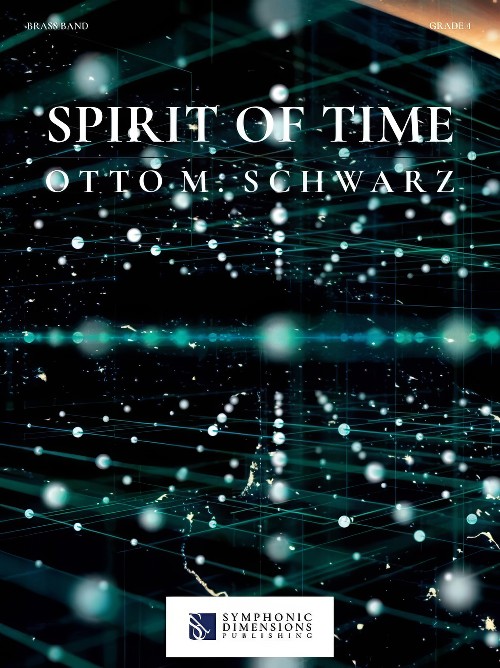
Spirit of Time (Brass Band - Score and Parts) - Schwarz, Otto M.
Zeitgeist; transformations; a departure for new shores... these are buzzwords we often encounter nowadays. Above all in this digital age, it is essential that we face changes positively and that we make the very best of them. Music is emotion! Otto M. Schwarz begins many of his lectures with this phrase, and this is exactly what we feel in this new concert work. Rapid, and full of energy, is the leap into a new chapter, wonderful opportunities are waiting to be discovered in uncharted lands. But change is not only loud and momentous. The creative power of the future lies dormant in the inventive spirit of the individual, quietly, thoughtfully, silently and alone! The final sequence of this work is all about good vibes: it lights the way to a positive future and stands for the dawn of a new era!Duration: 10.00
Estimated dispatch 7-14 working days
-
 £64.95
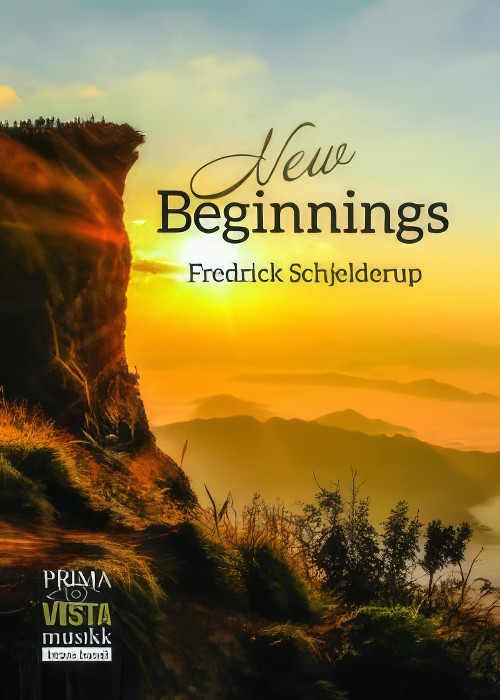
New Beginnings (Brass Band - Score and Parts) - Schjelderup, Fredrick
New Beginnings was commissioned by the National Youth Brass Band of Great Britain and was first performed by The National Children's Brass Band of Great Britain in August 2021.It describes in sonic terms the effect that energy can create, both musically and emotionally. Here, in a burst of vibrant rhythmic patterning, and dedicated to the young players of this famous brass band, New Beginnings is born.There are three sections:From the start, it is driven by the percussion section, who push the energy through a sequence of mysterious and joyous moments.After a sonorous climax, the music subsides to a slower, romantic middle section where the earlier rhythmic energy is transformed into melodic playing from the brass.As the Finale begins, earlier themes are combined, first with a fugato which passes the melodies around the band and then unites in a recapitulation that brings the whole composition to a rousing finish as the romantic hymn makes a final appearance.Duration: 10.00
Estimated dispatch 7-14 working days
-
 £35.00
Carol of the Bells (Brass Band - Score and Parts) - Littlemore, Phillip
This popular Christmas piece was composed by Mykola Leontovych around 1916. It is based on a Ukrainian folk chant known as 'Shchedryk', a New Year's carol. However, it was not until after the composer's death in 1921 that it was first introduced to Western audiences, when the Ukrainian National Choir included it on their tour of Europe and the Americas that same year. The film composer John Williams incorporated it into the score for the 1990 film Home Alone and he is credited for bringing it to a wider audience still, although it had been released on Christmas albums by a number of popular artists before that. This transcription for brass band has been adapted from the arrangement by Robert Prizeman, who created it for Libera, the world famous boys choir that he both founded and directs. Their unique, enchanting and, some say, heavenly sound delights audiences throughout the world through extensive concerts, recording and TV broadcasts. This brass band transcription introduces this skilled choral arrangement to a new genre and a whole new audience as well. Duration: 3.00
Estimated dispatch 7-14 working days
-
 £69.95
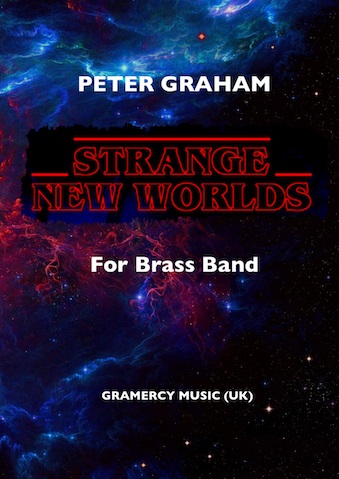
Strange New Worlds (Brass Band - Score and Parts) - Graham, Peter
Strange New Worlds was commissioned by Nicholas Childs for the National Children's Brass Band of Great Britain with funds provided by Arts Council England.The COVID-19 pandemic made it necessary for the 2020 course to transition from residential to virtual and the work was designed to accommodate this change. The participants individually filmed themselves to a click track and the videos were collated to create a "virtual" performance. The premiere was streamed live on YouTube on August 7, 2020.The work is in 5 movements with a narrative dictated by the individual movement titles. Although to me this narrative is clearly defined, multiple scenarios present themselves. Some may interpret the story as being one from the ancients while others might identify with the science-fiction of H.G. Wells. Others still will relate to the recent surge of interest in 1980s culture and the Netflix series Stranger Things (to which the title of my work pays homage). Nor would it be unreasonable to consider the piece an analogy reflecting events in 2020. Listeners will decide the story (or message) for themselves.The five movements are: I. Things to Come; II. Descent to Darkness (featuring Cornets, Trombones and Percussion); III. Resistance (featuring Horns, Baritones, Euphoniums, Basses and Percussion); IV/V. Aftermath/A New HopeDuration: 8.00
Estimated dispatch 7-14 working days
-
 £40.00
Millennium Bridge (from New London Pictures) (Brass Band - Score and Parts) - Hess, Nigel - Littlemore, Phillip
Millennium Bridge describes the pedestrian's journey across this wonderful new landmark bridge over the Thames, starting at the imposing Tate Modern, crossing the busy river, and on to St. Paul's Cathedral with its bells ringing out over the great city. This piece is the first movement of Nigel Hess's New London Pictures, which represents elements of London in the 21st Century. Suitable for Premier Youth/2nd Section Bands and above. Duration: 4.00
Estimated dispatch 7-14 working days
-
 £125.00
New London Pictures (Brass Band - Score and Parts) - Hess, Nigel - Littlemore, Phillip
New London Pictures represents elements of London in the 21st Century. The Millennium Bridge describes the pedestrian's journey across this wonderful new landmark bridge over the Thames, starting at the imposing Tate Modern, crossing the busy river, and onwards to St. Paul's Cathedral with its bells ringing out over the great city. London Eye is an incredibly large ferris wheel situated on the South Bank of the River Thames. This movement depicts a 'flight' on this riverside wheel, at the top of which the panoramic view of London is breath-taking and the expanse of the music is a suitable depiction of the view. As with all modern cities, London is over-crowded with motor vehicles. London is the first major city in Europe to adopt a Congestion Charge, and this piece (with its stop and go traffic lights) is both racy and comical. Here are Londoners attempting to go about their business in the face of overwhelming odds..... Suitable for Premier Youth/2nd Section Bands and above. Duration: 15.00
Estimated dispatch 7-14 working days
-
 £85.00
Danceries (Set I) (Brass Band - Score and Parts) - Hesketh, Kenneth
In Danceries, by Kenneth Hesketh, the melodies themselves are a mixture of old and new. Where the old occurs it has been adapted in mood and composition and is often interspersed with completely new material. The contemporary harmonies and rhythms bring a breath of new into these themes and add drama to the suite. Suitable for Advanced Youth/3rd Section Bands and above. Duration: 12.00
Estimated dispatch 7-14 working days
-
 £87.99
Moon Song, Sun Dance (Flugel Horn Solo with Brass Band - Score and Parts) - Sparke, Philip
Moon Song, Sun Dance was commissioned by flugel horn virtuoso, Claude Romailler, and premiered by him at the Swiss National Solo and Quartet Championships in April 2012. As the title implies, the work is in two contrasting movements, which can be performed separately or together. Moon Song opens with a flowing modal theme, which the soloist embellishes before the band takes centre stage. A central section brightens the mood with a new melody over the lightest of accompaniments; this is once again developed by the soloist until the original theme reappears, played by the band. This introduces a cadenza for the soloist which either closes the movement, or can be extended to link directly to the second movement. Sun Dance is a vivace 6/8 scherzo which opens with a flourish from the band. The soloist then introduces the main theme, which in turn is taken up by the band. A short bridge passage heralds a change of key and a new melody from the soloist. A brief central interlude then introduces a change of meter and recalls the main melody of Moon Song, before a recapitulation leads to a florid coda, which brings the work to a close.Duration: 8:45
Estimated dispatch 7-14 working days
 View Music