
Results
-
£57.95
Sea Pictures (Score Only)
An atmospheric and descriptive work, Sea Pictures is in three sections. The quiet but very difficult opening describes the sea at dawn when all is still save for the cries of the early-morning gulls and deep movements of the sea itself. The sun rises a
Estimated dispatch 7-14 working days
-
 £74.95
New World Dances (Brass Band - Score and Parts)
Duration: 8:17Includes: Earth Dance; Moon Dance; Sun Dance.Recorded on QPRL085D Vistas
Estimated dispatch 7-14 working days
-
 £54.20
Mr Blue Sky
Sun is shinin' in the sky, there ain't a cloud in sight - what a fabulously catchy song, one your band will love to play, and one your audiences are sure to love!
Estimated dispatch 7-14 working days
-
£37.95
New World Dances (Score Only)
Includes: Earth Dance; Moon Dance; Sun Dance
Estimated dispatch 7-14 working days
-
 £119.99
The Lonesome Knight - Saskia Apon
The composition the Lonesome Knight was based on a fairytale. The piece was written by Saskia Apon for the National Brass Band Championships 2001. Once upon a time there was a knight who went to fight and defeat the dragon that had beenkilling the people of his town. There is a short but intense battle between the two and the knight is triumphant. However whilst persuing the dragon the knight has travelled far away from his home and now is lost. He roames around trying to findhis way home, but exhausted and weary he falls to the ground. He awakens startled by a Giant and a group of Goblins who are celebrating the death of the dragon. The knight joins in the festivities but after a long evening is once more leftalone. The sun rises the following morning and he sees a castle on the horizon. He enthousiastcally ventures towards the castle in the hope of meeting other people. However he becomes greatly disillusioned when there is none to be found. Inhis desperation the knight climbs the tower ready to jump off. Suddenly he hears a heavenly voice. Right before him is the most beautiful princess he has ever seen. She graciously thanks him for killing the dragon, a spark ingnites between themand they build a life together and.... live happily ever after! Saskia Apon studied harp at Rotterdam School of music. With this instrument she rounded of her studies by passing with credit, however it was her love of composition thatremained her focus. Self-taught, she began composing at the age of nine. Since then she has written pieces for The Dutch Brass Quintet, The Dutch Brass Ensemble, The Rotterdam Trombone Quartet and the brass band quintet Brass Ability. Atpresent she is the in-house arranger for The Rotterdam Philarmonic Brass Ensemble. Besides the customary attention for the real splashworks she endeavours to add value to the melodic function of the brass wind instruments in her music. Hercompositions and arrangements can be found on many diverse Cds.The composition the Lonesome Knight was based on a fairytale. The piece was written by Saskia Apon for the National Brass Band Championships 2001. Once upon a time there was aknight who went to fight and defeat the dragon that had been killing the people of his town. There is a short but intense battle between the two and the knight is triumphant. However whilst persuing the dragon the knight has travelled far awayfrom his home and now is lost. He roames around trying to find his way home, but exhausted and weary he falls to the ground. He awakens startled by a Giant and a group of Goblins who are celebrating the death of the dragon. The knight joins inthe festivities but after a long evening is once more left alone. The sun rises the following morning and he sees a castle on the horizon. He enthousiastcally ventures towards the castle in the hope of meeting other people. However he becomesgreatly disillusioned when there is none to be found. In his desperation the knight climbs the tower ready to jump off. Suddenly he hears a heavenly voice. Right before him is the most beautiful princess he has ever seen. She graciously thankshim for killing the dragon, a spark ingnites between them and they build a life together and.... live happily ever after! Saskia Apon studied harp at Rotterdam School of music. With this instrument she rounded of her studies by passing withcredit, however it was her love of composition that remained her focus. Self-taught, she began composing at the age of nine. Since then she has written pieces for The Dutch Brass Quintet, The Dutch Brass Ensemble, The Rotterdam Trombone Quartetand the brass band quintet Brass Ability. At present she is the in-house arranger for The Rotterdam Philarmonic Brass Ensemble. Besides the customary attention for the real splashworks she endeavours to add value to the melodic functionof the brass wind instruments in her music. Her compositions and arrangements can be found on many diverse Cds.
Estimated dispatch 5-14 working days
-
£60.99
Aurora Borealis - Morten J. Wallin
Aurora Borealis, more popularly known as the Northern Lights, was a source of superstition in the Middle Ages. This dazzling spectacle, which is accompanied by whispering sounds, put the fear of God into those who didn't know that this was simply one of nature's grand shows. Many heathen attributed the phenomenon to the incomprehensible ways of the gods. Today we know better. Every 11 years, the amount of particles emitted by the sun is at its highest level, as is the case this year. These particles are hurled away from the sun, beyond its magnetic field. A small percentage of these particles are able to penetrate the earth's atmosphere. Once they are here, they begin tocollide and form the beautiful patterns in the night sky which we call the Aurora Borealis.
Estimated dispatch 5-14 working days
-
 £109.99
Nordic Moods - Tom Brevik
The composer:1st movement: Reflections by the Fjord.Overlooking one of the mighty fjords of Norway, my mind and thoughts are with an old religious Norwegian folk-tune, with words by the famous parson Peter Dass.The majestic fanfare-likeopening reflects the power of God our Father, the choral itself heard for the first time on flugelhorn. The choral is repeated a few times, separated only by some short variations. The movement ends in thriumph, with fanfares and the choral broughttogether.2nd movement: Reflections in the Old Church.In this movement my associations of a summer day, finding myself alone in an old deserted stone church. From the old walls I hear folk songs, perhaps like the ones sung in the church bypoor fishermen and farmers in days gone by. Suddenly the light from the sun breakes through the small circular window above the altar, and a lovely melody is heard, before the original figures take us to the end of the movement.3rd movement:Festive Reflections.Any festive occasion can be reflected in this movement. from the bonfire at midsummer-night to the children celebrating the return of the sun in the northern part of Norway. from the traditional sleigh-riding at Christmas tothe Celebrations of the National Day on the 17th of May each year.
Estimated dispatch 5-14 working days
-
 £60.99
A Summer Holiday - Patrick Millstone
In 'A Summer Holiday' Patrick Millstone takes us with him on a journey. After a year's hard work we may finally enjoy a well-earned holiday. The first part of this three-part composition has the appropriate title 'On Tour'. When we chose our holiday destination, the brochure said that it would be bathed in sunlight every day. Unfortunately, this turns out not to be the case. Somewhat melancholically, we play round games in our summer house on a 'Rainy Day'. However, the next day, when the sun again has driven away all the clouds, we naturally visit the 'Crowded Beach', where we enjoy both sun, sea and beach once again.
Estimated dispatch 5-14 working days
-
 £60.99
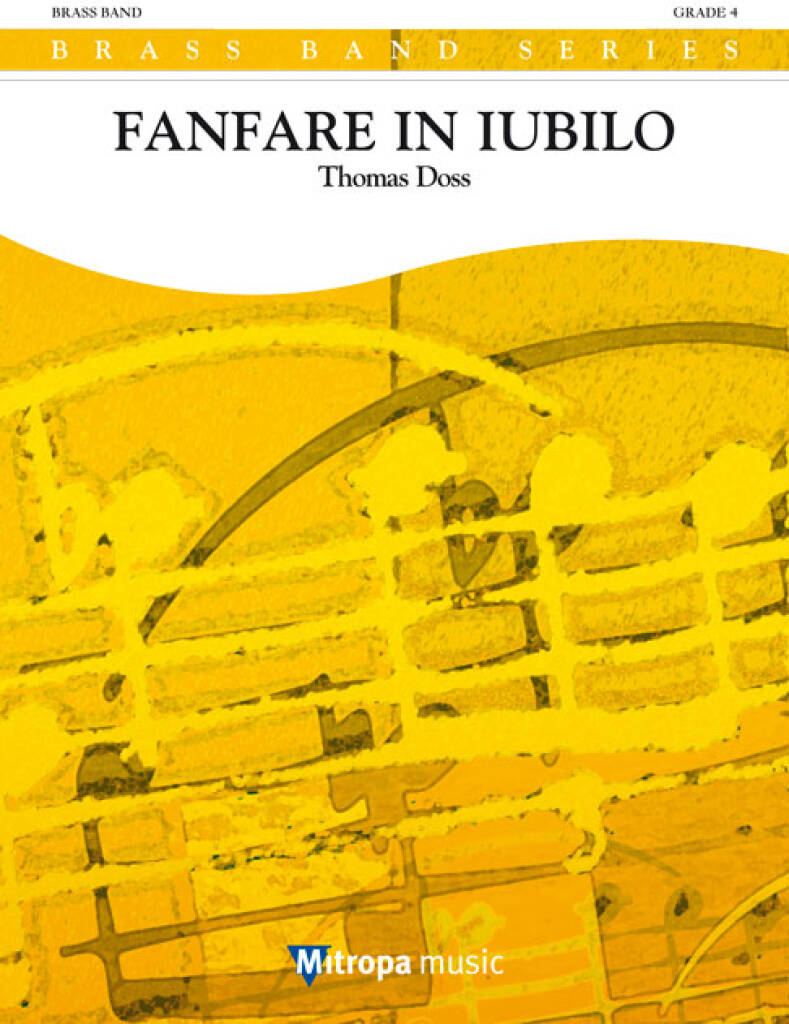
Fanfare in Iubilo - Thomas Doss - Brian Johnson
The power of this bright fanfare reflects the optimism, joy and commitment to tradition that the people of the Italian town of Schlanders have deep within their souls. The golden trumpets from the valleys of South Tyrol echo across the mountains on both sides of the Austrian-Italian border and help to convey the composer's message: just as the sun shines on all parts of the world, music knows no boundaries. This message echoes throughout this brilliant fanfare.
Estimated dispatch 5-14 working days
-
 £54.99
Caribbean Calypso - Roland Kernen
The music of the Caribbean is a mixture of styles encompassing traditions that reflect the nature of its many islands and ethnic groups which inherited a multitude of rhythms imported by slaves from West Africa. Europeans brought with them Western-style melodies and harmonies, still used today in Trinidadian calypso, a traditional folk genre which gained worldwide popularity thanks to internationally famous artists such as the American singer Harry Belafonte (Calypso, Island in the Sun, Day-O/Banana Boat Song). Fascinated by this music which embodies the very spirit of exoticism, Roland Kernen composed Caribbean Calypso, a composition with softly swaying rhythms whichfollow a gentle and subtle melodic line in a rum and cigar-flavoured atmosphere.
Estimated dispatch 5-14 working days
 View Music