
Results
-
£33.00
Carnaval Dorado
Translated literally, Carnaval Dorado means 'golden carnival'. Whilst composing this piece, I had in mind a marching carnival band that slowly forms out of the morning mist but then quickly starts marching with energy and purpose in the early sunshine. There is a brief siesta halfway through where the 'band' conserves its energy in the mid-day sun but soon the percussion section calls the band
In Stock: Estimated dispatch 1-3 working days
-
Wild Flower Variations - Traditional - Len Jenkins
The theme for this delightful piece is believed to be Spanish and was originally heard in a Mediterranean church over 30 years ago, sung by the local choir accompanied by local musicians. The theme is not stated separately, and the piece begins directly with the First Variation. The following Variations are subtly different from the First, yet both retain the essential warmth of the Mediterranean sun in their harmonic progression. A short Coda rounds off this relaxing and escapist siesta. Time to wake up...The piece is scored to be playable by most Third or Fourth Section bands.
-
£13.00
Gilbert and Sullivan Melodies - Gilbert & Sullivan - Stephens, D
Sorry Her Lot; Poor Wandering One; I Built Upon A Rock; I Cannot Tell What; Take A Pair of Sparkling Eyes; Silvered Is The Raven Hair; The Sun Whose Rays; Were I Thy Bride; In Bygone Days; Prithee Pretty Maiden and True Love; Love Is A Plaintive Song; Oh Goddess Wise
In Stock: Estimated dispatch 1-3 working days
-
 £99.95
SEA PICTURES (Brass Band - Score and Parts) - Sparke, Philip
An atmospheric and descriptive work, Sea Pictures is in three sections. The quiet but very difficult opening describes the sea at dawn when all is still save for the cries of the early-morning gulls and deep movements of the sea itself. The sun rises and the next section pictures it glistening and sparkling on the waves. A school of playful dolphins passes. As they swim into the distance we are alone again with the sun and the waves. But there are distant rumblings; from far away a storm approaches. Cool breezes disturb the surface of the sea as it clouds over. And then the storm is upon us, turning the sea into the most awful force in all nature. Then, as suddenly as it had begun, it abates, leaving the sea once again serene in sunlight. All is calm but, as the work fades to a close, distant claps of thunder remind us that we are always at the mercy of the power and ficklesness of nature. Championship section. Duration 20:13
Estimated dispatch 7-14 working days
-
£57.95
SEA PICTURES (Brass Band - Score only) - Sparke, Philip
An atmospheric and descriptive work, Sea Pictures is in three sections. The quiet but very difficult opening describes the sea at dawn when all is still save for the cries of the early-morning gulls and deep movements of the sea itself. The sun rises and the next section pictures it glistening and sparkling on the waves. A school of playful dolphins passes. As they swim into the distance we are alone again with the sun and the waves. But there are distant rumblings; from far away a storm approaches. Cool breezes disturb the surface of the sea as it clouds over. And then the storm is upon us, turning the sea into the most awful force in all nature. Then, as suddenly as it had begun, it abates, leaving the sea once again serene in sunlight. All is calm but, as the work fades to a close, distant claps of thunder remind us that we are always at the mercy of the power and ficklesness of nature. Championship section. Duration 20:13
Estimated dispatch 7-14 working days
-
 £29.95
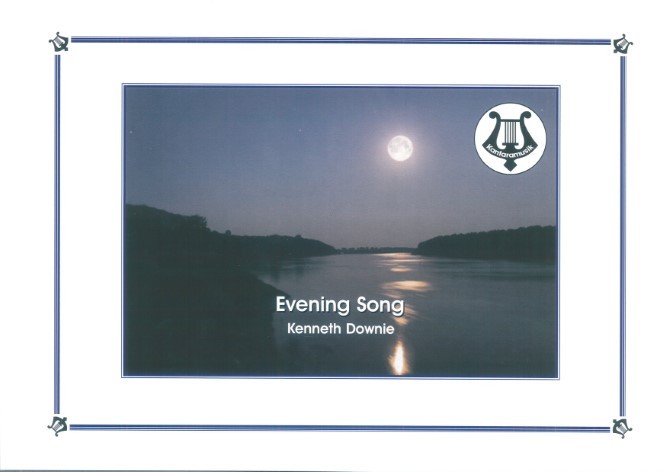
Evening Song (Brass Band - Score and Parts) - Downie, Kenneth
Evening Song recalls an old, and now rarely used, melody by William Kirkpatrick with words by pioneer Salvationist musician Fred Fry. The song's words are direct, to the point of being blunt; 'You must have your sins forgiven, ere the sun goes down; If you wish to go to Heaven, when the sun goes down'. The lyrical style of this setting is aimed at producing a feeling of calm and repose, of assurance and peace, the products of a heart reconciled.
Estimated dispatch 7-14 working days
-
£14.95
Evening Song (Brass Band - Score Only) - Downie, Kenneth
Evening Song recalls an old, and now rarely used, melody by William Kirkpatrick with words by pioneer Salvationist musician Fred Fry. The song's words are direct, to the point of being blunt; 'You must have your sins forgiven, ere the sun goes down; If you wish to go to Heaven, when the sun goes down'. The lyrical style of this setting is aimed at producing a feeling of calm and repose, of assurance and peace, the products of a heart reconciled.
Estimated dispatch 7-14 working days
-
 £64.95
Dance Spirit (Brass Band - Score and Parts) - Wiffin, Rob
Dance Spirit is a three movement suite of dances comprising Stomping Dance, Waltz Interlude and Duende linked by solo dancer cadenzas. It started life as the wind band piece Spirit of the Dance. In it I attempted to capture some of the elements of this most fundamental of human activities, the urge to move our bodies to the rhythm of the music. In re-working it for brass band I extended the duration of the Waltz Interlude and increased the technical level in some areas with the intention of making it a suitable test piece.Stomping Dance - The suite starts with perhaps the most basic dance feeling, the desire to stomp our feet to the music, unrefined, no knowledge of steps needed. The heavy stomp is not always present in the music here, and sometimes you can sense the dancers trying something a little more refined, but it is always lurking in the background, ready to draw us back to the elemental rhythm of the beat.Waltz Interlude - Of course, dance does not always have to have heat, it can be elegant and restrained, emphasising fluidity of line and movement. In the waltz it is occasionally suspended by the held poses before the motion starts again. Unlike the outer movements, the Waltz Interlude is cool, danced in moonlight rather than under the sun. The two dancers sometimes move as one and at other times the man provides a frame for the more intricate arabesques of his partner.Duende - During my time living in Spain I went to watch some flamenco dancing. I was expecting the normal tourist cliches but the dancers were serious students of Flamenco Nuevo y Viejo (new and old). They performed with passion to some pounding asymmetric rhythms and their performance was the inspiration for Duende. Duende as a term is hard to define. It is a spirit of performance - that moment when you are right in the middle of the creative spirit of the music. It is about soul and a heightened state of emotion. Federico Garcia Lorca wrote: I have heard an old maestro of the guitar say, The duende is not in the throat; the duende climbs up inside you, from the soles of the feet. Meaning this: it is not a question of ability, but of true, living style, of blood, of the most ancient culture, of spontaneous creation.- Rob WiffinDuration: 13.45
Estimated dispatch 7-14 working days
-
 £95.00
Tenor Horn Concerto 'Three Gods' (Tenor Horn Solo with Brass Band - Score and Parts) - Gregson, Edward
Edward Gregson's Tenor Horn Concerto (Three Gods) was commissioned by the Belgian tenor horn soloist Tim de Maeseneer for a recording of commissioned works he made in 2024 with his own band, Brass Band Willebroek.The subtitle of 'Three Gods' refers to three mythological Greek Gods: Zeus, Hermes and Apollo. The idea for this came from Gregson's Viola Concerto, which he composed in 2023 and which was similarly subtitled 'Three Goddesses'. Indeed, the first movement of the horn concerto shares some common material with the viola concerto, although the other movements are newly composed.The concerto exploits the noble character of the horn, but the writing is also virtuosic in character as well as lyrical and melodic, demanding an extended playing range of nearly four octaves with a variety of colouration in its sonorities. The unifying motif of the whole concerto is the interval of a rising 5th, heard at the outset. The opening also has some other surprises (both seen and heard).The musical ideas, cast in three separate movements, take their starting point from the characters of the Three Gods in the title:Zeus, ruled as King of the Gods on Mount Olympus, and was the God of Thunder and Lightning and of War. His music is often threatening and violent, but also has a more tender side as portrayed in the lyrical second subject. However, the dominant mood is one of foreboding.Hermes was the great messenger to the Gods who could travel between realms on his winged sandals. Thus, his music is fast, fleet of foot, and mercurial - a dashing scherzo, but with lyrical and expressive moments.Apollo, the God of Music and Dance (and the Sun), symbolises virtue and beauty. This final movement, 'Hymn to Apollo', is mainly slow and hymn-like and cast in a continuous stream of melody passed between soloist and band. Brief fanfares herald a triumphant march, before the music returns to its quiet opening, gradually rising to a triumphant climax with glittering melodic percussion leading the way. The music ends in a blaze of glory!Duration: 17.00
Estimated dispatch 7-14 working days
-
£40.00
Tenor Horn Concerto 'Three Gods' (Tenor Horn Solo with Brass Band - Score only) - Gregson, Edward
Edward Gregson's Tenor Horn Concerto (Three Gods) was commissioned by the Belgian tenor horn soloist Tim de Maeseneer for a recording of commissioned works he made in 2024 with his own band, Brass Band Willebroek.The subtitle of 'Three Gods' refers to three mythological Greek Gods: Zeus, Hermes and Apollo. The idea for this came from Gregson's Viola Concerto, which he composed in 2023 and which was similarly subtitled 'Three Goddesses'. Indeed, the first movement of the horn concerto shares some common material with the viola concerto, although the other movements are newly composed.The concerto exploits the noble character of the horn, but the writing is also virtuosic in character as well as lyrical and melodic, demanding an extended playing range of nearly four octaves with a variety of colouration in its sonorities. The unifying motif of the whole concerto is the interval of a rising 5th, heard at the outset. The opening also has some other surprises (both seen and heard).The musical ideas, cast in three separate movements, take their starting point from the characters of the Three Gods in the title:Zeus, ruled as King of the Gods on Mount Olympus, and was the God of Thunder and Lightning and of War. His music is often threatening and violent, but also has a more tender side as portrayed in the lyrical second subject. However, the dominant mood is one of foreboding.Hermes was the great messenger to the Gods who could travel between realms on his winged sandals. Thus, his music is fast, fleet of foot, and mercurial - a dashing scherzo, but with lyrical and expressive moments.Apollo, the God of Music and Dance (and the Sun), symbolises virtue and beauty. This final movement, 'Hymn to Apollo', is mainly slow and hymn-like and cast in a continuous stream of melody passed between soloist and band. Brief fanfares herald a triumphant march, before the music returns to its quiet opening, gradually rising to a triumphant climax with glittering melodic percussion leading the way. The music ends in a blaze of glory!Duration: 17.00
Estimated dispatch 7-14 working days
 View Music