
Results
-
 £105.20
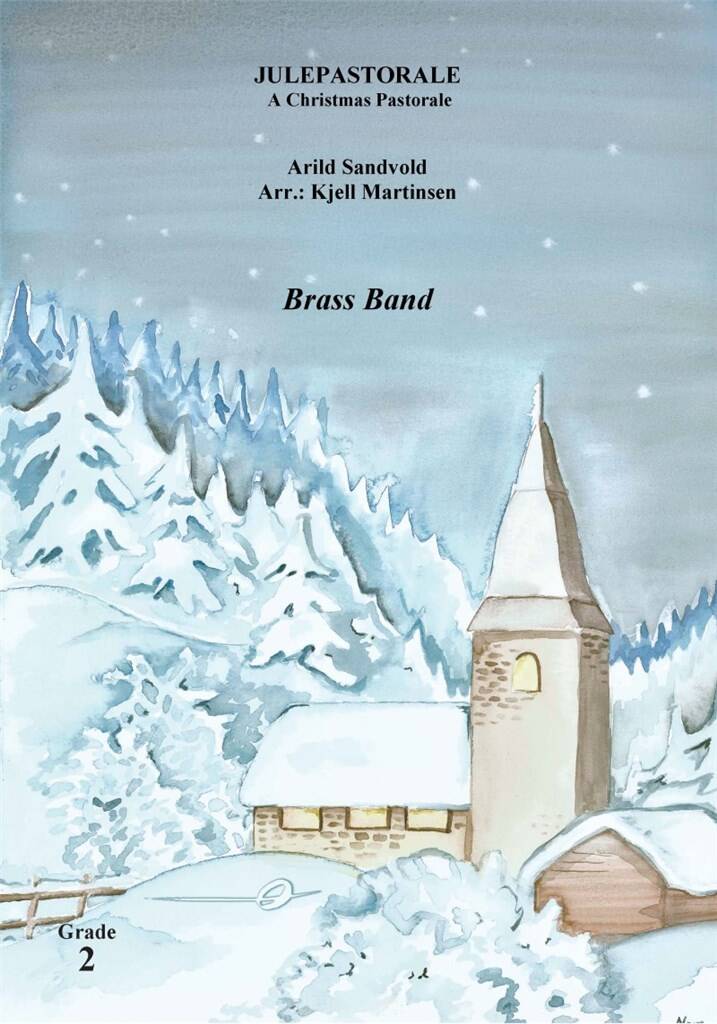
Julepastorale - Arild Sandvold - Kjell Olav Martinsen
Arild Sandvold (1895 - 1984) began his studies at the Music Conservatory in Kristiania (Oslo) in 1906, in piano and organ as well as music theory. After his debut as organist and pianist, he had his debut as orchestral conductor in 1924. At the same time he also had two periods of studies in Leipzig. In addition to studies in piano and organ, he received tutoring in composition. He was a teacher at the Oslo Music Conservatory and organist and a cathedral cantor in Oslo for more than 50 years. Sandvold brought both Baroque and Romantic organ works to a wider audience. He wrote a number of works for organ, in addition to music for choir and orchestra. The polyfony of the lateBaroque and the harmony of the Romantic period serve as the basis of his musical style. "A Christmas Pastorale" arranged with thoughts about the brass bands possibility for sound and colour, and should be a nice piece to do on concerts in the Christmas time.
Estimated dispatch 5-14 working days
-
 £19.95
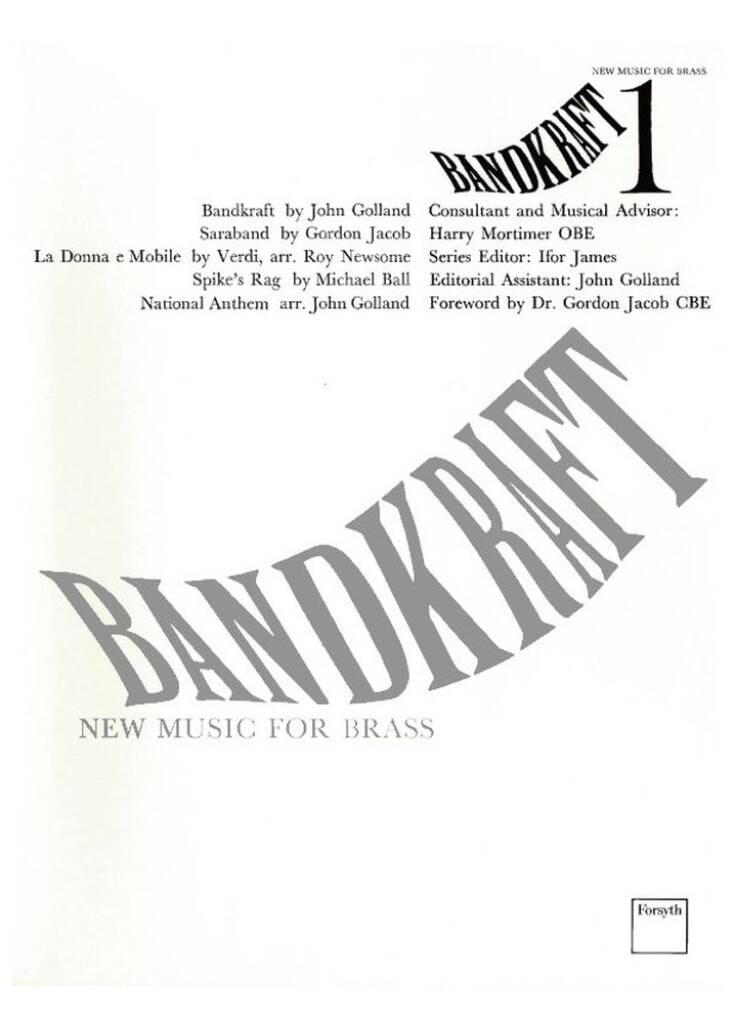
Bandkraft 1
The first of three superb sets of new music and arrangements for brass ensemble, edited by John Golland.1. Bandkraft - John Golland: A substantial piece with an exciting syncopated rhythm introduced in the opening bars and referred to throughout in a fanfare-like manner, to which a hint of dissonance adds extra thrill to the sound.2. Saraband - Gordon Jacob: A stately Elizabethan dance of great beauty, utilising modal harmony in Jacob's characteristic style. Constant speed, full note values and careful playing will achieve a beautiful, delicate effect.3. La Donna E Mobile - Verdi, arr. Roy Newsome: An amusing arrangement of this popular favourite by a conductor and adjudicator of international acclaim. Easy and enjoyable to play and to listen to.4. Spike's Rag - Michael Ball: A skilfully written piece in the true tradition of Scott Joplin, with the ragtime rhythm the backdrop to an unfolding conversation between the sections of the band. Really persuasive entertainment.5. National Anthem - arr. John Golland: A simple first verse setting the scene for the colourful and majestic second, utilising chromatic harmonies and an optional tenor counter melody for added splendour.
Estimated dispatch 5-14 working days
-
 £184.00
The Maestro - Andrew Pearce
The Maestro, a concertino voor trompet en band, was commissioned by Philip Cobb, principal trumpet of the London Symphony Orchestra. I spent most of Summer 2011 in Prague and London composing this demanding piece, for this was a wonderful opportunity to write a large scale work for one of the world's finest Trumpet virtuosos and I accepted the assignment with great enthusiasm. I also felt a great responsibility to deliver a tour de force for this world class player that was both challenging and enjoyable. Phil was seeking melodies and themes in the piece and had enjoyed my album 'Cinema Symphony', and the dramatic vistas it conjured up. Before writing began, I listened to his beautiful album 'Life Abundant' many times, ensuring I had his sound in my head while writing. The piece represents the many aspects of a contemporary trumpeter's musical life from; brass band chorale (a homage to Phil's musical roots), to the symphonic concert hall to the film recording studio. I am delighted to have had Phil and the International Staff Band record this work under the baton of Dr Stephen Cobb. Its a tour de force not only for the soloist but also for the band and should be an exciting challenge for the very best bands out there.
Estimated dispatch 5-14 working days
-
 £94.99
Dublin Pictures - Marc Jeanbourquin
Ireland is a multi-faceted country that has developed a popular and distinctive musical culture. The first movement of Dublin Pictures reflects Irish festivals where there is dancing and traditional beer flowing.More tranquil in its feel, the second movement illustrates the landscape that can be seen from the Ha'penny Bridge, a bridge that crosses the River Liffey in Dublin. This movement highlights the wide range of the orchestra's sound colours as the musicians' voices combine with the wind and percussion to accompany the soloist. The lively and joyful rhythms of the last movement take the listener to Temple Bar, the famoustourist quarter of the city, well known for its vibrant nightlife.The music's energy and virtuosic motifs are in contrast to the previous movement and provide a spirited and festive finale.Marc Jeanbourquin wrote this piece in three movements for Azimuts Brass in 2011. He then arranged it for Concert, Fanfare or Brass Band.
Estimated dispatch 5-14 working days
-
 £53.50
Romance for Horn - Joseph Turrin
Several years ago, I attended an Imperial Brass concert in the United States, which featured soloist Sheona White on tenor horn. I was so impressed with her playing that I asked if I could write something for her. The result of the conversation is this piece, Romance for Horn. I thought I'd compose something melodically flowing with grace and tenderness that was very carefully crafted to match Sheona's beautiful sound on the tenor horn. As for the overall structure of the work, it basically consists of flowing melodic lines in the solo part supported by a pulsing harmonic current that runs throughout. A piano reduction of this fine Romance is also available.Joseph Turrin
Estimated dispatch 5-14 working days
-
 £137.99
Sunrise with Sea Monsters - Oliver Waespi
The title of this work is based on the painting of the same name by the English painter William Turner. The ambiguity and suggestive power of this seascape offers great musical possibilities. The first part of the work represents the sunrise, and depicts scenes from Greek mythology in which two sea monsters from Odyssey play their part. In Charybdis, rugged high and low sound fields contrast with a tuneful theme, veined with restlessly pulsing lines. The subsequent fragmentary movement, Sirens, is characterized by mysterious sounds and intertwined arabesques, that are increasingly overshadowed by menacing chords. Concluding the final movement is another famous musical monster: a Tarantella. Sunrise with Sea Monsters was commissioned by the Brassband Burgermusik Luzern and was premiered at the 2023 Swiss Brass Band Championships, conducted by Michael Bach.
Estimated dispatch 5-14 working days
-
 £127.30
Song for Frances - Øystein Olsen Vadsten
"Song for Frances" is a classic love ballad, written for concert band and brass band, with a soloist on euphonium.The piece always has the soloist in focus and gives him plenty of room to show off, both a warm sound and technical skills. In the first part of "Song for Frances", the basic melody is clearly presented, while the rest of the piece is more of a written "as if improvisation" with various melodic and technical "whims". The piece will be perfect for any euphoniumist looking for a challenge.
Estimated dispatch 5-14 working days
-
 £137.99
A Gabrieli Fantasy - Bert Appermont
In this five-movement work, Bert Appermont explores the possibilities that three choruses within a brass band have to offer. For this, he used the Canzon a 12 in echo by Giovanni Gabrieli, which he also used in 2018 for a double chorus trombone octet of the same name. There's a lot to be enjoyed in this fantasy, with its range of motifs, melodic cells and chords plus counterpoint techniques like the canon and imitations. An atmospheric piece of music that presents variation in sound and in stage arrangement as well!
Estimated dispatch 5-14 working days
-
 £154.99
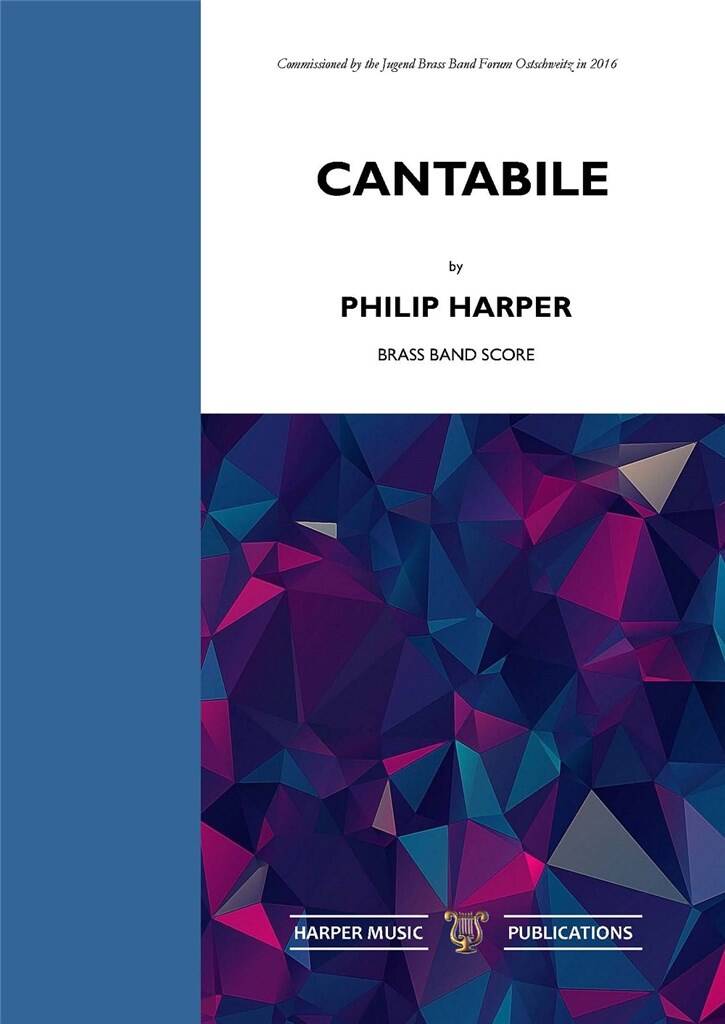
Cantabile - Philip Harper
"As long as we live there is never enough singing." - Martin Luther Philip Harper composed this piece in response to his personal concern about the direction of new music for brass band. His goal with this 5 movementCantabile, was to compose a piece which fully complied with all that is asked of a top-level test in the 21st Century, but also to reconnect with more traditional values such as lyricism in melody and richness of blendedbrass sound. Each of the 5 parts seek to capture this idea.
Estimated dispatch 5-14 working days
-
 £125.00
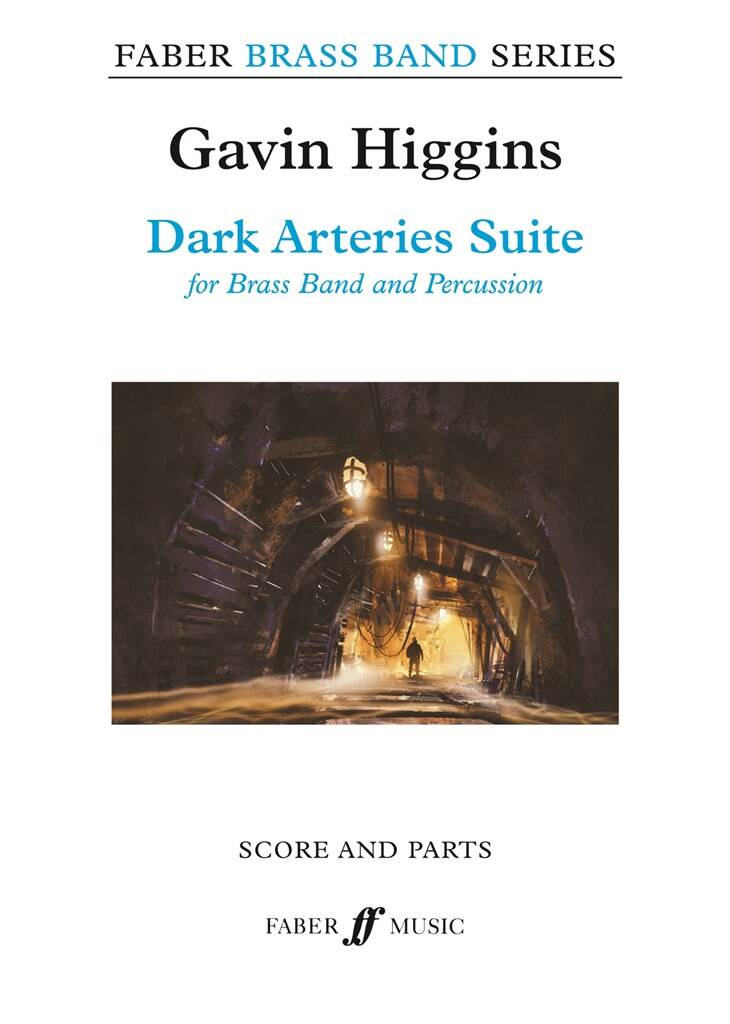
Dark Arteries - Gavin Higgins
Dark Arteries was commissioned by Rambert Dance Company and first performed in May 2015 with the Tredegar Town Band sharing the stage with Rambert dancers. Dark Arteries is a personal and at times highly wrought response to the Miners' Strike and its aftermath. It is in three movements, the first and last are expansive, with widely contrasting sound worlds, from dark, brooding melodies and the haunting sounds of solo flugel horn to wild syncopations on cornets, suggestive of an imposing, but often bleak mining landscape.In 2016 Higgins re-worked Dark Arteries into a virtuoso concert suite, which captures the essence of the work in three connected movements.Dark Arteries Suite was premiered by the National Youth Brass Band of Great Britain, conducted by Bramwell Tovey at the Barbican Centre, London, 22 April 2017.
Estimated dispatch 5-14 working days
 View Music