
Results
-
 £15.00
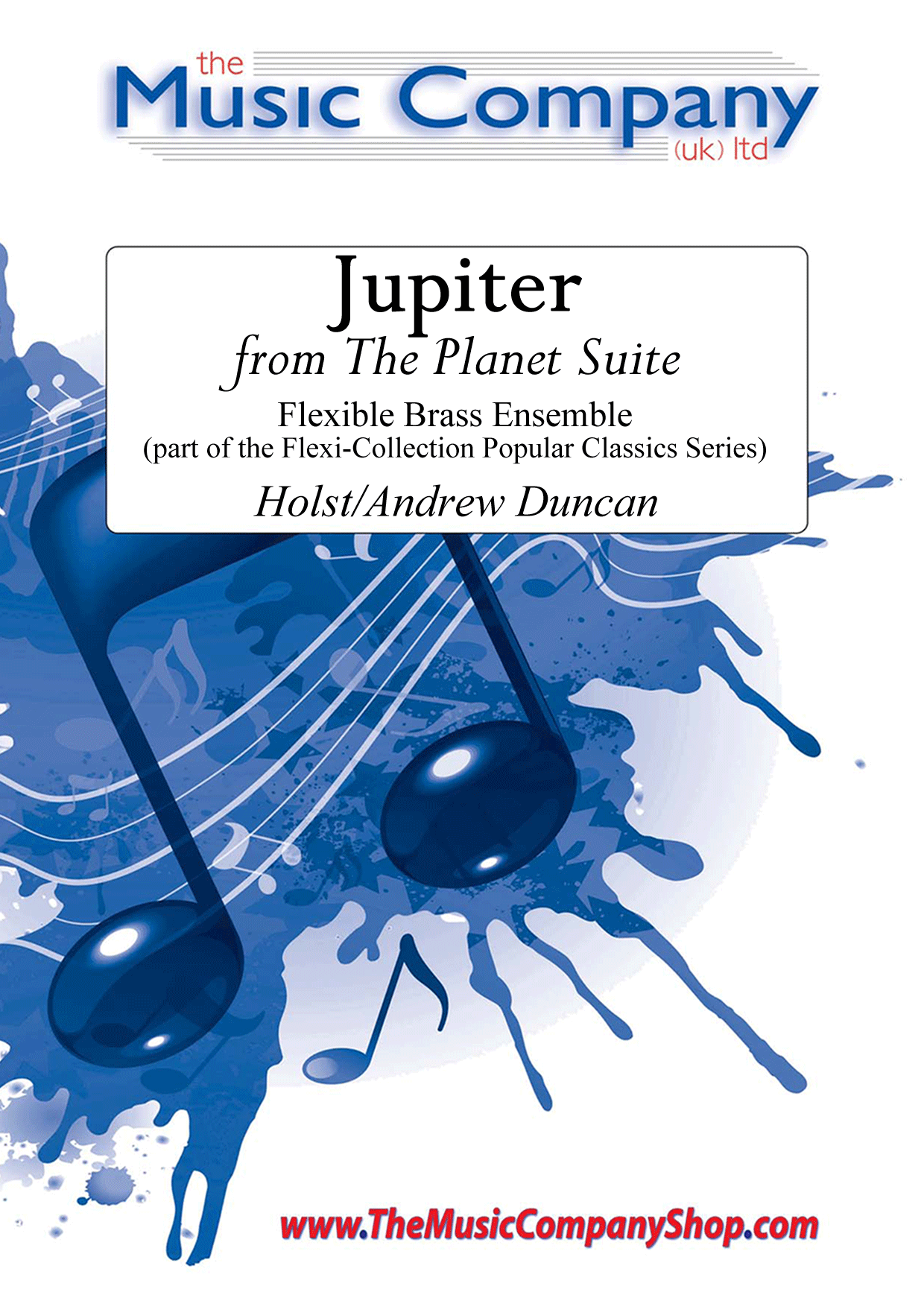
Jupiter from the Planet Suite - Holst
Programme notes:The hauntingly beautiful theme from Jupiter, from The Planets Suite has a rare qualityexpressing both optimism and dignity which makes it a popular choice for many formalpublic events such as opening and award ceremonies.The tune is originally found in the Jupiter movement from the large-scale work fororchestra called 'The Planets Suite'. Written by the English composer Gustav Holt ThePlanets Suite is thought to be his finest work.The theme has a steady 3/4 rhythm which provides a contrast in terms of tempo andmeter to the rest of the movement, and has been made popular as a patriotic song called'I vow to Thee My Country'.Performance notes:This arrangement makes use of a gradual increase in dynamics, beginning p and ending ff.With this gradual increase in dynamics is a gradual increase in the scoring starting offwith only the lower instruments playing p and ending up with everyone playing ff.The percussion part is very minimal in this arrangement (only 2 notes for the suspendedcymbal) and is an optional part.Just before the final chord there is a cut off marked in the parts. This may be a newconcept for some inexperienced players so it should be fully explained by the conductor.The Flexi-Collection ApproachFlexible scoring tailored to your needs - A perfect solution for expanding the repertoire of training and junior brass bands. The Flexi-Collection currently offers two series - Popular Classics and World Tour. Based on four-part harmony, these collections provide groups with the advantage of complete flexibility when they may not be balanced. If players or instruments are missing, the show can still go on!The Flexi-Collection - Popular Classics Series, encapsulates all that is great about the wonderful range of musical styles produced by Holst, Elgar, Handel, Verdi, Tchaikovsky, Grieg, Bizet and Parry.The thoughtful scoring and arranging by Andrew Duncan now means that groups of all abilities have access to a truly flexible set of music for their needs. With world parts, rudimentary theory, terminology translations and large format typesetting, The Flexi-Collection ticks all the boxes when it comes to bringing interesting music to the training and junior band/brass group environment.Available individually or as part of the money-saving Flexi-Collection Popular ClassicsAlbum.Scored for Brass Band and supplied with additional Easy Bb, Easy Eb and world parts - The Flexi-Collection offers flexibility in every sense of the word.
In Stock: Estimated dispatch 3-5 working days
-
 £55.00
Triumph Series Brass Band Journal, Numbers 1383 - 1386, March 2026
1383: Festival March - Lead On! (Andrew Wainwright)A dynamic march, commissioned by Majors Paul and Dawn McFarland during their appointment as Area Commanders of The Salvation Army's Dallas-Fort Worth Area, premiered at the 2023 Thanksgiving service at the Dallas Adult Rehabilitation Centre. Featuring the classic hymns Storm the forts of darkness (S.A.S.B. 980) and Lead on, O King eternal (S.A.S.B. 964), the piece captures the drive, hope, and mission at the heart of The Salvation Army's work in North Texas.1384: Confession (Kenneth Downie)This arrangement is based on the tune Lord of all (T.B. 440), one of the welcome additions to the 2015 Salvation Army tune book. Introduced to the arranger by Andrew Blyth, whose appreciation for the melody highlighted its gentle charm, the piece is dedicated to Andrew and the Peterborough Citadel Band, where he served as Bandmaster and continues to play.The music pairs the tune with the reflective words of We have not known thee as we ought (S.A.S.B. 630), a hymn often used in worship as a moment of confession and heart-searching before God. Its inclusion encourages both performers and listeners to approach worship with humility and sincerity.Although labelled simply as "German traditional," the tune's graceful simplicity is immediately evident. This arrangement preserves that character while introducing subtle harmonic colour and developing the tune's rising fourth motif as a unifying musical thread. The gentle nature of the melody remains central throughout, with a slightly heightened energy in the fifth phrase carefully drawn out without disrupting the overall serenity. The sharing of thematic material between Cornets and Horns calls for smooth, unobtrusive ensemble playing, allowing the tune's beauty to speak naturally.1385: God in good (Stephen Hull) This arrangement brings together two much'loved melodies: Goodness of God, a favourite from the final years of the arranger's service as Divisional Music Director in the Wisconsin/Upper Michigan Division, and the simple, enduring chorus God is so good. Heard often at summer camps, the song's message stayed with him, eventually inspiring this thoughtful musical pairing that highlights God's unwavering goodness throughout our lives.1386: A march in time (Martin Cordner)Written to celebrate the 130th anniversary of Thetford Corps (UKI Territory), this lively march pays tribute to a legacy of faithful witness, joyful service, and a community moving forward in God's light. Premiered by Cambridge Citadel Band during the anniversary weekend, the piece weaves together three cherished songs: Marching on in the light of God (S.A.S.B. 968), Jesus, precious Saviour (S.A.S.B. 501), and Light up the sunshine in your heart.
Estimated dispatch 7-14 working days
-
 £77.00
General Series Brass Band Journal, Numbers 2246 - 2249, August 2024
2246: Christmas Prelude - David's City (Noel Jones)In 2 Samuel 5, we read of David's anointing as King of Israel at the age of thirty, a reign that lasted for forty years. Bethlehem was known as 'David's city' because he was born there and worked as a shepherd on the nearby hills. Verses 1, 2 and 5 of Once in Royal David's City (C.C. 68) are featured in this Christmas Prelude. There are also brief references to the carols O come, all ye faithful and O little town of Bethlehem between verses.2247: Cornet and Euphonium Duet - This Kingdom (Stephen Bulla)Geoff Bullock's song, This Kingdom, has been made well known by the American gospel singer Ron Kenoly. Stephen Bulla wrote this duet for a Brass Spectacular concert held in Basel, Switzerland, in May 2019.2248: Wonder (Stephen Gibson)When we stop to consider the mystery of God's love for each one of us, its enormity can only cause us to wonder. The opening bars of this music create an atmosphere, using a rolling accompaniment underneath sustained, music and chromatic Cornets, setting the style for the entire piece. Occasional references to Albert E. Webber's chorus Can you wonder? are heard throughout.2249: O to love thee! (Michael Davis)This piece takes its title from the first verse of Francis Bottome's words, Precious Jesus, O to love thee! The introduction establishes the baroque form of a prelude which leads into the tune Glory to the lamb (T.B. 327). Following a brief interlude, the melody is passed through several sections of the band, with delicate countermelodies in the Flugel and Horns. The majestic ending eventually comes to rest on the final tonic chord.
Estimated dispatch 7-14 working days
-
 £154.99
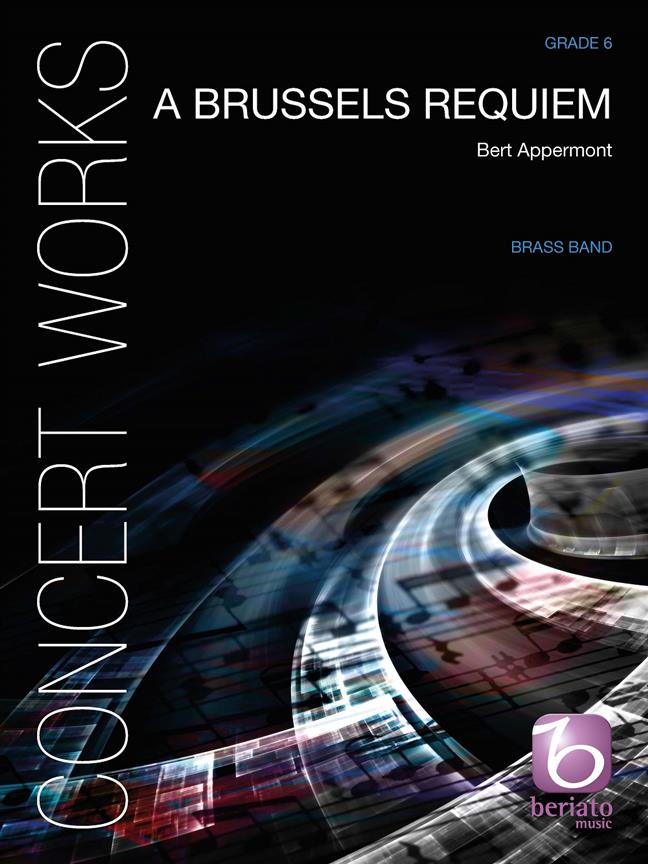
A Brussels Requiem (Brass Band - Score and Parts)
The attacks in Brussels on 22 March 2016 created a shockwave throughout Belgium and the rest of the world. Equally, the attacks in Paris and Nice led to great public indignation, fear and disbelief. What has happened to the western world? Have our cultures grown apart to such an extent that we do not understand each other anymore? Bert Appermont's intention was to voice certain emotions that these acts of terror have caused: particularly fear, grief, anger, and helplessness. He uses the French children's song Au Claire de la Lune as a connecting thread throughout the work. This piece is also about hope and faith in another world, and is meant to pay homage to all victims, resulting in a dignified remembrance. The musical development is presented in four through-composed parts, titled Innocence, In Cold Blood, In Memoriam - We Shall Rise Again and A New Day. This work was commissioned by the Brassband Oberosterreich (Brass Band Upper Austria) to be played at the European Brass Band Championships 2017.Duration: 16.30
Estimated dispatch 7-14 working days
-
 £84.95
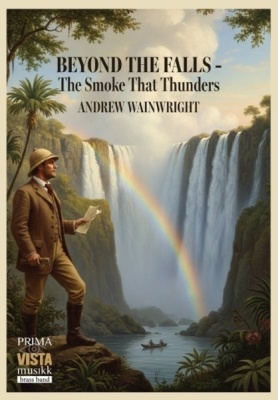
Beyond the Falls - The Smoke That Thunders (Brass Band - Score and Parts)
David Livingstone was a renowned Scottish missionary and explorer whose legendary expeditions from 1841 until his death in 1873 took him deep into the interior of central and southern Africa. While his initial aim was to spread Christianity and commerce, his legacy became defined by his relentless spirit of discovery.This work captures the harrowing and ultimately triumphant journey that led to his discovery of Victoria Falls. Originally composed for the GUS Band's performance at the 2012 Brass in Concert Championships, the work was expanded in 2026 for the Black Dyke Band's recording, Gothique Fantasy - The Music of Andrew Wainwright.The music opens with an air of trepidation, reflecting the weight of the mission ahead. This tension soon gives way to a more optimistic section featuring the Scottish folk song A Man's a Man for a' That. Livingstone reportedly hummed this Rabbie Burns tune to bolster his spirits while travelling. The score then depicts the immense hardships of the expedition (letters F to L), illustrating skirmishes with suspicious local tribes, wild animal attacks, and bouts of African fever.Following these trials, a more reflective, emotive movement (Letters L to R) explores Livingstone's internal struggle and his doubts about continuing. This emotional core is built upon the hymn Lord, Send Me Anywhere, a melody composed by Livingstone himself. Emerging from this prayer with renewed purpose, the final section (Letter R to the end) follows his path along the Zambezi River. The music builds to a triumphant climax, capturing his elation at seeing the magnificent Victoria Falls - known locally as 'Mosi-oa-Tunya' (The Smoke that Thunders).Duration: 13.30
Estimated dispatch 7-14 working days
-
£31.95
Beyond the Falls - The Smoke That Thunders (Brass Band - Score only)
David Livingstone was a renowned Scottish missionary and explorer whose legendary expeditions from 1841 until his death in 1873 took him deep into the interior of central and southern Africa. While his initial aim was to spread Christianity and commerce, his legacy became defined by his relentless spirit of discovery.This work captures the harrowing and ultimately triumphant journey that led to his discovery of Victoria Falls. Originally composed for the GUS Band's performance at the 2012 Brass in Concert Championships, the work was expanded in 2026 for the Black Dyke Band's recording, Gothique Fantasy - The Music of Andrew Wainwright.The music opens with an air of trepidation, reflecting the weight of the mission ahead. This tension soon gives way to a more optimistic section featuring the Scottish folk song A Man's a Man for a' That. Livingstone reportedly hummed this Rabbie Burns tune to bolster his spirits while travelling. The score then depicts the immense hardships of the expedition (letters F to L), illustrating skirmishes with suspicious local tribes, wild animal attacks, and bouts of African fever.Following these trials, a more reflective, emotive movement (Letters L to R) explores Livingstone's internal struggle and his doubts about continuing. This emotional core is built upon the hymn Lord, Send Me Anywhere, a melody composed by Livingstone himself. Emerging from this prayer with renewed purpose, the final section (Letter R to the end) follows his path along the Zambezi River. The music builds to a triumphant climax, capturing his elation at seeing the magnificent Victoria Falls - known locally as 'Mosi-oa-Tunya' (The Smoke that Thunders).Duration: 13.30
Estimated dispatch 7-14 working days
-
£21.95
Beyond the Falls - The Smoke That Thunders (Brass Band - Study Score)
David Livingstone was a renowned Scottish missionary and explorer whose legendary expeditions from 1841 until his death in 1873 took him deep into the interior of central and southern Africa. While his initial aim was to spread Christianity and commerce, his legacy became defined by his relentless spirit of discovery.This work captures the harrowing and ultimately triumphant journey that led to his discovery of Victoria Falls. Originally composed for the GUS Band's performance at the 2012 Brass in Concert Championships, the work was expanded in 2026 for the Black Dyke Band's recording, Gothique Fantasy - The Music of Andrew Wainwright.The music opens with an air of trepidation, reflecting the weight of the mission ahead. This tension soon gives way to a more optimistic section featuring the Scottish folk song A Man's a Man for a' That. Livingstone reportedly hummed this Rabbie Burns tune to bolster his spirits while travelling. The score then depicts the immense hardships of the expedition (letters F to L), illustrating skirmishes with suspicious local tribes, wild animal attacks, and bouts of African fever.Following these trials, a more reflective, emotive movement (Letters L to R) explores Livingstone's internal struggle and his doubts about continuing. This emotional core is built upon the hymn Lord, Send Me Anywhere, a melody composed by Livingstone himself. Emerging from this prayer with renewed purpose, the final section (Letter R to the end) follows his path along the Zambezi River. The music builds to a triumphant climax, capturing his elation at seeing the magnificent Victoria Falls - known locally as 'Mosi-oa-Tunya' (The Smoke that Thunders).Duration: 13.30
Estimated dispatch 7-14 working days
-
 £95.00
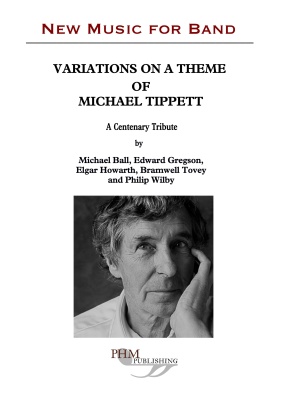
Variations on a Theme of Michael Tippett (Brass Band - Score and Parts)
A Centenary Tribute by Michael Ball, Edward Gregson, Elgar Howarth, Bramwell Tovey and Philip WilbyThis unique 'pice d'occasion' arose out of a telephone conversation in 2004 with Alan Wycherley, who was the soprano cornet player of the Foden's Richardson Band at the time. He indicated that the band would like to include an original birthday tribute for Edward Gregson (60) and Elgar Howarth (70) in its concert at the 2005 RNCM Festival of Brass in Manchester. I have been Artistic Director of Manchester's Festival of Brass since it was established in 1990 as a BBC Radio 3 series, As the centenary of the birth of Sir Michael Tippett fell on 5 January 2005, I devised this collective work as a way of embracing all three anniversaries in a novel way.The idea of joint compositions is not a new one in the classical music world. In the 1860s, Verdi was joined by a number of his contemporaries in a Requiem Mass for Rossini. In this country there have been a number of orchestral examples over the past fifty years, but never before for the brass band. Although Tippett composed only one work for brass band, Festal Brass with Blues, his orchestral works and operas are full of idiomatic brass writing. The theme I chose for this celebration is one of Tippet's most memorable miniatures featuring wind and brass. In the opera Midsummer Marriage it marks the entry of the Ancients. It is also included in the orchestral Suite in D (1948), for the Birthday of Prince Charles.I invited five of the leading contemporary voices in brass band music to add their own creative perspectives to the little Tippett theme, with it's characteristic rhythms, embellishments and modality - the Lydian mode. Each contribution was designed to fit into a tonal and formal template to give the whole work a flow and continuity. In Danse des Amis, Bramwell Tovey has composed a jazzy, humorous variation. Inspiration came from Tippett's love of jazz and, more personally, from the characteristically syncopated gait of the distinguished music critic John Amis, who Tovey once observed leaving a performance of Tippett's opera King Priam before the end. Incidentally, that performance was conducted by Elgar Howarth.We hear Edward Gregson in lyrical mode. His Midsummer Song is redolent of the sound world of Tippett's opera A Midsummer Marriage and it ends with a brief reference to a favourite of Gregson's, Tippett's Concerto for Orchestra. Michael Ball provides a brief moment of light, airy activity bringing to mind perhaps Tippett's love of Shakespearian fantasy, especially The Tempest. Elgar Howarth juxtaposes a slowed down version of the processional theme with distant recollections of fanfares from King Priam. Philip Wilby has rounded the tribute off with a spectacular fugue. During its inexorable progress Wilby ingeniously introduces the two other birthday references - the three-note musical signature that Elgar Howarth includes in much of his music and the characteristic theme which begins Edward Gregson's substantial work for brass an organ The Trumpets of the Angels. An elaborated reprise of Tippett's little theme is followed by a dynamic coda.- Paul HindmarshDuration: 13.00
Estimated dispatch 7-14 working days
-
£40.00
Variations on a Theme of Michael Tippett (Brass Band - Score only)
A Centenary Tribute by Michael Ball, Edward Gregson, Elgar Howarth, Bramwell Tovey and Philip WilbyThis unique 'pice d'occasion' arose out of a telephone conversation in 2004 with Alan Wycherley, who was the soprano cornet player of the Foden's Richardson Band at the time. He indicated that the band would like to include an original birthday tribute for Edward Gregson (60) and Elgar Howarth (70) in its concert at the 2005 RNCM Festival of Brass in Manchester. I have been Artistic Director of Manchester's Festival of Brass since it was established in 1990 as a BBC Radio 3 series, As the centenary of the birth of Sir Michael Tippett fell on 5 January 2005, I devised this collective work as a way of embracing all three anniversaries in a novel way.The idea of joint compositions is not a new one in the classical music world. In the 1860s, Verdi was joined by a number of his contemporaries in a Requiem Mass for Rossini. In this country there have been a number of orchestral examples over the past fifty years, but never before for the brass band. Although Tippett composed only one work for brass band, Festal Brass with Blues, his orchestral works and operas are full of idiomatic brass writing. The theme I chose for this celebration is one of Tippet's most memorable miniatures featuring wind and brass. In the opera Midsummer Marriage it marks the entry of the Ancients. It is also included in the orchestral Suite in D (1948), for the Birthday of Prince Charles.I invited five of the leading contemporary voices in brass band music to add their own creative perspectives to the little Tippett theme, with it's characteristic rhythms, embellishments and modality - the Lydian mode. Each contribution was designed to fit into a tonal and formal template to give the whole work a flow and continuity. In Danse des Amis, Bramwell Tovey has composed a jazzy, humorous variation. Inspiration came from Tippett's love of jazz and, more personally, from the characteristically syncopated gait of the distinguished music critic John Amis, who Tovey once observed leaving a performance of Tippett's opera King Priam before the end. Incidentally, that performance was conducted by Elgar Howarth.We hear Edward Gregson in lyrical mode. His Midsummer Song is redolent of the sound world of Tippett's opera A Midsummer Marriage and it ends with a brief reference to a favourite of Gregson's, Tippett's Concerto for Orchestra. Michael Ball provides a brief moment of light, airy activity bringing to mind perhaps Tippett's love of Shakespearian fantasy, especially The Tempest. Elgar Howarth juxtaposes a slowed down version of the processional theme with distant recollections of fanfares from King Priam. Philip Wilby has rounded the tribute off with a spectacular fugue. During its inexorable progress Wilby ingeniously introduces the two other birthday references - the three-note musical signature that Elgar Howarth includes in much of his music and the characteristic theme which begins Edward Gregson's substantial work for brass an organ The Trumpets of the Angels. An elaborated reprise of Tippett's little theme is followed by a dynamic coda.- Paul HindmarshDuration: 13.00
Estimated dispatch 7-14 working days
-
 £27.00
Auld Lang Syne (Brass Band - Score and Parts)
It is a tradition in most English-speaking countries to sing this song at the stroke of midnight on New Year's Eve to usher in the New Year. The words are at least partially written by Robert Burns and the words "Auld Lang Syne" literally mean "old long ago" or "the good old days", providing a moment of reflection before moving forwards into the New Year.The tubular bells, although pitched, sound midnight when they enter at bar 10.This arrangement was prepared for Brass Band of the Western Reserve, musical director Keith M Wilkinson, to perform at First Night, Akron, Ohio, December 31st, 2007. The following choreography is suggested:Commence the performance with all the cornets scattered around the auditorium.At the end of bar 18 invite the audience to sing along with the band.At bar 27 the cornets move to stand in front of the other members of the band to lead to the stirring conclusion. Should auld acquaintance be forgot and never brought to mind?Should auld acquaintance be forgot and days of auld lang syne?For auld lang syne, my dear, for auld lang syne,We'll take a cup of kindness yet, for auld lang syne.
Estimated dispatch 7-14 working days