
Results
-
 £59.99
Ukrainian Bell Carol - Mykola D. Leontovich - Philip Sparke
The Ukrainian Bell Carol is part of a large choral work entitled Shchedryk by the Ukrainian composer Mykola Dmytrovich Leontovych (1877-1921).The tune is an adaptation of an old 'shchedrivka', a song traditionally sung on Ukrainian New Year's Eve (January 13th) which hopes for good fortune in the year to come. The tune has since been the inspiration for at least four different Christmas carols, of which Carol of the Bells is the most famous. Philip Sparke has sourced the original Ukrainian melody to create this stirring arrangement.
Estimated dispatch 5-14 working days
-
 £79.99
Valerius Variations - Philip Sparke
Dutch composer, artist and poet Adriaen Valerius is mostly remembered today for his collection of 79 songs for voice and lute or cittern, published posthumously in 1626. Philip Sparke has taken one melody from this collection that tells of the War of Independence with Spain. The beautiful slow melody is followed by a series of lively variations to form an extremely entertaining piece that will bring great joy to all who perform and listen to it.
Estimated dispatch 5-14 working days
-
 £134.99
Tuba Concerto - Philip Sparke
When writing his tuba concerto, Philip Sparke wanted to create a work which explored the many aspects of the instrument's technical and vocal qualities but without resorting to caricature. The result is a concerto in two joined movements, which can both be programmed individually, that contains both many lyrical lines together with stunning virtuosic passages. An outstanding concerto that tuba players and brass band audiences alike will enjoy and applaud.
Estimated dispatch 5-14 working days
-
 £59.99
The Conqueror - Philip Sparke
This fantastic contest march was composed for the Alexander Brass Band from Stavanger, Norway, who wanted a brand new march to play when they took part in the world-renowned Whit Friday March Contest. In the march Philip Sparke has followed the traditional brass band contest march format and it is named as a tribute to Alexander the Great, rather than the Alexander brass band, who were actually named after their local pub!
Estimated dispatch 5-14 working days
-
 £106.99
The Saga Of Haakon The Good - Philip Sparke
Philip Sparke's The Saga Of Haakon The Good for Brass Band. Score and parts.
Estimated dispatch 5-14 working days
-
 £59.99
Jubiloso - Philip Sparke
Jubiloso was commissioned by Utsunomiya Brass Society, a talented and versatile group of brass players whom Philip Sparke has conducted on many occasions.When they asked him to compose a 'signature' march to celebrate their 30th anniversary, they asked for a bright and breezy march which they could use to open concerts.Jubiloso is in the same 'Broadway' style as Sparke's Slipstream and The Bandwagon with heavily syncopated melodies and the conventional cantabile trio section but also contains sudden bars with unusual time signatures which trip up the march rhythm.
Estimated dispatch 5-14 working days
-
 £79.99
Scaramouche - Philip Sparke
Score and parts for Philip Sparke's Scaramouche, composed for Baritone/Euphonium Concert band.
Estimated dispatch 5-14 working days
-
 £59.99
Salute to a Hero - Philip Sparke
It is a tradition at Marlow High School, Oklahoma, that the band members' parents host a Band Banquet every May, at which the senior members of the band present a gift to the band director as a token of gratitude for his year's work. In 2009, clarinet player Brenna Hensley had the idea to commission a new piece from composer Philip Sparke to present to band director Billy Daniel, which would be played at the Spring Concert later that month. Salute to a Hero was the result.The piece opens with a decorated fanfare played on cornets and trombones and, after a short bridge passage, this reappears, played by the full band. A central lyrical section brings a mood of calm, utilisingdifferent brass colours, before the fanfare returns to close the work.
Estimated dispatch 5-14 working days
-
 £87.99
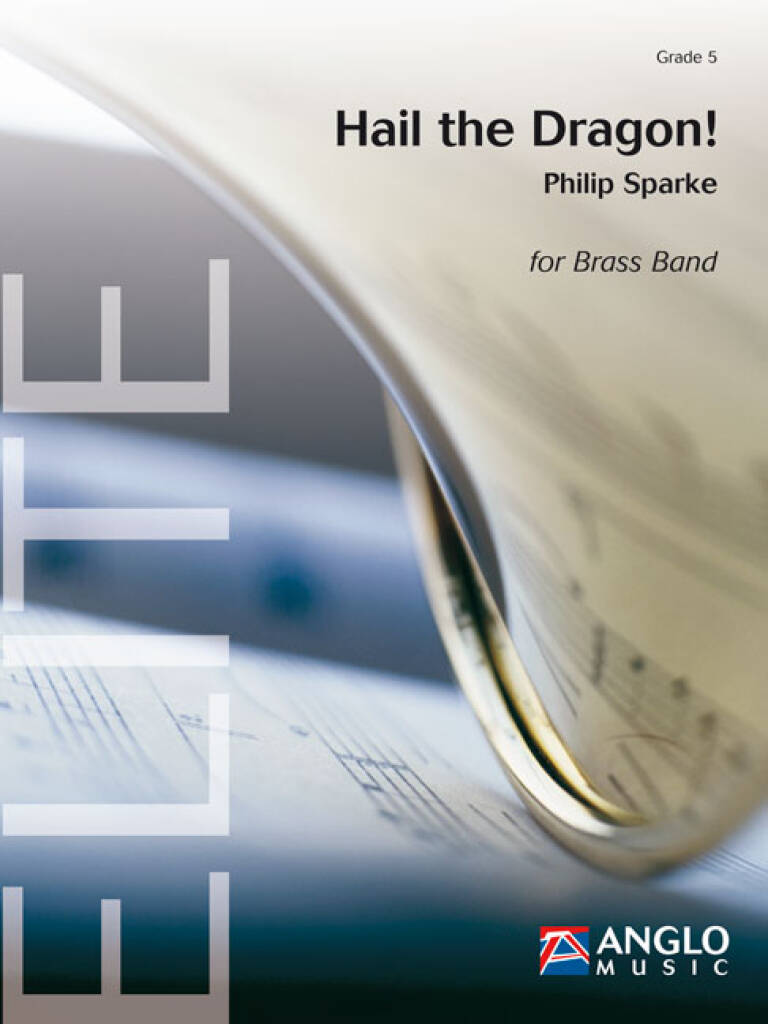
Hail the Dragon! - Philip Sparke
Its title, Hail the Dragon!, references a work Philip Sparke wrote in 1984, The Year of the Dragon. The piece opens with a lively and energetic fanfare. The mood becomes more subdued in the centre section as the cornet introduces a new theme that builds to an emotional climax. This leads into a recap of the opening fanfare which acts as a type of descant to short quotations from the last movement of The Year of the Dragon before reaching a thunderous finale.
Estimated dispatch 5-14 working days
-
 £106.99
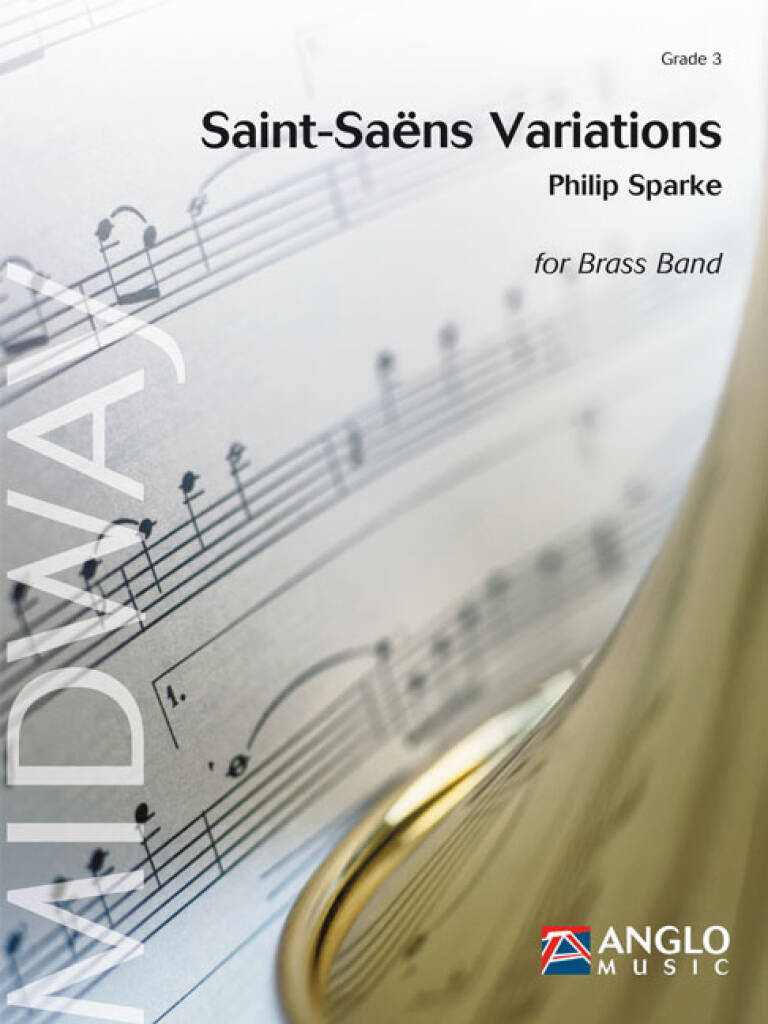
Saint-Saens Variations - Philip Sparke
In 2006, a long-time dream of Philip Sparke finally became reality: to compose a set of variations on the famous chorale from Saint-Saens' renowned Organ Symphony. In 2009 the composer reworked the piece for brass band. The resulting Saint-Saens Variations has been simplified, shortened and in many places completely recomposed, to distill the essence of the symphony even further and allow younger bands to enjoy the power of Saint-Saens' masterpiece in an approachable, yet completely faithful, work.
Estimated dispatch 5-14 working days
 View Music