
Results
-
 £54.95
Road to Run (Brass Band - Score and Parts)
The piece starts with a simple rhythmic pulse which is the basis of the entire work. This cell provides a platform for the piece to grow and develop starting with the first theme played by the euphoniums, all the way through to the conclusion performed in full gusto by the whole ensemble. The various motifs introduced throughout the opening of the piece are passed between the ensemble before the introduction of the three soloists.The central section of the piece features the Solo Trombone, Cornet and Euphonium as they take turns to play a jazz fusion solo whilst having some musical interplay with each other at the front of the stage. After this solo passage, the music then features the various sections within the ensemble, which pays homage to Weather Reports' famous "Birdland". In a jazz fused cannon, each new independent musical phrase is performed by the various sections standing. Starting with the Horns then Solo Cornets, Back Row and Flugal and finally the Baritones and Trombones.Once the different sections of the ensemble are featured, the piece then moves into the final stages. This section sees a reprieve of the opening material heard at the beginning, but further developed with the various melodic motifs passed around the ensemble. The ending builds on this material towards a rousing conclusion."Road to Run" is an up tempo, high energy concert work that has that 'feel-good factor' from start to finish. The idea behind the title is based on the feel and structure of the piece which takes the listener on a musical journey. And at 150 beats per minute - you could put it in your headphones and find your own 'Road to Run'.
Estimated dispatch 7-14 working days
-
 £89.95
Orion (Brass Band - Score and Parts)
Orion was named after the giant huntsman in Greek mythology and is a prominent constellation located on the celestial equator and visible throughout the world. It is one of the most conspicuous and recognisable constellations in the night sky. This piece and its inspiration were composed as a tone poem creating a musical picture of this amazing phenomenon.The opening introduces the constellation. Starting mysteriously with the percussion and basses this section develops a series of rhythmic and harmonic interludes from the upper brass. As this introduction develops, the melodic line lead by the Solo Cornet and Euphonium builds as the accompanying instruments increase in their rhythmic complexity. This section climaxes with a short fanfare motif which will be a prominent theme throughout this piece.The fast rhythmic section that follows serves as a technical test for the players. The thematic device introduced by the Solo Cornets is passed around various soloists and sections within the ensemble. This part of the tone poem gives the opportunity for the ensemble to highlight their technical prowess. The fanfare motif returns to conclude this section and takes the piece into the slow middle movement.Motifs heard earlier are mixed with new ideas in this slow section which give an opportunity for a variety of soloists to demonstrate their musical prowess. After the various solo passages and cadenzas, the mood shifts dramatically to a more ominous section that builds in texture and dynamic. Concluding with our returning fanfare motif the piece then builds in momentum towards our finale section.This finale is a technical showcase which will further test the playing ability and stamina of soloists, small groups and the full ensemble. Using prominent musical themes heard throughout this piece the music builds to a glorious conclusion fitting with wonderful constellation.
Estimated dispatch 7-14 working days
-
 £40.00
Abide With Me (Euphonium Solo with Brass Band - Score and Parts)
My arrangement of William H. Monk's tune of 1861, uses the euphonium soloist as the central figure for the melodic line in the three verses. Surrounding the solo line is an irregular pulsed figure in the percussion to give the music an unsettled feel whilst the muted ensemble lightly colour the melodic contour of the soloist. From the low beginnings of the piece, where no high instrumentation is used, we are led through the darkened texture to a bright finale, although the sense of the forbidding is always present.Abide With Me has always been a favourite hymn of mine and it was when watching the film 28 Days Later that I believed it would make a rather striking arrangement for brass band. This was confirmed further when the hymn was used at the 2012 opening ceremony of the London Olympics. The juxtaposition between the static, slow moving melody and the rhythmic effects of the dancers was something that I thought could be captured in an arrangement.- Paul McGheeDuration: 5.00
Estimated dispatch 7-14 working days
-
 £34.95
Excelsior - Fanfare and Theme (Brass Band - Score and Parts)
The New Mills Old Prize Band is the inheritor of a proud tradition going back 200 years. Its origin lies in a brass and reed band formed in 1812 by Timothy Beard and it is one of the oldest brass bands in continuous existence in the UK.The New Mills Old Prize Band is inextricably linked to the Beard family. Timothy Beard the founder of the band, was one of five children and two of his brothers, John and Stephen, were to join him in the band.Excelsior is based on the hymn tune 'Ransom' believed to have been composed in 1838 by Timothy's brother Stephen Beard. I have taken this hymn tune and composed a concert fanfare utilising the main melodic material from the original hymn tune.The title of the piece comes from the bands original motto "Excelsior!"Paul Lovatt-Cooper
Estimated dispatch 7-14 working days
-
 £69.95
Transformation (Brass Band - Score and Parts)
I believe in transformation, God can change the hearts of men, And refine the evil nature, till it glows with grace again'. So wrote John Gowans in the second verse of his great hymn, 'I believe that God the Father, can be seen in God the Son', written specifically to affirm Salvationists' beliefs. It is sung to the tune Bethany and in seeking to explore this great subject at the heart of the Christian gospel in musical terms, the composer has used this fine tune as the basis. Although it never appears in its entirety, it is seldom out of the picture and much of the work is derived from it. The other main source of material is the lovely, simple chorus, 'Some day I shall be like him, changed to heavenly beauty, when his face I see'. This chorus is especially prominent in the middle section but there are important references to it throughout. There are also brief references to Charles Wesley's hymn, 'Love Divine' and, in particular, the telling lines, 'Changed from glory into glory, till in Heaven we take our place'. The work suggests that, at times, the process of being transformed is a struggle, portrayed with many passages of fraught and demanding music. Considerable reserves of stamina and technique are required while, in contrast, the chorus, 'Some day I shall be like him' provides the warm, gentle centre of the work. The premiere of the work was given by The International Staff Band of The Salvation Army in Cadogan Hall on Friday 3rd June 2011, as part of the band's 120th anniversary celebrations.
Estimated dispatch 7-14 working days
-
 £84.95
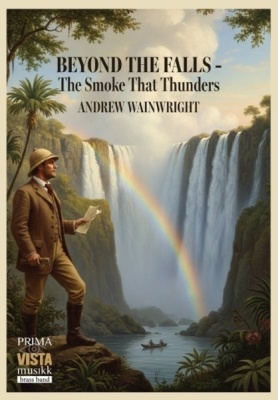
Beyond the Falls - The Smoke That Thunders (Brass Band - Score and Parts)
David Livingstone was a renowned Scottish missionary and explorer whose legendary expeditions from 1841 until his death in 1873 took him deep into the interior of central and southern Africa. While his initial aim was to spread Christianity and commerce, his legacy became defined by his relentless spirit of discovery.This work captures the harrowing and ultimately triumphant journey that led to his discovery of Victoria Falls. Originally composed for the GUS Band's performance at the 2012 Brass in Concert Championships, the work was expanded in 2026 for the Black Dyke Band's recording, Gothique Fantasy - The Music of Andrew Wainwright.The music opens with an air of trepidation, reflecting the weight of the mission ahead. This tension soon gives way to a more optimistic section featuring the Scottish folk song A Man's a Man for a' That. Livingstone reportedly hummed this Rabbie Burns tune to bolster his spirits while travelling. The score then depicts the immense hardships of the expedition (letters F to L), illustrating skirmishes with suspicious local tribes, wild animal attacks, and bouts of African fever.Following these trials, a more reflective, emotive movement (Letters L to R) explores Livingstone's internal struggle and his doubts about continuing. This emotional core is built upon the hymn Lord, Send Me Anywhere, a melody composed by Livingstone himself. Emerging from this prayer with renewed purpose, the final section (Letter R to the end) follows his path along the Zambezi River. The music builds to a triumphant climax, capturing his elation at seeing the magnificent Victoria Falls - known locally as 'Mosi-oa-Tunya' (The Smoke that Thunders).Duration: 13.30
Estimated dispatch 7-14 working days
-
£31.95
Beyond the Falls - The Smoke That Thunders (Brass Band - Score only)
David Livingstone was a renowned Scottish missionary and explorer whose legendary expeditions from 1841 until his death in 1873 took him deep into the interior of central and southern Africa. While his initial aim was to spread Christianity and commerce, his legacy became defined by his relentless spirit of discovery.This work captures the harrowing and ultimately triumphant journey that led to his discovery of Victoria Falls. Originally composed for the GUS Band's performance at the 2012 Brass in Concert Championships, the work was expanded in 2026 for the Black Dyke Band's recording, Gothique Fantasy - The Music of Andrew Wainwright.The music opens with an air of trepidation, reflecting the weight of the mission ahead. This tension soon gives way to a more optimistic section featuring the Scottish folk song A Man's a Man for a' That. Livingstone reportedly hummed this Rabbie Burns tune to bolster his spirits while travelling. The score then depicts the immense hardships of the expedition (letters F to L), illustrating skirmishes with suspicious local tribes, wild animal attacks, and bouts of African fever.Following these trials, a more reflective, emotive movement (Letters L to R) explores Livingstone's internal struggle and his doubts about continuing. This emotional core is built upon the hymn Lord, Send Me Anywhere, a melody composed by Livingstone himself. Emerging from this prayer with renewed purpose, the final section (Letter R to the end) follows his path along the Zambezi River. The music builds to a triumphant climax, capturing his elation at seeing the magnificent Victoria Falls - known locally as 'Mosi-oa-Tunya' (The Smoke that Thunders).Duration: 13.30
Estimated dispatch 7-14 working days
-
£21.95
Beyond the Falls - The Smoke That Thunders (Brass Band - Study Score)
David Livingstone was a renowned Scottish missionary and explorer whose legendary expeditions from 1841 until his death in 1873 took him deep into the interior of central and southern Africa. While his initial aim was to spread Christianity and commerce, his legacy became defined by his relentless spirit of discovery.This work captures the harrowing and ultimately triumphant journey that led to his discovery of Victoria Falls. Originally composed for the GUS Band's performance at the 2012 Brass in Concert Championships, the work was expanded in 2026 for the Black Dyke Band's recording, Gothique Fantasy - The Music of Andrew Wainwright.The music opens with an air of trepidation, reflecting the weight of the mission ahead. This tension soon gives way to a more optimistic section featuring the Scottish folk song A Man's a Man for a' That. Livingstone reportedly hummed this Rabbie Burns tune to bolster his spirits while travelling. The score then depicts the immense hardships of the expedition (letters F to L), illustrating skirmishes with suspicious local tribes, wild animal attacks, and bouts of African fever.Following these trials, a more reflective, emotive movement (Letters L to R) explores Livingstone's internal struggle and his doubts about continuing. This emotional core is built upon the hymn Lord, Send Me Anywhere, a melody composed by Livingstone himself. Emerging from this prayer with renewed purpose, the final section (Letter R to the end) follows his path along the Zambezi River. The music builds to a triumphant climax, capturing his elation at seeing the magnificent Victoria Falls - known locally as 'Mosi-oa-Tunya' (The Smoke that Thunders).Duration: 13.30
Estimated dispatch 7-14 working days
-
 £59.99
Marcho Brioso (Brass Band - Score and Parts)
Marcho Brioso was commissioned by The Brioso Brass, a British-style brass band from Hokkaido, Japan. They gave the first performance in January 2012.The commission was for a bright and breezy march that the band could use as their theme tune, so Marcho Brioso falls into the composer's series of Broadway-style marches, which includes Slipstream, The Bandwagon and Jubiloso. After a short introduction a solo cornet plays the main theme, accompanied by a euphonium counter-melody. A secondary phrase from the horns and baritones leads to a tutti version of the main theme which is followed by the traditional 'bass' strain. A change of key heralds the trio section, which features a cantabile melody on euphonium; this is then taken up by the full band after a short bridge passage and further change of key.This takes us back to the home key which sees a quiet staccato version of the main theme lead to a recapitulation and a short coda which brings the march to a close.Duration: 3:40
Estimated dispatch 7-14 working days
-
 £54.95
Fire in the Blood (Brass Band - Score and Parts)
Fire in the Blood was commissioned by Dr Stephen Cobb for the 120th anniversary of the International Staff Band of the Salvation Army. The piece was composed for the celebration concert where the ISB were joined by several other staff bands from around the world to perform independently to a sell-out capacity crowd at Britain's most famous concert hall The Royal Albert Hall. Fire in the Blood received its world premier at the 'ISB 120' concert at the Royal Albert Hall on June 4th 2011.With this piece I wanted to acknowledge music that had an impact on me through my Salvation Army upbringing. When thinking of a title for this piece I had no hesitation than to reflect and re-word the Salvation Army's motto under their famous crest 'Blood and Fire'.When composing Fire in the Blood I wanted to use three songs of worship that have been prevalent in the Salvation Army's services over a number of years. Opening with Richard Phillips' setting of Psalm 95, 'Sing for Joy', the music is vibrant and full of energy, I wanted to capture the spirit of the well known words of Scripture. The music then moves into a more reflective section that includes Howard Davies' emotive song melody 'Lord, you know that we love you' and Laurie Klein's worship song 'I love you Lord'.A re-statement of the opening Psalm setting follows and this, in turn, leads into a dramatic and powerful finale that combines two pivotal statements drawn from the slower, reflective section: I love you lord, and I lift my voice to worship you, O my soul rejoice and Lord, you know that we love you with a final flourish from Psalm 95: Come let us sing joy to the Lord!Paul Lovatt-Cooper
Estimated dispatch 7-14 working days