
Results
-
 £76.99
Ready - Steady - Brass! (Brass Band - Score and Parts) - Schwarz, Otto M.
Ready - Steady - Brass! is one of a number of successful works by Otto M. Schwarz such as Last Call, Funky Winds, Glory Fanfare and Groove Machine. Starting with a fanfare-style opening the music takes a journey through melodic sections and technical, soloistic passages to a grandiose finale.Duration: 4.45
Estimated dispatch 7-14 working days
-
 £43.99
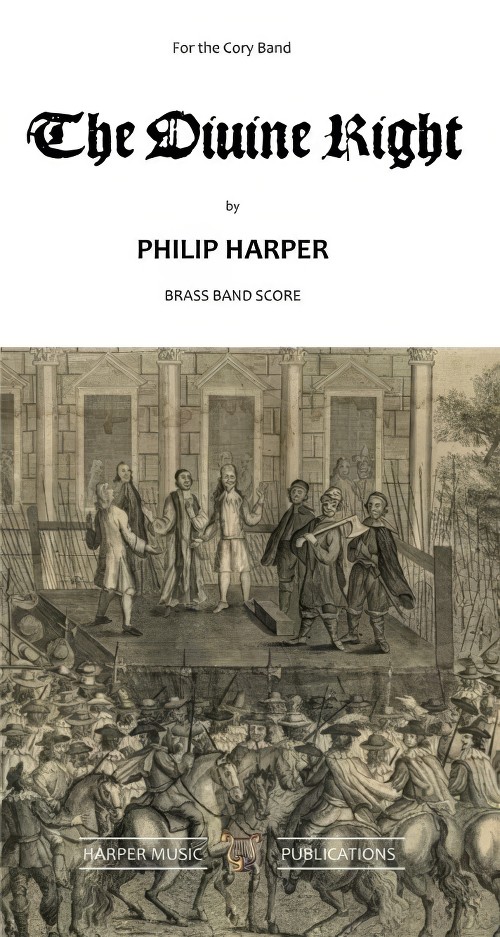
The Divine Right (Brass Band - Score only) - Harper, Philip
At the time of composing this piece, the Arab Spring was sweeping through the Middle East. It seemed that almost every week a new country's people had risen up against the regimes and dictatorships which had prevailed for generations, leaving many nations at a defining crossroads in their history. There were so many possible ways ahead: so many hopes, yet so many uncertainties.This music is a depiction of these revolutionary times, and several musical themes are in turn presented, discussed, considered, fought over, altered, rejected or accepted.Most nations have had, or probably will have, their own Arab Spring, including the United Kingdom. Events of 17th Century Britain provide the context for this piece, particularly those following the execution of the tyrant King Charles I on 30 January 1649. The regicide was in part due to Charless steadfast belief in the Divine Right of Kings, and led to a tumultuous interregnum, where England stood at its own defining crossroads. The music begins turbulently, before King Charles appears and is led to the gallows outside Banqueting House in central London where he is brutally decapitated. From the assembled crowd rose, according to one observer,a moan as I never heard before and desire I may never hear again.The music descends to emptiness.The musical argument which follows is not strictly programmatic, but a number of musical themes are all thrown into the melting pot, representing ideas such as: religion; military force; reasoned Parliamentary debate; and the chattering, irrepressible voice of the people. Additionally, there are some quotations from the music of royalist composer Thomas Tomkins (1572-1656), who was often in tune with the feeling of the times.This defining episode in England's history was brought to a close with the Restoration of the monarchy in 1660, and as the exiled King Charles II rode back into London the diarist John Evelyn wrote:Never was so joyful a day seen in this nation. I stood in the Strand and beheld it, and blessed God.At the end of the piece the bells ring out, and the musical appearance of the King has transformed from turbulent to triumphant.Duration: 17.00
Estimated dispatch 7-14 working days
-
£104.99
The Divine Right (Brass Band - Score and Parts) - Harper, Philip
At the time of composing this piece, the Arab Spring was sweeping through the Middle East. It seemed that almost every week a new country's people had risen up against the regimes and dictatorships which had prevailed for generations, leaving many nations at a defining crossroads in their history. There were so many possible ways ahead: so many hopes, yet so many uncertainties.This music is a depiction of these revolutionary times, and several musical themes are in turn presented, discussed, considered, fought over, altered, rejected or accepted.Most nations have had, or probably will have, their own Arab Spring, including the United Kingdom. Events of 17th Century Britain provide the context for this piece, particularly those following the execution of the tyrant King Charles I on 30 January 1649. The regicide was in part due to Charless steadfast belief in the Divine Right of Kings, and led to a tumultuous interregnum, where England stood at its own defining crossroads. The music begins turbulently, before King Charles appears and is led to the gallows outside Banqueting House in central London where he is brutally decapitated. From the assembled crowd rose, according to one observer,a moan as I never heard before and desire I may never hear again.The music descends to emptiness.The musical argument which follows is not strictly programmatic, but a number of musical themes are all thrown into the melting pot, representing ideas such as: religion; military force; reasoned Parliamentary debate; and the chattering, irrepressible voice of the people. Additionally, there are some quotations from the music of royalist composer Thomas Tomkins (1572-1656), who was often in tune with the feeling of the times.This defining episode in England's history was brought to a close with the Restoration of the monarchy in 1660, and as the exiled King Charles II rode back into London the diarist John Evelyn wrote:Never was so joyful a day seen in this nation. I stood in the Strand and beheld it, and blessed God.At the end of the piece the bells ring out, and the musical appearance of the King has transformed from turbulent to triumphant.Duration: 17.00
Estimated dispatch 7-14 working days
-
 £54.99
Ayers Rock (Brass Band - Score and Parts) - Hogestein, Henk
The famous monolith Uluru (formally known as Ayers Rock) is the one of the attractions in the Northern Territory of Australia. This colossal red rock lies in the middle of a desert plain. At dusk, a beautiful spectacle develops as the setting sun envelops the rock in rose-red hues. There are tourists who used to climb the rock, while this is a taboo according to the indigenous religion of the Aboriginals. Besides, the climb is very strenuous. A walk around the rock is also an unforgettable experience. During a journey through Australia, Henk Hogestein was inspired by this rock; he composed this robust rock number to cherish the memory of it.Duration: 3:00
Estimated dispatch 7-14 working days
-
 £42.95
Evening Hymn and Sunset (Brass Band - Score and Parts) - Wiffin, Rob
The bugle call Sunset has, over the years, been combined with a number of tunes but The Day Thou Gavest, Lord, is Ended is the most usual combination with it.The words of John Ellerton's hymn are associated with the tune St Clement - generally credited to the Reverend Clement Cotteril Scholefield.The band accompaniment to Sunset is generally associated with the band arrangement by one Captain Green (1888-1974), but the arranger has taken the opportunity to give a slightly new look at the accompaniment to the trumpet call.Duration: 3.15
Estimated dispatch 7-14 working days
-
 £54.99
Proud Mary (Brass Band - Score and Parts) - Oud, Thijs
At the end of the 1960s the group Creedence Clearwater Revival wrote many successful numbers, many of which were covered by various artists. Proud Mary - one of their best known songs was covered many times and this arrangement by Thijs Oud is based on Tina Turner's performance. For the musicians this is a fantastic piece to play. Each section has a challenging, yet satisfying part. For the audience this well-known and stirring number is a smash! Duration: 5.00
Estimated dispatch 7-14 working days
-
 £76.99
Ready - Steady - Brass! (Brass Band - Score and Parts)
Ready - Steady - Brass! is one of a number of successful works by Otto M. Schwarz such as Last Call, Funky Winds, Glory Fanfare and Groove Machine. Starting with a fanfare-style opening the music takes a journey through melodic sections and technical, soloistic passages to a grandiose finale. 04:50
Estimated dispatch 7-14 working days
 View Music