
Results
-
 £104.99
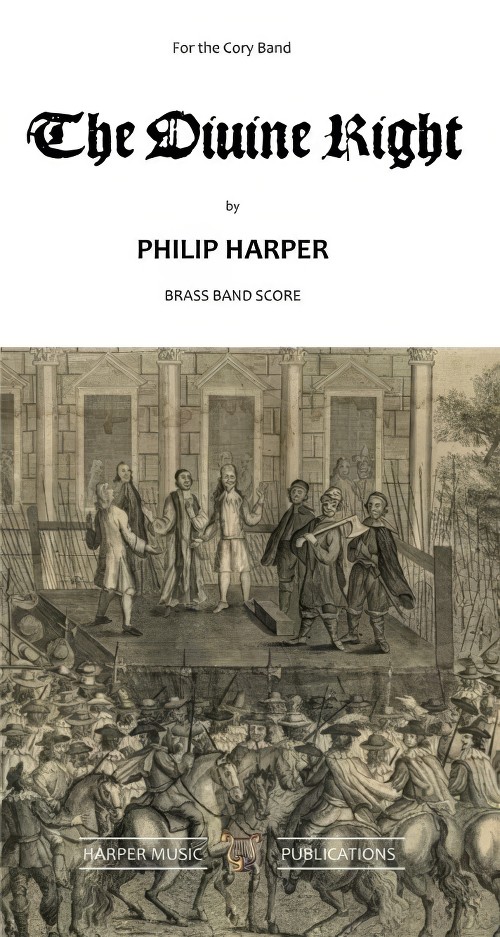
The Divine Right (Brass Band - Score and Parts) - Harper, Philip
At the time of composing this piece, the Arab Spring was sweeping through the Middle East. It seemed that almost every week a new country's people had risen up against the regimes and dictatorships which had prevailed for generations, leaving many nations at a defining crossroads in their history. There were so many possible ways ahead: so many hopes, yet so many uncertainties.This music is a depiction of these revolutionary times, and several musical themes are in turn presented, discussed, considered, fought over, altered, rejected or accepted.Most nations have had, or probably will have, their own Arab Spring, including the United Kingdom. Events of 17th Century Britain provide the context for this piece, particularly those following the execution of the tyrant King Charles I on 30 January 1649. The regicide was in part due to Charless steadfast belief in the Divine Right of Kings, and led to a tumultuous interregnum, where England stood at its own defining crossroads. The music begins turbulently, before King Charles appears and is led to the gallows outside Banqueting House in central London where he is brutally decapitated. From the assembled crowd rose, according to one observer,a moan as I never heard before and desire I may never hear again.The music descends to emptiness.The musical argument which follows is not strictly programmatic, but a number of musical themes are all thrown into the melting pot, representing ideas such as: religion; military force; reasoned Parliamentary debate; and the chattering, irrepressible voice of the people. Additionally, there are some quotations from the music of royalist composer Thomas Tomkins (1572-1656), who was often in tune with the feeling of the times.This defining episode in England's history was brought to a close with the Restoration of the monarchy in 1660, and as the exiled King Charles II rode back into London the diarist John Evelyn wrote:Never was so joyful a day seen in this nation. I stood in the Strand and beheld it, and blessed God.At the end of the piece the bells ring out, and the musical appearance of the King has transformed from turbulent to triumphant.Duration: 17.00
Estimated dispatch 7-14 working days
-
 £76.99
Tango for Joe (Trombone Solo with Brass Band - Score and Parts) - Sparke, Philip
Tango for Joe was written for Joe Alessi, principal trombone of the New York Philharmonic. He gave the official premiere with the Brass Band of Battle Creek on 3rd December 2022 at the W K Kellogg Auditorium in Battle Creek, Michigan.Opening with an (optional) unaccompanied recitative for the soloist, Tango for Joe then develops into a slow and sensuous tango, exploring the lyrical properties of the trombone. The opening of this theme is then taken up by the full band but is soon interrupted by a highly decorated version of the melody by the soloist. A further cadenza-like passage then leads to a faster 'tango nuevo' which makes up the majority of the work.A long introduction by the band builds to the first entry of the soloist, who plays the main tango melody over a rhythmic accompaniment. This is taken up briefly by the band but the soloist enters again with his own variation on the theme. After a bridge passage featuring a brief 'question and answer' exchange between the instruments, the soloist then plays a new version of the opening slow tango theme over rhythmic interpolations. After a climax, the soloist presents a long and elaborate cadenza accompanied only by a solo cajon or drum kit. This eventually leads to a repeat of the main theme and , after a short second cadenza, the piece ends with a flourish for band and soloist.Duration: 8.45
Estimated dispatch 7-14 working days
-
 £59.99
Sanctuary (Brass Band - Score and Parts) - Sparke, Philip
Sanctuary was commissioned by Eastern Bay of Plenty Brass from New Zealand and was performed as an own choice piece at the 2018 New Zealand National Brass Band Championships. It opens with an expressive cornet solo, hymn-like in mood. A slightly faster central section builds to a change of key and an expansive return of the opening melody, this time scored for full band. After an emotional climax the mood subsides, leading to a quiet close.Duration: 3.30
Estimated dispatch 7-14 working days
-
 £124.95
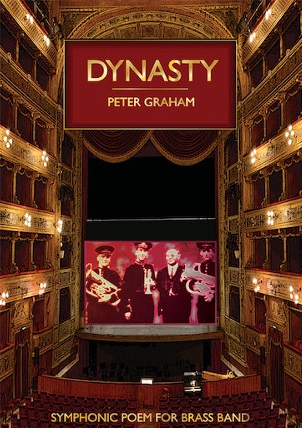
Dynasty (Brass Band - Score and Parts) - Graham, Peter
Dynasty takes the form of a Symphonic Poem, a musical form first introduced to a contest audience at the Crystal Palace in 1913 by Percy Fletcher in his work Labour and Love.Using key passages from the autobiography of Harry Mortimer, On Brass, as the source for the narrative, the work opens with a four-note leitmotif (Harry's theme, "as if descending from the heavens"), and the timeline unfolds as follows:Harry - One's destiny decided at birth "I'll make him the best cornet player in England"War - Why do the nations so furiously rage together? Fred volunteers for military serviceTheatre - And suddenly "I dashed to the rescue like a hero in the silent movies I was about to get to know so well"Journey - Comfort Ye A new life and new challengesTogether - Come unto me "A golden age"Farewell - For behold, darkness "Fred's death surely marked the passing of an era"Amen - The Trumpet shall soundListeners familiar with brass band repertoire will recognise a few pertinent quotes within the piece.In my imagination Harry is joined by Fred on cornet and the euphoniums of Alex and Rex for the quartet cadenza from Sovereign Heritage by Jack Beaver in Together.The Amen section from Handel's Messiah provides the basis for a contrapuntal flight of fancy as the work moves towards a conclusion. Other less overt fragments contribute to the story.Dynasty was co-commissioned by the British Open Brass Band Championships for the September 2019 contest, and the Brass Band Committee VLAMO for the Belgian Brass Band Championships 2019.- Peter GrahamDuration: 17.00
Estimated dispatch 7-14 working days
-
 £48.00
Red Vest Man (Brass Band - Score and Parts) - Waterman, Steve
Red Vest Man was composed as a dedication to cornet player Buddy Bolden, one of the first jazz musicians. He was reputed to always perform wearing a red vest. The piece is a New Orleans funeral march, something Bolden would have been called to do many times in his career. It starts with a slow mournful march, featuring solos from trumpet and trombone and finishes with a joyful 2nd line New Orleans rhythm. Duration: 8.00. Suitable for 2nd Section Bands and above.
Estimated dispatch 7-14 working days
-
 £74.95
Aspects of Adiemus (Brass Band - Score and Parts) - Jenkins, Karl - Graham, Peter
Aspects of Adiemus is a collection from one of the world's most popular composers, Karl Jenkins. Adiemus, literally translated, means 'we will draw near' and represents a musical language which can be heard on five award winning albums from the composer.Since Adiemus has risen in popularity around the world, it has become a growing entity meaning many different things to many different people. Vocally, the spread of influence grows wider all the time, taking in Arabic and African sounds as well as Celtic and ecclesiastical ones. The percussion too has expanded using Indian, Middle Eastern, Japanese, Chinese and even Australian instrumentation.The evolving nature of Adiemus has meant that it has been difficult to categorise. New age, classical crossover, world music, even pop. Karl sees this as a good sign: To me, Adiemus transcends labels. The fact that it reaches people of different backgrounds, faiths and cultures gives it a universal appeal which is special. The compositions can be spiritual, religious, meditative - it's open to move people in any away they choose to experience.Ironically, the Adiemus project got off the ground initially due to a television commercial for an airline. Karl Jenkins explains, I'd been toying with a new idea, completely separate to my work in advertising, but at this time, Jenkins Ratledge were commissioned to come up with the music for an airline commercial. We presented the client with a demonstration tape of one of my completed compositions and they loved it.That composition became known as Adiemus. The music for the airline commercial was aired and immediately drew interest from the public. Karl: It's ironic that a piece of music not originally intended for a TV commercial should end up on a TV commercial, and that this music became the springboard for the success of the Adiemus project.Expertly arranged by Peter Graham, Aspects of Adiemus features the eponymous Adiemus, an uplifting and instantly recognisable opener. Chorale - Za Ma Ba and Chorale - Vocalise are songs of sanctuary, the latter featuring a chamber group from within the band. The vibrant Song of the Spirit is a cornet feature, and the finale, Song of the Plains combines intense rhythmic energy with tribal harmonies. Duration is variable depending on movement selection and optional cuts.Duration: 20.00
Estimated dispatch 7-14 working days
-
 £59.95
Celestial Prospect (Brass Band - Score and Parts) - Heaton, Wilfred
Selected as 2nd Section test piece for 2003 'Regionals'Wilfred Heaton originally composed Celestial Prospect in the 1940's but, so the story goes, it was rejected by the SA Editorial 'chiefs' as being too modern. The original manuscript was lost for many years, turning up in the 1980's in New York. Heaton re-worked it for the New York Staff Band, and it is now accepted as a classic of the SA 'Festival' genre.
Estimated dispatch 7-14 working days
-
£29.95
Celestial Prospect (Brass Band - Score only) - Heaton, Wilfred
Selected as 2nd Section test piece for 2003 'Regionals'Wilfred Heaton originally composed Celestial Prospect in the 1940's but, so the story goes, it was rejected by the SA Editorial 'chiefs' as being too modern. The original manuscript was lost for many years, turning up in the 1980's in New York. Heaton re-worked it for the New York Staff Band, and it is now accepted as a classic of the SA 'Festival' genre.
Estimated dispatch 7-14 working days
-
 £64.95
Music for Greenwich (Brass Band - Score and Parts) - Gregson, Edward
Music for Greenwich was commissioned in 1980 by the Greenwich Theatre, London, for a new production of Peter Buckman's play 'All Together Now'.In this play, about a down-at-heels brass band in the North of England brought to a new level of self-confidence and achievement by an incoming conductor, the whole cast performed a test piece on stage every night (i.e. Music for Greenwich), in readiness for a competition which they have entered and, of course, win. Although the play is as much a social commentary as anything to do with music-making, every member of the cast had to be able to play a brass instrument to a greater or lesser extent (a difficult challenge for the casting Director!).For obvious reasons, the music is not technically difficult. The work is structured as follows: a brief fanfare-like opening is followed by an allegro section, rhythmic and playful; a slow lyrical section is then introduced (a suitably nostalgic melody featuring solos for cornet and trombone), before a return to the fast music, a hint of the fanfare, and finally a climactic flourish to round things off. This is music to be enjoyed, as hopefully it was every night by the audience and actors alike.Duration: 5.00
Estimated dispatch 7-14 working days
-
£24.95
Music for Greenwich (Brass Band - Score only) - Gregson, Edward
Music for Greenwich was commissioned in 1980 by the Greenwich Theatre, London, for a new production of Peter Buckman's play 'All Together Now'.In this play, about a down-at-heels brass band in the North of England brought to a new level of self-confidence and achievement by an incoming conductor, the whole cast performed a test piece on stage every night (i.e. Music for Greenwich), in readiness for a competition which they have entered and, of course, win. Although the play is as much a social commentary as anything to do with music-making, every member of the cast had to be able to play a brass instrument to a greater or lesser extent (a difficult challenge for the casting Director!).For obvious reasons, the music is not technically difficult. The work is structured as follows: a brief fanfare-like opening is followed by an allegro section, rhythmic and playful; a slow lyrical section is then introduced (a suitably nostalgic melody featuring solos for cornet and trombone), before a return to the fast music, a hint of the fanfare, and finally a climactic flourish to round things off. This is music to be enjoyed, as hopefully it was every night by the audience and actors alike.Duration: 5.00
Estimated dispatch 7-14 working days
 View Music