
Results
-
 £3.95
£3.95On the Face! (High Trombone/Euphonium BC)
Please note: This part is only for use when there is a Tuba in the ensemble.On the Face is a complete repertoire (warm-ups and 23 pieces) for beginner brass ensemble. Perfect material for school assemblies and music centres, it includes folk songs, famous classical themes, and exciting new jazz and pop numbers. Each piece is score for a basic trio of two trumpets/cornets and one trombone/euphonium (TC or BC). However, optional independent parts can also be added for horn in E flat or F; high trombone or euphonium (tenor part); tuba; and drum kit. The pieces work equally well either with one player to a part, or in larger group settings. With its appealing variety of musical styles and textures, On the Face is sure to make the young brass player's first experience of group playing both rewarding and fun.
Estimated dispatch 7-14 working days
-
 £3.95
£3.95On the Face! (High Trombone/Euphonium TC)
Please note: This part is only for use when there is a Tuba in the ensemble.On the Face is a complete repertoire (warm-ups and 23 pieces) for beginner brass ensemble. Perfect material for school assemblies and music centres, it includes folk songs, famous classical themes, and exciting new jazz and pop numbers. Each piece is score for a basic trio of two trumpets/cornets and one trombone/euphonium (TC or BC). However, optional independent parts can also be added for horn in E flat or F; high trombone or euphonium (tenor part); tuba; and drum kit. The pieces work equally well either with one player to a part, or in larger group settings. With its appealing variety of musical styles and textures, On the Face is sure to make the young brass player's first experience of group playing both rewarding and fun.
Estimated dispatch 7-14 working days
-
 £3.95
£3.95On the Face! (Percussion)
On the Face is a complete repertoire (warm-ups and 23 pieces) for beginner brass ensemble. Perfect material for school assemblies and music centres, it includes folk songs, famous classical themes, and exciting new jazz and pop numbers. Each piece is score for a basic trio of two trumpets/cornets and one trombone/euphonium (TC or BC). However, optional independent parts can also be added for horn in E flat or F; high trombone or euphonium (tenor part); tuba; and drum kit. The pieces work equally well either with one player to a part, or in larger group settings. With its appealing variety of musical styles and textures, On the Face is sure to make the young brass player's first experience of group playing both rewarding and fun.
Estimated dispatch 7-14 working days
-
 £3.95
£3.95On the Face! (Trombone/Euphonium BC)
On the Face is a complete repertoire (warm-ups and 23 pieces) for beginner brass ensemble. Perfect material for school assemblies and music centres, it includes folk songs, famous classical themes, and exciting new jazz and pop numbers. Each piece is score for a basic trio of two trumpets/cornets and one trombone/euphonium (TC or BC). However, optional independent parts can also be added for horn in E flat or F; high trombone or euphonium (tenor part); tuba; and drum kit. The pieces work equally well either with one player to a part, or in larger group settings. With its appealing variety of musical styles and textures, On the Face is sure to make the young brass player's first experience of group playing both rewarding and fun.
Estimated dispatch 7-14 working days
-
 £3.95
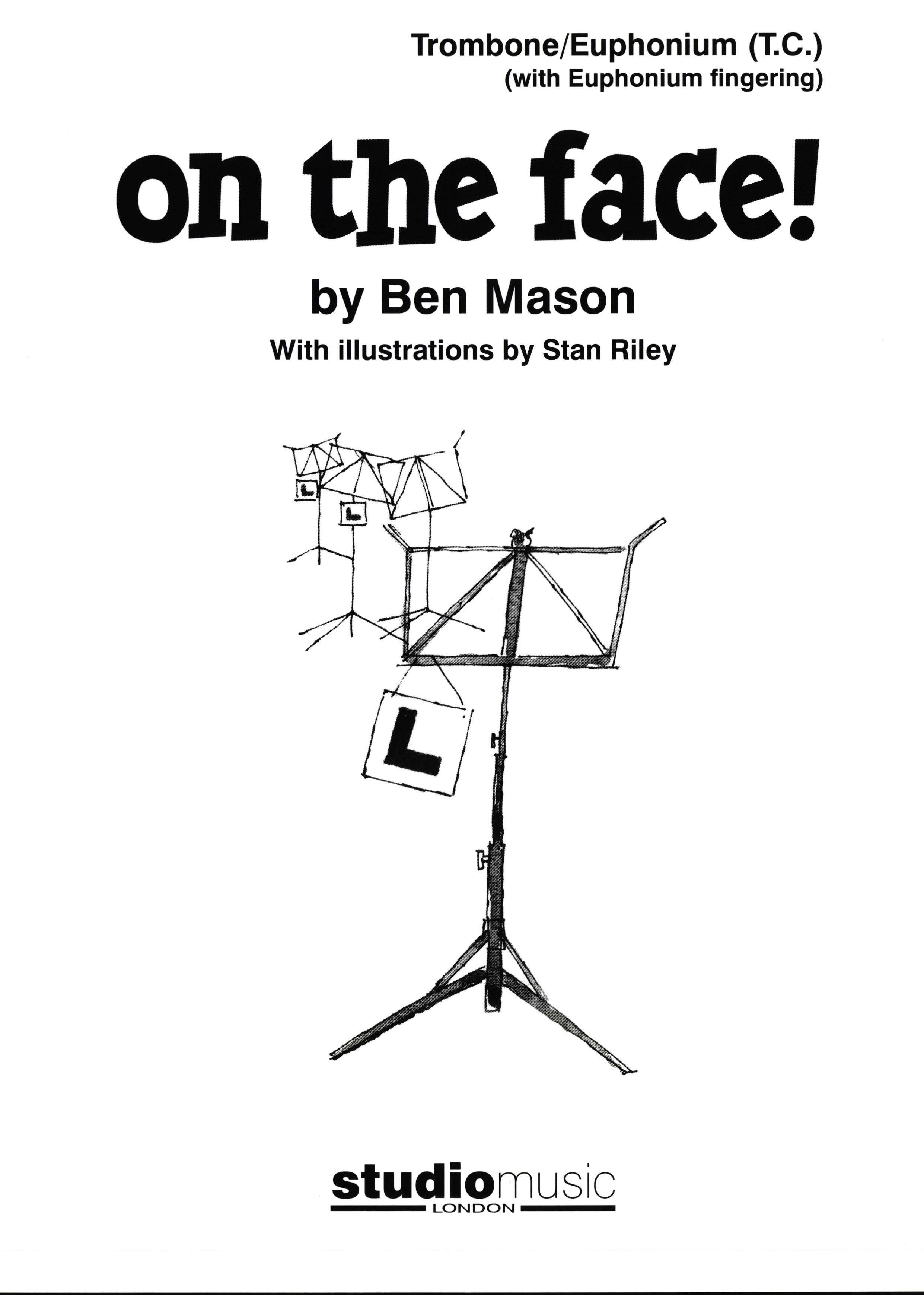
£3.95On the Face! (Trombone/Euphonium TC)
On the Face is a complete repertoire (warm-ups and 23 pieces) for beginner brass ensemble. Perfect material for school assemblies and music centres, it includes folk songs, famous classical themes, and exciting new jazz and pop numbers. Each piece is score for a basic trio of two trumpets/cornets and one trombone/euphonium (TC or BC). However, optional independent parts can also be added for horn in E flat or F; high trombone or euphonium (tenor part); tuba; and drum kit. The pieces work equally well either with one player to a part, or in larger group settings. With its appealing variety of musical styles and textures, On the Face is sure to make the young brass player's first experience of group playing both rewarding and fun.
Estimated dispatch 7-14 working days
-
 £3.95
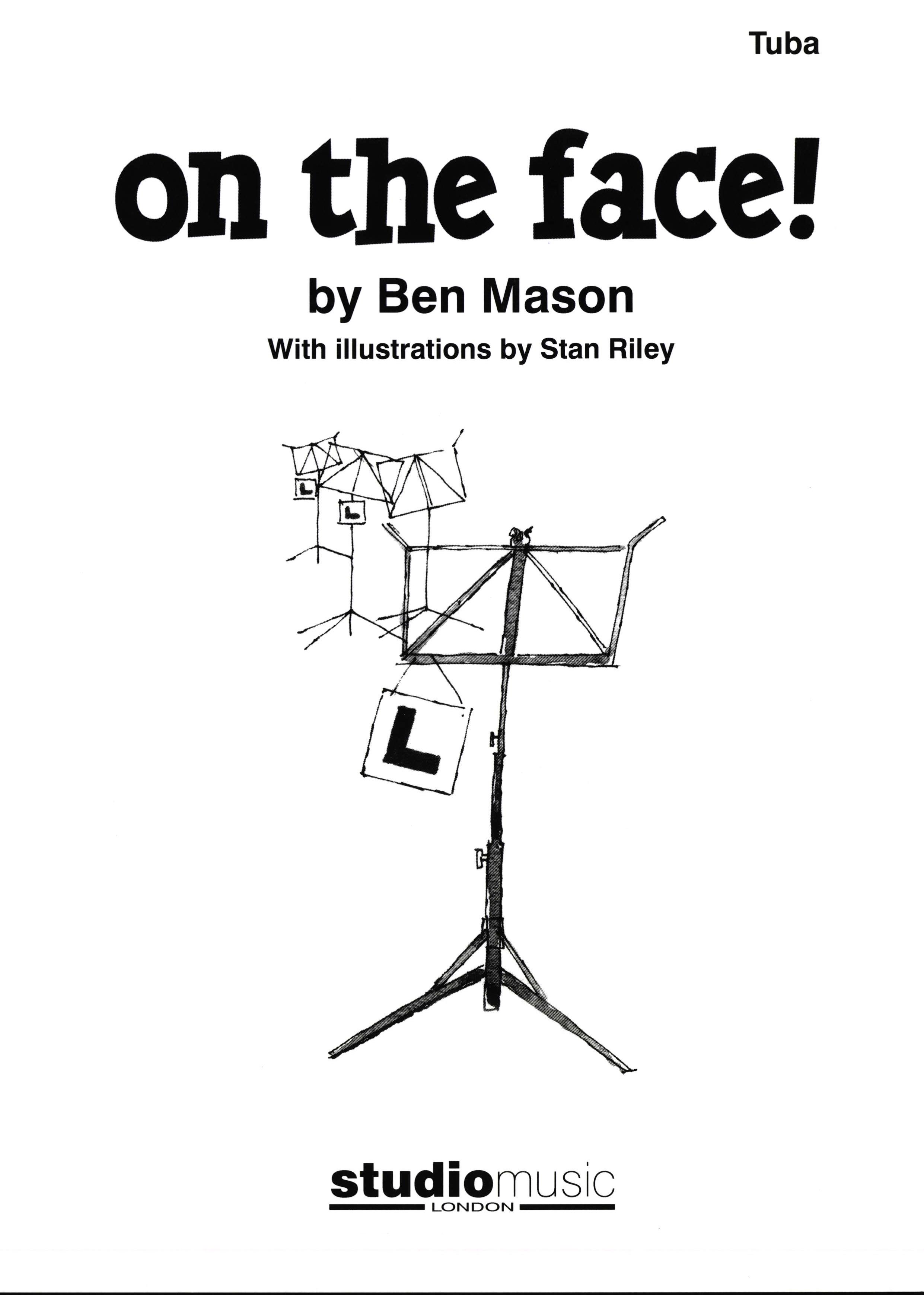
£3.95On the Face! (Tuba BC)
On the Face is a complete repertoire (warm-ups and 23 pieces) for beginner brass ensemble. Perfect material for school assemblies and music centres, it includes folk songs, famous classical themes, and exciting new jazz and pop numbers. Each piece is score for a basic trio of two trumpets/cornets and one trombone/euphonium (TC or BC). However, optional independent parts can also be added for horn in E flat or F; high trombone or euphonium (tenor part); tuba; and drum kit. The pieces work equally well either with one player to a part, or in larger group settings. With its appealing variety of musical styles and textures, On the Face is sure to make the young brass player's first experience of group playing both rewarding and fun.
Estimated dispatch 7-14 working days
-
 £39.95
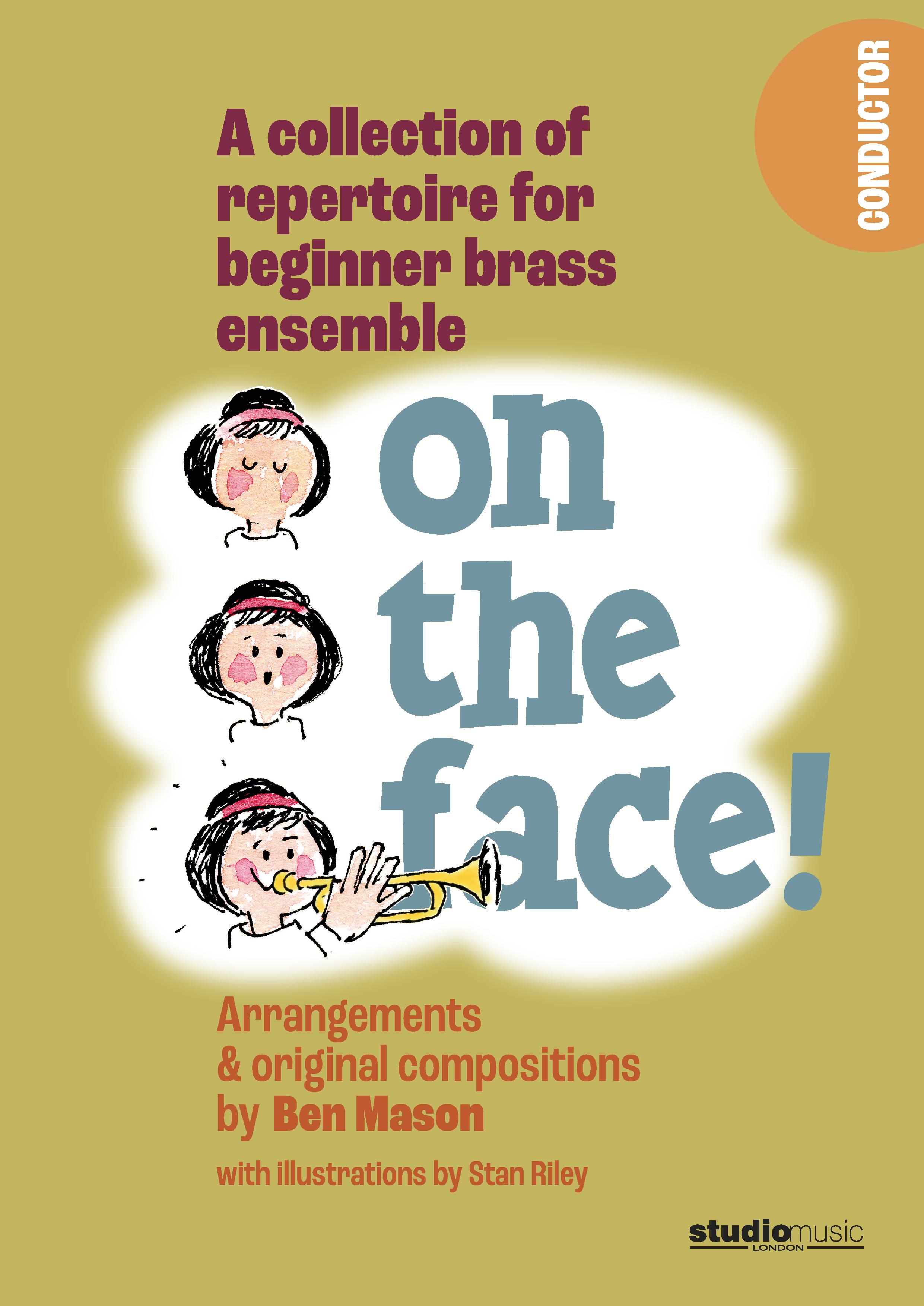
On the Face! (Value Set)
The Value Set contains the score and one of each part:1st B flat Trumpet/Cornet2nd B flat Trumpet/CornetTrombone/Euphonium/Baritone BCTrombone/Euphonium/Baritone TCHorn in E flatHorn in FHigh Trombone/Euphonium/Baritone TC*High Trombone/Euphonium/Baritone BC*E flat Bass/Tuba TCE flat Bass/Tuba TCPercussion and occasional Aux. Percussion(* for use only when there is a Tuba in the ensemble)Additional scores and parts are available individually.On the Face is a complete repertoire (warm-ups and 23 pieces) for beginner brass ensemble. Perfect material for school assemblies and music centres, it includes folk songs, famous classical themes, and exciting new jazz and pop numbers. Each piece is score for a basic trio of two trumpets/cornets and one trombone/euphonium (TC or BC). However, optional independent parts can also be added for horn in E flat or F; high trombone or euphonium (tenor part); tuba; and drum kit. The pieces work equally well either with one player to a part, or in larger group settings. With its appealing variety of musical styles and textures, On the Face is sure to make the young brass player's first experience of group playing both rewarding and fun.
Estimated dispatch 7-14 working days
-
 £74.95
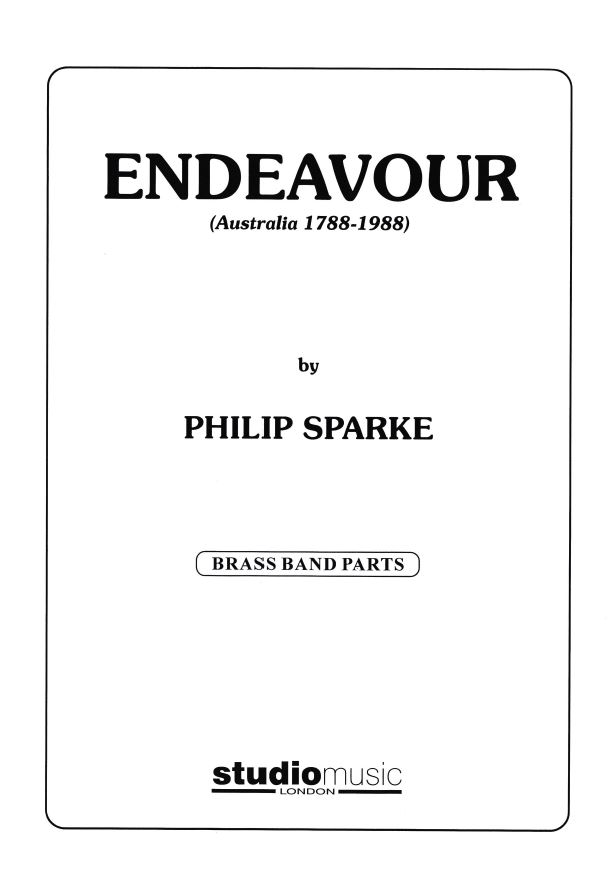
Endeavour (Brass Band - Score and Parts)
Commissioned by the Festival of Bands, Brisbane 1988, for the Bicentennial World Brass Band Championship held there on 29th July.Endeavour takes its title from the name of the ship in which Captain James Cook circumnavigated the world and attempts to depict in music some aspects of the history of the great continent which he discovered.The Unknown Continent tells the story of the many fruitless voyages undertaken to find the mysterious Terra Australis and conjures up something of the awe and excitement its discovery engendered. Early struggles and hardships of the first settlers are described in The New Challenge but the true story of Australia over the last 200 years is one of success and Celebration ends the piece in triumph.Duration: 11.30 mins
Estimated dispatch 7-14 working days
-
 £89.95
Diversions for Brass Band, Op.97 (Brass Band - Score and Parts)
This work was commissioned in1985 by Skellerup, Christchurch, New ZealandMovements:Allegro VivaceAndante Con Moto Molto ExpressivoAllegro VivaceDerek Bourgeois wrote Diversions in the summer of 1985 to a commissioned from the Skellerup Brass Band.Bourgeois previous test piece, Blitz, was aggressive and forceful, therefore the composer decided to write a work of a completely different character, which although technically very demanding, is light-hearted in style, and easy on the ear, as the title suggests.The first and third movements share the same tempo, but are rather different in character. The first movement is a sonata allegro contrasting two main themes. The first is bold and jaunty and is heavily scored, the second announced by the solo horn is more lyrical in character. The development section and recapitulation are merged into a continuous interplay of the two themes.The second movement is an expressive andante in free rondo form. It is lightly scored for the most part with a lot of solo passages that make demands on the musicianship of the players and conductor alike. The very simplicity of its textures and the breadth of its melodic writing demand firm control of vibrato, phrasing and rubato.The brief finale is nothing short of a romp. Its ternary structure is highly rhythmic in character and only rarely do the performers enjoy the luxury of two consecutive bars in the same time signature!Duration: 11.00
Estimated dispatch 7-14 working days
-
 £37.95
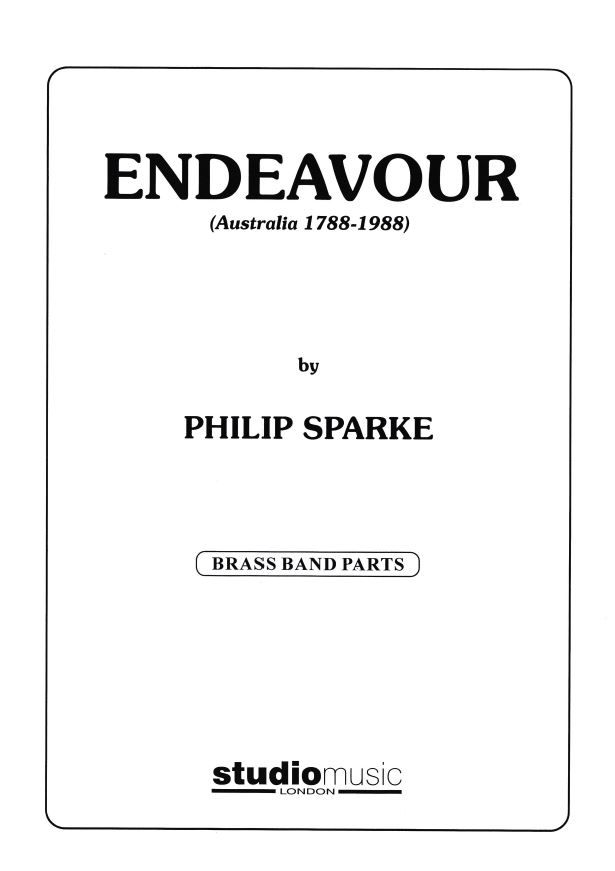
Endeavour Score Only)
Commissioned by the Festival of Bands, Brisbane 1988, for the Bicentennial World Brass Band Championship held there on 29th July.Endeavour takes its title from the name of the ship in which Captain James Cook circumnavigated the world and attempts to depict in music some aspects of the history of the great continent which he discovered.The Unknown Continent tells the story of the many fruitless voyages undertaken to find the mysterious Terra Australis and conjures up something of the awe and excitement its discovery engendered. Early struggles and hardships of the first settlers are described in The New Challenge but the true story of Australia over the last 200 years is one of success and Celebration ends the piece in triumph.Duration: 11.30 mins
Estimated dispatch 7-14 working days