
Results
-
£29.50
Sunset Praise - Wilfried Weiland
Based on a strong Chorale melody by Melchior Vulpius dating back to 1609, this modern take on the baroque chorale brings a new flavour to your audiences with a showcase piece for all your players to enjoy. Featuring the Chorale melody to open with before moving into a 5/4 section ala Dave Brubeck style with a nice percussion drive and holding true to the strict chorale form. A great piece to showcase bands' versatility.
In Stock: Estimated dispatch 1-3 working days
-
£29.50
Pachelbango - Pachelbel - Ed Keeley
Pachelbel's most famous work as you've never heard it before. This arrangements features all sections of the band and gives them a chance to shine making the piece perfect for both concert or contest venues. Pachelbel's Canon in D is one of the most famous pieces of classical music of all time. Simply written for 3 violins and a cello, the music is basically 8 bars repeated 28 times. Mostly unforgotten until the 1970s it has become one of the most recorded pieces and used at more than 90% of all weddings as an introit. This arrangement has reset the Canon into a Latin-American tango style, pushing it into a new accessible groove and will bring a smile to your audiences & players. A must have for your upcoming concerts.
In Stock: Estimated dispatch 1-3 working days
-
£29.50
So Amazing - Traditional - Jonathan Mead
'So Amazing', is a beautiful new hymn tune arrangement from the pen of Welsh Composer Jonathan Mead. The music would create a lovely moment in a concert, where the audience would have time for reflection. The title comes from the words that are often associated with this tune, 'Love so amazing, so divine,'. The tune used, is also well known in the brass band world as, 'The Water is wide'. The music is lovely to play as well as listen to. A must for any Concert Programme.
In Stock: Estimated dispatch 1-3 working days
-
£29.50
Michaelmas March - Various - Alexander Scaife McGee
March into Christmas with the new arrangement for brass band!Set to a lively march tempo are the following the Christmas classics;Deck the HallsHark! The Herald Angels SingJoy to the WorldGod Rest Ye Merry GentlemenTroikaCarol of the BellsO Come all Ye FaithfulAngels from the Realms of GloryWhile multiple percussion lines are provided the piece will work without them all being included
In Stock: Estimated dispatch 1-3 working days
-
£24.50
Sailor's Hymn - Amber Hooton
Sailor's Hymn depicts a scene of sailors preparing to depart from the port of Liverpool, looking out over the docks as the Blue Peter flag flies,beckoning the sailors aboard to begin their long journey. It is a piece about saying goodbye to what was once familiar, moving on and pushing towards new horizons.This piece was written for a cultural exchange between brass and wind bands from St Helens (Valley Brass Band) and Normandy (Harmonie Courselles Sur Mer), culminating in a massed bands concert in Normandy during April 2024. The piece was one of several arrangements and original compositions written especially for the exchange, supported by grants from the Victoria Wood Foundation and Johnson Foundation. The concert celebrated the local cultures of Merseyside and Normandy, as well as the wider national cultures of the United Kingdom and France.
In Stock: Estimated dispatch 1-3 working days
-
 £125.00
East Coast Pictures. - Nigel Hess
East Coast Pictures, originally written for wind band, have now been transcribed by Phillip Littlemore, introducing these exciting programmatic pieces to a wider audience. These three short 'pictures' wereinspired by several visits by the composer to a small part of the USA's East Coast, an area that provides great extremes in the geography and the people. Shelter Island is a small island situated almost at the end of LongIsland, a few hours' drive east of New York. In the summer it becomes a crowded tourist trap, but in the winter it is gloriously deserted, and bravely faces the onslaught of the turbulent Atlantic, shrouded in sea mistsanddriving rain. In upstate New York lie the Catskill Mountains, an extraordinary combination of tranquillity and power, peace and majesty. Once seen they call you back again and again. New York ...or, to be precise, Manhattan.For anyone who is familiar with this bizarre and wonderful city, this 'picture' needs no explanation. For those not yet hooked, here is a foretaste of things to come.
Estimated dispatch 5-14 working days
-
 £72.99
Cityscapes - Jan de Haan
For Cityscapes, the composer used the metropolis of New York, the largest city of the United States, as a source of inspiration. The first movement mirrors the skyline of the 'Big Apple'. In movement two, Central Park is introduced and in the closing movement of this triptych, the ever-sparkling Manhattan, known for its many skyscrapers, and its financial centre Wall Street, is the focal point. Not only are the busy city traffic and the chaotic hustle and bustle expressed in the music, but also the impressive buildings, including the famous Empire State Building. Let the magic of New York shine with this dramatic new item for brass band.
Estimated dispatch 5-14 working days
-
 £104.99
High Flyers - Andrew R. Mackereth
From the composer: High Flyers are regarded as people with promise and potential.They are winners. This is music for winners.The title, as well as being a play-on-words, implies the nature of the work. It is a bright, optimistic, and upbeat piece attempting to depict an exhilarating ride on flying carpet. The opening rising chords immediately suggest the gentle elevation of the carpets' ascent towards unknown heights, leading to a hint of a first theme in the horns at Fig. B. The first four notes provide the thematic material for the whole work: C F G A.A perpetual sense of movement is achieved through accented quaver chords punctuating the melodicmaterial of the first main theme. Fig. E sees the music of the opening bars fully realised, with flourishes from the euphonium and baritones representing swirling clouds, shooting stars, or passing birds in flight.The same subject is developed into a lyrical second theme with a new lush harmonic treatment, evocative of gliding over an expanse of sparse countryside.This section ends with a note of serenity but is shattered by the urgent insistence of the percussion rhythms.The third section introduces a new idea with a slightly distorted fanfare in the cornets and trombones. This figure suggests for the first time that there may be trouble ahead. In fact, there is no need to fear and the journey can continue without aggravation. This fanfare returns near the end to signal a final note of triumph.A new rhythmic variant of the cell motif emerges as the third theme now transformed by the addition of a triplet figure. The music steadily gains momentum before moving inexorably towards the climactic return of the music and tonality of the opening bars of the piece.
Estimated dispatch 5-14 working days
-
 £68.99
OASIS on Tour - Philip Sparke
The legendary English rock band Oasis reunites after fifteen years! Brothers Liam and Noel Gallagher will once more work their musical magic in a spectacular reunion tour in 2025. This is the moment that fans worldwide have been waiting for.With timeless classics like Wonderwall, Don't Look Back in Anger, and Champagne Supernova, the brothers return to the stage, touching a chord in a new generation and taking old fans back to the heyday of the 1990s.For this occasion, Philip Sparke has arranged a breathtaking medley. The nostalgia and raw energy of these iconic songs are guaranteed to give every musician and listener goosebumps. And so, this unique arrangement will add a new dimension to your concert programme.
Estimated dispatch 5-14 working days
-
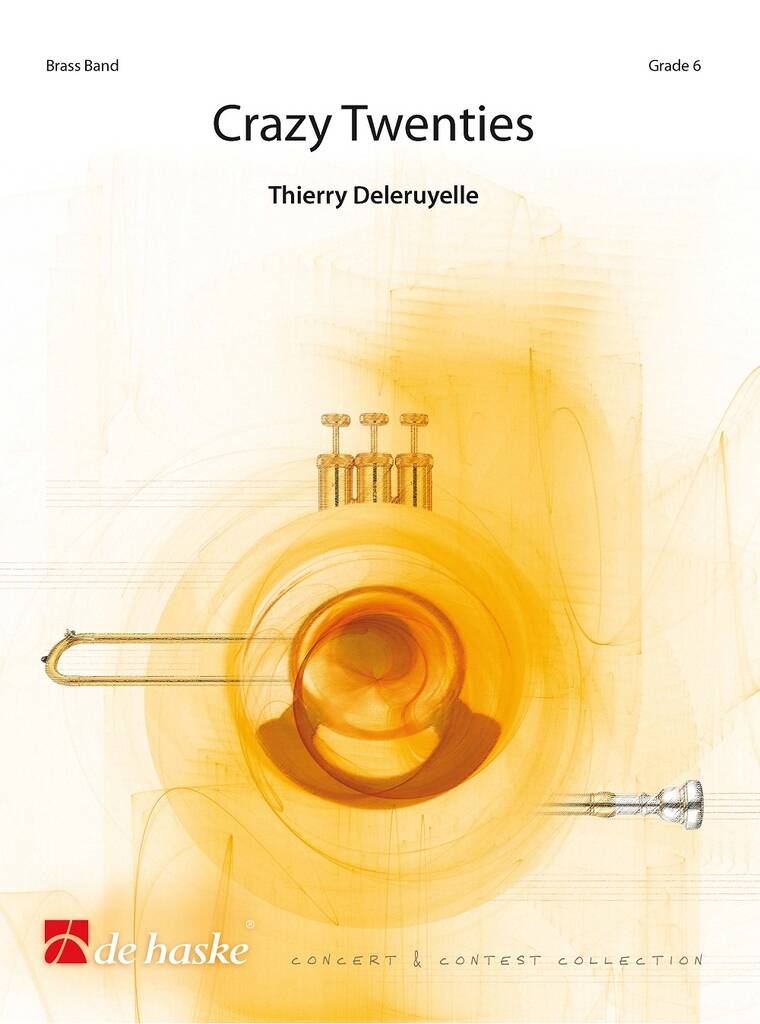 £134.99
Crazy Twenties - Thierry Deleruyelle
Crazy Twenties takes place in the 1920s, a decade otherwise known as the "Roaring Twenties". This work retraces an exceptional period in social, cultural and artistic terms, when a new generation dreamt of a new world. The work opens with a bright and lively movement, followed by a nostalgic interlude. A gracious slow movement accompanies the Parisian district of Montparnasse. Written in the style of an unstable blues, the next movement evokes characters sipping their Bloody Marys in a cafe. The final movement is a fugue with the main motif as the subject.
Estimated dispatch 5-14 working days
 Listen to MP3
 View Music