
Results
-
 £30.00
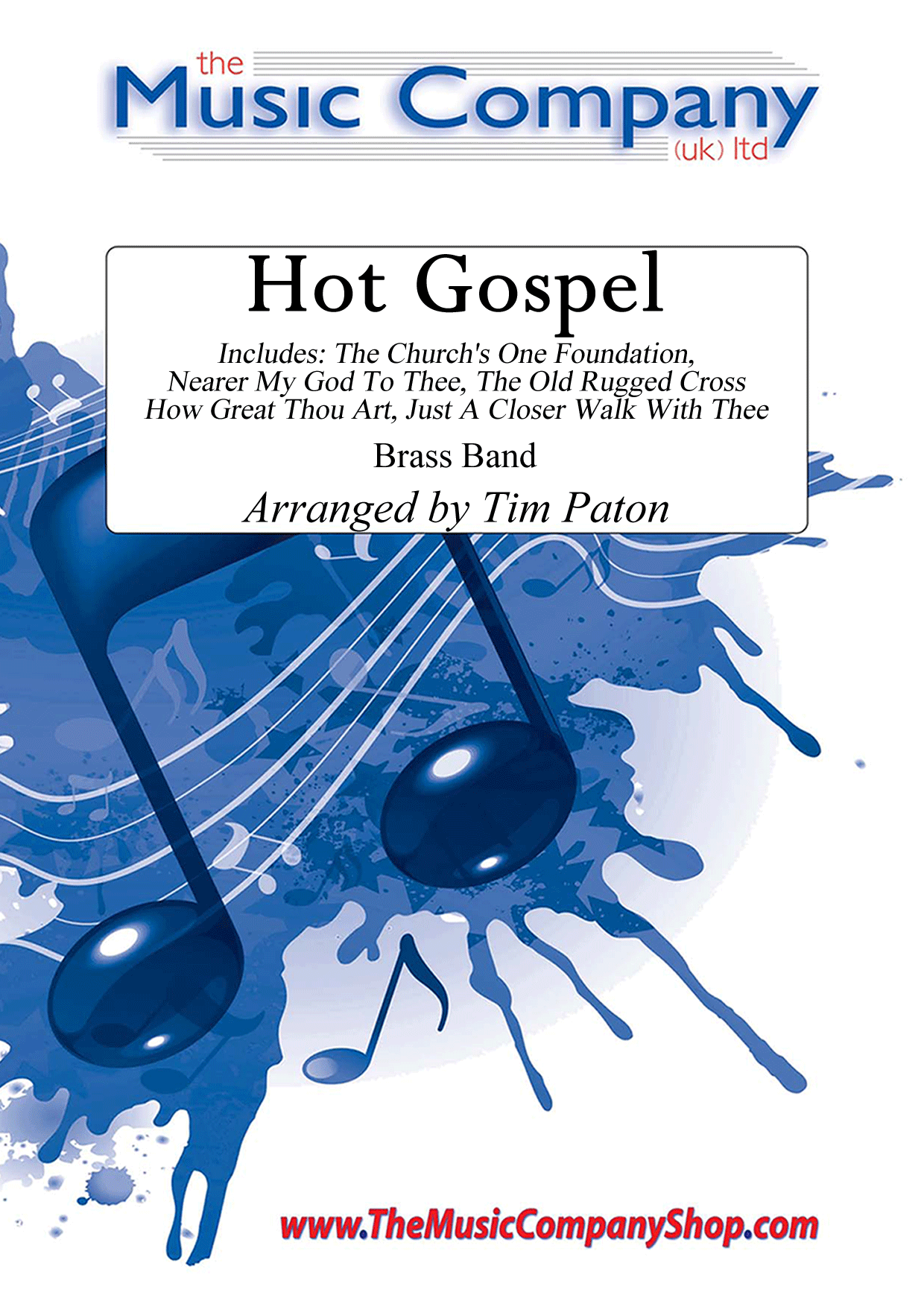
Hot Gospel - Various
Tim Paton has creatively arranged for brass band this selection of familiar hymns/religious songs to create a 5-movement, gospel-styled work. With features for soloists across the band and a great mix of styles including swing, traditional jazz, blues, and calypso, this makes for a versatile concert feature either as a complete piece piece (9 minutes); using the alternative optional cuts (4.5 minutes); or simply by cherry-picking the individual movements in order to spotlight the different styles/melodies/soloists of your choice.With solo features in each section, the piece includes:The Church's One Foundation - Swing version with Tenor Horn soloNearer My God To Thee - Traditional jazz style with Cornet soloThe Old Rugged Cross - Bluesy with Flugel soloHow Great Thou Art - Calypso with Euphonium soloJust A Closer Walk With Thee - Finale with jazzy Trombone soloTim comments:The community gospel choir sound has become very popular in recent years. "Hot Gospel" is my attempt to capture this charismatic experience in a medley of well known sacred music. Each of the five songs chosen follows a similar pattern - a verse for full band followed by a solo, and all solos are intended to sound like improvisation.I've included Optional Cuts which would reduce the play length from c. 9 minutes, down to approximately 4.5 mintues, should your concert programming not allow for the full version. The optional cuts simply side-step the solo section of each song.However you wish to perform Hot Gospel, it will definitely bring variety to programme choice.Also available for wind/concert band.
In Stock: Estimated dispatch 3-5 working days
-
 £59.95
Judd: Quest
'Quest' was originally written for the Territorial Youth Band (UK) in 2012. It is a major work in three movements, Movement 1: Making a difference, Movement 2: Making time and Movement 3: Making progress. The music essentially charts the journey of the Christians life. The music commences with Ray Steadman-Allen's choral work and testimony 'So this is it! My day for living!' and has references and then a presentation to the tune 'Southport' associated with the words 'To serve the present age my calling to fufil'. The music displays the struggle of the Christian in maintaining a witness within this world. The second movement is a reflective and prayerful setting of the song 'This day' found in the Sing to the Lord journal. The imposing third movement features the tune 'Trust in God' with the associated words 'As the weary way of life we journey'. The piece has been recorded by the International Staff Band under the same title (SPS330)
Estimated dispatch 7-14 working days
-
 £9.00
£9.00120 Hymns - A4 Parts
INDEX OF HYMNS :AberystwythAbridgeAngelusAureliaAustrian HymnBelmontBlaenwernCarlisleChrist the KingComeCorJesuCorpus ChristiCrimondCross of JesusDarwalls 148thDay of RestDennisDiademDiademataDivine MysteriesDixDominus Regit MeDresden (Wir pflugen)Duke StreetDundee (French)Easter HymnEm' Feste BurgEllacombeEllersEventideFranconiaFrench (Dundee)GeibelGerontiusGopsalHanoverHollingsideHorsleyHursleyHyfrydolInnocentsKocherLaudate DominumLaudes DominiLloydLobe den HerrenLove DivineLux BenignaMaidstoneMannheimMartyrdomMarytonMelcombeMelitaMiles LaneMisericordiaMissionaryMonldandMonks GateMorning HymnMorning LightMoscowMozart (Nottingham)National AnthemNearer, My God, To TheeNicaNottingham (Mozart)Nun DanketOld HundredthPassion ChoralePenlanPentecostPilgrimsPraise, my SoulRedheadRegent SquareRichmondRimmingtonRockinghamSt. AgnesSt. AlbinusSt. AnnSt. BeesSt. CeciliaSt. ClementSt. ColumbaSt. CuthbertSt. DenioSt. EtheiwaldSt. FrancisSt. George,St. GertrudeSt. MagnusSt. MichaelSt. OswaldSt. PeterSt. TheodulphSt. TheresaSamuelSandonSawstonSine NomineStellaStracathroStuttgartTallis' CanonTurns DavidicaVictoryVox DilectiWarehamWarringtonWestminsterWhen He ComethWhitburnWiltshireWir pflugen (Dresden)INDEX OF CAROLS :Angels from the Realms of GloryAs with GladnessAway in a MangerChristians AwakeCoventry Carol, TheDing Dong Merrily on HighDeck the HallsGod Rest ye Merry GentlemenGood King WenceslasGood Christian Men RejoiceHark! The Herald Angels SingHolly and The Ivy, TheI Saw Three ShipsIt Came upon the Midnight ClearJingle BellsNowellO Come All Ye FaithfulO Little Town of BethlehemOnce in Royal David's CityRocking Carol, TheSee Amid the Winter SnowSilent NightUnto us a Child is BornWassailWe Three KingsWe Wish you a Merry ChristmasWhile Shepherds Watched
Estimated dispatch 7-14 working days
-
£7.50
120 Hymns - A5 Parts
INDEX OF HYMNS :AberystwythAbridgeAngelusAureliaAustrian HymnBelmontBlaenwernCarlisleChrist the KingComeCorJesuCorpus ChristiCrimondCross of JesusDarwalls 148thDay of RestDennisDiademDiademataDivine MysteriesDixDominus Regit MeDresden (Wir pflugen)Duke StreetDundee (French)Easter HymnEm' Feste BurgEllacombeEllersEventideFranconiaFrench (Dundee)GeibelGerontiusGopsalHanoverHollingsideHorsleyHursleyHyfrydolInnocentsKocherLaudate DominumLaudes DominiLloydLobe den HerrenLove DivineLux BenignaMaidstoneMannheimMartyrdomMarytonMelcombeMelitaMiles LaneMisericordiaMissionaryMonldandMonks GateMorning HymnMorning LightMoscowMozart (Nottingham)National AnthemNearer, My God, To TheeNicaNottingham (Mozart)Nun DanketOld HundredthPassion ChoralePenlanPentecostPilgrimsPraise, my SoulRedheadRegent SquareRichmondRimmingtonRockinghamSt. AgnesSt. AlbinusSt. AnnSt. BeesSt. CeciliaSt. ClementSt. ColumbaSt. CuthbertSt. DenioSt. EtheiwaldSt. FrancisSt. George,St. GertrudeSt. MagnusSt. MichaelSt. OswaldSt. PeterSt. TheodulphSt. TheresaSamuelSandonSawstonSine NomineStellaStracathroStuttgartTallis' CanonTurns DavidicaVictoryVox DilectiWarehamWarringtonWestminsterWhen He ComethWhitburnWiltshireWir pflugen (Dresden)INDEX OF CAROLS :Angels from the Realms of GloryAs with GladnessAway in a MangerChristians AwakeCoventry Carol, TheDing Dong Merrily on HighDeck the HallsGod Rest ye Merry GentlemenGood King WenceslasGood Christian Men RejoiceHark! The Herald Angels SingHolly and The Ivy, TheI Saw Three ShipsIt Came upon the Midnight ClearJingle BellsNowellO Come All Ye FaithfulO Little Town of BethlehemOnce in Royal David's CityRocking Carol, TheSee Amid the Winter SnowSilent NightUnto us a Child is BornWassailWe Three KingsWe Wish you a Merry ChristmasWhile Shepherds Watched
Estimated dispatch 7-14 working days
-
 £74.95
Platform to the Heavens (Brass Band - Score and Parts)
The piece takes its inspiration from the mountain ranges from one of my favourite countries, Switzerland.I have visited the Swiss Alps on many occasions and I am still taken back by its sheer awesome beauty with every visit. This commission gave me the opportunity to pay homage to this wonderful landscape and paint my own musical picture of it.The piece opens with what I imagine daybreak would be like at one of its many peaks. With the sun growing behind the mountain range, the piece builds from a single note to a huge climatic chord revealing Mother Nature's creation.Then at rehearsal figure 'C' the tempo changes dramatically as we fly through the many slopes of the mountains as if on a manic skiing expedition, revealing the many dangers within the Swiss Alps.The twists, turns and climaxes begin to die away as we enter rehearsal figure 'M' - nightfall over the mountains. As the sun disappears, the sky darkens to reveal the beautiful starlit sky above the mountain range. This middle section starts with the various cadenzas that serve as echoes around the Alps. It then leads to a lyrical solo at rehearsal figure 'O' as the moonlight illuminates the icy mountain peaks. A final cadenza to conclude this section highlights the end of nightfall as the sun starts to rise again.This recapitulation from the opening, signals a new dawn as the sun rises above the snowy peaks once again. The music at this point in its slightly altered state highlights the dawn of a new day in the Alps. The fast manic ski ride follows which takes the piece to its grand finale conclusion.The idea behind the title of this piece is that the Swiss Alps are so beautiful and vast; I can only imagine that they could be a platform connecting the earth to the heavens above.Paul Lovatt-Cooper
Estimated dispatch 7-14 working days
-
 £24.95
Judd: Of Whom I Sing
The original, Jeg elsker Dig, is a plaintive love song for voice and piano with words by Hans Christian Anderson; 'You have become thought of my thought, you are my heart's first love. I love you, as no one here on earth, I shall love you through time and eternity!'
Estimated dispatch 7-14 working days
-
 £30.00
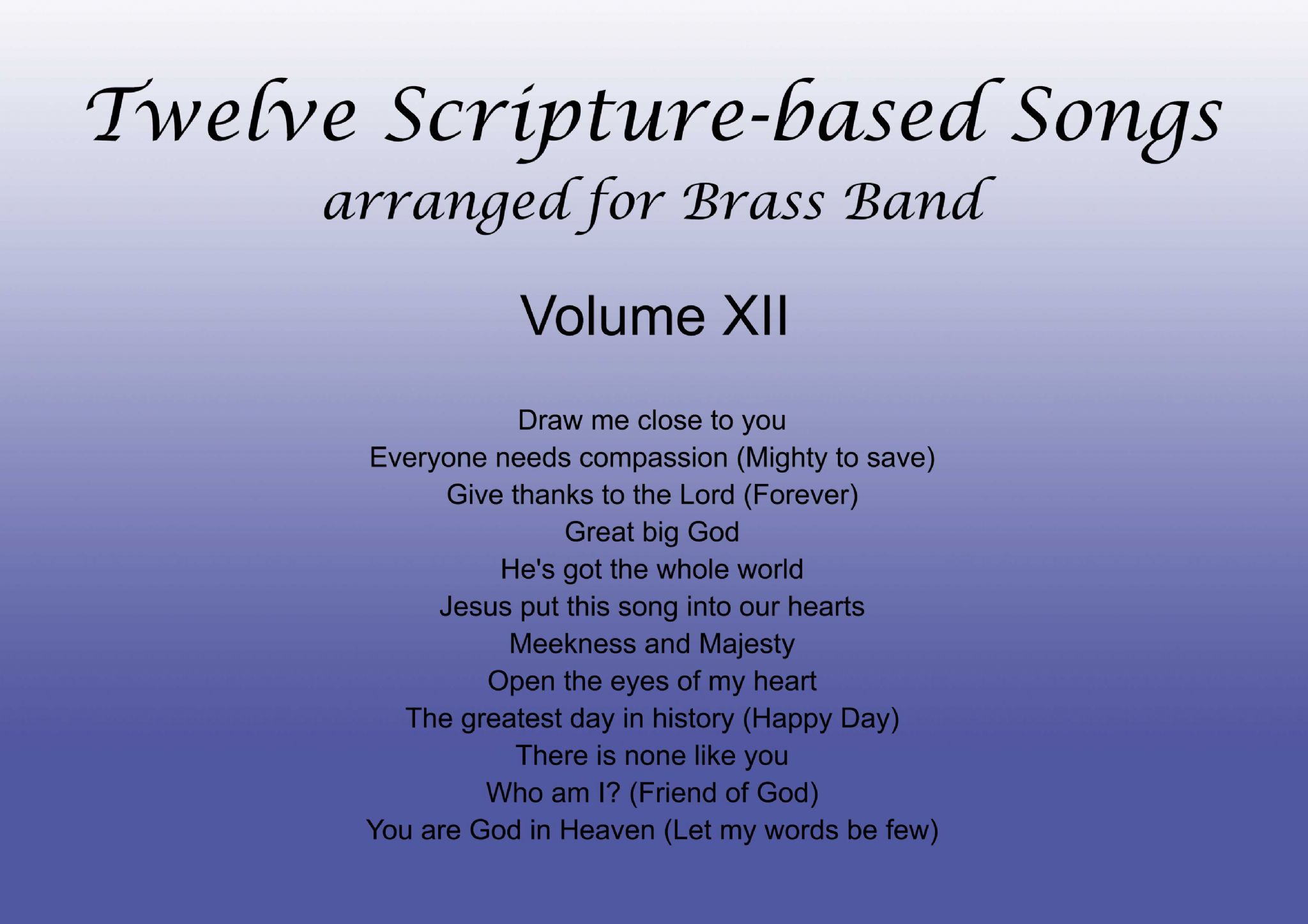
Twelve Scripture-Based Songs Volume XII
Twelve scripture-Based Songs arranged for Brass Band (Volume XII) are packaged and marketed in complete sets which include a full score and a set of master parts. It is intended that these parts be used as 'masters', for the purpose of photocopying a quantity of parts to accommodate the precise instrumentation needs of the band for which this has been purchased.Draw me close to you; Everyone needs compassion (Mighty to save); Give thanks to the Lord (Forever); Great big God;He's got the whole world; Jesus put this song into our hearts; Meekness and Majesty; Open the eyes of my heart;The greatest day in history (Happy Day); There is none like you; Who am I? (Friend of God);You are God in Heaven (Let my words be few).
Estimated dispatch 7-14 working days
-
 £124.95
Hyperlink - Peter Graham
Hyperlink was commissioned by the National Youth Brass Band of Great Britain (funded by Arts Council England and the Department for Education) for its 70th Anniversary Year. Since the anniversary coincided with other significant celebrations in 2022 (including the Royal Albert Hall/Ralph Vaughan Williams 150th and the Platinum Jubilee of Elizabeth II) it was requested that these also be recognised in some way.
Where better to begin this challenging brief but with a computer search for the NYBBGB founder Dr Denis Wright (coincidently born in Kensington, home of the RAH). The subsequent rabbit warren of hyperlinks led me to structure the work through a series of "associations":
Movement I - The Voice of Jupiter.
Alongside the discovery that Denis Wright had been a church organist was the realisation that while the RAH has hosted thousands of musical events the fabric of the building actually incorporates a musical instrument, the famous Henry Wills organ (aka The Voice of Jupiter).Organ and J S Bach are synonymous (e.g. Toccata in D min) and so both become fundamental to the content of the movement. An opening 7 note quote from the Toccata leads to a mammoth sound cluster, as if every note on the huge RAH organ is sustained. The material which follows is based upon the notes BACH (in German notation). The notes are manipulated in various ways in a 12 tone matrix; reversed, inverted and so on. Other techniques employed in the movement are ones of which Bach was master, including ground bass and fugue.
Movement II - Remember Me.
The lives of Salvationist composer Ray Steadman-Allen (born 1922) and Ralph Vaughan Williams are remembered here, with "RSA" in musical notation and fragments of RVWs famous Tuba Concerto providing the source material.While writing the movement my father passed away and to close his funeral service the family chose the uplifting Robert Lowry hymn They'll sing a welcome home. It seemed fitting to conclude the movement with a reflective setting of the chorus, the repeated phrase "Welcome, welcome home" eventually disappearing into the ether.
Movement III - Vivat.
The finale takes the form of a short fantasy upon Hubert Parry's marvellous coronation anthem I Was Glad, truly a celebratory note with which to conclude.The first performance of Hyperlink was given by the NYBBGB conducted by Martyn Brabbins at the Royal College of Music, London on August 6th 2022.
Estimated dispatch 3-7 working days
-
 £40.00
Losgaintir. For solo Baritone/Euphonium and brass band
Recommended - Championship to 2nd Section Written for Katrina Marzella and the Black Dyke band, Losgaintir (or Luskentyre in English) is one of my favourite places in Scotland. Losgaintir is on the west coast of the isle of Harris in the Outer Hebrides and has an outstanding beach widely regarded as one of the most beautiful in the world. Losgaintir is a wonderful place to be on warm sunny days with its long stretch of white sands, aqua marine seas, the incredible mountain backdrop of south Lewis and the uninhabited island of Taransaigh in view. The weather in Harris is notorious for changing very quickly and this piece tries to reflect this. Although idyllic on a calm, sunny days, on stormy days Losgaintir's character becomes dark and foreboding, with low dark clouds and sweeping winds from the Atlantic creating a dark, brooding atmosphere. The opening melody (written modally like a traditional Scottish Gaelic air) depicts the calm serenity of Losgaintir on a beautiful summer's day. The character of the fast section that follows portrays winter in Losgaintir during a tempestuous storm with bracing winds. Includes score & parts Also see: Losgaintir for Solo Baritone/Euphonium & Piano
-
 £34.95
Water Lilies - Jonathan Bates
DURATION: 5'00". DIFFICULTY: 1st Section+. 'Water Lilies' is a setting of a short poem by the American War poet Sara Teasdale from 1937. Teasdale's evocative writing is steadily becoming a renowned influence for composers - particularly in the choral scene, and this was where my first introduction to her work was founded in a work by Eriks Esenvalds entitled 'Stars'. . The percussion writing in this depicts a gentle ripple on a lake as water lilies float by at dusk, whilst the band writing explores a deep and personal interpretation of Teasdale's words which whilst on the face seem quite dark and brooding, yet really seem to express a feeling of longing and determination. . Water Lilies . If you have forgotten water lilies floating . On a dark lake among mountains in the afternoon shade, . If you have forgotten their wet, sleepy fragrance, . Then you can return and not be afraid. . But if you remember, then turn away forever . To the plains and the prairies where pools are far apart, . There you will not come at dusk on closing water lilies, . And the shadow of mountains will not fall on your heart. . Sara Teasdale (1937). .
In Stock: Estimated dispatch 1-3 working days
 View Music