
Results
-
 £82.95
The Flowers of the Forest (Brass Band - Score and Parts) - Bennett, Richard Rodney - Hindmarsh, Paul
In a preface to the score, the composer explains that 'the folk song The Flowers of the Forest is believed to date from 1513, the time if the battle of Flodden, in the course of which the archers of the Forest (a part of Scotland) were killed almost to a man'. Bennett had already used the same tune in his Six Scottish Folksongs (1972) for soprano, tenor and piano, and it is the arrangement he made then that forms the starting-point for the brass-band piece. A slow introduction (Poco Adagio) presents the folk song theme three times in succession - on solo cornet, on solo cornets and tenor horns, and on muted ripieno cornets in close harmony - after which the work unfolds through five sections and a coda. Although played without a break, each of these five sections has its own identity, developing elements of the tune somewhat in the manner of variations, but with each arising from and evolving into the next. The first of these sections (Con moto, tranquillo) is marked by an abrupt shift of tonality, and makes much of the slow rises and falls characteristic of the tune itself. The tempo gradually increases, to arrive at a scherzando section (Vivo) which includes the first appearance of the theme in its inverted form. A waltz-like trio is followed by a brief return of the scherzando, leading directly to a second, more extended, scherzo (con brio) based on a lilting figure no longer directly related to the theme. As this fades, a single side drum introduces an element of more overtly martial tension (Alla Marcia) and Bennett says that, from this point on, he was thinking of Debussy's tribute to the memory of an unknown soldier (in the second movement of En Blanc et noir, for two pianos). Bennett's march gradually gathers momentum, eventually culminating in a short-lived elegiac climax (Maestoso) before the music returns full-circle to the subdued melancholy of the opening. The work ends with a haunting pianissimo statement of the original tune.
Estimated dispatch 7-14 working days
-
£44.95
The Flowers of the Forest (Brass Band - Score only) - Bennett, Richard Rodney - Hindmarsh, Paul
In a preface to the score, the composer explains that 'the folk song The Flowers of the Forest is believed to date from 1513, the time if the battle of Flodden, in the course of which the archers of the Forest (a part of Scotland) were killed almost to a man'. Bennett had already used the same tune in his Six Scottish Folksongs (1972) for soprano, tenor and piano, and it is the arrangement he made then that forms the starting-point for the brass-band piece. A slow introduction (Poco Adagio) presents the folk song theme three times in succession - on solo cornet, on solo cornets and tenor horns, and on muted ripieno cornets in close harmony - after which the work unfolds through five sections and a coda. Although played without a break, each of these five sections has its own identity, developing elements of the tune somewhat in the manner of variations, but with each arising from and evolving into the next. The first of these sections (Con moto, tranquillo) is marked by an abrupt shift of tonality, and makes much of the slow rises and falls characteristic of the tune itself. The tempo gradually increases, to arrive at a scherzando section (Vivo) which includes the first appearance of the theme in its inverted form. A waltz-like trio is followed by a brief return of the scherzando, leading directly to a second, more extended, scherzo (con brio) based on a lilting figure no longer directly related to the theme. As this fades, a single side drum introduces an element of more overtly martial tension (Alla Marcia) and Bennett says that, from this point on, he was thinking of Debussy's tribute to the memory of an unknown soldier (in the second movement of En Blanc et noir, for two pianos). Bennett's march gradually gathers momentum, eventually culminating in a short-lived elegiac climax (Maestoso) before the music returns full-circle to the subdued melancholy of the opening. The work ends with a haunting pianissimo statement of the original tune.
Estimated dispatch 7-14 working days
-
£29.95
Spirit Of Praise (Brass Band - Score and Parts) - Marshall, George
The trio section of this march closely follows the vocal score of a setting of the hymn Praise my soul, the king of heaven by A. P. Berggren of Denmark. This hymn-like style, especially in the trio section, was not uncommon in Salvation Army marches of the period, intentionally devotional and a contrast to the lively nature which surrounded it.
Estimated dispatch 7-14 working days
-
£14.95
Spirit Of Praise (Brass Band - Score only) - Marshall, George
The trio section of this march closely follows the vocal score of a setting of the hymn Praise my soul, the king of heaven by A. P. Berggren of Denmark. This hymn-like style, especially in the trio section, was not uncommon in Salvation Army marches of the period, intentionally devotional and a contrast to the lively nature which surrounded it.
Estimated dispatch 7-14 working days
-
 £59.99
Land of Hope and Glory (Brass Band - Score and Parts) - Elgar, Edward - Sparke, Philip
Elgar's five Pomp and Circumstance Marches were written between 1901 and 1930 with number 1 undoubtedly being the most popular of the five. King Edward VII told Elgar that the tune would 'go round the world' if words were fitted to it. Elgar took the hint and included it (with slight rhythmic changes) in his Coronation Ode of 1902, with words by A. C. Benson. Thus was born Land of Hope and Glory which is now, of course, an integral part of the annual Last Night of the Proms, when the audience (with varying degrees of success!) sing the words along to the original march. Now your brass band can enjoy all the pomp and ceremony of proms with this arrangement by Philip Sparke.Duration: 2:30
Estimated dispatch 7-14 working days
-
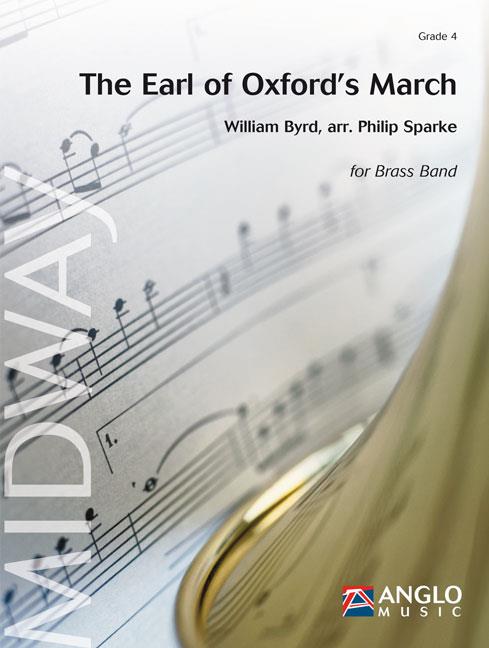 £59.99
The Earl of Oxford's March (Brass Band - Score and Parts) - Byrd, William
The Battell was written during the late 14th Century when England was in a mood of national celebration after victory over the Spanish and French Armadas. The movement which Byrd called Marche Before The Battell became known as The Earl of Oxford's Marchand it appears with that title in an early manuscript copy of the Fitzwilliam Virginal Book. Written while Byrd was at the height of his powers, it still stirs the soul to this day. A perfect opener for your concert performances.Duration: 4:45
Estimated dispatch 7-14 working days
-
 £50.00
Harry Potter and the Goblet of Fire (Brass Band - Score and Parts) - Doyle, Patrick - Littlemore, Phillip
Harry Potter and The Goblet of Fire is the pivotal fourth novel in the seven-part tale of Harry Potter's training as a wizard and his coming of age. This suite for brass band includes the themes Harry In Winter, The Quidditch World Cup, Hogwarts' Hymn, Hogwarts' March and The Death Of Cedric. Suitable for Advanced Youth/3rd Section Bands and above. Duration: 7.00
Estimated dispatch 7-14 working days
-
£29.95
The Flag Of Freedom (Brass Band - Score and Parts) - Coles, Bramwell
This march's title is not patriotic but relates to the Salvation Army flag, a symbol of spiritual liberation and salvation. The score notes, written by the editor, Lieut-Colonel Frederick Hawkes, refer to 'the well-contrasted melodies, the balanced effect of the scoring and ever-changing effects in regard to light and shade'.
Estimated dispatch 7-14 working days
-
£14.95
The Flag Of Freedom (Brass Band - Score only) - Coles, Bramwell
This march's title is not patriotic but relates to the Salvation Army flag, a symbol of spiritual liberation and salvation. The score notes, written by the editor, Lieut-Colonel Frederick Hawkes, refer to 'the well-contrasted melodies, the balanced effect of the scoring and ever-changing effects in regard to light and shade'.
Estimated dispatch 7-14 working days
-
£42.50
Guards of Honour (Brass Band - Score and Parts) - Evers, Harm
De Haske once again presents a excellent march from composer Harm Evers. In Guards of Honour Evers must have consciously envisioned an honour guard as the solemn nature of such a body is clearly audible in this composition.Duration: 3:30
Estimated dispatch 7-14 working days
 View Music