
Results
-
 £38.95
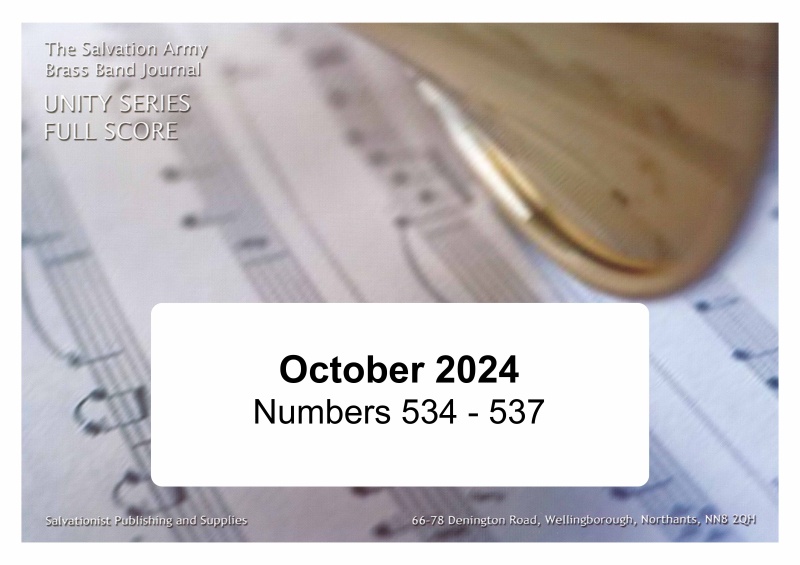
Unity Series Band Journal - Numbers 534 - 537, October 2024
534: Boldly Going (Wycliffe Kortin)This arrangement is derived from a Kenyan Swahili gospel melody Simama Imara, which means 'to stand firm'. The song is an encouragement to Christians to stay strong in the Lord, even in times of difficulty. The piece has a lively rock feel which requires precision in articulation and a sense of drive throughout.535: Fill me anew (Mark Feltwell)The melody Fill me anew (T.B. 611) has always been a favourite of the composer and this composition was used at the Worchester Corps in their Pentecost services. It is a simple melody with a simple purpose and associated prayer that is the focus of the piece, 536: There's something about that name (William Gaither arr. Kingsley Layton)The chorus (S.A.S.B. 80) from which this piece takes its title was composed by Bill and Gloria Gaither. They wrote it in 1970, having watched their grandparents near the end of their lives and pass away. At the same time, they were, as a couple, embracing parenthood. It resonated with them how the young loved to say the name of Jesus as well as those that were nearing the end of their lives. The chorus reflects the peace and comfort which comes to us when we call on that name during both the good and challenging times in life. The Gaithers are a performing and songwriting couple who have become well-known within the Southern Gospel music genre.537: Selection - Singing Praises! (Noel Jones)A motif, based on the phrase 'Praise him!, Praise him!, Ever in joyful song', appears throughout the selection. Songs also featured include I love to sing of the Saviour (S.A.S.B. 845) and Singing glory, glory, Glory be to God on high (S.A.S.B. 840)
Estimated dispatch 7-14 working days
-
 £34.95
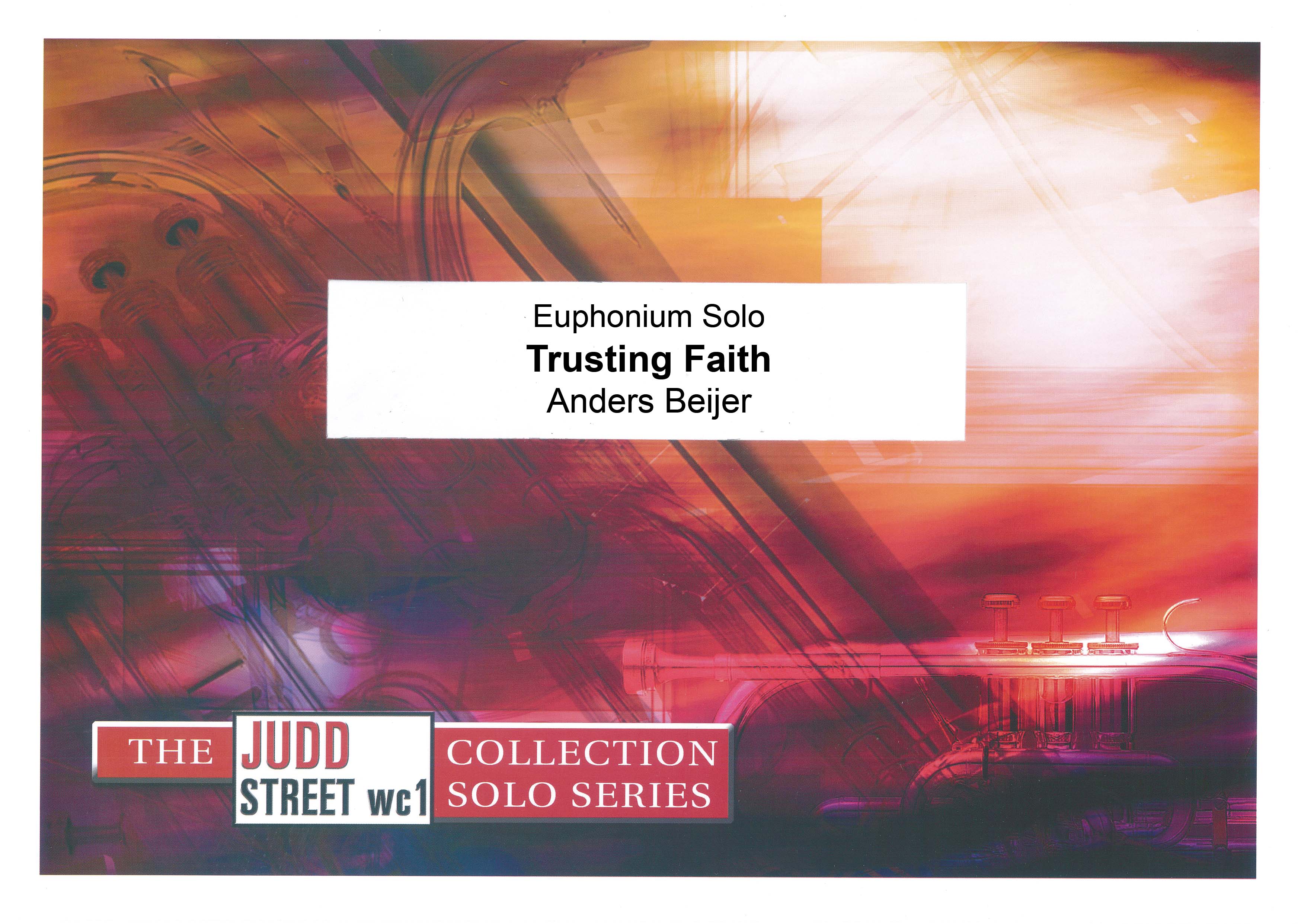
Trusting Faith (Euphonium Solo with Brass Band - Score and Parts)
This piece is based on the melody Faith is the victory (T.B. 128) and throughout the solo we follow a person's journey of faith. In the first movement, the bold and confident opening depicts a seemingly strong and certain faith, although perhaps a little naive and immature. The music suggests that if we are certain enough, then we will see our prayers immediately answered and will witness miracles. But what happens when we don't see those miracles happen, or our prayers seem unanswered? Doubt creeps in and the music quickly becomes a full struggle continuing through to the end of the moment.What do you do when you faith amounts to something other than what you thought it to be? The beginning of the second movement reflects this questions and starts hesitantly and full of doubt. Soon, a new melody is introduced, Trusting as the moments fly (T.B. 263). The words of the chorus remind us that true faith should bot be affected by fears or disappointments, that our trust in God should remain. Realising that a faith that holds firm, though being tested over time, becoming deeper and stronger, is a liberating truth. We no longer need to struggle in our strength alone, but can lean on God instead.When we lean on God, reset in his care, and feel. safe in his hands, then faith has really become our victory. We will then become strong disciples who can meet life's various challenges without wavering or being afraid. This is depicted in the final movement of the solo when both melodies, whose messages complement each other, are woven together in an explosive finale.
Estimated dispatch 7-14 working days
-
 £89.95
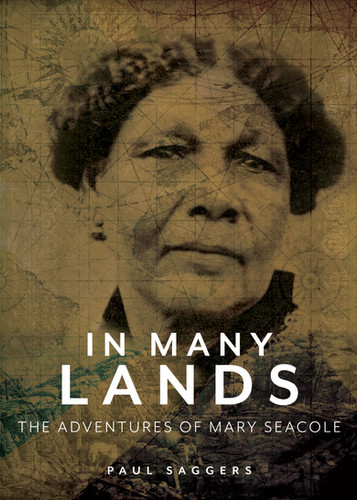
In Many Lands - The Adventures of Mary Seacole - Paul Saggers
In Many Lands - The Adventures of Mary Seacole was commissioned by The Royal Marines Band Service for The National Youth Brass Band of Great Britain. The first performance of the piece was on 16 April 2022 in Huddersfield Town Hall to celebrate the 70th anniversary of the NYBBGB. It was next performed in Birmingham Town Hall (on 28 April 2022) at a joint charity concert of the NYBBGB and The Band of Her Majestyas Royal Marines, Collingwood, for the European Brass Band Association Prelude Concert. The work is a musical account of the life of Mary Seacole who was a British-Jamaican nurse and businesswoman who set up the "British Hotel" behind the lines during the Crimean War. The work takes inspiration from Seacoleas biography Wonderful Adventures of Mrs. Seacole in Many Lands. The work is divided into three movements:
-
 £74.72
Blaenwern Diversions (Brass Band) Karl Whelan
Commissioned by Micah Dominic Parsons, Blaenwern Diversions is based on the well loved hymn, Love Divine. The composer writes: 'Originally intended to be a set of variations, I found myself wandering around the notes of the hymn tune at the piano and found that the variations almost took on a life of their own resulting in what we have here - diversions. There are 8 diversions in total; the introductory diversion; diversions 1 - 6; and the finale which are divided into three linked movements. Blaenwern Diversions represents my entry into the world of contest works, so even though the piece aims to test the band, it is important that the band enjoy the music within no matter how treacherous!' To view a follow-the-score video please visit www.youtube.com/watch?v=6X5gTMTHkfg PDF download includes score and parts. Sheet music available from: UK - www.brassband.co.uk USA - www.solidbrassmusic.com Difficulty Level: Championship Instrumentation: Soprano Cornet Eb Solo Cornet Bb Repiano Cornet Bb 2nd Cornet Bb 3rd Cornet Bb Flugel Horn Bb Solo Horn Eb 1st Horn Eb 2nd Horn Eb 1st Baritone Bb 2nd Baritone Bb 1st Trombone Bb 2nd Trombone Bb Bass Trombone Euphonium Bb Bass Eb Bass Bb Timpani Percussion 1-3
In Stock: Estimated dispatch 1-3 working days
-
 £37.35
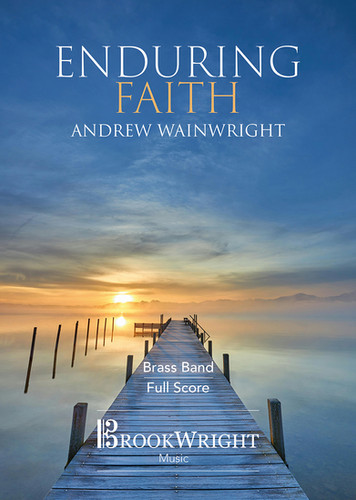
Enduring Faith (Brass Band) Andrew Wainwright
Enduring Faith was commissioned by Christopher Ward and the Five Lakes Silver Band and is a lyrical work for brass band that explores the intersection of hope, resilience, and conviction. Designed with a focus on melodic clarity and expressive phrasing, the composition moves through a series of nuanced emotional shifts - ranging from quiet, reflective passages to moments of expansive lyricism and affirmation. The harmonic structure travels through several keys, serving as a musical metaphor for the changing seasons of life. Throughout the piece, the texture is enriched by featured soloists from across the ensemble, including flugel horn, cornet, euphonium, baritone, and trombone. This work is dedicated to Doug and Stephanie Bayne, long-standing members of the Five Lakes Silver Band, in recognition of their commitment to their community and their steadfast support of the ensemble. It was recorded by the Five Lakes Silver Band on their 2025 album, Legacy. To view a video of the Five Lakes Silver Band performing the work please visit https://youtu.be/84NU_OXMs3Y Duration: Approx. 5.30 minutes Difficulty Level: 3rd Section + This PDF download includes the full score and parts. Sheet music available at www.brassband.co.uk (UK) or https://satradecentral.org (USA) Instrumentation: Soprano Cornet Eb Solo Cornet Bb Repiano Cornet Bb 2nd Cornet Bb 3rd Cornet Bb Flugel Horn Bb Solo Horn Eb 1st Horn Eb 2nd Horn Eb 1st Baritone Bb 2nd Baritone Bb 1st Trombone Bb 2nd Trombone Bb Bass Trombone Euphonium Bb Bass Eb Bass Bb Timpani Percussion 1-2
In Stock: Estimated dispatch 1-3 working days
-
 £33.62
Extinction:2100! (Brass Band) Joe Galuszka
Extinction:2100!, by Joe Galuszka, takes us on a journey to the present day and shows us the devastating impacts of climate change. With the world reaching crisis, we open with a reminder that the world has suffered in recent years from some of the most raging destruction of our plants and animal life, from wildfires. With the time left becoming smaller and smaller with each day passing, the piece reminds us next of the 'Tolling Bell of Extinction' before the conclusion takes us to a place all too familiar - the present - where with action and with a 'Call for Change', we can hopefully make a difference to our future, our children's future, and save our planet from devastation, from decimation, from extinction! To listen to an audio demo of the work please visit https://on.soundcloud.com/SjxKbnM1Q55hVXck7 Duration: approx. 4.30 mins Difficulty Level: 1st Section + PDF download includes parts and score. Sheet music available from www.brassband.co.uk (UK) or https://satradecentral.org (USA) Instrumentation: Soprano Cornet Eb Solo Cornet Bb Repiano Cornet Bb 2nd Cornet Bb 3rd Cornet Bb Flugel Horn Bb Solo Horn Eb 1st Horn Eb 2nd Horn Eb 1st Baritone Bb 2nd Baritone Bb 1st Trombone Bb 2nd Trombone Bb Bass Trombone Euphonium Bb Bass Eb Bass Bb Timpani Percussion 1-3
In Stock: Estimated dispatch 1-3 working days
-
 £37.35
Nocturne for Brass Band & Percussion: The Lady with the Lamp - Andy Wareham
VIEW SCORE PDF Nocturne for Brass Band & Percussion: The Lady with the Lamp was composed for the BrookWright International Brass Band Composer Competition 2020, the work later going on to be a finalist in the competition. The music celebrates the life and achievements of Florence Nightingale on the 200th anniversary of her birth. The work is structured in ternary form and is designed to be an engaging concert piece, accessible to both lower and upper section bands. Minimal percussion has been used and ossia passages have been added to accommodate all levels. The music imagines Miss Nightingale walking the wards at night with the contrasting sections representing her devotion to the care of others, the struggles and sacrifice of her service, and the lasting effect of her renowned achievements that are still felt to this day. Sheet music available from: UK - www.brassband.co.uk USA - www.solidbrassmusic.com Difficulty Level: 2nd Section + Instrumentation: Soprano Cornet Eb Solo Cornet 1&2 Bb Solo Cornet 3&4 Bb Repiano Cornet Bb 2nd Cornet Bb 3rd Cornet Bb Flugel Horn Bb Solo Horn Eb 1st Horn Eb 2nd Horn Eb 1st Baritone Bb 2nd Baritone Bb 1st Trombone Bb 2nd Trombone Bb Bass Trombone Euphonium 1&2 Bb Bass Eb Bass Bb Timpani Percussion 1-2
In Stock: Estimated dispatch 1-3 working days
-
 £63.51
Temperamental (Brass Band) Fendall Hill
This work by Fendall Hill was the set test for the 2021 National Brass Band Championships of New Zealand, B Grade. The composer writes: 'J.S. Bach (1685-1750) is deemed by many to be the 'Ulimate Composer'. He added an incredible proportion to the DNA of western music, and his influence is heard in the music of today. Like many artists, he was not overly recognised as a composer during his lifetime, and it took an 1829 performance of the St Matthew Passion by Mendelssohn to ignite a recognition of his place in the music world, a place he has maintained ever since. This piece starts with a similar spark of rediscovery of the music of Bach. It contains arrangements of various works, interspersed with composition based on Bach's chord structures, sections in the style of Bach, and original sections inspired by the moods created along the way. The first section explores the Toccata, and great organ works. This leads into an exploration of his choral works, and a finale based on the Preludes. The word 'Tempered' has different meanings, and all seem to apply to the music of Bach, and these appeal to the musical, engineering and spiritual aspects of my personal life. His music reaches to the humanity and divinity, it has strength, structure and order that creates frameworks in which incredible complexity reigns; and the complexity leads to a wildness, a kind of craziness that represents a range of human moods, and can change without warning. The same piece of music affects people in very different ways. I don't know if it's Bach's music, or us, but it can seem out of control and under control at the same time - the combination is highly temperamental. To view a follow-the-score video of the work please visit: https://youtu.be/zpNxITUqXZU Sheet music available from: UK - www.brassband.co.uk USA - www.solidbrassmusic.com Difficulty Level: 1st Section + Instrumentation: Soprano Cornet Eb Solo Cornet 1&2 Bb Solo Cornet 3&4 Bb 2nd Cornet Bb 3rd Cornet Bb Flugel Horn Bb Solo Horn Eb 1st Horn Eb 2nd Horn Eb 1st Baritone Bb 2nd Baritone Bb 1st Trombone Bb 2nd Trombone Bb Bass Trombone Euphonium Bb Bass Eb Bass Bb Timpani Percussion 1-4
In Stock: Estimated dispatch 1-3 working days
-
 £79.95
Neverland - Christopher Bond
"All children, except one, grow up" wrote J.M. Barrie about Peter Pan in 1911; the first line and an expression of beautiful melancholy and fantasy, coming to represent one of the best-loved children's stories of the twentieth century. 'Peter & Wendy', as the book was first released, has subsequently been transformed into adaptations for film and stage, with subsequent books based on this iconic tale. In writing this new work for brass band, the composer has taken three of the main themes from J. M. Barrie's book, and used these themes to create new musical material, forming a work in three contrasting sections. I. Journey to Neverland The opening of the work, mysterious in its style, reflects the opening chapters of the story - a leafy London street, still in the dead of night - with the music transforming quickly as it builds in texture and momentum - a Journey to Neverland through the night sky; Second Star to the Right and straight on 'til morning. "Then Peter knew that there was not a moment to lose. 'Come,' he cried imperiously, and soared out at once into the night, followed by John and Michael and Wendy. Mr & Mrs Darling and Nana rushed into the nursery too late. The birds were flown." II. The Windows that Closed The central section of the work takes its inspiration from the sense of longing throughout the book, mainly by Peter Pan, the Darling Children & The Lost Boys. Distant memories of life before Neverland, memories of the Lost Boys' mothers, and regret at what the children have missed. Peter says "Long ago, I thought like you that my mother would always keep the window open for me; so I stayed away for moons and moons and moons, and then flew back; but the window was barred, for mother had forgotten all about me, and there was another little boy sleeping in my bed." III. Aboard the Pirate Ship The final section of the work takes its inspiration from the Pirate Ship, and Peter Pan's ultimate battle with its infamous Captain Hook. "In person, he was cadaverous and blackavized, and his hair was dressed in long curls, which at a distance looked like black candles, and gave a singularly threatening expression to his handsome countenance. His eyes were the blue of the forget-me-not, and of a profound melancholy, save when he was plunging his hook into you, at which time two red spots appeared in them and lit them up horribly."
Estimated dispatch 10-14 working days
-
 £55.00
Mary Did You Know?
ABOUT THIS PIECE: Upon being asked to write a Christmas musical for his church, Mark Lowry penned a series of monologues based on Christmas Songs including a conversation with Mary about the birth and life of her Son, Jesus. Lowry worked on the lyrics for years until he approached southern gospel singer-songwriter and harmonica player, Buddy Greene. Greene agreed to pen music for his words, completing the instrumentation within a few days. The result is this new-age Christmas classic: 'Mary Did You Know". ENSEMBLE: Standard British Brass Band WHEN YOU BUY THIS PRODUCT, YOU GET: High-quality printed score and parts LEVEL: 2 LISTEN: Listen here DURATION: 4-minutes 30-secondsEXAMPLE SCORE: Click here LEVEL GUIDE: Level 1- Accessible to all Level 2 - c. UK third section and higher Level 3 - c. UK second section and higher Level 4 - c. UK first section and higher Level 5 - c. UK championship section level .
Estimated dispatch 5-7 working days
 Watch video