
Results
-
£76.99
Music for Cinema - Bertrand Moren
In Music for Cinema Bertrand Moren pays tribute to film music, a genre he has particularly passion for. The work opens with a sonorous introduction which gradually leads into the central passage which alternates between discordant plaintive lines and expressive and passionate solo phrases. A mysterious and tense bridge passage brings a feeling of fear which leads into the finale in which the opening melodic line returns over perky and joyful rhythms.
Estimated dispatch 5-14 working days
-
£60.99
Laudatio - Bertrand Moren
This piece was commissioned by a brass band from the Jura in Switzerland to thank its resigning conductor for his loyalty and work. The first and last sections of this composition develop a joyful and highly energetic theme which expresses the complete commitment required of a conductor in order to get the best out of the musicians. The central passage mirrors an atmosphere full of nostalgia. After so many years of intense and relentless work, it is always difficult for a keen conductor to retire.
Estimated dispatch 5-14 working days
-
 £79.99
Sambezi - Philip Sparke
Sambezi is the brass band version of the last movement of Philip Sparke's Trombone Concerto. It starts in a joyful and outgoing mood with the soloist playing a carefree samba tune. A jazz-in uenced central tune explores the higher ranges of the trombone before the samba rhythms set up a 'contest' between the soloist and the band's trombone section. The soloist is the eventual 'winner' and he celebrates by reintroducing the samba melody before bringing the work to a virtuosic close. A real treat for your trombone soloist.
Estimated dispatch 5-14 working days
-
 £84.99
Voyage with the VOC - William Vean
The Netherlands have been an important trading nation for a long time partly as a result of their geographical situation. One of the first multinationals in The Netherlands was the 'Verenigde Oostindische Compagnie' (VOC). The aim of the VOC was to send ships to Asia in order to buy pepper and spices, and to take over the Portuguese monopoly in this field. The Company was successful. An era of great prosperity resulted, in which the art of painting (Rembrandt van Rijn) as well as science (Constantijn Huygens) flourished alongside a thriving economy. 1. The Sails are set : There is a lot of hustle and bustle on the quay. The crew are preparing fordeparture. Goodbyes are said and once the sails have been hoisted the ship sets out to sea.2. A Visit to the Rajah of Yogyakarta: After a voyage of many months the place of destination is reached. A visit to the Radja, the king of the area around Yokyakarta, follows. The dishes and beverages and the native culture in general are very pleasant after having been on a diet of ship's biscuit and water for such a long time.3. The Holds have been loaded: The holds have been loaded to the brim, and the voyage home can be begin!4. Death sails along: Life at sea is rough. not seldom did a sailor die of a tropical disease or scurvy. After a memorial service, the Captain would speak the words 'One, two, three, in God's name ...' and the body, wrapped in canvas, would be committed to the sea.5. A joyful homecoming: After many months of hardship coming home is perhaps the best part of the entire voyage. The quay is filled with people eager to give the crew a warm welcome.
Estimated dispatch 5-14 working days
-
 £154.99
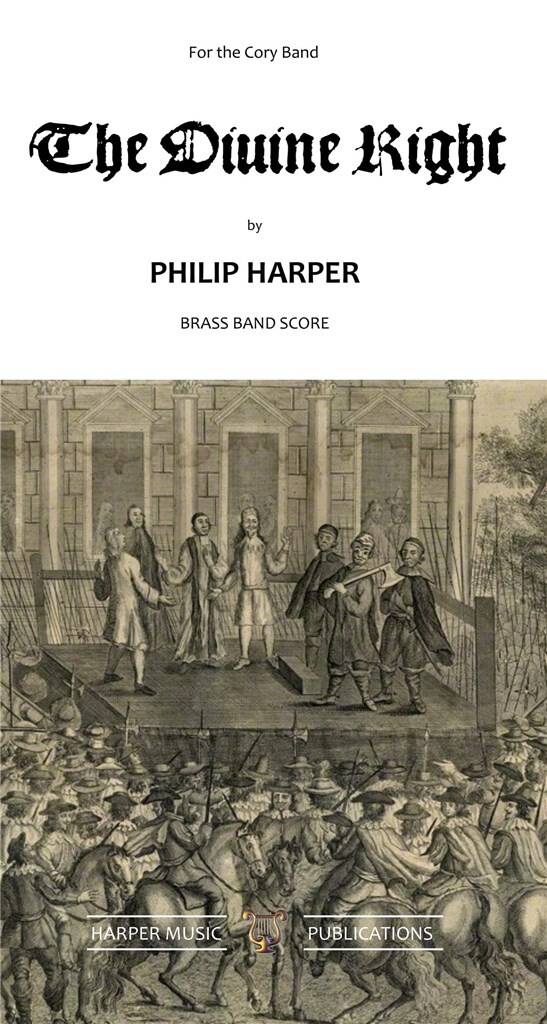
The Divine Right - Philip Harper
At the time of composing this piece, the Arab Spring was sweeping through the Middle East. It seemed that almost every week a new countrys people had risen up against the regimes and dictatorships which had prevailed for generations, leaving manynations at a defining crossroads in their history. There were so many possible ways ahead: so many hopes, yet so many uncertainties.My music is a depiction of these revolutionary times, and several musical themes are in turn presented, discussed, considered, fought over, altered, rejected or accepted. Most nations have had, or probably will have, their own Arab Spring, including my own, the United Kingdom. Events of 17th Century Britain provide the context for this piece, particularly those following the execution of the tyrant King Charles I on30 January 1649. The regicide was in part due to Charless steadfast belief in the Divine Right of Kings, and led to a tumultuous interregnum, where England stood at its own defining crossroads.The music begins turbulently, before King Charles appears and is led to the gallows outside Banqueting House in central London where he is brutally decapitated. From the assembled crowd rose, according to one observer, a moan as I never heard before and desire I may never hear again.The music descends to emptiness. The musical argument which follows is not strictly programmatic, but a number of musical themes are all thrown into the melting pot, representing ideas such as: religion; military force; reasoned Parliamentary debate; and the chattering,irrepressible voice of the people. Additionally, there are some quotations from the music of royalist composer Thomas Tomkins (1572-1656), who was often in tune with the feeling of the times. This defining episode in Englands history was brought to a close with the Restoration of the monarchy in 1660, and as the exiled King Charles II rode back into London the diarist John Evelyn wrote: Never was so joyful a day seen in this nation. I stood in the Strand and beheld it, and blessed God.At the end of the piece the bells ring out, and the musical appearance of the King has transformed from turbulent to triumphant. Philip Harper, 2013
Estimated dispatch 5-14 working days
-
 £94.99
Dublin Pictures - Marc Jeanbourquin
Ireland is a multi-faceted country that has developed a popular and distinctive musical culture. The first movement of Dublin Pictures reflects Irish festivals where there is dancing and traditional beer flowing.More tranquil in its feel, the second movement illustrates the landscape that can be seen from the Ha'penny Bridge, a bridge that crosses the River Liffey in Dublin. This movement highlights the wide range of the orchestra's sound colours as the musicians' voices combine with the wind and percussion to accompany the soloist. The lively and joyful rhythms of the last movement take the listener to Temple Bar, the famoustourist quarter of the city, well known for its vibrant nightlife.The music's energy and virtuosic motifs are in contrast to the previous movement and provide a spirited and festive finale.Marc Jeanbourquin wrote this piece in three movements for Azimuts Brass in 2011. He then arranged it for Concert, Fanfare or Brass Band.
Estimated dispatch 5-14 working days
-
 £38.95
Unity Series Band Journal - Numbers 550 - 553, February 2026
550: March - Century of celebration (Stephen Smith)This march follows a traditional pattern and should be accessible for most bands. It was written for the 100th anniversary of Camp Gifford in Loon Lake, Washington, therefore included are well-known songs with references to water as the camp is located on the shores of Deer Lake.551: Going Home (Alan Williams)Richard Jukes' song I'm a soldier bound for Glory (S.A.S.B. 856) displays the confidence of someone with a steadfast faith who is certain that by loving and serving their God they will be accepted into his Kingdom. This assurance results in a joyful song of testimony. Whilst not a direct setting of the five verses, the dance-like rhythm of this cha-cha should reflect the positive and encouraging nature of the lyrics and be full of joy and spirit.552: Whosoever will may come (Noel Jones)This is a two-verse arrangement of the song Whosoever will may come (S.A.S.B. 405), with words written by William John McAlonan and music composed by Alfred Braine. This song is included in the Invitation and Challenge section of the song book. The arrangement should be played in a spirited style.553: March - Sing a praise of celebration (Marcus Venables)This music was written at the request of the Singapore Central Corps Band, who asked that the work be based on two specific meaningful melodies. The first is To the Glory and Praise of God by Robert Redhead, a tune rooted in corporate worship and joyful proclamation, calling God's people to lift their voices in thanksgiving. The other is Home, a beloved Singaporean song that speaks of belonging.
Estimated dispatch 7-14 working days
-
 £30.00
Joy to the World - George Frideric Handel
"Joy to the World" is a popular Christmas Carol with words by Isaac Watts. As of the late 20th century, "Joy to the World" was the most published Christmas hymn in North America. The words of the hymn are by the English writer Watts are based on Psalm 98, 96:11-12 and Genesis 3: 17-18. The version of this carol usually heard today is from an edition by Lowell Mason and is named "Antioch" and attributed as "arranged by Handel". This tune has the first four notes in common with the chorus "Lift up your heads" from the Messiah and the third line recalls "Comfort ye" from the same work. But this resemblance is often dismissed as a chance resemblance by Handel scholars today. Another theory is its similarity to a tune called "Comfort" and associated with Charles Wesley's hymn "O Joyful Sound", which was written some three years earlier than Lowell Mason's "Antioch" in 1833. This carol has been recorded by many artists such as Andy Williams, The Supremes, Bing Crosby, Ella Fitzgerald, Johnny Cash, Nat King Cole, Perry Como, Vic Damone and Mariah Carey.
-
£50.00
The Colours Fly - Nevard, W
This new march from Wendy Nevard would be ideal as a concert opener for a lower section band.It is a steady 1000bpm and features joyful melodies and infectious rhythms throughout.4th Section +Duration 4 mins
In Stock: Estimated dispatch 1-3 working days
-
£25.00
The Colours Fly (Score) - Nevard, W
This new march from Wendy Nevard would be ideal as a concert opener for a lower section band.It is a steady 100bpm and features joyful melodies and infectious rhythms throughout.4th Section +Duration 4 minutes
In Stock: Estimated dispatch 1-3 working days
 View Music