
Results
-
£29.95
ROSEHILL (Brass Band Set) - Albert Jakeway
The Salvation Army Assurance Society Band was the first Salvation Army band to take part in the Lord Mayor's Show, in 1928. The Society relocated from London to Reading at the beginning of World War Two and the title of this march is derived from the name of the Reading property. Rosehill is a fine march containing all the drama and pyrotechnics that make it suitable for a Whit Friday type march contest.
Estimated dispatch 7-14 working days
-
 £30.00
Exegesis - Tim Paton
An exciting, original composition for brass band by Tim Paton. A complex work which entwines melodic lyricism amidst contemporary harmonies and scoring. A tour de force of Tim's creativity and a rewarding challenge for the performers and audience.Tim comments: The term exegesis is applied to a study which works out the meaning of something, an interpretation of a series of events, a comparison of ideas within a given medium, for example, "Biblical exegesis". This brass band piece is a musical exegesis.Section one is made up of three main themes, and although these themes are tonal within themselves, there is a sense that they are trying to understand one another. From the very beginning of this section, there is an element of bi-tonality and dissonance.The middle section is ponderous, where we hear elements of these three themes. It could be called the 'thinking section'.Section three almost interrupts this middle section, with fanfares displaying a realisation, still containing bi-tonality, but in harmony! We are soon led in to a hymn like celebration, followed by a determined, militaristic section for the percussion. Finally, the fanfares which opened this third section, reappear, taking us to a final conclusion.
In Stock: Estimated dispatch 3-5 working days
-
 £15.00
Pomp and Circumstance No. 1 (Land of Hope and Glory) - Elgar
Performance Notes by Andrew Duncan:This fine march theme is arranged in two distinct parts.From the beginning up to two bars before letter C the melody is played quietly with the Horns carrying the tune - the Horns have to play up to a high F in this section. If this is not something that your band can manage then you have two options of where you can start playing the arrangement from.If your band can manage the chromatic notes, then begin playing from two bars before letter C. Alternatively, simply start playing directly from letter C .The musical concepts of Rallentando and A tempo are encountered in this arrangement. These can be difficult concepts for inexperienced players to grasp, so playing this arrangement should help to establish this technique.The Flexi-Collection ApproachFlexible scoring tailored to your needs - A perfect solution for expanding the repertoire of training and junior brass bands. The Flexi-Collection currently offers two series - Popular Classics and World Tour. Based on four-part harmony, these collections provide groups with the advantage of complete flexibility when they may not be balanced. If players or instruments are missing, the show can still go on!The Flexi-Collection - Popular Classics Series, encapsulates all that is great about the wonderful range of musical styles produced by Holst, Elgar, Handel, Verdi, Tchaikovsky, Grieg, Bizet and Parry.The thoughtful scoring and arranging by Andrew Duncan now means that groups of all abilities have access to a truly flexible set of music for their needs. With world parts, rudimentary theory, terminology translations and large format typesetting, The Flexi-Collection ticks all the boxes when it comes to bringing interesting music to the training and junior band/brass group environment.Available individually or as part of the money-saving Flexi-Collection Popular ClassicsAlbum.Scored for Brass Band and supplied with additional Easy Bb, Easy Eb and world parts - The Flexi-Collection offers flexibility in every sense of the word.
In Stock: Estimated dispatch 3-5 working days
-
 £40.00
Dragons' Rise - Matthew Hall
Dragons' Rise was commissioned by the Tredegar Town Band in July 2008 for their CD recording Spirit of the Valleys, to represent the band beginning their resurrection from a difficult time in the bands history back through to becoming on of the best bands in the world. It was premiered by the Tredegar Town Band at the National Eisteddfod contest in Cardiff in August 2008, performed live on national television, where the band were victorious.Dragons' Rise was the first piece composed by Matthew as the bands new composer-in-residence. Subsequent pieces have included Legends of Cyfarthfa and Nightingale Dances, both winners of the Cyril Beere award for Best New Composition at Brass in Concert, The Smile and Activate.
Estimated dispatch 5-7 working days
-
£45.00
A Christmas Festival - Anderson, L - Wilkinson, K
Keith Wilkinson has done a fresh new version of this Christmas classic from light music icon Leroy Anderson. So many different carols make an appearance, beginning with Joy to the World and ending with O Come All Ye Faithful and Jingle Bells simultaneously! Audiences will love it.3rd section +Duration 6 mins 30 secs
In Stock: Estimated dispatch 1-3 working days
-
 £34.95
Trusting Faith (Euphonium Solo with Brass Band - Score and Parts)
This piece is based on the melody Faith is the victory (T.B. 128) and throughout the solo we follow a person's journey of faith. In the first movement, the bold and confident opening depicts a seemingly strong and certain faith, although perhaps a little naive and immature. The music suggests that if we are certain enough, then we will see our prayers immediately answered and will witness miracles. But what happens when we don't see those miracles happen, or our prayers seem unanswered? Doubt creeps in and the music quickly becomes a full struggle continuing through to the end of the moment.What do you do when you faith amounts to something other than what you thought it to be? The beginning of the second movement reflects this questions and starts hesitantly and full of doubt. Soon, a new melody is introduced, Trusting as the moments fly (T.B. 263). The words of the chorus remind us that true faith should bot be affected by fears or disappointments, that our trust in God should remain. Realising that a faith that holds firm, though being tested over time, becoming deeper and stronger, is a liberating truth. We no longer need to struggle in our strength alone, but can lean on God instead.When we lean on God, reset in his care, and feel. safe in his hands, then faith has really become our victory. We will then become strong disciples who can meet life's various challenges without wavering or being afraid. This is depicted in the final movement of the solo when both melodies, whose messages complement each other, are woven together in an explosive finale.
Estimated dispatch 7-14 working days
-
 £54.95
Road to Run (Brass Band - Score and Parts)
The piece starts with a simple rhythmic pulse which is the basis of the entire work. This cell provides a platform for the piece to grow and develop starting with the first theme played by the euphoniums, all the way through to the conclusion performed in full gusto by the whole ensemble. The various motifs introduced throughout the opening of the piece are passed between the ensemble before the introduction of the three soloists.The central section of the piece features the Solo Trombone, Cornet and Euphonium as they take turns to play a jazz fusion solo whilst having some musical interplay with each other at the front of the stage. After this solo passage, the music then features the various sections within the ensemble, which pays homage to Weather Reports' famous "Birdland". In a jazz fused cannon, each new independent musical phrase is performed by the various sections standing. Starting with the Horns then Solo Cornets, Back Row and Flugal and finally the Baritones and Trombones.Once the different sections of the ensemble are featured, the piece then moves into the final stages. This section sees a reprieve of the opening material heard at the beginning, but further developed with the various melodic motifs passed around the ensemble. The ending builds on this material towards a rousing conclusion."Road to Run" is an up tempo, high energy concert work that has that 'feel-good factor' from start to finish. The idea behind the title is based on the feel and structure of the piece which takes the listener on a musical journey. And at 150 beats per minute - you could put it in your headphones and find your own 'Road to Run'.
Estimated dispatch 7-14 working days
-
 £29.95
Judd: Rosehill
The Salvation Army Assurance Society Band was the first Salvation Army band to take part in the Lord Mayors Show, in 1928. The Society relocated from London to Reading at the beginning of World War Two and the title of this march is derived from the name of the Reading property. Rosehill is a fine march containing all the drama and pyrotechnics that make it suitable for a Whit Friday type march contest.
Estimated dispatch 7-14 working days
-
 £14.95
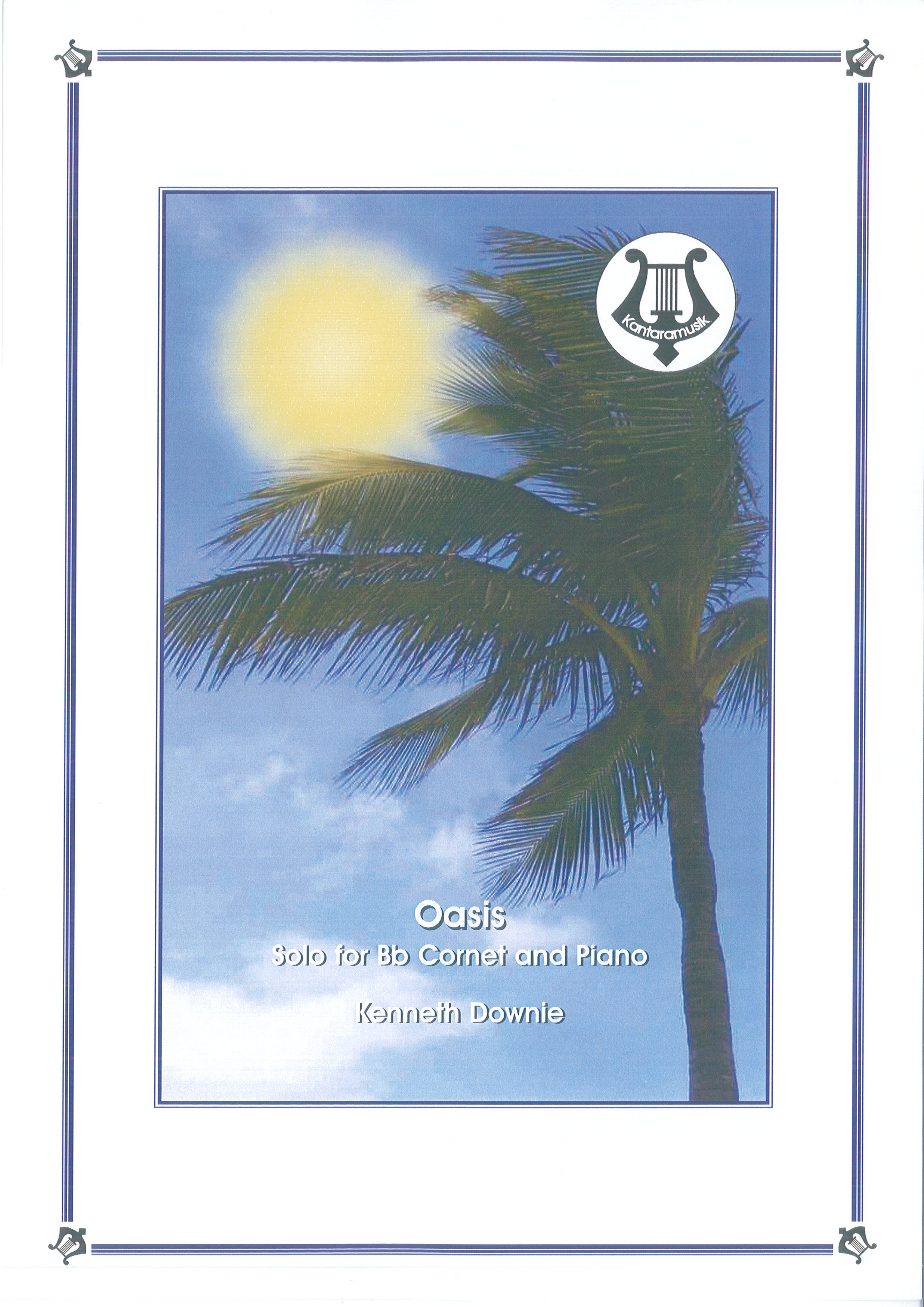
Oasis (Cornet and Piano)
The music 'Oasis' has adopted the meaning as described in Collins English Dictionary; 'a place of peace, safety or happiness in the midst of trouble or difficulty'. It is an original tune which should come over as a soothing, melodious song without words. The rubato marking at the beginning provides the soloist with plenty of scope for expressive, individual playing, within the bounds of good musical taste.
Estimated dispatch 7-14 working days
-
 £24.95
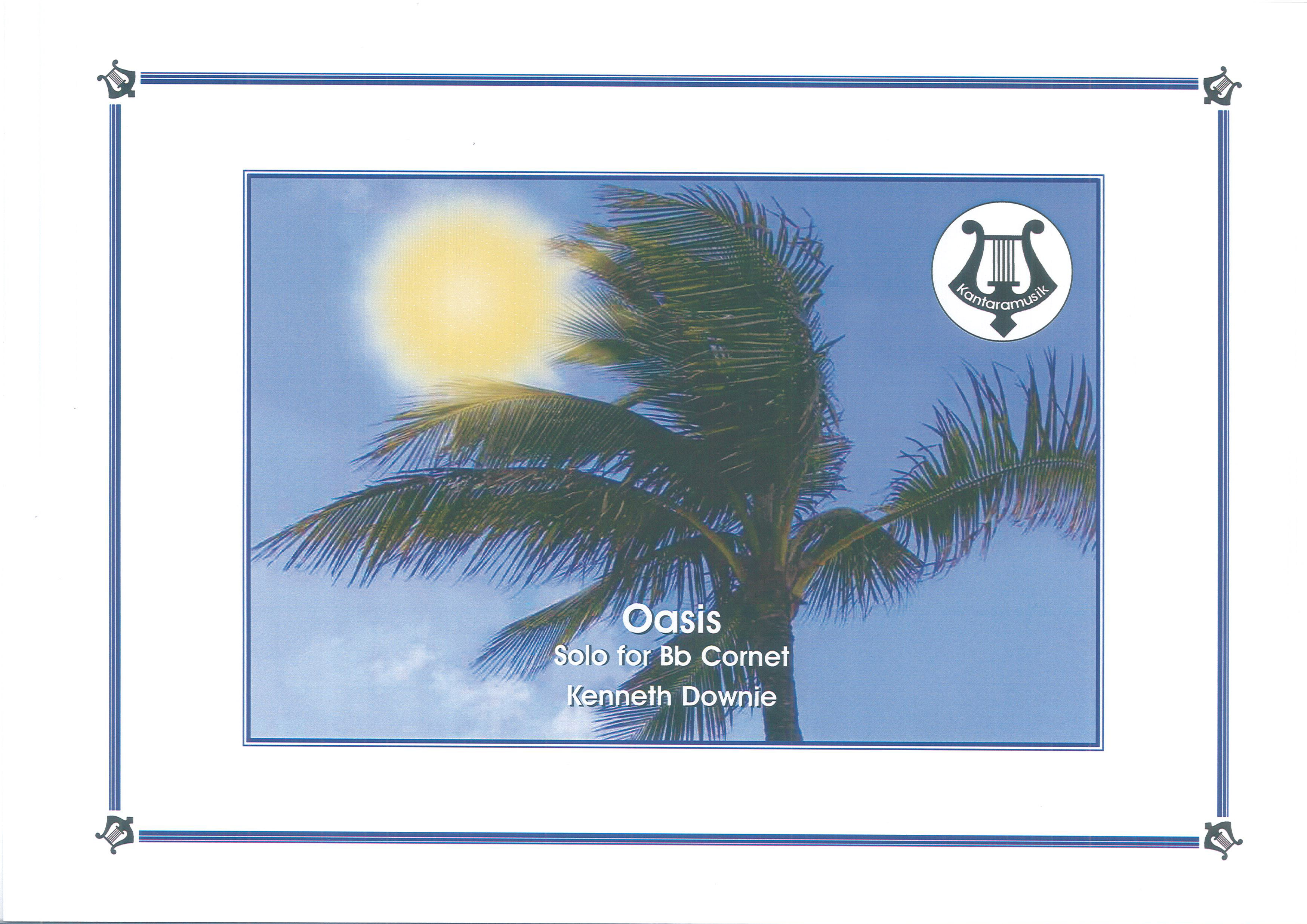
Oasis - Cornet Solo (Brass Band - Score and Parts)
The music 'Oasis' has adopted the meaning as described in Collins English Dictionary; 'a place of peace, safety or happiness in the midst of trouble or difficulty'. It is an original tune which should come over as a soothing, melodious song without words. The rubato marking at the beginning provides the soloist with plenty of scope for expressive, individual playing, within the bounds of good musical taste.
Estimated dispatch 7-14 working days
 View Music