
Results
-
£54.99
Intrada & Wilhelmus - John Blanken
John Blanken wrote Intrada & Wilhelmus in 2002 for the brass band Euphonia from Wolvega, the Netherlands.The title speaks for itself. It's an introduction to the national anthem of The Netherlands; Wilhelmus. In this piece the national anthem is heared two times followed by a short postlude.
Estimated dispatch 5-14 working days
-
 £60.99
Montana - Jan Van der Roost
From the first bars the stately character of this solemn, yet celebratory, march is clearly heard. The introduction of the main theme takes place in the medium register, immediately resulting in a noble tone. A lyrical trio melody provides contrast, but the march closes in a festive and imposing mood. A march worthy of any concert program.
Estimated dispatch 5-14 working days
-
 £60.99
Consolation - Jan de Haan
Wer nur den lieben Gott lasst walten was composed by Georg Neumark in about 1641 and was subtitled 'Trostlied' literally meaning consolation song. Songbooks at the time showed the popularity of this song and it is still well-known today partly due to Johann Sebastian Bach's use of the melody for one of his own chorals. In Jan de Haan's arrangement the choral is heard twice, once, alternating with the original motif from the introduction and a second time, without interruption, reflecting the composer's original intention - a song of consolation.
Estimated dispatch 5-14 working days
-
 £72.99
Irish Mood - Stijn Roels
Irish Mood was written in a classic 'theme and variations' construction, opening with an Irish-inspired melodic theme, which is then followed by four variations of divergent character. After the introduction of the theme by the soloist, the cornets and trombones play the main melody in Variation 1, while the soloist provides a flowing counter melody. Next comes the highly extrovert and lively Variation 2, contrasted by an introverted Variation 3 in a minor key. A masterful tutti (Variation 4) then leads the piece toward a brilliant ending.
Estimated dispatch 5-14 working days
-
 £95.00
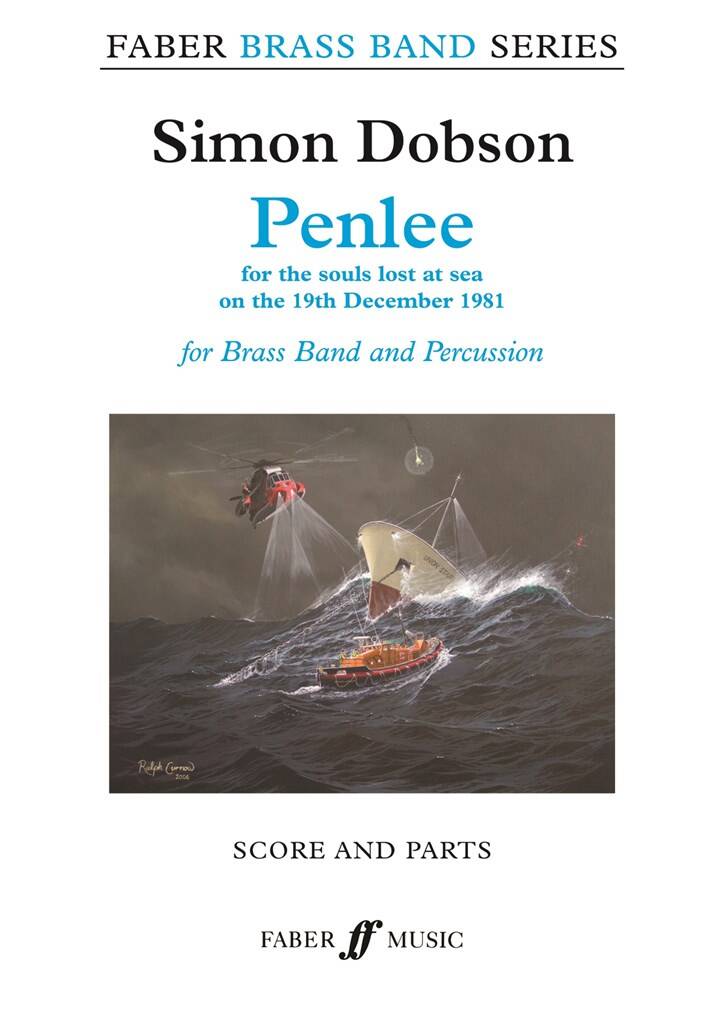
Penlee - Simon Dobson
To some, the tragic story of the Penlee lifeboat, Solomon Browne, would need no introduction, and to some the pain felt is still very much a reality. The composer, born just a few weeks before that fateful night on the19th December 1981, has created this work as a musical homage to the bravery of the souls who lost their lives and has dedicated it to their memory. Penlee was commissioned by the Cornwall Youth BrassBand using funds bequeathed by Michael Pickett. The first performance was given by the Cornish Youth Brass Band, conducted by Ian Porthouse, at St. Michael's Church, Newquay, on 30th December 2008.Penleehas been voted into the Classic FM Hall of Fame 2011 at No.106. Not only is it the first time a brass work has been featured in the Hall of Fame, but it was also thehighest new entry. The work has subsequently been recorded by the Leyland Band, conducted by Jason Katsikaris, on the CD entitled Penlee.Brass Band Grade 4: Advanced Youth and 3rd Section Duration: 13 minutes
Estimated dispatch 5-14 working days
-
 £69.99
Czardas (Xylophone solo) - Monti - Gert Bomhof
Vittorio Monti was born on January 6, 1868 in Naples (Italy). His musical education (Violin and composition), he enjoyed at the conservatory there. Around his 30's Monti went to Paris. He earned a living as a conductor and wrote several ballets and operettas. In his last years, before his death in 1922, Monti devoted himself to teaching and composing. His famous 'Czardas' has made his name known even today.Initially the Czardas was a Hungarian folk dance, but after the mid-nineteenth century it was even a dance for the upper-class. Czardas begins with a slow introduction, the Lassan (slow and sad), and then the fast part,Friska, follows. Czardas is not, as so many people think, typical gypsy music.
Estimated dispatch 5-14 working days
-
 £69.99
Dance of the Shepherds - Patrick Millstone
Patrick Millstone based his Dance of the Shepherds on the song Quem pastores laudavere by Michael Praetorius.After an upbeat flashy introduction, you can hear this wonderful Christmas song. A good choice for a Christmas concert or church service!
Estimated dispatch 5-14 working days
-
 £102.99
The African Connection - Carl Wittrock
Carl Wittrock's wide interest in global folk-music resulted in this concert-piece based on original African rhythms. Obviously, the percussion section has a conspicious role to play, but the band too may indulge itself in moments of thoroughly delightful excitement. The introduction depicts the awakening of nature, and develops into a dance. The (main) motif of this dance is from a dance entitled Apollo and comes from Gambia. Its accompaniment consists of an ostinato pattern by balaphon-master Maudo Susa. The quiet middle movement is based on the rhythm of the 'gigbo' : a traditional dance from Ghana. In the final movement -which also bears a slight resemblanceto a theme from 'The Lion King'- the so-called 'Kono' rhythm is used. The work is played most advantageously using djembes. Challenge and please your percussion section with 'The African Connection'.
Estimated dispatch 5-14 working days
-
 £85.00
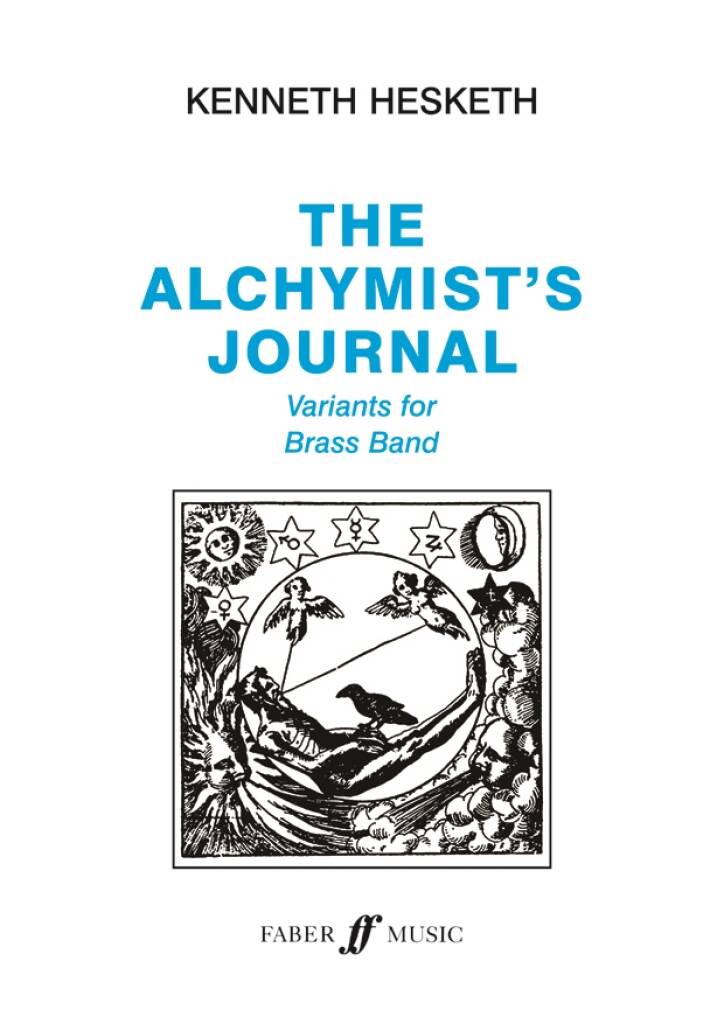
Alchymist's Journal. - Kenneth Hesketh
'The Alchymist's Journal' gets its title from the book of the same name by American author Evan S. Connell. The book fictionalises a number of famous Alchemist's writings, each one developing another's thoughts thuscontinuing one idea but changing it subtly to provide a new view point or way of thinking. This process is, in fact, alchemical as one idea transmutes into another. This idea is parallel to the processes at work within thesevariants. The whole work is constructed from 6 notes (C, A, B flat, E flat, F sharp, E) and is presented in nine different sections, each individual in mood but still based upon the original pitches. This is not a thematic setofvariations, as the themes are developed one at a time from small segments of the six notes. For example, the opening theme is the complete number of pitches, the second theme uses three notes transposed then repeated at theoriginal level, and so on. Harmonically, the six notes can be divided into two triads, A minor and E flat minor - each key beginning and ending the piece respectively. Whilst this is essentially abstract music with noprogramme there is an introduction, menacing scherzo, slow reflective section followed by a recap of the scherzo and final coda. 'The Alchymist's Journal' was commissioned by the Brass Band Heritage Trust at the suggestionof Paul Hindmarsh, to whom the work is dedicated.
Estimated dispatch 5-14 working days
-
 £54.99
Step Aside - David Well
Excuse me, may I play along? Could you step aside, please? 'Step Aside' is a pleasant competition both between two tempi and among the different parts. After a short, slow introduction it is the drummer who, without asking the questions above, sets the high pace. As soon as this rapid movement has been established, 'part 1' takes the lead, but the other parts obviously don't want to miss a thing and follow in rapid succession. At the end of the composition the various parts 'compete' in order to be able to play solo for a while, but soon others join in again, asking 'Excuse me, may I play along?'
Estimated dispatch 5-14 working days
 View Music