
Results
-
 £23.80
Caribbean Calypso - Steve Robson
Composed by Steve Robson specifically for the Flexi-Collection World Tour Series. Caribbean Calypso opens the doors to a memorable concert item, with the option of including a local steel drum group to join you. Lots of fun to be had with this unusual combination. But don't worry, there is an alternative solo version if a steel drum group isn't possible, so you can still bring the sea, sand and sun to your concert hall with the distinctive style of this music.Caribbean Calypso is part of the Flexi-Collection World Tour Series.Our Flexi-Collection Series:Flexible scoring tailored to your needs - a perfect solution for expanding the repertoire of Junior/Youth brass bands and ensembles. The Flexi-Collection currently offers two series and these will be regularly expanded to offer groups an even wider variation of music. Based on four-part harmony, these collections provide brass groups with the advantage of complete flexibility when may not be balanced.Added Extras:Each part of The World Tour Series also includes rudimentary theory reference sheet andLearn Together Moments(warm-up passages which relate to each of the styles of pieces included in the whole series). The score also includes background/programme notes andCheck It Outideas to encourage the players to find out more about the music style and/or inspiration behind the piece.If players or instruments are missing, the show can still go on! The thoughtful scoring and arranging by Steve Robson now means that groups of all abilities have access to a truly flexible set of music for their needs.Available for Brass Band (with world parts included), pieces included in our World Tour Series offer flexibility in every sense of the word.(Available individually or as part of the completeFlexi-Collection World Tour Series Album).
In Stock: Estimated dispatch 3-5 working days
-
 £75.00
De Profundis - john wallace, Tony George
An original composition for massed brass bands and brass quintet devised by John Wallace, Tony George and Svend McEwan-Brown. A cross-genre production work, including scene setting, lighting and the spoken word reciting associated poems, De Profundis was given its world premiere at the East Neuk Festival on 1 July 2017 at The Bowhouse, performed by The Wallace Collection, Tullis Russell Mills Band and friends.If you would like to perform this work, The Wallace Collection are able to provide production consultancy and supply the brass quintet elements of the production - if you would like to discuss potential performances, please contact them direct on [email protected] NotesDe Profundis is a large scale brass band performance piece created by John Wallace and Tony George, based upon an original idea by Svend McEwan-Brown. It was developed in sessions with members of the Tullis Russell Mills Band, commissioned and premiered at East Neuk Festival 2017 at The Bowhouse, St Monans, on 1st July 2017.It was supported by Creative Scotland, Fife Council, Toby and Kate Anstruther, Shields and Carol Henderson, Donald and Louise MacDonald.This project remembers and celebrates the lives and music of miners. It is designed to give brass bands a performance piece that uses elements of improvisation and participation, to offer the players a stimulating and inspiring experience beyondthe normal run of brass band repertoire.All the music is drawn from two settings of the psalm 'Out of the Deep" (De Profundis).Look and Listen (courtesy of Tullis Russell Mills Band and The Wallace Collection at 2017 East Neuk Festival):More InformationMore details about the De Profundis project is available on a dedicated web-page on The Wallace Collection website.
In Stock: Estimated dispatch 3-5 working days
-
 £15.00
Toreador's March from Carmen - Bizet
Performance Notes from Andrew Duncan:The main feature of this arrangement is perhaps the wide range of dynamics used. Every dynamic from p through to ffis written and if played will, greatly enhance a performance of the piece.The distinctive style of the piece is also an important element for the players to embrace. Although the original rhythm has been simplified to facilitate ability, it has retained the intended 'feel' of the bravado style and offers a useful development of the players' musical awareness.The Flexi-Collection ApproachFlexible scoring tailored to your needs - A perfect solution for expanding the repertoire of training and junior brass bands. The Flexi-Collection currently offers two series - Popular Classics and World Tour. Based on four-part harmony, these collections provide groups with the advantage of complete flexibility when they may not be balanced. If players or instruments are missing, the show can still go on!The Flexi-Collection - Popular Classics Series, encapsulates all that is great about the wonderful range of musical styles produced by Holst, Elgar, Handel, Verdi, Tchaikovsky, Grieg, Bizet and Parry.The thoughtful scoring and arranging by Andrew Duncan now means that groups of all abilities have access to a truly flexible set of music for their needs. With world parts, rudimentary theory, terminology translations and large format typesetting, The Flexi-Collection ticks all the boxes when it comes to bringing interesting music to the training and junior band/brass group environment.Available individually or as part of the money-saving Flexi-Collection Popular ClassicsAlbum.Scored for Brass Band and supplied with additional Easy Bb, Easy Eb and world parts - The Flexi-Collection offers flexibility in every sense of the word.
In Stock: Estimated dispatch 3-5 working days
-
 £24.20
What's The Matter Horn? - Steve Robson
Composed by Steve Robson and scored specifically for our Flexi-Collection World Tour Series. Steve has been inspired by fond memories of hearing Alpine Bands and seeing knee slapping dancers performing in Switzerland for this piece. It starts with some off-stage calls (which could even be from an Alpine Horn if one is available), and moves into a lively dance section, ending with a little yodeling! There are various ways to convey the yodeling through instruments, but a bit of vocal yodel practice could be a novel new addition to the band's warm-up routine!Our Flexi-Collection Series:Flexible scoring tailored to your needs - a perfect solution for expanding the repertoire of Junior/Youth brass bands and ensembles. The Flexi-Collection currently offers two series and these will be regularly expanded to offer groups an even wider variation of music. Based on four-part harmony, these collections provide brass groups with the advantage of complete flexibility when may not be balanced.Added Extras:Each part of The World Tour Series also includes rudimentary theory reference sheet andLearn Together Moments(warm-up passages which relate to each of the styles of pieces included in the whole series). The score also includes background/programme notes andCheck It Outideas to encourage the players to find out more about the music style and/or inspiration behind the piece.If players or instruments are missing, the show can still go on! The thoughtful scoring and arranging by Steve Robson now means that groups of all abilities have access to a truly flexible set of music for their needs.Available for Brass Band (with world parts included), pieces included in our World Tour Series offer flexibility in every sense of the word.(Available individually or as part of the completeFlexi-Collection World Tour Series Album).
In Stock: Estimated dispatch 3-5 working days
-
The Crown of Roses - Tchaikovsky - Len Jenkins
Tchaikovsky wrote this in his 'Songs for Young People' in Moscow in 1883 to words by Pletchtcheev. The story it tells is about Jesus Christ when he was a young child, having a small wild garden in which roses grew. Passing children saw the roses and plucking them mockingly asked if he wove rose garlands in his hair. Christ says to take the roses, but to leave the thorns. Instead, they make a crown of these and forced it onto his head so that it bleeds, symbolic of what was going to happen later in his lifetime. The melody contains all the passion that we associate with Russian church music and is equally suitable for a contemplative Christmas or Passiontide. This arrangement is faithful to the four verses of the original lyrics, but with an optional ending half-way if preferred.
-
 £124.95
Hyperlink - Peter Graham
Hyperlink was commissioned by the National Youth Brass Band of Great Britain (funded by Arts Council England and the Department for Education) for its 70th Anniversary Year. Since the anniversary coincided with other significant celebrations in 2022 (including the Royal Albert Hall/Ralph Vaughan Williams 150th and the Platinum Jubilee of Elizabeth II) it was requested that these also be recognised in some way.
Where better to begin this challenging brief but with a computer search for the NYBBGB founder Dr Denis Wright (coincidently born in Kensington, home of the RAH). The subsequent rabbit warren of hyperlinks led me to structure the work through a series of "associations":
Movement I - The Voice of Jupiter.
Alongside the discovery that Denis Wright had been a church organist was the realisation that while the RAH has hosted thousands of musical events the fabric of the building actually incorporates a musical instrument, the famous Henry Wills organ (aka The Voice of Jupiter).Organ and J S Bach are synonymous (e.g. Toccata in D min) and so both become fundamental to the content of the movement. An opening 7 note quote from the Toccata leads to a mammoth sound cluster, as if every note on the huge RAH organ is sustained. The material which follows is based upon the notes BACH (in German notation). The notes are manipulated in various ways in a 12 tone matrix; reversed, inverted and so on. Other techniques employed in the movement are ones of which Bach was master, including ground bass and fugue.
Movement II - Remember Me.
The lives of Salvationist composer Ray Steadman-Allen (born 1922) and Ralph Vaughan Williams are remembered here, with "RSA" in musical notation and fragments of RVWs famous Tuba Concerto providing the source material.While writing the movement my father passed away and to close his funeral service the family chose the uplifting Robert Lowry hymn They'll sing a welcome home. It seemed fitting to conclude the movement with a reflective setting of the chorus, the repeated phrase "Welcome, welcome home" eventually disappearing into the ether.
Movement III - Vivat.
The finale takes the form of a short fantasy upon Hubert Parry's marvellous coronation anthem I Was Glad, truly a celebratory note with which to conclude.The first performance of Hyperlink was given by the NYBBGB conducted by Martyn Brabbins at the Royal College of Music, London on August 6th 2022.
Published Closed for Holidays. Est dispatch 13th Nov
-
 £65.00
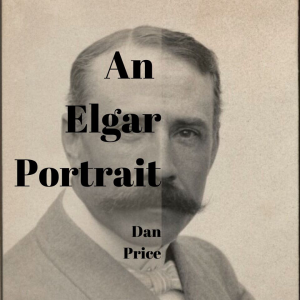
AN ELGAR PORTRAIT - D.Price
This work was composed in commemoration of the 150th Anniversary of the birth English Composer Sir Edward Elgar. The suite is in three movements: 'Introduction', 'Elegy' and 'March', each of which have been inspired by three of Elgar's most celebrated works; Chanson de Matin, Nimrod ('Variation IX' from the Enigma Variations) and Pomp and Circumstance No.1.'Introduction' - Hollybush HillHollybush Hill is the name of one of the peaks of the Malvern Hills in Worcestershire. The Malverns were a favourite walking area for Elgar and his wife, and their panoramic views inspired much of Elgar's music.'Elegy' - BroadheathBroadheath is the small village at the foot of the Malvern Hills where Elgar was born (and lived at various times throughout his life). Elgar is buried not far from Broadheath at St Wulstan's in Little Malvern. 'March' - Worcester CathedralMany of the Worcestershire ensembles and music festivals played an important role in Elgar's early musical education. He was heavily involved in The Three Choirs Festival and either conducted or played in many of the light orchestras and vocal groups that performed at venues across Worcester. A statue of Elgar overlooks the Cathedral at the end of Worcester High Street.An Elgar Portrait has been used regularly as an own-choice test-piece for Section 4 bands, and was also selected as the set work for the Swiss National Championships in 2007 as well as the Pontins Championships in 2008. The composer has slightly reworked this piece for the Section 4 Final of the National Brass Band Championships of Great Britain 2020 and it's this version that should be performed at the contest. If bands currently have an older version in their libraries, please contact us directly for more information.
In Stock: Estimated dispatch 3-5 working days
-
 £45.00
Aurora Awakes
Aurora Awakes was composed in 2020 for Youth Brass 2000. Sometimes referred to as the Northern Lights, Aurora Borealis is a natural light phenomenon in the Earth's s ky. Predominantly seen in high-latitude regions, they are a result of magnetosphere disturbances caused by solar wind. The resulting ionisation (the process of a molecule acquiring positive or negative charge) of atmospheric components emit light of varying colour and complexity. For those of you familiar with the composer's other space inspired works , Aurora Awakes is a slow alternative, exploring the tonal colour and lyricism of the brass band rather than its raw energy. An effective contrast if you choose to programme it following either Starburst or Andromeda . Duration : 00:03:10 Grade : 3 Flexi-Score
Estimated dispatch 5-7 working days
-
 £30.00
Flanfayre - Stephen Deazley
I was asked by Music for Youth to write a flexibly scored fanfare for the school proms at the Royal Albert Hall and at their National Festival in Birmingham in 2013. At its first performance at the National Festival, over 200 young brass players performed Flanfayre in Birmingham Town Hall, directed by Roger Argente, members of Superbrass and myself. The score is a progressive romp through some increasingly dance-like grooves, borrowing some of its swing from South America, from marches and big band, moving from a really quite straight opening to a "let-go" moment at the end. It is more like a flan full of different flavours, than a fanfare, hence the title. I set myself a challenge to write 100 bars but ended up with 102, which, after the introduction, can be broken down into 10 easily discernible sections each with their own mini-musical narrative. If you have time feel free to teach the audience the clapping groove. I also modelled the slow moving melody of the final section on the following words; "nothing beats a nice big cheesy, nothing beats a nice big cheesy, nothing beats a nice big cheesy, nothing beats a cheesy flan". Feel free to incorporate these too, and perform only under the strict instruction that you have fun ! - Programme Note copyright of Stephen Deazley
-
 £77.00
General Series Brass Band Journal, Numbers 2238 - 2241, December 2023
2238: Fanfare and allegro on the Doxology (Steve Kellner)The Doxology, set to the tune Old Hundredth (T.B. 31), is used widely around the world by Christian denominations, including Salvationists. This concert opener is based on the short but powerful hymn of praise to the Triune God.2239: To the endless day (Kenneth Downie)This is a meditation on the hymn tune Ruth (T.B. 191), written by Samuel Smith. It is a particular favourite of Don Jenkins, whose late wife was also called Ruth. This music is dedicated to Don, a distinguished trombone soloist and former Band master of Bristol Easton Corps Band.The music is always associated with the hymn by William Walsham How, whose words begin 'Summer suns are flowing over land and sea' (S.A.S.B. 59) with the title coming from the end of the final verse.2240: Euphonium Solo - He giveth more grace (Ray Steadman-Allen)This 1996 arrangement of Blacklands (T.B. 527), the composers own hymn tune written in 1963, is being published posthumously. The hymn tune sets the words 'He giveth more grace as our burdens grow greater' (S.A.S.B. 30) with an emphasis on the generosity of God.2241: The Calvary effect (Ian Clarke)Around AC 30, on a hill often refered to as Mount Calvary, an event took place that was to change the world forever. The Calvary effect is a reflection, in musical form, on that event and what it still means to people today. If features two tunes: first, in a quiet reflective mood, we hear the highly emotive Healing Stream, associated with the words 'Jesus, keep me near the cross; There is a precious fountain' (S.A.S.B. 178). This then makes way for the chorus; 'Lord, make Cavalry real to me' (S.A.S.B. 182), which is at times indistinct and almost lost in its surroundings, reflecting the sentiments of the chorus. A return to the main tune follows, this time in a positive, passionate setting. The music finishes with a triumphant 'Hallelujah!'.
Estimated dispatch 7-14 working days
 View Music