
Results
-
 £15.00
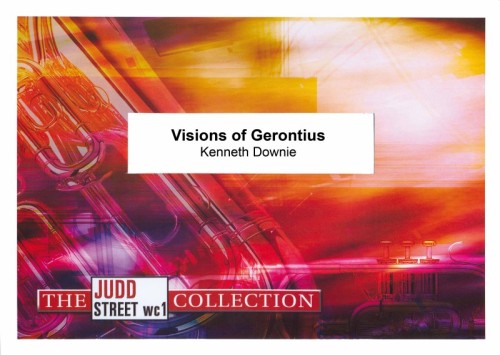
Visions of Gerontius (Brass Band - Study Score) - Downie, Kenneth
Visions of Gerontius is a set of variations on a hymn tune which is invariably associated with Cardinal John Henry Newman 's words taken from his visionary poem "The Dream of Gerontius", which deals with the journey of the soul from this world to the next. The stanzas of the hymn are taken from the poem which Elgar set to music in his great masterpiece of the same name, for soloists, chorus and orchestra, first performed in Birmingham in 1900. The dramatic setting of those words provides some of the most memorable moments in the music.
Estimated dispatch 7-14 working days
-
£89.95
Visions of Gerontius (Brass Band - Score and Parts) - Downie, Kenneth
Commissioned for the Open Brass Band Championships 2007Visions of Gerontius is a set of variations on a hymn tune which is invariably associated with Cardinal John Henry Newman 's words taken from his visionary poem "The Dream of Gerontius", which deals with the journey of the soul from this world to the next. The stanzas of the hymn are taken from the poem which Elgar set to music in his great masterpiece of the same name, for soloists, chorus and orchestra, first performed in Birmingham in 1900. The dramatic setting of those words provides some of the most memorable moments in the music.
Estimated dispatch 7-14 working days
-
£44.95
Visions of Gerontius (Brass Band - Score only) - Downie, Kenneth
Visions of Gerontius is a set of variations on a hymn tune which is invariably associated with Cardinal John Henry Newman 's words taken from his visionary poem "The Dream of Gerontius", which deals with the journey of the soul from this world to the next. The stanzas of the hymn are taken from the poem which Elgar set to music in his great masterpiece of the same name, for soloists, chorus and orchestra, first performed in Birmingham in 1900. The dramatic setting of those words provides some of the most memorable moments in the music.
Estimated dispatch 7-14 working days
-
 £29.95
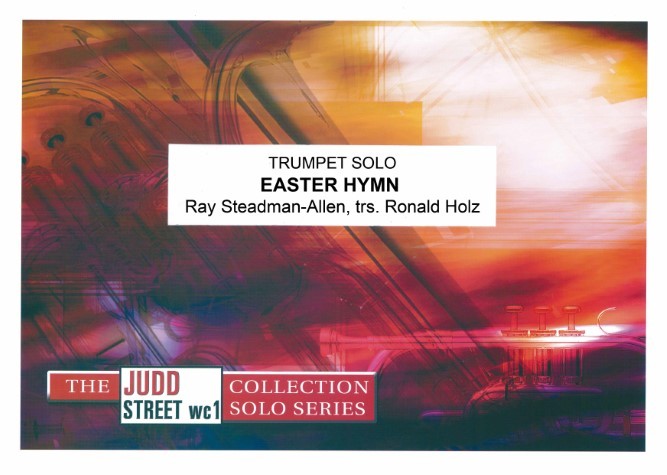
Easter Hymn (Trumpet Solo with Brass Band - Score and Parts) - Steadman-Allen, Ray - Holz, Ronald
Ray Steadman-Allen sketched this short, festive arrangement in the early 1990s.While labelled by RSA as a Trumpet Solo, a Cornet soloist would also be appropriate. The piece should not prove difficult to prepare except in terms of maintaining balance between the soloist and the band. Some of the harmonies are quite unexpected, even curiously dissonant in the late RSA style. However, such sounds should help the listener hear this traditional hymn in a new and vital manner. The piece would serve well as an Intrada on Easter Sunday, or during any celebratory occasion in Eastertide.
Estimated dispatch 7-14 working days
-
 £59.99
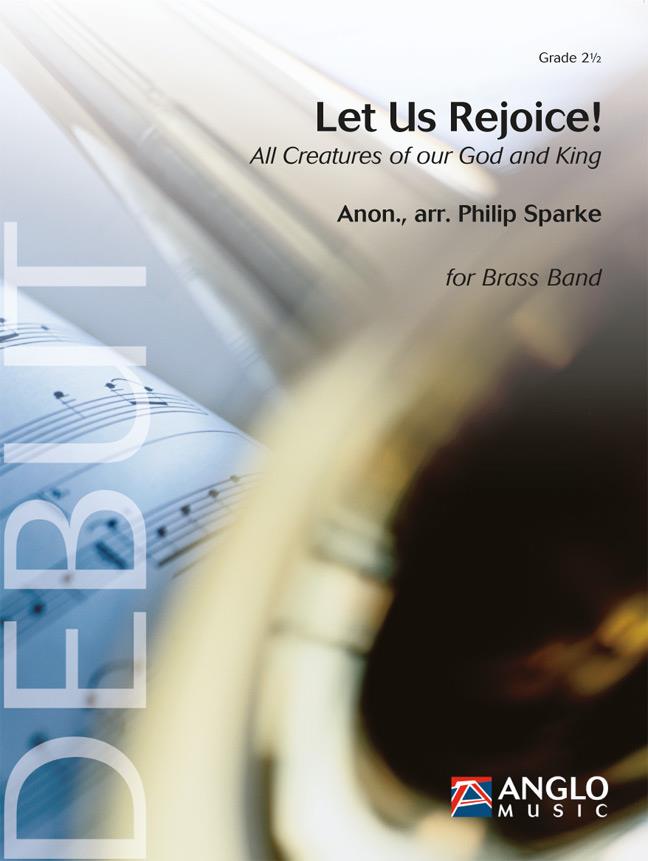
Let Us Rejoice! (All Creatures of our God and King) (Brass Band - Score and Parts) - Sparke, Philip
This arrangement presents three contrasting verses of the ancient hymn tune Let Us Rejoice!, which in the English-speaking world is usually sung to the hymn All creatures of our God and King. It is effective as a concert piece as well as an instrumental interlude during a church service, particularly at Easter or Whitsun.Duration: 3:00
Estimated dispatch 7-14 working days
-
 £37.95
Easter Hymn (Brass Band - Score and Parts) - Mascagni, Pietro - Wilson, Eric
A traditional setting of the 'Easter Hymn' (Regina Coeli) from the opera Cavalleria Rusticana - Mascagni's much-loved opera. The arrangement is a semitone lower than it appears in the opera. Duration: c.6:00
Estimated dispatch 7-14 working days
-
£24.50
Aberystwyth - Joseph Parry - Ed Keeley
This arrangement is based on the famous Welsh hymn tune Aberystwyth by Joseph Parry. Composed in the late nineteenth century whilst Parry was Professor of Music at Aberystwyth University. The tune is a powerful example of the expressive style of Welsh chapel music.Most widely known today as the setting for Charles Wesley's hymn "Jesus, Lover of My Soul," the melody is notable for its haunting minor key, sweeping phrases and dramatic climax. These qualities translate naturally to the warm, resonant and warm timbre of the brass band.This setting seeks to capture both the solemn dignity and emotional depth of the original tune. Rich harmonic textures and the sonorous colours of the brass band highlight the melody's expressive contours, building towards a broad and noble climax while preserving the reflective and haunting character of the hymn.
In Stock: Estimated dispatch 1-3 working days
-
£24.50
Aberystwyth - Joseph Parry - Ben thomas
A beautiful arrangement of the hymn tune Aberystwyth (Jesus, Lover of My Soul), expertly arranged for brass band. The ever popular hymn, Aberystwyth, is number 1 in the 120 hymn tunes for brass band book, and is therefore commonly played by bands as a warm up at the start of rehearsals. The gorgeous harmonies make it perfect to not just be played in the bandroom, but to be heard in all various types of performances, from private concerts, to the contest stage, making it a perfect addition to your band's library!This arrangement was first performed in concert by Northop Community Band in March 2025
In Stock: Estimated dispatch 1-3 working days
-
 £24.95
The Pilgrim's Prayer (Brass Band - Score and Parts) - Rouse, Sydney - Ball, Eric
Introduction - This could hardly be more simple. Inexperienced players may have some little difficulty in intonation, especially as they are starting 'cold', but a useful lesson can be learned in this connection when rehearsing these two bars. Section A - The music is hymn tune-like in character, but it should not become stilted. Close intonation is still a point to study, especially in view of the chromatic nature of some of the harmony. Section B - Aim to secure just balance in the accompanying parts, especially in the second phrase, where the 1st comets may be inclined to treat their moving part as an independent melody rather than part of the 'colour' background. Section C -This is a reprise of the first theme, with a different arrangement. The same comments apply, however. Section D - Here the music becomes more song-like in style, and provides an interesting contrast. The scoring, too, is more varied, and there are a number of points that call for attention. Note that the 1st and 2nd comets and 2nd trombone work as a team throughout; see that the pulsating, syncopated background adds to the movement of the music without giving a jerky effect; the new entries in the fourth and twelfth bars are to be made quite smoothly; and do not allow the texture of the music, especially in the last eight bars of the section, to overshadow the simplicity of the main tune. Section E - Here the first subject appears again. In the arrangement the colour contrasts are quite clear-cut. In order to secure true balance in the fifth and sixth bars, it may be necessary to adjust the amount of tone given by the bass trombone, as this part is not doubled as are the other parts. Section F -This section forms a simple but expressive coda.
Estimated dispatch 7-14 working days
-
£12.50
The Pilgrim's Prayer (Brass Band - Score only) - Rouse, Sydney - Ball, Eric
Introduction - This could hardly be more simple. Inexperienced players may have some little difficulty in intonation, especially as they are starting 'cold', but a useful lesson can be learned in this connection when rehearsing these two bars. Section A - The music is hymn tune-like in character, but it should not become stilted. Close intonation is still a point to study, especially in view of the chromatic nature of some of the harmony. Section B - Aim to secure just balance in the accompanying parts, especially in the second phrase, where the 1st comets may be inclined to treat their moving part as an independent melody rather than part of the 'colour' background. Section C -This is a reprise of the first theme, with a different arrangement. The same comments apply, however. Section D - Here the music becomes more song-like in style, and provides an interesting contrast. The scoring, too, is more varied, and there are a number of points that call for attention. Note that the 1st and 2nd comets and 2nd trombone work as a team throughout; see that the pulsating, syncopated background adds to the movement of the music without giving a jerky effect; the new entries in the fourth and twelfth bars are to be made quite smoothly; and do not allow the texture of the music, especially in the last eight bars of the section, to overshadow the simplicity of the main tune. Section E - Here the first subject appears again. In the arrangement the colour contrasts are quite clear-cut. In order to secure true balance in the fifth and sixth bars, it may be necessary to adjust the amount of tone given by the bass trombone, as this part is not doubled as are the other parts. Section F -This section forms a simple but expressive coda.
Estimated dispatch 7-14 working days
 View Music
 Listen to MP3