
Results
-
 £154.99
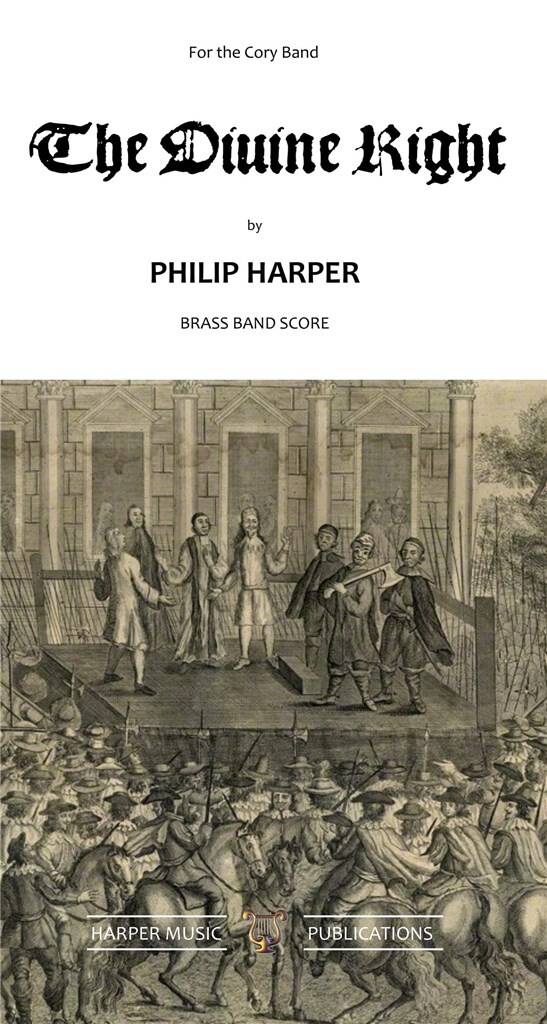
The Divine Right - Philip Harper
At the time of composing this piece, the Arab Spring was sweeping through the Middle East. It seemed that almost every week a new countrys people had risen up against the regimes and dictatorships which had prevailed for generations, leaving manynations at a defining crossroads in their history. There were so many possible ways ahead: so many hopes, yet so many uncertainties.My music is a depiction of these revolutionary times, and several musical themes are in turn presented, discussed, considered, fought over, altered, rejected or accepted. Most nations have had, or probably will have, their own Arab Spring, including my own, the United Kingdom. Events of 17th Century Britain provide the context for this piece, particularly those following the execution of the tyrant King Charles I on30 January 1649. The regicide was in part due to Charless steadfast belief in the Divine Right of Kings, and led to a tumultuous interregnum, where England stood at its own defining crossroads.The music begins turbulently, before King Charles appears and is led to the gallows outside Banqueting House in central London where he is brutally decapitated. From the assembled crowd rose, according to one observer, a moan as I never heard before and desire I may never hear again.The music descends to emptiness. The musical argument which follows is not strictly programmatic, but a number of musical themes are all thrown into the melting pot, representing ideas such as: religion; military force; reasoned Parliamentary debate; and the chattering,irrepressible voice of the people. Additionally, there are some quotations from the music of royalist composer Thomas Tomkins (1572-1656), who was often in tune with the feeling of the times. This defining episode in Englands history was brought to a close with the Restoration of the monarchy in 1660, and as the exiled King Charles II rode back into London the diarist John Evelyn wrote: Never was so joyful a day seen in this nation. I stood in the Strand and beheld it, and blessed God.At the end of the piece the bells ring out, and the musical appearance of the King has transformed from turbulent to triumphant. Philip Harper, 2013
Estimated dispatch 5-14 working days
-
 £87.99
Black Gold - Thierry Deleruyelle
Black Gold was commissioned by Musikverein 1891 "Harmonie" Saarwellingen e.V. (Germany) to mark its 130th anniversary. This composition pictures the history of the mining industry in the town of Saarwellingen and its surrounding region, where the life of the miners as well as their families revolved around coal, or black gold, for centuries on end. The piece is based on motifs from the famous song "Gluck auf, Gluck auf, der Steiger kommt..." ("Good luck, good luck, the mining foreman comes"), a veritable anthem for miners the world over.
Estimated dispatch 5-14 working days
-
 £69.99
The Green Hills of Tyrol - Philip Sparke
The Green Hills of Tyrol was commissioned by Jrena and Beat Knusel for their son, Swiss euphonium player Joel Knusel, to celebrate his 20th birthday in 2019. The request was for a piece suitable for use in a solo competition, possibly using a Scottish or Irish melody, and composer Philip Sparke suggested an 'old-fashioned' air varie might be a suitable idea. The piece follows the well-established formula of a theme followed by four variations. The history of the original melody is fascinating and, although it is now well-known as a bagpipe tune, its background is Austrian or Italian, rather than Scottish. The tune appears as a chorus of Swiss soldiers in Rossini's 1829 opera William Tell but was possibly an existing Tyrolean folk tune. In 1854, during the Crimean War, Pipe Major John MacLeod of the 93rd Highlanders heard a band of the Sardinian contingent playing selections from the opera in camp before the Siege of Sebastopol. He was struck by the melody and arranged it for his pipers, calling it The Green Hills of Tyrol, referring to Tell's visit to that corner of Austria in the opera. It has since become universally popular among pipe bands who usually refer to it as A Scottish Soldier, following the addition of new lyrics in a 1961 hit by Andy Stewart.
Estimated dispatch 5-14 working days
-
 £104.99
Crossing Worlds - Thierry Deleruyelle
Crossing Worlds is a cornet concerto commissioned by the Swiss cornet player Kathleen Gaspoz who made history when after 200 years she became the first woman to hold the post of principal cornet in both the famous Brighouse & Rastrick Band and the Grimethorpe Colliery Band. Crossing Worlds is written in three separate movements ('Getaway', 'Skylights' & 'Welcome Parade') and follows the journey of a musician. Through their travels, the artist discovers a variety of countries, cultures and landscapes.
Estimated dispatch 5-14 working days
-
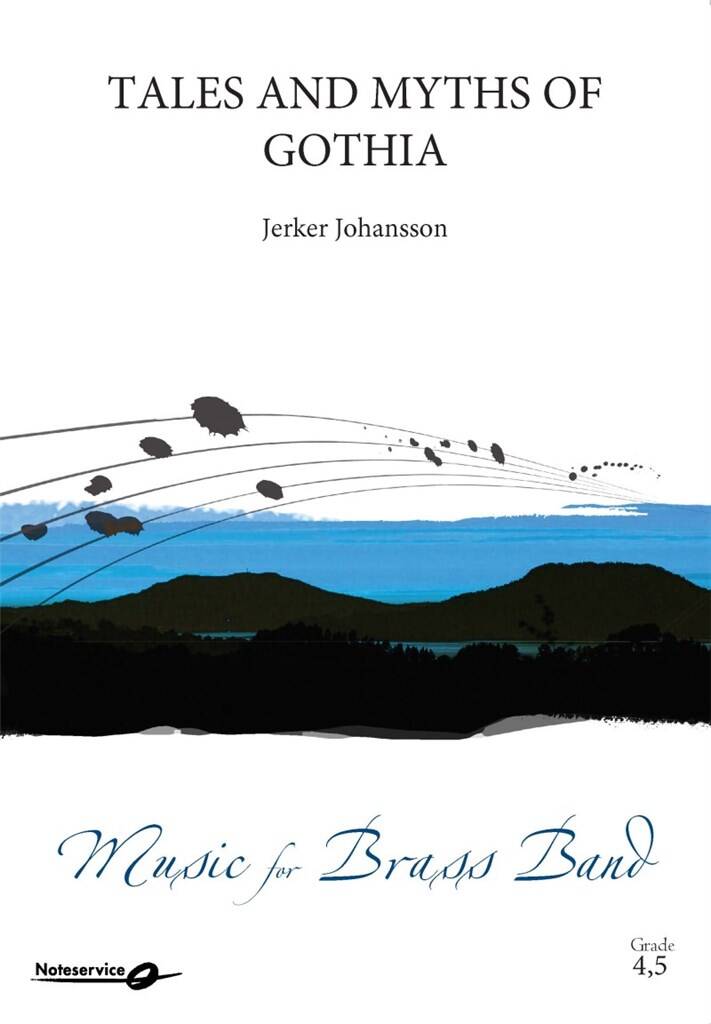 £183.20
Tales and Myths of Gothia - Jerker Johansson
Jerker Johansson has lived in Gothenburg, on the Swedish West Coast, since 1984, and is deeply interested in the history of the country. Gothia is the most southern part of Sweden, and Gothenburg, which was founded in 1621, is since many years an important centre for trade and shipping. Old paintings of the harbour with its gigantic sailing ships gave impulse to the heroic character of the piece. The opening fanfare is followed by a lively allegro, which eventually leads to a calm section, containing reminiscences of the fanfare. The cornets introduce a cantabile theme, and a dance reminding of the Renaissance precede a recapitulation of the allegro theme. Tales and Myths of Gothia was originally composed for concert band in 2017. The brass band version was premiered on 26 April 2019 during Oslo Brass festival by Uffes Blas Brassband, conducted by Andreas Kratz.
Estimated dispatch 5-14 working days
-
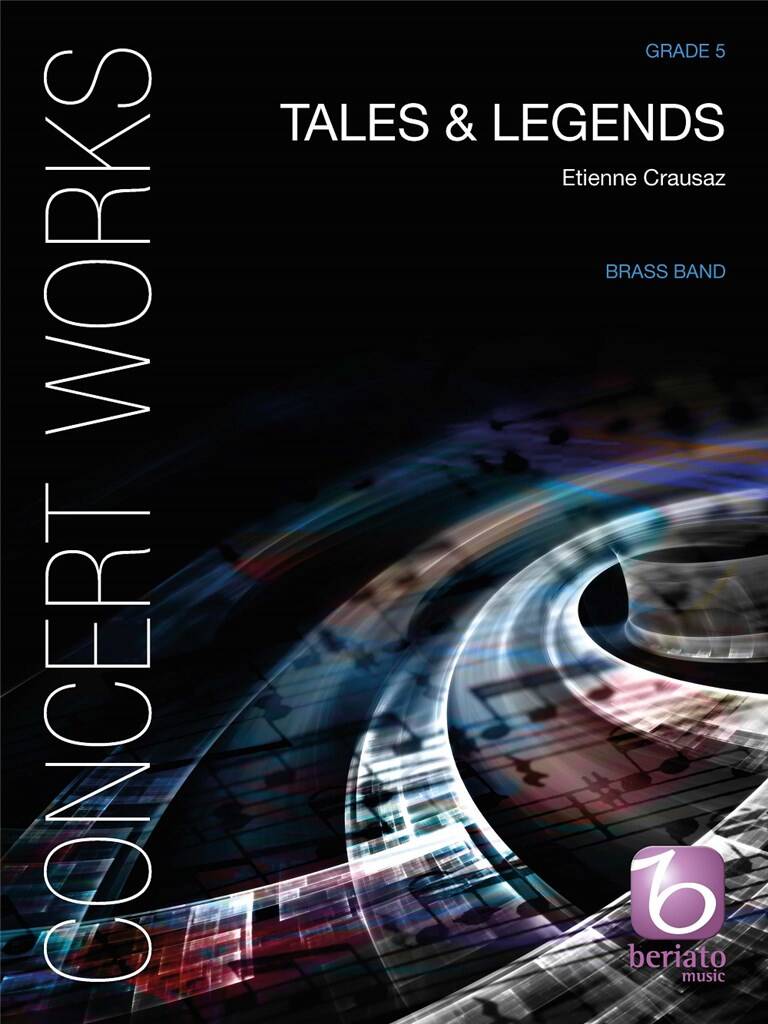 £174.99
Tales & Legends - Etienne Crausaz
This three-movement work by the Swiss composer Etienne Crausaz reflects three true stories and fascinating legends from the Middle Ages. The first movement tells the dramatic story of the 'witch' Catherine 'Catillon' Repond (1662 1731). She was the last woman ever to be executed for sorcery. In the second movement, the famous court jester Girard Chalamala occupies centre stage. This jester, the last one at the castle of Count Greyerz, could make everyone laugh. The third movement tells the story of Count Michael. He went down in history as a spendthrift bon-vivant. His burden of debt became so high that he did a moonlight flit and never came back!
Estimated dispatch 5-14 working days
-
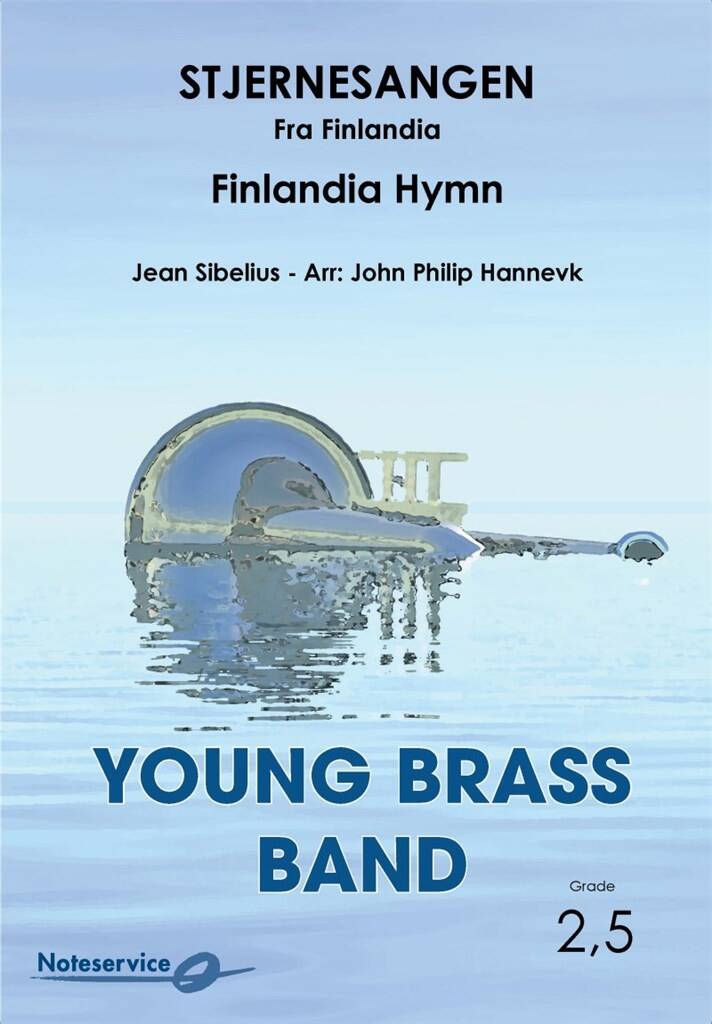 £105.20
Stjernesangen fra Finlandia - Jean Sibelius - John Philip Hannevik
The Finnish composer Jean Sibelius (1865-1957) is widely recognized as his country's greatest composer, and through his music he helped Finland to develop a national identity during its struggle for independence from the Russian empire. The tone poem Finlandia (1899-1900) played an important role in this part of Finnish history, and the hymn has become an important song to the Finnish people.
Estimated dispatch 5-14 working days
-
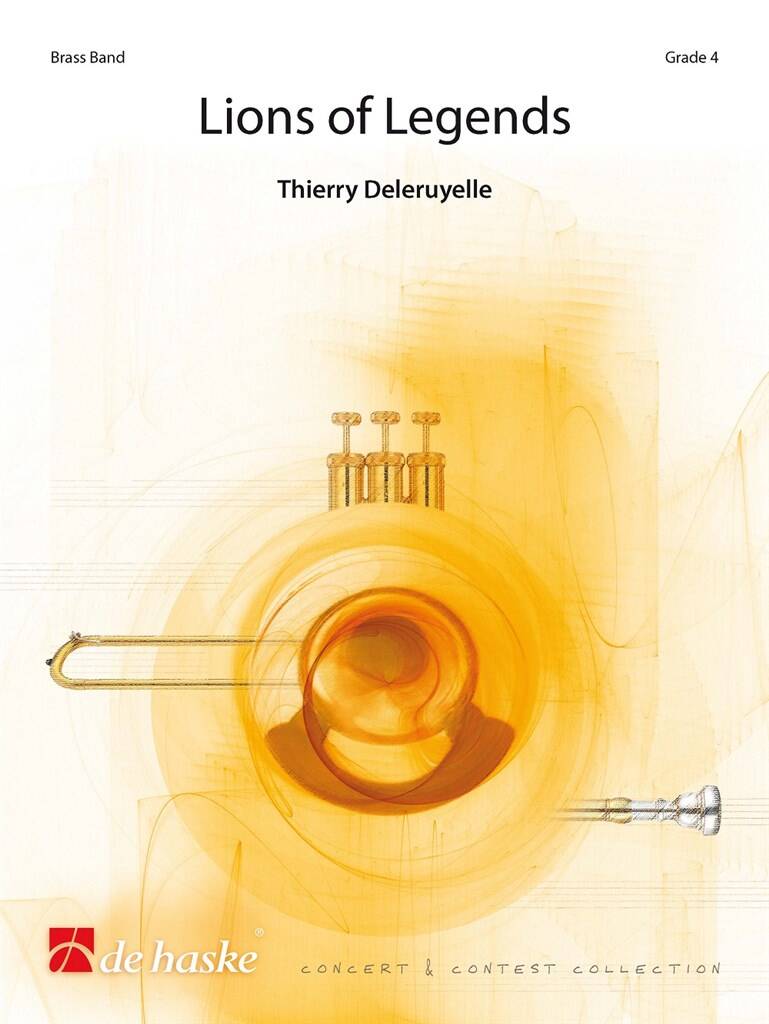 £118.99
Lions of Legends - Thierry Deleruyelle
This work was commissioned by Eurofestival. Ever since antiquity, mankind has been fascinated by the lion: symbolising courage, strength and temperance. Many have made use of the lion to represent themselves in symbols and emblems. In five movements the composer describes both the history of the lion throughout centuries, as well as the characteristics. A challenging idea to turn into music! The final movement 'King of Kings' is extremely spectacular. A great choice for thematic concerts or as a main piece in your concert or contest.
Estimated dispatch 5-14 working days
-
 £118.99
Introduction and Variations on "Dies Irae" - Jan de Haan
After the introduction, in which the landscape of Groningen with its beautiful wide views is presented, follows five variations based on the 13th-century Gregorian theme Dies Irae that is attributed to Thomas van Celano. Each variation can be seen as a stage or a scene in the rich history of the village of Grijpskerk, making this work a very exciting and expressive piece of music for a contest or a concert.
Estimated dispatch 5-14 working days
-
 £154.99
Fraternity - Thierry Deleruyelle
This piece by Thierry Deleruyelle is based on one of the most significant events in the history of coal mining; the catastrophe at Courrieres, Northern France. It took place on 10th March 1906 and is considered the most momentous mining accident in Europe and the second most significant in the world. This work is both emotional and spectacular and tells in 7 contrasting sections the catastrophe that occurred. Fraternity was the test piece in the "Champion" category at the European Brass Band Competition 2016 in Lille, thus commemorating 110 years since the disaster at Courrieres.
Estimated dispatch 5-14 working days
 View Music
 Listen to MP3