
Results
-
£29.50
Christmas Csardas - Ed Keeley
Christmas Csardas is a traditional Hungarian folk dance, the name deriving from 'csarda' an old Hungarian term for a roadside tavernThe csardas is characterized by several variations in tempo, usually starting slowly it gradually gains tempo, with moments where the brakes are suddenly applied for a moment of repose, then again gains tempo and ends in a very fast and fresh finale. The dancers are both male and female, with the women dressed in traditional wide skirts, which form a distinctive shape when they whirl.This quirky arrangement of Jingle Bells starting in the traditional czardas minor mode eventually has a fresh atmospheric modulation into the tonic major, and races away for a truly festive finale.
In Stock: Estimated dispatch 1-3 working days
-
 £74.30
HUNGARIAN DANCE No 5 (Brass Band) - Brahms, Johannes - Newsome, Roy
Medium
Estimated dispatch 7-14 working days
-
 £26.50
Hungarian Dances (2nd set) (Brass Band - Score and Parts) - Liszt, Franz
-
Estimated dispatch 7-14 working days
-
 £24.95
HUNGARIAN MARCH (Brass Band Set)
Estimated dispatch 7-14 working days
-
£50.00
Hungarian Rhapsody No.2 (Brass Band - Score and Parts) - Liszt, Franz
-
Estimated dispatch 7-14 working days
-
 £105.20
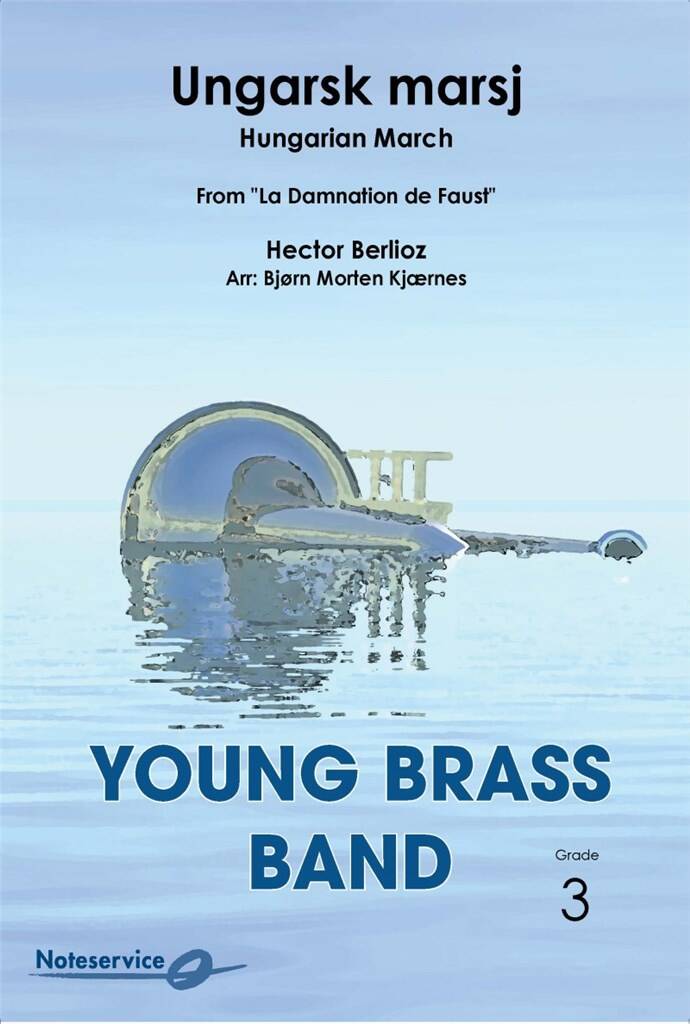
Ungarsk marsj - Hector Berlioz - Bjorn Morten Kjaernes
The "Rakoczi March" (Hungarian March) was the unofficial state anthem of Hungary before Ferenc Kolcsey wrote the Himnusz which is today the official national anthem of Hungary. The first version of this march-song was probably created around 1730 by one or more anonymous composers, although tradition says that it was the favorite march of Francis Rakoczi II. That early version called back Francis Rakoczi II to save his people. It was very popular in the 18th century but in the 19th century the more refined Rakoczi March became prevalent. Hector Berlioz included the music in his composition "La Damnation de Faust" in 1846, and Franz Liszt wrote a number of arrangements, includinghis Hungarian Rhapsody No. 15, based on the theme. The march gave its name to a 1933 Austrian-Hungarian feature film - Rakoczy-Marsch This arrangement is based on Berlioz instrumentation and phrasing from his Hungarian March, but in the form of the 19th century Rakoczi March
Estimated dispatch 5-14 working days
-
 £115.60
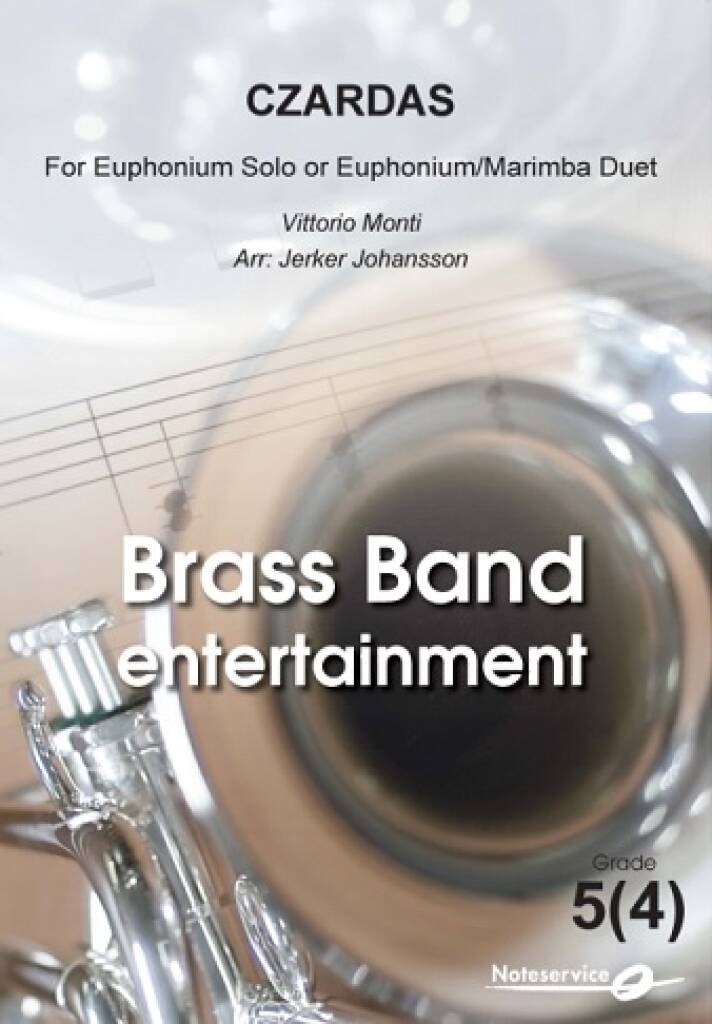
Czardas - Vittorio Monti - Jerker Johansson
There are composers that have gone done in history by just a single composition. One of those is the Italian violinist and composer Vittorio Monti (1868-1922). Around 1904 he wrote "Czardas", which soon became a favourite among violinists inrestaurant and gipsy orchestras. Monti was also conductor of the Lamoureux Orchestra in Paris and wrote music for ballets and operettas.Csardas is originally a Hungarian folk dance with a slow part (lassu) and a fast part (friska). The virtuoso solo in this arrangement for brass band is written for euphonium and marimba.
Estimated dispatch 5-14 working days
-
£109.99
The Horn of Plenty - Marc Cunningham
The Horn of Plenty is a composition which allows to present the Horn in many styles. The opening has an heroic character and exudes an Spanish atmosphere. The next part is a playful and lighthearted Leggiero. The melody used in bar 38 has an oriental sound through melodic use of the harmonic scale. The Andante is a parody on a piano etude by the composer Stephen Heller, a Frenchman of Hungarian descent. The piece ends with a relaxed swing area in which the Horn also in a different way can be heard.
Estimated dispatch 5-14 working days
-
 £69.99
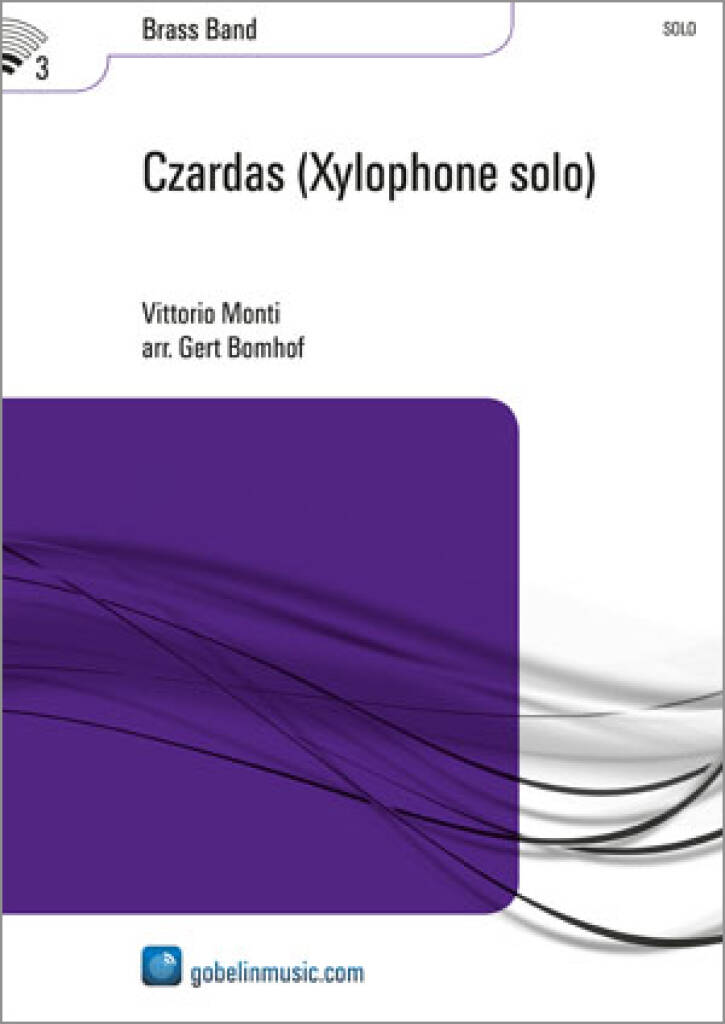
Czardas (Xylophone solo) - Monti - Gert Bomhof
Vittorio Monti was born on January 6, 1868 in Naples (Italy). His musical education (Violin and composition), he enjoyed at the conservatory there. Around his 30's Monti went to Paris. He earned a living as a conductor and wrote several ballets and operettas. In his last years, before his death in 1922, Monti devoted himself to teaching and composing. His famous 'Czardas' has made his name known even today.Initially the Czardas was a Hungarian folk dance, but after the mid-nineteenth century it was even a dance for the upper-class. Czardas begins with a slow introduction, the Lassan (slow and sad), and then the fast part,Friska, follows. Czardas is not, as so many people think, typical gypsy music.
Estimated dispatch 5-14 working days
-
£67.00
Ungarsk marsj - Hector Berlioz - Bjorn Morten Kjaernes
The "Rakoczi March" (Hungarian March) was the unofficial state anthem of Hungary before Ferenc Kolcsey wrote the Himnusz which is today the official national anthem of Hungary.The first version of this march-song was probably created around 1730 by one or more anonymous composers, although tradition says that it was the favorite march of Francis Rakoczi II. That early version called back Francis Rakoczi II to save his people. It was very popular in the 18th century but in the 19th century the more refined Rakoczi March became prevalent.Hector Berlioz included the music in his composition "La Damnation de Faust" in 1846, and Franz Liszt wrote a number of arrangements, including his Hungarian Rhapsody No. 15, based on the theme. The march gave its name to a 1933 Austrian-Hungarian feature film - Rakoczy-Marsch This arrangement is based on Berlioz instrumentation and phrasing from his Hungarian March, but in the form of the 19th century Rakoczi March
Estimated dispatch 7-14 working days
 Listen to MP3
 View Music