
Results
-
 £91.99
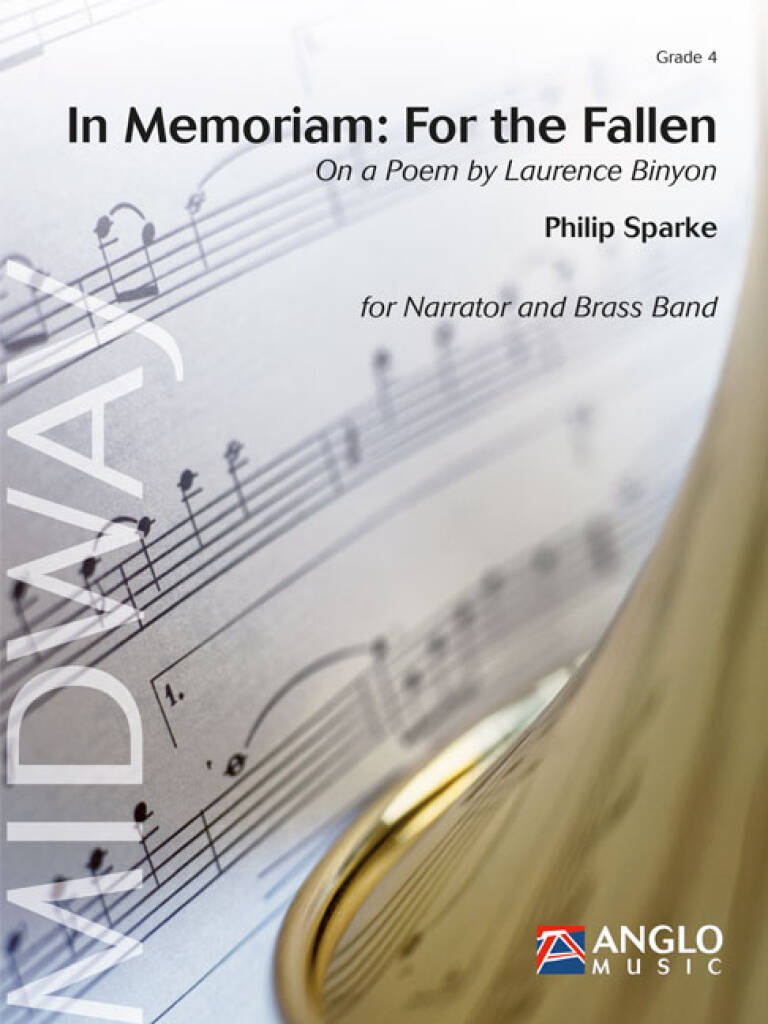
In Memoriam: For the Fallen - Philip Sparke
In Memoriam: For the Fallen was commissioned by Bolsover District Council for the Bolsover Brass Summer School 2014. It is a setting for narrator and band of Laurence Binyon's (1869-1943) poem, For the Fallen, which was first published in The Times in September 1914. The poem is known world-wide as the famous fourth stanza (They shall grow not old...) has become a regular part of Remembrance Day and ANZAC Day services. In Memoriam: For the Fallen is a musical accompaniment to the poem, shadowing the mood of each stanza.
Estimated dispatch 5-14 working days
-
 £84.99
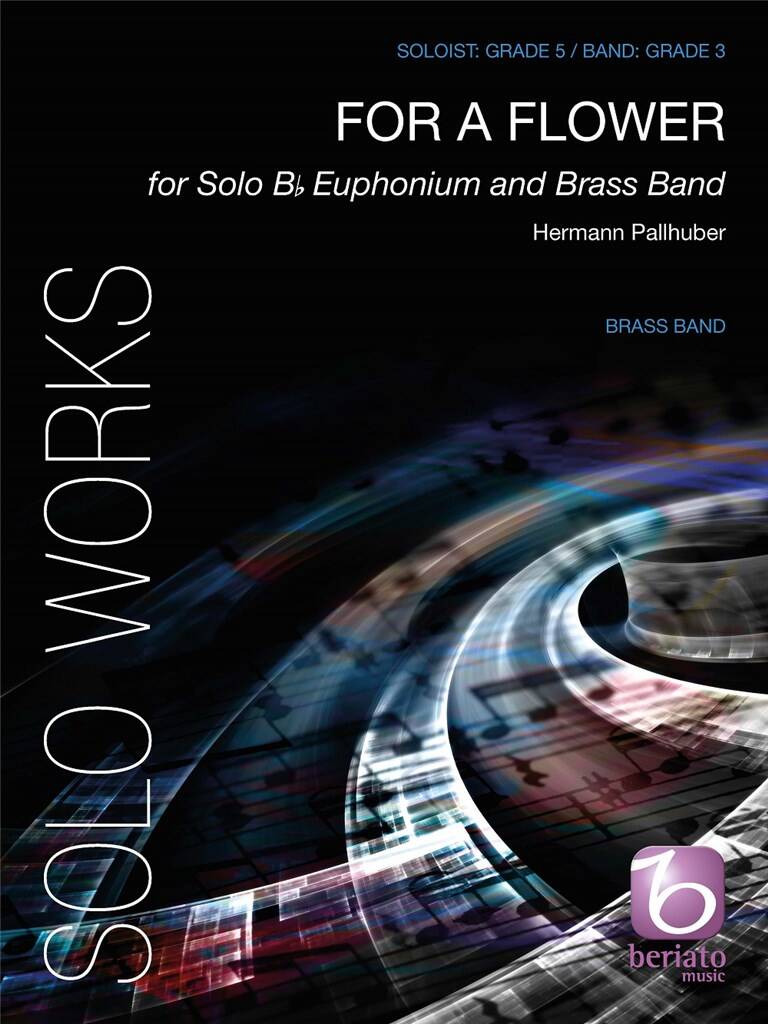
For a Flower - Hermann Pallhuber
For a Flower is a very melodic and virtuosic solo work for euphonium and brass band. It opens with a gentle solo introduction on euphonium, which develops into a grand hymnal theme. Following this comes a faster and more virtuosic section in a traditional Irish style, with a varied dialogue between the band and the soloist. The work closes triumphantly with the hymnal theme of the opening. For a Flower showcases both the musical and technical capabilities of this wonderful instrument. The euphonium soloist must naturally master both skills: lyrical playing and virtuoso playing. For a Flower was commissioned by the Dutch euphonium virtuoso Robbert Vosand is dedicated to his wife, Evi.
Estimated dispatch 5-14 working days
-
 £72.99
Fanfare For A Friend - Bert Appermont
Fanfare for a Friend was originally composed as an introductory piece for the brass ensemble Musica Mosana and their conductor Mark Prils. The work begins with a brilliant brass fanfare that presents the main theme for the first time. This stately theme can be heard in counterpoints throughout the first 28 bars. This is followed by a contrasting and rapid part whereby a melodic theme can be heard against a more rhythmic accompaniment. A virtuoso and sweeping passage then leads to the grandioso in which both themes are played simultaneously in a grand finale.
Estimated dispatch 5-14 working days
-
£67.50
Fantasia for Tuba - James Curnow
This work for Tuba and Brass Band was commissioned by and written for internationally renowned tuba soloist Steve Sykes. The Tuba plays four notes (F, Bb, G, C) during the opening. All the themes and much of the harmonic structure are based on these fours notes and their permutations. The soloist receives ample opportunity to showcase his or her technical prowess and expressive capabilities. Fantasia for Tuba also provides plenty of interaction between the soloist and brass band.
Estimated dispatch 5-14 working days
-
 £53.50
Romance for Horn - Joseph Turrin
Several years ago, I attended an Imperial Brass concert in the United States, which featured soloist Sheona White on tenor horn. I was so impressed with her playing that I asked if I could write something for her. The result of the conversation is this piece, Romance for Horn. I thought I'd compose something melodically flowing with grace and tenderness that was very carefully crafted to match Sheona's beautiful sound on the tenor horn. As for the overall structure of the work, it basically consists of flowing melodic lines in the solo part supported by a pulsing harmonic current that runs throughout. A piano reduction of this fine Romance is also available.Joseph Turrin
Estimated dispatch 5-14 working days
-
 £134.99
Alpina Brass - Jan Van der Roost
Alpina Brass was the test piece for the first division of the Fetes Cantonales on 8 and 9 June 2019 in Naters, Switzerland. It consists of three movements, and features a variety of aspects, as is common for a competitionwork. However, as a whole, it has been written in such a way that it can perfectly serve as a concert work as well. It is a challenging piece for every section and offers colourful and melodic as well as spectacular rhythmicsequences and a most impressive ending!
Estimated dispatch 5-14 working days
-
 £66.00
Ballet for Band - Joseph Horovitz
Composer Joseph Horovitz will celebrate his 90th birthday in May, with 2016 already seeing a welcome retrospective of some his finest works at the RNCM Brass Band Festival in Manchester in January.It included Ballet for Band, written in 1983 at the set-work for the National Final at the Royal Albert Hall, and which has since become one his most popular major test-pieces - played on numerous occasions throughout the banding world. It is a wonderfully elegant, mischievous composition - a brass band ballet, not of programmatic intent but of fertile imagination; beautifully crafted with a delicacy of touch as light on its feet as any arabesque.The composer has admitted that he had a clear vision of the characters that inhabit his score, yet has never divulged any details - leaving the bands and listeners, as he says, "...to exercise their own imaginations rather than being influenced bymine!"
Estimated dispatch 5-14 working days
-
 £11.95
The Brass Band Player's Manual - Ian Lowes
This is the 'Haynes manual' of technique for the brass player. It breaks down all areas of preparation and performance into easy to understand sections and provides valuable exercises to improve all aspects of playing. Completewith a quick reference 'fault diagnosis chart'.IntroductionThis tutor is intended as a self-help tutor for all band players. It is laid out in the manner of a DIY car manual where technical explanationsare combined with fault diagnosis and suggestions for corrective solutions. Explanations range in depth to suit playing standards from beginner to championship level.64 pages.
Estimated dispatch 5-14 working days
-
£59.99
Holiday For Trombones - David Rose - Mark Freeh
Holiday For Trombones arranged by Mark Freeh for three Trombones and Brass Band.
Estimated dispatch 5-14 working days
-
 £50.00
I'll be there for you - Kauffman
A Brass Band arrangement of The Rembrandt's celebrated theme tune for the ever-popular TV Sitcom, 'Friends'.
Estimated dispatch 5-14 working days
 View Music