
Results
-
 £69.99
A Hymn to New England - John Williams
Written in 1987 as the accompaniment to New England Time Capsule, an Omnimax travelogue, and recently recorded by the Boston Pops, this three minute concert work adapts wonderfully for band. With true Williams craftmanship, it features brassy fanfares and a rich, sonorous hymn, all based on the same melodic intervals. John Williams' brilliant orchestration is successfully captured, making this a superb concert opener for brass bands.
Estimated dispatch 5-14 working days
-
 £84.99
Festivus Americas - Stephen Bulla
Dedicated to the North American Brass Band Association, this is music that is full of energy and dynamic extremes. In form it draws from the overture style, although the themes are self-existing and the piece is programmatic. Working well asa festival opener, it sets a mood of excitement. Following the rhythmic fanfares of the opening, the first theme is presented in the cornets followed by a return to the same rhythmic material. A second theme appears in the horn section and isdeveloped, changing into a darker and sinister form of the same motif. Eventually a Maestoso section is reached, full of sustained block chords in the cornets and trombones, as the rest of the band counters with cascading lines that weavestraight through the brighter instruments.
Estimated dispatch 5-14 working days
-
 £60.99
Into The Sky - Stephen Bulla
This music is a fanfare prelude that is designed to open concert programs with an impressive display of brass fireworks. It features every section of the band and reflects a modern spin on the style of the great Strauss fanfares for brass from the past.
Estimated dispatch 5-14 working days
-
 £109.99
Nordic Moods - Tom Brevik
The composer:1st movement: Reflections by the Fjord.Overlooking one of the mighty fjords of Norway, my mind and thoughts are with an old religious Norwegian folk-tune, with words by the famous parson Peter Dass.The majestic fanfare-likeopening reflects the power of God our Father, the choral itself heard for the first time on flugelhorn. The choral is repeated a few times, separated only by some short variations. The movement ends in thriumph, with fanfares and the choral broughttogether.2nd movement: Reflections in the Old Church.In this movement my associations of a summer day, finding myself alone in an old deserted stone church. From the old walls I hear folk songs, perhaps like the ones sung in the church bypoor fishermen and farmers in days gone by. Suddenly the light from the sun breakes through the small circular window above the altar, and a lovely melody is heard, before the original figures take us to the end of the movement.3rd movement:Festive Reflections.Any festive occasion can be reflected in this movement. from the bonfire at midsummer-night to the children celebrating the return of the sun in the northern part of Norway. from the traditional sleigh-riding at Christmas tothe Celebrations of the National Day on the 17th of May each year.
Estimated dispatch 5-14 working days
-
£69.99
Variations on a Shaped Note Melody - James Curnow
Based on the American 'shaped-note' melody Saints Bound for Heaven, Variations on a Shaped Note Melody by James Curnow captures a feeling of joyful celebration through a series of unique and skilfully adapted variations. The opening strains are actually fragments of the first variation and occur before the main tune is introduced by low brass. The second variation features a euphonium solo and builds to a glorious climax with the full ensemble. The final variation is joyful and filled with energy, using flourishes and fanfares throughout the band for a grand conclusion to this marvellous work.
Estimated dispatch 5-14 working days
-
 £154.60
Festivitas - Fredrick Schjelderup
"Festivitas" is written as an effective concert opener which fits every occasion.The piece includes fanfares, virtuose passages and hymn tune."Festivitas" is written as the 1st movement of the piece "Festive Fireworks", which also can be performed as a larger concert or contest piece.
Estimated dispatch 5-14 working days
-
 £79.99
Liberty Fanfare - John Williams
Liberty Fanfare follows the successful pattern that John Williams has made his own in a series of ceremonial fanfares. The grandeur and energy that are heard in this exciting short work form a juxtaposition and eventual combination of lively fanfare figures together with a broader theme. It's concise form and simple directness makes a bold opening statement for any concert.
Estimated dispatch 5-14 working days
-
 £79.99
A Midwest Fanfare - Philip Sparke
A Midwest Fanfare was commissioned by the Brass Band of Battle Creek and premiered by them during their appearance at the Midwest Clinic in Chicago on 20th December 2017 where this fanfare was the opening piece of the entire event. This piece is designed to be played with the cornets split into two teams either side of the band. It opens with the two groups answering each other antiphonally over a repeated figure in the lower band. A calmer central section introduces a euphonium solo which is then taken up by the whole ensemble. This leads back to a repeat of the opening fanfares over a rhythmic accompaniment and a short coda which brings the work to a close.
Estimated dispatch 5-14 working days
-
 £104.99
A Fanfare of Bells - Hermann Pallhuber
A Fanfare of Bells is festival music composed for a particular occasion: in 2012 the young 3BA Brass Band from Germany took part in the champion section of the Flemish Open Brass Band Championship in Mechelen, Belgium, for the first time: a festival of premieres. A Fanfare of Bells, accordingly, is music that creates festival atmosphere. Big melodies designed to touch the heart are cut through with brilliant fanfares. The piece contains lyrical and melodic passages that bring the skills and general musicianship of the 3BA Brass Band to the fore, along with various technical passages that spotlight the excellence of the individual musicians. Peels of bells at thestart and end of the work ring in a new atmosphere for brass band music in Germany and Austria. A Fanfare of Bells is, however, also a tribute to the wonderful sound of brass instruments, that blend together to create the most subtle sonorities: bells as a symbol of the beauty of the instruments--both sonically and visually: let the bells ring...
Estimated dispatch 5-14 working days
-
 £52.50
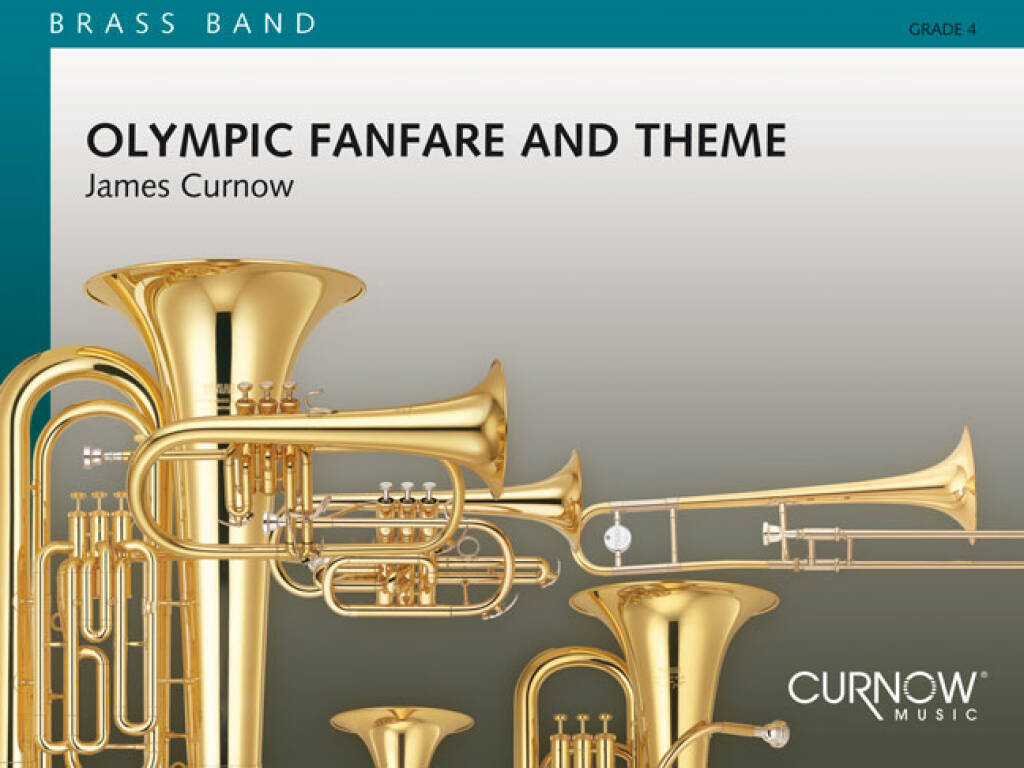
Olympic Fanfare and Theme - James Curnow
Dramatic fanfares announce a flowing main theme,creating an atmosphere of exhilaration and anticipation.Commissioned for the 1996 Atlanta Centennial Olympics,Olympic Fanfare and Theme will make a brilliant opener forany occasion
Estimated dispatch 5-14 working days
 View Music