
Results
-
£60.00
Requiem Paraphrases - Peter Meechan
Requiem Paraphrases uses the opening bars of Mozartas Requiem as its musical material for the whole piece. An aggressive opening is followed by a sounding of Mozartas original theme, in a setting for low brass and solo euphonium. Percussion and woodwind then enter, as the soloist begins to elaborate. A brief return to the opening is followed by a new, percussion driven, section.The euphonium and various soloists in the ensemble interact, exchanging ideas over an ostinato in the marimba. As this section continues towards the cadenza, the ensemble gradually takes on more of an accompanying role, leaving the soloist to again break free, with flourishes and gestures leading to the cadenza.Following this, there is a short recapitulation, before the euphonium brings us to a dramatic conclusion!Requiem Paraphrases was commissioned by, and dedicated to Steven Mead.
Estimated dispatch 12-14 working days
-
 £15.00
Celtic Lullaby - Helen Douthwaite
An original composition by Helen Douthwaite for solo baritone, euphonium or trombone with brass band (reduced score) accompaniment.The piece was written with training/junior band level players in mind, and offers a great opportunity to spotlight a soloist through this moment of musical beauty.Set includes score and parts for:Soloist - Euphonium/Baritone/TromboneCornet 1Cornet 2Eb Tenor Horn 1Eb Tenor Horn 2Trombone 1Trombone 2Baritone/EuphoniumEb Bass (optional)GlockenspielPercussion
In Stock: Estimated dispatch 3-5 working days
-
 £15.00
My Love is Like a Red, Red Rose - Helen Douthwaite
Robert Burns' beautiful melody is brought to life as a euphonium solo with brass band accompaniment in this simple, yet highly effective, arrangement by Helen Douthwaite.Originally arranged by Helen for the Kirkintilloch Youth Band, the piece not only features the soloist with a carefully crafted, accessible solo line, but also enables the rest of the band to shine through the tutti elements.Set includes score and parts for:Solo CornetRepiano Cornet2nd Cornet3rd CornetFlugelhornSolo Eb Tenor Horn1st Eb Tenor Horn2nd Eb Tenor Horn1st Baritone2nd Baritone1st Trombone2nd TromboneBass TromboneEuphoniumEb BassBb Bass (optional)GlockenspielPercussionAdditional world parts also provided include F Horn 1/2/3, Baritone 1/2 in bass clef, Trombone 1/2 in bass clef, Euphonium in bass clef, Tuba.
In Stock: Estimated dispatch 3-5 working days
-
 £39.95
Softly, As I Leave You - Alfred de Vita arr. Alan Catherall
Made popular by many singers over the years, this lovely song was first arranged for the Childs brothers as a solo, and later a duet, by Alan Catherall. It was first performed in the duet version at the Royal Albert Hall, London, in October 1985, conducted by their late father, John Childs. Also available with piano Brass Band Set comprises: Detailed condensed conductor score Solo B-flat Euphonium B-flat Euphonium Duet (2) E-flat Soprano Cornet Solo B-flat Cornet (4) 2nd B-flat Cornet (2) 3rd B-flat Cornet (2) B-flat Flugelhorn* Solo E-flat Horn* 1st E-flat Horn* 2nd E-flat Horn 1st B-flat Baritone 2nd B-flat Baritone 1st B-flat Trombone 2nd B-flat Trombone Bass Trombone B-flat Euphonium (2) E-flat Bass (2) B-flat Bass (2) 1st Percussion 2nd Percussion 3rd Percussion (Drum Kit) * Alternative parts for use as solo or duet provided. There is no Repiano Cornet part.
Estimated dispatch 7-9 working days
-
 £30.00
Journey Home - Lucy Pankhurst
Written for the Euphonium player of the Wingates Band by Lucy Pankhurst, this solo offers a wonderful variety of music all wrapped up in one piece.Starting with a hymnal melody with beautiful, building harmonies and incorporating some great techniques for added effect, the euphonium then moves into a more rhythmic element, which is brilliantly echoed throughout the band.Unusual and unexpected sounds and rhythms all combine to make this a a must for the euphonium player's repertoire collection!
In Stock: Estimated dispatch 3-5 working days
-
 £37.35
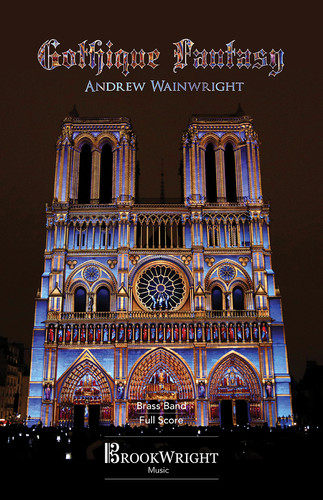
Gothique Fantasy - On a theme by Boellmann (Brass Band Score) Andrew Wainwright
This magnificent work was commissioned by The Illinois Brass Band for the 2024 North American Brass Band Championships. It is also the title track of the 2026 CD by Black Dyke Band, featuring the music of Andrew Wainwright. Please note this PDF download is for the full score. The full set can be purchased here. Based on Leon Boellmann's epic organ work Suite Gothique, the 3rd movement of which is entitled Priere a Notre-Dame (A Prayer for Notre Dame), it pays tribute to the nearly 700-year-old Notre-Dame de Paris after the fire which did so much damage to this iconic building. Notre-Dame stands out for its three pipe organs (one historic) and its immense church bells, which are referenced at various times in Gothique Fantasy. Two of the other movements from Boellmann's work also provide inspiration for the piece, firstly the Introduction - Choral, and the famous Toccata, snippets of which appear at various times in the piece. Gothique Fantasy opens with the Choral, a solo offstage cornet sounding the opening statement. A quintet, stood to the side of the stage, takes up the Choral, while the rest of the band enters on held muted notes, creating a sustained effect evoking the harmonies spreading across the vast cathedral. Colossal organ-like sounds announce themselves as the full band takes on the theme. A lively Animato follows. Here there are continued references to the Choral, while the famous Toccata motif starts to appear. A Misterioso section ensues, which leads into a poignant Prayer for Notre Dame featuring a euphonium duet, where the music reflects upon the devasting fire and centuries of history and artefacts that were lost. A lone euphonium the sounds, representing the remaining remnants of the cathedral. A chaotic and rhythmic Presto, based on the Toccata, then follows and tests the technique of the band from top to bottom, whilst moving through various time signatures, the pulse lacking any sense of stability. A return to the Choral theme leads into a further reflective section, this time featuring the secondary theme from the Toccata with a flugel and solo horn duet. Next the music arrives at an aleatory section (Senza Misura), which depicts the remnants of the fire, followed by the grand cathedral emerging out of the ashes. Various motifs from earlier in the piece are heard across the band. At this point, various parts enter at different times on the conductor's signal, before building towards a 6/8 Presto. Here the music gathers momentum as it leads to a Grandioso finale featuring the Choral in all its glory. However, to conclude the work, the final strains of the Toccata sound, bringing the work to a glorious conclusion as Notre-Dame rises again! To view a video of The Illinois Brass Band performing the work please visit www.youtube.com/watch?v=xG3JB6Ye5aU Duration: 15.00 minutes approx. Difficulty Level: Championship Section Sheet music available from www.brassband.co.uk Instrumentation: Soprano Cornet Eb Solo Cornet Bb Repiano Cornet Bb 2nd Cornet Bb 3rd Cornet Bb Flugel Horn Bb Solo Horn Eb 1st Horn Eb 2nd Horn Eb 1st Baritone Bb 2nd Baritone Bb 1st Trombone Bb 2nd Trombone Bb Bass Trombone Euphonium Bb Bass Eb Bass Bb Percussion 1-4
In Stock: Estimated dispatch 1-3 working days
-
 £74.72
Gothique Fantasy - On a theme by Boellmann (Brass Band) Andrew Wainwright
This magnificent work was commissioned by The Illinois Brass Band for the 2024 North American Brass Band Championships. It is also the title track of the 2026 CD by Black Dyke Band, featuring the music of Andrew Wainwright. Based on Leon Boellmann's epic organ work Suite Gothique, the 3rd movement of which is entitled Priere a Notre-Dame (A Prayer for Notre Dame), it pays tribute to the nearly 700-year-old Notre-Dame de Paris after the fire which did so much damage to this iconic building. Notre-Dame stands out for its three pipe organs (one historic) and its immense church bells, which are referenced at various times in Gothique Fantasy. Two of the other movements from Boellmann's work also provide inspiration for the piece, firstly the Introduction - Choral, and the famous Toccata, snippets of which appear at various times in the piece. Gothique Fantasy opens with the Choral, a solo offstage cornet sounding the opening statement. A quintet, stood to the side of the stage, takes up the Choral, while the rest of the band enters on held muted notes, creating a sustained effect evoking the harmonies spreading across the vast cathedral. Colossal organ-like sounds announce themselves as the full band takes on the theme. A lively Animato follows. Here there are continued references to the Choral, while the famous Toccata motif starts to appear. A Misterioso section ensues, which leads into a poignant Prayer for Notre Dame featuring a euphonium duet, where the music reflects upon the devasting fire and centuries of history and artefacts that were lost. A lone euphonium the sounds, representing the remaining remnants of the cathedral. A chaotic and rhythmic Presto, based on the Toccata, then follows and tests the technique of the band from top to bottom, whilst moving through various time signatures, the pulse lacking any sense of stability. A return to the Choral theme leads into a further reflective section, this time featuring the secondary theme from the Toccata with a flugel and solo horn duet. Next the music arrives at an aleatory section (Senza Misura), which depicts the remnants of the fire, followed by the grand cathedral emerging out of the ashes. Various motifs from earlier in the piece are heard across the band. At this point, various parts enter at different times on the conductor's signal, before building towards a 6/8 Presto. Here the music gathers momentum as it leads to a Grandioso finale featuring the Choral in all its glory. However, to conclude the work, the final strains of the Toccata sound, bringing the work to a glorious conclusion as Notre-Dame rises again! To view a video of The Illinois Brass Band performing the work please visit www.youtube.com/watch?v=xG3JB6Ye5aU Duration: 15.00 minutes approx. Difficulty Level: Championship Section This PDF download includes parts and score. Sheet music available from www.brassband.co.uk Instrumentation: Soprano Cornet Eb Solo Cornet Bb Repiano Cornet Bb 2nd Cornet Bb 3rd Cornet Bb Flugel Horn Bb Solo Horn Eb 1st Horn Eb 2nd Horn Eb 1st Baritone Bb 2nd Baritone Bb 1st Trombone Bb 2nd Trombone Bb Bass Trombone Euphonium Bb Bass Eb Bass Bb Percussion 1-4
In Stock: Estimated dispatch 1-3 working days
-
 £39.95
Canzona Bravura - Paul Lovatt-Cooper
A fresh new and exciting euphonium solo that shows off the technical skills of the soloist and also their musicality in the beautiful middle section. Commissioned by Louise Martin for euphonium soloist Martin Smith. Circa 5'30". Soloist: Grade 6 ABRSM.
Estimated dispatch 10-14 days
-
 £15.00
Flourish - Helen Douthwaite
A lovely original composition by Helen Douthwaite with junior/youth bands in mind, but just as appropriate for brass ensembles looking for a short and sweet item to play.A rich opening melody develops to bring vitality and a nice upbeat feel to the piece.Lots for each instrument section to do and a chance for the emerging players to hear some great harmonies around the band.The set includes score and parts for:Cornet 1Cornet 2Cornet 3Eb Tenor HornEb Tenor Horn EASYEuphonium/BaritoneEuphonium/Baritone EASYTromboneTrombone EASYEb BassDrum setPercussion
In Stock: Estimated dispatch 3-5 working days
-
 £30.00
Midnight - Lucy Pankhurst
Written for and premiered by the Leyland Band with euphonium soloist Philippe Schwartz in 2010, Midnight is a haunting euphonium solo which features the engaging combination of lyrical melodies and strident energy.The piece opens with peaceful serenity and then moves towards an energetic and exciting passage which really showcases the soloist and the band alike. Lots of percussion highlights are included in the scoring which adds immense depth to the writing. Following is a return to an atmospheric spotlight on the soloist, developing into an impressive cadenza and eventually closing with the original tranquility.Comments by the composer, Lucy Pankhurst, on writing collaboratively for a band:"I didn't intend to tailor [this piece] specifically, other than knowing I could pretty much write whatever I wanted to for the band and soloist.They are such great players and have a cracking percussion section. The only stipulation I was given was for something 'atmospheric'.This is actually one piece that I started at the first bar and composed chronologically. Everything grew from the opening marimba ostinato."Midnight is featured on the Leyland Band CD - Age of Chivalry.
In Stock: Estimated dispatch 3-5 working days
 View Music