
Results
-
 £72.99
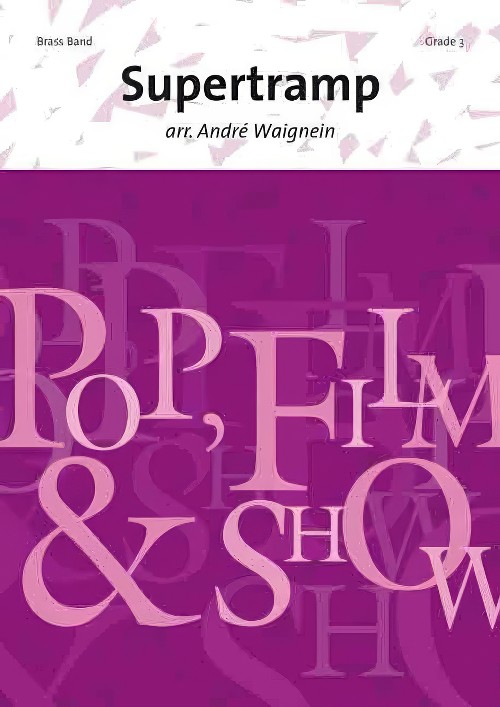
Supertramp (Brass Band - Score and Parts) - Waignein, Andre
During the 1980's the English super-group Supertramp were hardly ever out of the charts. This medley by Andre Waignein includes their hits: The Logical song, Breakfast in America and It's Raining Again.Duration: 9:00
Estimated dispatch 7-14 working days
-
 £60.99
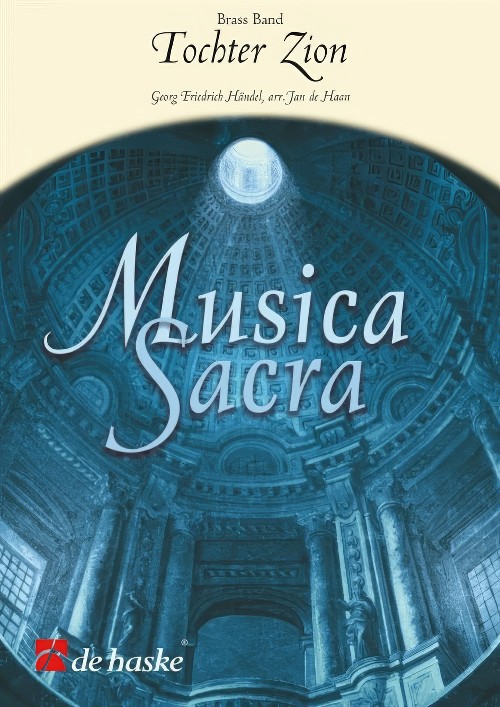
Tochter Zion (See the Conquering Hero Comes) (Brass Band - Score and Parts) - Handel & Tchaikovsky - De Haan, Jan
Tochter Zion, also known as See the Conquering Hero Comes, is the most famous chorus from the oratorio Judas Maccabaeus (1746) by the composer George Frideric Handel (1685-1759). The heroic epic based on the Biblical story about commander-in-chief Judas Maccabaeus, was used by Handel to celebrate the English victory over the rebellious Scottish. The first performance of this patriotic work - written in the pleasing, rich baroque style that Handel's music is known for - was conducted by himself; the success was huge. The chorus See the Conquering Hero Comes was added later, in 1748, drawn from another oratorio (Joshua).Duration: 2:30
Estimated dispatch 7-14 working days
-
 £54.99
Go West (Brass Band - Score and Parts) - Sebregts, Ron
The Pet Shop Boys are one of the finest examples of an English electro pop group. Since their formation in the early 1980s they have had 38 top 40 hits in the UK and are still often in the charts today. This highly inventive duo owes their long-term career to the ability to bridge melodic pop and dance music with intelligence and style. Go West was one of their hits from 1993 and this arrangement by Ron Sebregts retains all the splendour of the original. A fantastic pop arrangement which will have all your audience dancing in the aisles.Duration: 3:40
Estimated dispatch 7-14 working days
-
 £84.99
Utopia (Brass Band - Score and Parts) - De Haan, Jacob
Utopia is the name of a book written by the English author Thomas More and was published in 1516. The title is a word thought up by More himself, after the Greek language, meaning Nowhereland and leading to the invention of the words utopian scheme and utopian. Utopia pictured an ideal state on an island far from the inhabited world. This idea was the basis of the composition. It makes one think of Oregon in variety of themes and style. Utopia also exists of a combination of styles that breathe the atmosphere of film music. However, Utopia sounds less American. The slow and stirring middle part for example is closer to the European romanticism: the chord signals in the brass section remind of Wagner's music.Duration: 11.30
Estimated dispatch 7-14 working days
-
 £76.99
The Universal Band Collection (Brass Band - Score and Parts) - De Haan, Jacob
A collection of 5 short works in pop style which can be performed by any kind of compilation. The titles can be presented on the programme as separate works but the Universal Band Collection can also be performed as a complete suite. From a didactic point of view it is a suitable work to teach musicians something about the structure in music. For this purpose not only the big structure but also the small structure was kept very clear.Western Girl: A girl from the west of the USA rides her horse across the prairie, dreaming of her future. The rough structure: introduction - theme in a blues scale - the same thing in a different instrumentation - finale.Just a ballad: A ballad in pop style with a rough A-B-A form. First there is the introduction of the main theme (A), then follows a tenor melody in minor with a rhythmical reference to the main theme (B). Finally there is the main melody, performed tutti with a different rhythm in the drums (A').Play the Game: An English saying meaning: play fairly. Playful music in up-tempo with a wink to China, where almost all games are manufactured nowadays. Once again an A-B-A structure here.San Diego: A Mexican fugitive enjoys his freedom in America but also remembers his place of birth with melancholy. A sad minor melody with a straight trendy beat appears twice. The second time it has a slightly different instrumentation, in which the muted trumpets represent the Mexican feeling.Final Dance: Eventually there is a dance with an introduction in renaissance style, followed by a fast dance in rock style. All this composed in a classical song structure: introduction, verse, bridge, chorus, shortened verse, bridge, chorus, chorus.Duration: 10:30
Estimated dispatch 7-14 working days
-
 £60.99
Holy, Holy, Holy (Brass Band - Score and Parts) - Dykes, John Bacchus - Curnow, James
The music for the beloved hymn Holy, Holy, Holy (also known as Nicaea) was composed by the English composer John Bacchus Dyke in 1861 and was first published that year in the book Hymns Ancient and Modern. The beautiful melody is not only suitable for use in church services but also makes an ideal reflective concert work.Duration: 3:30
Estimated dispatch 7-14 working days
-
 £60.99
Canterbury Chorale (Brass Band - Score and Parts) - Van der Roost, Jan
This quiet piece with its broad tones was originally written for brass band on request of Robert Leveugle, chairman of the composer's own band: Brass Band Midden Brabant (Belgium). The direct cause was a visit to the beautiful cathedral of the English city Canterbury, in which so many fine compositions sounded throughout the centuries. Later on, Jan Van der Roost rescored this piece for symphonic wind band, exploring the full richness of colours of this formation. Besides solo phrases for several instruments, there are some massive tutti passages making the wind orchestra sound like a majestic organ. By the way: an "ad libitum" organ part adds an extra richness, colour and power to this piece, making it sound even more broad and grand.Duration: 6:30
Estimated dispatch 7-14 working days
-
 £35.00
Anvil Chorus (from Il Trovatore) (Brass Band - Score and Parts) - Verdi, Giuseppe - Littlemore, Phillip
The Anvil Chorus?from Verdi's opera?Il Trovatore?is from Act II. The original Italian is 'Coro di zingari' (Gypsy chorus), and it depicts the Gypsy men striking their anvils (hence the English name) and singing the praises of hard work, good wine and their women!?Duration: 4:30
Estimated dispatch 7-14 working days
-
 £60.99
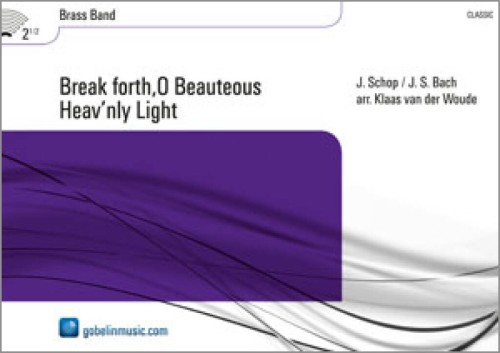
Break forth, O Beauteous Heav'nly Light (Brass Band - Score and Parts) - Bach & Schop - Woude, Klaas van der
Words: Johann Rist, Himmlische Lieder (Leipzig, Germany: 1641) (Ermuntre dich, mein schwacher Geist). translated from German to English by John Troutbeck, circa 1885.Duration: 2.45
Estimated dispatch 7-14 working days
-
 £118.99
Elegy I (Brass Band - Score and Parts)
Elegy I 'Jealousy' has been named after John Donne's poem of the same name. This English poet (1572-1631) wrote an entire series of elegies, each with its own theme. Jealousy can trigger various emotions, ranging from disappointment, grief, or regret, to madness and anger. All these emotions have been incorporated into this composition. Jacob de Haan was inspired by three different works of art: a poem (the aforementioned poem by John Donne), a painting by the Norwegian painter Edvard Munch (Jealousy in the Garden) and an old French chanson about jealousy (Je ne l'ose dire) by the sixteenth-century French composer Pierre Certon. The music refers repeatedly to this chanson - sometimes through key notes from the melody that serve as the starting point for new, isolated themes and sometimes through quotations of the original version
Estimated dispatch 7-14 working days
 View Music