
Results
-
 £34.95
Trusting Faith (Euphonium Solo with Brass Band - Score and Parts)
This piece is based on the melody Faith is the victory (T.B. 128) and throughout the solo we follow a person's journey of faith. In the first movement, the bold and confident opening depicts a seemingly strong and certain faith, although perhaps a little naive and immature. The music suggests that if we are certain enough, then we will see our prayers immediately answered and will witness miracles. But what happens when we don't see those miracles happen, or our prayers seem unanswered? Doubt creeps in and the music quickly becomes a full struggle continuing through to the end of the moment.What do you do when you faith amounts to something other than what you thought it to be? The beginning of the second movement reflects this questions and starts hesitantly and full of doubt. Soon, a new melody is introduced, Trusting as the moments fly (T.B. 263). The words of the chorus remind us that true faith should bot be affected by fears or disappointments, that our trust in God should remain. Realising that a faith that holds firm, though being tested over time, becoming deeper and stronger, is a liberating truth. We no longer need to struggle in our strength alone, but can lean on God instead.When we lean on God, reset in his care, and feel. safe in his hands, then faith has really become our victory. We will then become strong disciples who can meet life's various challenges without wavering or being afraid. This is depicted in the final movement of the solo when both melodies, whose messages complement each other, are woven together in an explosive finale.
Estimated dispatch 7-14 working days
-
 £90.00
Vienna Nights (Brass Band - Score and Parts)
The City of Vienna stands at one of the historic crossroads of the world, linking east and west and embracing artistic influences from all sides. In the 250th anniversary year of Mozart's birth, this fantasy on Mozart's celebrated Piano Sonata in A (K331), has been composed true to the form and content of the original, but also to the underlying substance of the conception.One of Mozart's distinguishing features, and one that links him to later music by Beethoven, Schubert, Mahler and Schoenberg, is the breadth of his musical vision. His music links intellectual rigour with ecstatic utterance and darker preoccupations. It is, perhaps, this shadow-laden side of his musical nature which gives his work a profundity often absent in the work of his contemporaries. Admirers of his Requiem Mass or the Statue music in Don Giovanni will recognise that it is this extra sense of reality which makes Mozart so relevant to the modern age, and where he may link hands with the other great Viennese thinkers such as Berg, Webern and Adorno.The composer follows the three movement plan of the Sonata closely. The original begins with a Theme and Variations which is freely quoted. His Minuet is mirrored in the Recitative and Notturno, where each section of the band lays down a metaphoric rose to his memory. Famously, the sonata ends in populistic style with a Turkish Rondo. Ever since the Hapsburg-Ottoman Wars, which came to an end in the seventeenth century, Viennese composers have included Turkish elements in their music, not least in the use of certain percussion instruments. Vienna Nights is thusly a homage.It celebrates the world's greatest composer, but also the city which fostered his work. Here, in your imagination, you might easily conjure up a caf table near the Opera House, where Mozart, Mahler and Sigmund Freud, observed by us all from a discreet distance, may meet as old friends.
Estimated dispatch 7-14 working days
-
£12.00
Vienna Nights (Brass Band - Study Score)
The City of Vienna stands at one of the historic crossroads of the world, linking east and west and embracing artistic influences from all sides. In the 250th anniversary year of Mozart's birth, this fantasy on Mozart's celebrated Piano Sonata in A (K331), has been composed true to the form and content of the original, but also to the underlying substance of the conception.One of Mozart's distinguishing features, and one that links him to later music by Beethoven, Schubert, Mahler and Schoenberg, is the breadth of his musical vision. His music links intellectual rigour with ecstatic utterance and darker preoccupations. It is, perhaps, this shadow-laden side of his musical nature which gives his work a profundity often absent in the work of his contemporaries. Admirers of his Requiem Mass or the Statue music in Don Giovanni will recognise that it is this extra sense of reality which makes Mozart so relevant to the modern age, and where he may link hands with the other great Viennese thinkers such as Berg, Webern and Adorno.The composer follows the three movement plan of the Sonata closely. The original begins with a Theme and Variations which is freely quoted. His Minuet is mirrored in the Recitative and Notturno, where each section of the band lays down a metaphoric rose to his memory. Famously, the sonata ends in populistic style with a Turkish Rondo. Ever since the Hapsburg-Ottoman Wars, which came to an end in the seventeenth century, Viennese composers have included Turkish elements in their music, not least in the use of certain percussion instruments. Vienna Nights is thusly a homage.It celebrates the world's greatest composer, but also the city which fostered his work. Here, in your imagination, you might easily conjure up a caf table near the Opera House, where Mozart, Mahler and Sigmund Freud, observed by us all from a discreet distance, may meet as old friends.
Estimated dispatch 7-14 working days
-
 £6.95
£6.95Eight Quartets (Brass Quartet - Score and Parts)
Written for 2 Cornets, Eb Horn and Euphonium TC. Includes: Gavotte; Bourree; Gigue (Berenice); Minuet (Don Giovanni); March (Occasional Oratorio); Minuet in G; It was Lover and His Lass; Canon.
Estimated dispatch 7-14 working days
-
 £34.95
Deep River (Eb Solo with Low Brass Ensemble - Score and Parts)
Solo for Eb Bass with Low Brass Ensemble (Euphoniums 1 & 2, Eb Bass 2 and Bb Bass 1 & 2)Deep River is one of the best known of the spirituals originating among the enslaved Africans in the United States during the 18th and 19th centuries. Although primarily expressions of religious faith, spirituals were also veiled protest songs, the sense of oppression conveyed in the lyrics being clear to present day performers:Deep River,My home is over Jordan.Deep River, Lord.I want to cross over into campground.Oh, don't you want to go,To the Gospel feast;That Promised Land,Where all is peace?(Includes treble and bass clef parts)
Estimated dispatch 7-14 working days
-
 £49.99
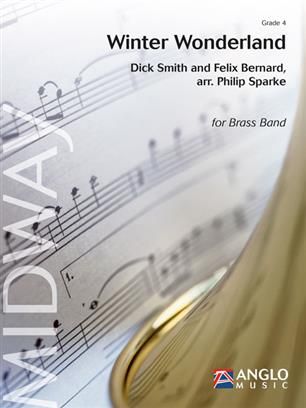
Winter Wonderland (Brass Band - Score and Parts)
This endearingly popular seasonal song has long been a Christmas favourite, even though the lyrics don't mention 'Christmas' at all. The words were by Dick Smith (1901-1935) and the music by Felix Bernard (1897-1944). The inspiration was reportedly a visit by Smith to Honesdale's (his hometown) Central Park when it was covered in snow.The first recording was made by Richard Himber's Ritz-Carlton Orchestra in 1934. The same year Guy Lombardo and his band, The Royal Canadians, took the song to number 2 in the US Billboard Chart, where it stayed for 9 weeks. It has since been recorded by over 150 artists, the most successful versions being by Perry Como and the Andrews Sisters, both released in 1946.
Estimated dispatch 7-14 working days
-
 £44.95
Judd: Symphonic Rhapsody for Euphonium
This is a developed solo in which lyrical and variation elements are contrasted and combine. The theme is an old song 'So we'll roll the old chariot along, and we don't drag on behind'.
Estimated dispatch 7-14 working days
-
 £94.95
Waiting for a Pain Hit!??!!? (Brass Band - Score and Parts)
Waiting For a Pain Hit!??!!? was written during November and December 2006 as an entry in the 2006/07 Swiss Brass Band Association Composers Competition. It was later chosen as the Championship Section set test piece for the 2010 Swiss National Brass Band Championships.The piece originates from sketches for a Brass Quintet which was written whilst I was in my second year of studies at the Royal Welsh College of Music and Drama. The piece, now being much more elaborate both musically and structurally than the original, aims to explore the many various textures available to a large brass ensemble. The aims of the piece, from its earliest stages, were mainly exploration of textures as well as dealing with issues of continuity and whilst the piece certainly contains challenging technical elements, they were not a driving force behind its inception and more organically grew from the primary aims of the piece. I was purposefully looking throughout the writing and editing process to create a piece of music with a seamless, ethereal quality to both the structure and the musical content.There are no 'performance directions' throughout the piece, the reasoning for this is explained below. However, I have spent much time and thought over the tempo markings throughout the piece and the tempos throughout the piece are the desired tempi and care should be taken with these. The tempo markings contained throughout the piece form a vital part of the structure and affect the continuity of the piece. Metronome marks contained within a box show the tempo of the new section in relation to the tempo that precedes it by use of metronome modulations. Any alterations to the tempo of the section that precedes it will alter the boxed metronome marks.The title of a piece of music, please forgive my generalisation, is to give an insight into 'what a piece is about'. I suppose that this piece is no different, but with the title being slightly abstract I shall resist the temptation to reveal what it means to me. The title, I feel, needs to be open to interpretation along with the music within. That's the way, with this piece especially, I like my music to be. Freedom to find our own meaning and a way to express it from within the score is vital. It is only then that the piece can take on its own identity and grow in ways that even I might not have imagined, revealing different sides to its personality with each performance.Before the music begins I have included some text. Do these words hold the key to the music?! Can they help??! I DON'T KNOW!!! I just like the rhythms, the pulse and the imagery. Hopefully, all of this can help to create a picture. But let it be your picture...- Paul McGhee, June 2010
Estimated dispatch 7-14 working days
-
 £32.50
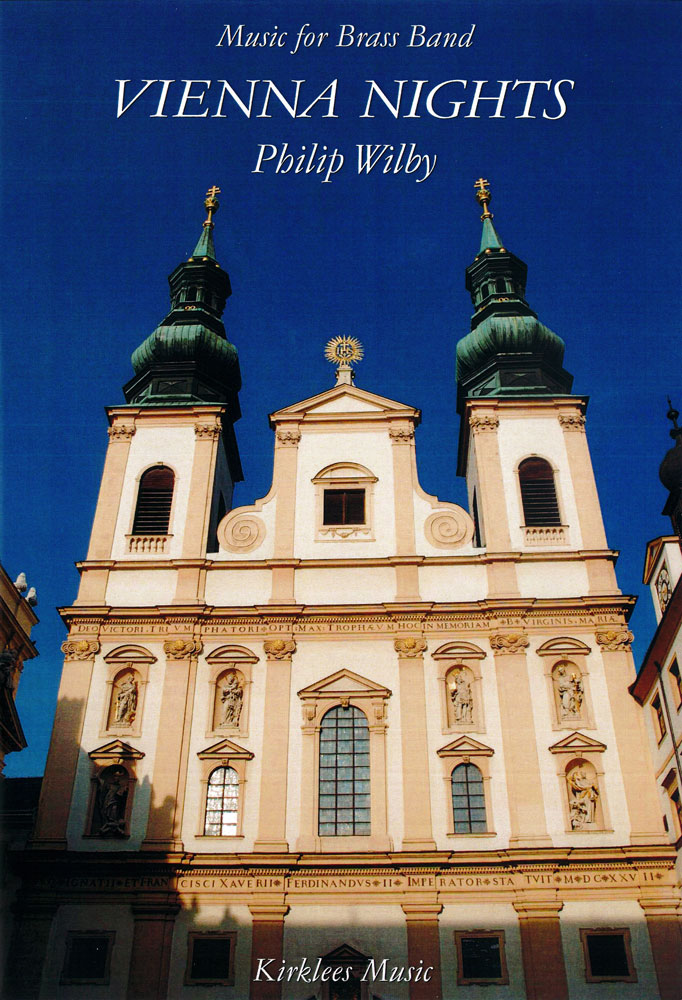
Vienna Nights (Score Only)
The City of Vienna stands at one of the historic crossroads of the world, linking east and west and embracing artistic influences from all sides. In the 250th anniversary year of Mozart's birth, this fantasy on Mozart's celebrated Piano Sonata in A (K331), has been composed true to the form and content of the original, but also to the underlying substance of the conception.One of Mozart's distinguishing features, and one that links him to later music by Beethoven, Schubert, Mahler and Schoenberg, is the breadth of his musical vision. His music links intellectual rigour with ecstatic utterance and darker preoccupations. It is, perhaps, this shadow-laden side of his musical nature which gives his work a profundity often absent in the work of his contemporaries. Admirers of his Requiem Mass or the Statue music in Don Giovanni will recognise that it is this extra sense of reality which makes Mozart so relevant to the modern age, and where he may link hands with the other great Viennese thinkers such as Berg, Webern and Adorno.The composer follows the three movement plan of the Sonata closely. The original begins with a Theme and Variations which is freely quoted. His Minuet is mirrored in the Recitative and Notturno, where each section of the band lays down a metaphoric rose to his memory. Famously, the sonata ends in populistic style with a Turkish Rondo. Ever since the Hapsburg-Ottoman Wars, which came to an end in the seventeenth century, Viennese composers have included Turkish elements in their music, not least in the use of certain percussion instruments. Vienna Nights is thusly a homage.It celebrates the world's greatest composer, but also the city which fostered his work. Here, in your imagination, you might easily conjure up a caf table near the Opera House, where Mozart, Mahler and Sigmund Freud, observed by us all from a discreet distance, may meet as old friends.
Estimated dispatch 7-14 working days
-
 £107.95
When Worlds Collide (Score and Parts)
Subtitled: Little Green Men in Intergalactic Spaceships with Ray-Guns and Phasers, A Space Symphony for Brass band. Written for the free choice test piece for Brass Band Buizingen for the Flemish Open Brass Band Championships. When Worlds Collide seeks to recreate the atmosphere and sentiment of the American cult Sci-Fi movies of the 1950's such as Robert Wise's 1951 film 'The day the Earth Stood Still' and 'Invasion of the Body Snatches' directed by Don Siegel in 1956, as well as Rudolph Mate's 1951 film 'When Worlds Collide'. It is programmatic with subtitled sub-sections as follows: Crop Circles; Lights in the Sky; Strange Happenings; Sightings; "We Come in Peace"; Alien Abduction; Analysis of the Earthlings; Teleportation; New Understandings; Visions of Far Off Worlds; Colonisation.
Estimated dispatch 7-14 working days