
Results
-
 £84.99
Convergents - Franco Cesarini
With Convergents Franco Cesarini has succeeded in composing a piece suitable for both concerts or contests which whilst not being too difficult still has the feel of a major work. This extremely rhythmical piece is built upon three themes which, after being introduced in turn, finally converge into the triumphal finale of the work. This scintillating workwill be a definite enrichment to the repertoire of your concert band.
Estimated dispatch 5-14 working days
-
£60.99
Laudatio - Bertrand Moren
This piece was commissioned by a brass band from the Jura in Switzerland to thank its resigning conductor for his loyalty and work. The first and last sections of this composition develop a joyful and highly energetic theme which expresses the complete commitment required of a conductor in order to get the best out of the musicians. The central passage mirrors an atmosphere full of nostalgia. After so many years of intense and relentless work, it is always difficult for a keen conductor to retire.
Estimated dispatch 5-14 working days
-
£42.50
The Lights of Europe - Harm Evers
The inspiration for The Lights of Europe was the continuous growth in unity throughout Europe. The march begins in the minor key (all beginnings are difficult) but unity is found and is clearly audible in the melodious trio of the march.
Estimated dispatch 5-14 working days
-
 £60.99
Only One Glimpse - Agathe Backer-Grøndahl - Tom Brevik
A gem from the Norwegian folk music. No difficult and complicated matter but music based on sounds and atmosphere. The melody is one of pure beauty and mystical characteristic of the tranquil scenery of Norway. Solo for 2 B-flat instruments. Een juweeltje uit de Noorse volksmuziek. Geen moeilijke, ingewikkelde materie maar muziek gebaseerd op klank en sfeer. De melodie is er een van pure schoonheid en karakteristiek voor het mystieke verstilde Noorse landschap. Solo voor 2 bes instrumenten.
Estimated dispatch 5-14 working days
-
 £54.99
Footprints - Jerry B. Bensman
Bring the house down with Jerry Bensman's sparkling Footprints. Everyone is, or at least feels, important in this simple but very effective march which works equally well on stage as on parade. Often a march does not have to be difficult to possess a thorougly pleasing 'full' sound. In understanding this, Jerry Bensman added a valuable repertoire-piece to the music available for youth-bands. In performing Footprints your beginning bandsmen take a major step forward in advancing their budding musical careers. Tip: Put the spotlights on your cymbals-player and make him (or her) the star of the evening.
Estimated dispatch 5-14 working days
-
 £44.10
Echo - Orlando di Lasso - Marleen Schipper
Here we have a rather easy piece with a grand effect. This 2 x 4 voice Renaissance piece was composed by Orlando di Lasso for double choir. It can be performed by two (half) bands or by a band and a quartet. The separate parts are not really difficult, yet the performance as a canon can cause some difficulties, but that's precisely the pedagogical characteristic of the piece.
Estimated dispatch 5-14 working days
-
 £83.60
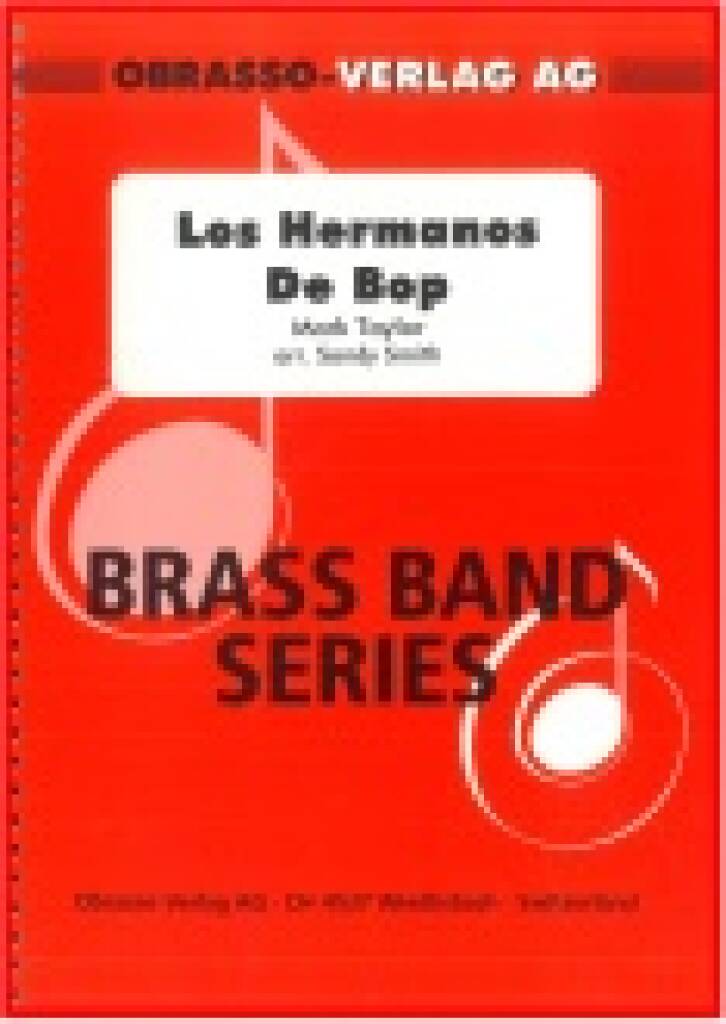
Los Hermanos de Bop - Mark Taylor - Sandy Smith
Los Hermanos De Bop is a composition by Mark Taylor (arr. Sandy Smith). In the Obrasso webshop are the Sheet Music for Brass Band with the article no. 16198 available. The sheet music is classified in Difficulty level C (medium). More Music for entertainment for Brass Band can be found using the flexible search function. Use the free trial score for Los Hermanos De Bop and get a musical impression from the audio samples and videos available for the Brass Band piece. With the user-friendly search function in the Obrasso webshop, you can find in just a few steps more sheet music from Mark Taylor for Brass Band. So that you can complete your concert program, show all music sheets can be displayed with one click on Music for entertainment in Difficulty level C (medium) . Los Hermanos De Bop is one of many brass music compositions that have been published by Musikverlag Obrasso. Next to Mark Taylor over 100 composers and arrangers work for the Swiss music publishing house. In addition to the notes for Brass Band you will also find literature in other formats such as Brass Band, Concert Band, Junior Band, Brass Ensemble, Woodwind Ensemble, Symphony Orchestra as well as CDs and Music Education. A large part of the publisher's own literature from top brass bands such as the Black Dyke Band, Cory Band, Brighouse & Rastrick Band or the Oberaargauer Brass Band was recorded on Obrasso Records. All sound carriers are also available digitally on the popular portals of Apple, Amazon, Google, Spotify and other providers worldwide. All Obrasso sheet music is produced on high quality paper. The slightly yellowish note paper offers a good contrast and is easy on the eyes in difficult lighting conditions. Delivery to private customers worldwide is free of shipping costs. Order your sheet music now directly from Obrasso Verlag.
Estimated dispatch 5-14 working days
-
 £19.95
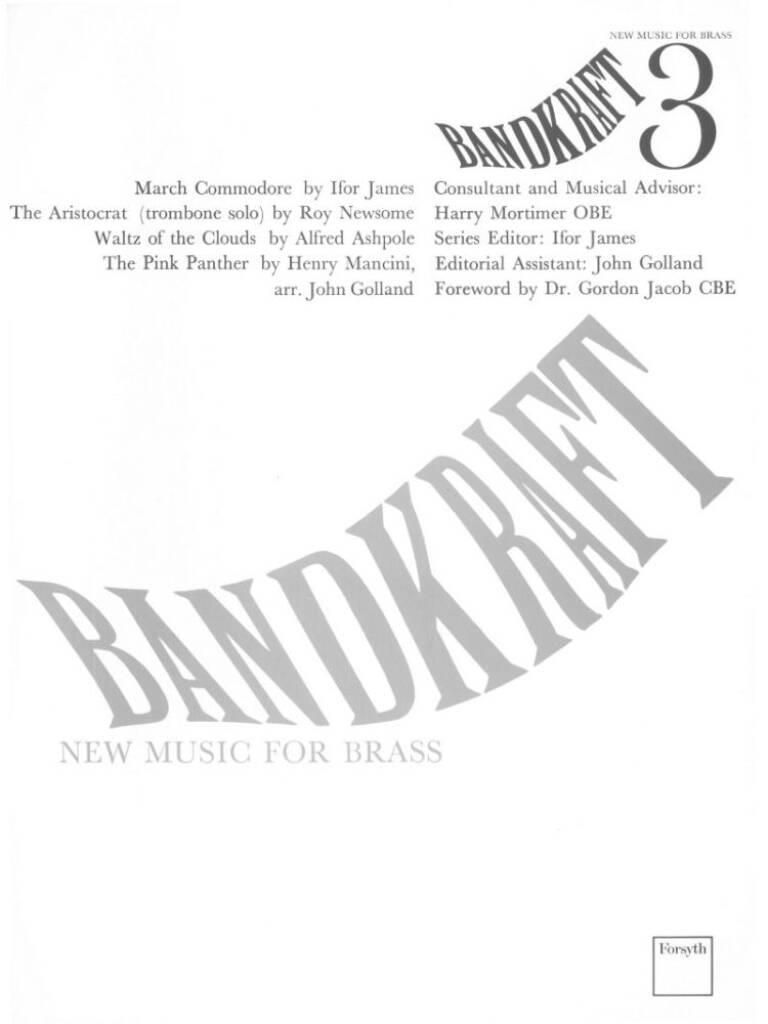
Bandkraft 3
The third of three superb sets of new music and arrangements for brass ensembles.March Commodore - Ifor James: A striking piece well suited for performance in concert or on the march.The Aristocrat - Roy Newsome: A not too difficult trombone solo, providing animated, musical fun for band and audience alike, and which gives the trombonist ample opportunity to play the fool.Waltz of the Clouds - Alfred Ashpole: A Viennese style waltz by a composer with unparalleled experience of writing for bands.Pink Panther - Mancini, arr. John Golland: The original Mancini Pink Panther translated for brass band. Watch out for his sneaky rhythms, which need proper dance band treatment.
Estimated dispatch 5-14 working days
-
 £54.99
Eine Kleine Morgenmusik - Bruce Fraser
An "unintended" play on words on the title of Mozart's famous composition forms the basis of this solo piece. It was composed in 2004 by the Scottish composer, Bruce Fraser, and features a solo for flugel or cornet. It is not a very difficult piece for both the soloist and the band, but is that always necessary? A lovely, highly recommended intermezzo for your concert.
Estimated dispatch 5-14 working days
-
 £52.70
Der Yid - Paul Voet
Jews in Eastern Europe always had their typical music. Links with gipsy music are never far away. Starting with 3 cadenzas, each for cornet, euphonium and tenorhorn the band has to deal with a difficult and very fast theme of 'Der yid in Yerusholayim'. Virtuosi horns, baritone and flugelhorn often answer the main theme by cornets and euphoniums. Quick drum patterns accompany the whole movement. Growing to a raging climax at the end all possible is asked from the bandsmen as to technique and endurance.
Estimated dispatch 5-14 working days
 View Music