
Results
-
 £154.99
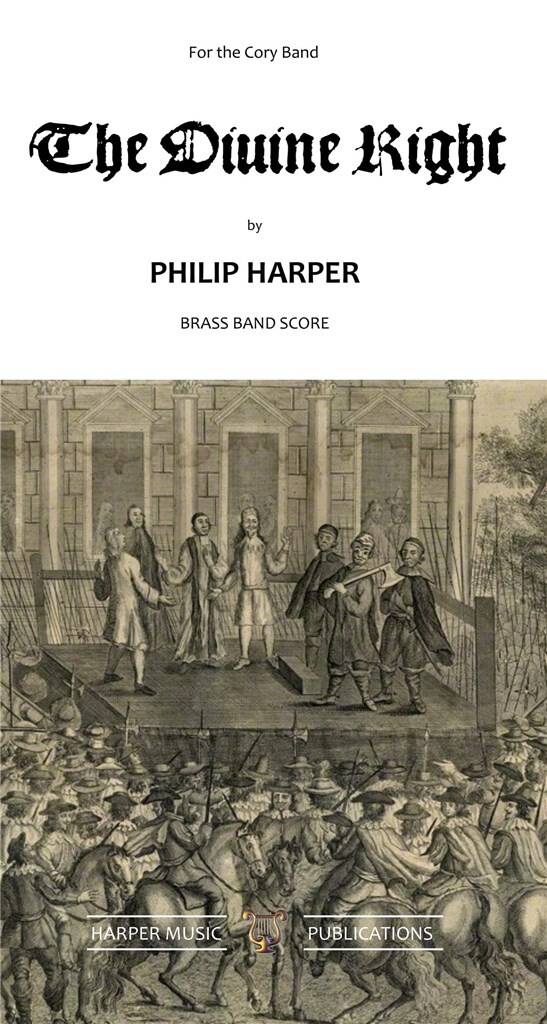
The Divine Right - Philip Harper
At the time of composing this piece, the Arab Spring was sweeping through the Middle East. It seemed that almost every week a new countrys people had risen up against the regimes and dictatorships which had prevailed for generations, leaving manynations at a defining crossroads in their history. There were so many possible ways ahead: so many hopes, yet so many uncertainties.My music is a depiction of these revolutionary times, and several musical themes are in turn presented, discussed, considered, fought over, altered, rejected or accepted. Most nations have had, or probably will have, their own Arab Spring, including my own, the United Kingdom. Events of 17th Century Britain provide the context for this piece, particularly those following the execution of the tyrant King Charles I on30 January 1649. The regicide was in part due to Charless steadfast belief in the Divine Right of Kings, and led to a tumultuous interregnum, where England stood at its own defining crossroads.The music begins turbulently, before King Charles appears and is led to the gallows outside Banqueting House in central London where he is brutally decapitated. From the assembled crowd rose, according to one observer, a moan as I never heard before and desire I may never hear again.The music descends to emptiness. The musical argument which follows is not strictly programmatic, but a number of musical themes are all thrown into the melting pot, representing ideas such as: religion; military force; reasoned Parliamentary debate; and the chattering,irrepressible voice of the people. Additionally, there are some quotations from the music of royalist composer Thomas Tomkins (1572-1656), who was often in tune with the feeling of the times. This defining episode in Englands history was brought to a close with the Restoration of the monarchy in 1660, and as the exiled King Charles II rode back into London the diarist John Evelyn wrote: Never was so joyful a day seen in this nation. I stood in the Strand and beheld it, and blessed God.At the end of the piece the bells ring out, and the musical appearance of the King has transformed from turbulent to triumphant. Philip Harper, 2013
Estimated dispatch 5-14 working days
-
 £78.20
The Rocketeer - James Horner - Roland Smeets
Before Titanic,James Horner was not above composing scores for cartoonish family films, and many of those that brought him on their production board owe him greatly. The Rocketeer entails the story of a young pilot during World War II who happens upon a rocket pack that allows him to fly. The film is based on the tradition of old film serials that left theater-goers hanging with "To be continued," and aside from modern production, it is old fashioned and innocent fun. Horner's score begins and ends with the brilliant "Main Title," which is so moving it was used in previews for later films that did not yet have finished scores. Most of th Rocketeersoundtrack elicits the adventure and lifting spirit of the film and reveals how Horner incorporates rich instrumentals in the tiniest crevices. Even when the film involves danger, as in "Jenny's Rescue," the composer takes care when it is hardly even required. Instead of some "duh-duh-duhs," he brings on a full, stunning orchestra and when he overdoes it, it is in a jolly way -- he never exhausts his medium. That is what separates him from inferior composers, and what makes a nice film like The Rocketeer extra nice. It is a soundtrack worth listening to.
Estimated dispatch 5-14 working days
-
 £64.99
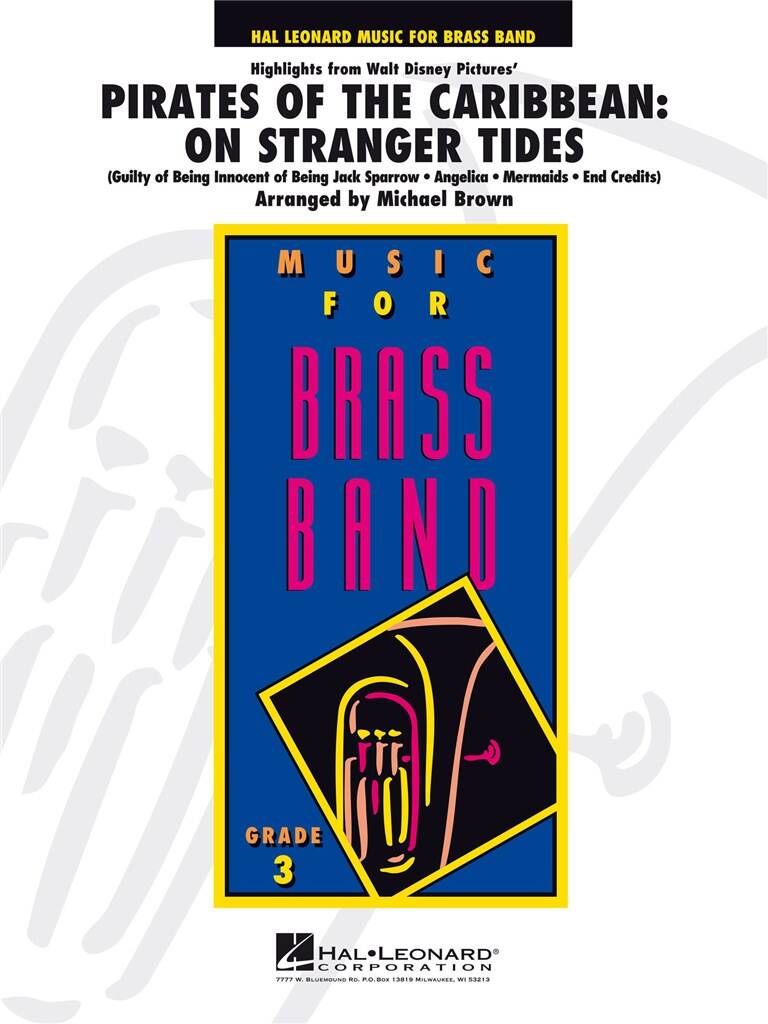
Pirates of the Caribbean - Hans Zimmer - Michael Brown
Johnny Depp and company are back at it with the fourth installment of the blockbuster movie franchise. The soundtrack by Hans Zimmer (in collaboration with noted choral and band composer Eric Whitacre) features familiar swashbuckling melodies along with new flamenco-inspired themes performed by the guitar duo Rodrigo y Gabriela. Your concert stage will come alive with this exciting and well-paced medley by Michael Brown. Medley of: Guilty of Being Innocent of Being Jack Sparrow, Angelica, Mermaids, End Credits
Estimated dispatch 5-14 working days
-
 £77.20
The Best of Andrew Lloyd Webber - Andrew Lloyd Webber - Henk Ummels
Once again Henk Ummels has succeeded to make a rich and full arrangement using only 5 voices. This time an arrangement of highlights from the biggest musical hits from the most well known musical composer of all time. It has been arranged for beginner bands, but also very suitable for lower level bands who want something fun and entertaining. Includes music from: The Phantom of the Opera, Jesus Christ Superstar, Cats, and Joseph and the Amazing Technicolour Dreamcoat.
Estimated dispatch 5-14 working days
-
£105.20
This is Halloween - Danny Elfman
This Is Halloween is a song by composer Danny Elfman from the 1993 film, "The Nightmare Before Christmas". In the movie it's performed by the residents of the fictional "Halloween Town", which is the films main setting, and introduces thetowns Halloween-centered lifestyle. Differently from the vast majority of Disney movies, in several countries The Nightmare Before Christmas was released only with subtitles, since the movie was originally considered to be "too dark and scary forkids", and was thus released as a film for adults.
Estimated dispatch 5-14 working days
-
 £107.80
Ragnarok Main Title - Magnus Torkehagen Beite - Reid Gilje
This is the main theme from the movie "Gaten Ragnarock" (2013) superbly composed by Norwegian composer Magnus Beite. The music is narrative with long, melodic lines combined with a rhythmic drive. This arrangement tries to capture the symphonic expression from the original orchestral score. There are several unison lines. Intonation, balance and phrasing are important to make these sounding as good as possible. Clear articulation in the rhythmic passages are also important. The piece is very evocative and may fit very well into any concert program.
Estimated dispatch 5-14 working days
-
 £92.20
I hop med Grieg - Marsj - Fredrick Schjelderup
Onwards with Grieg is a festive march commissioned by the Norwegian concert band, Skjold Nesttun Janitsjar, for their 115th anniversary in 2019.The famous Norwegian composer, Edvard Grieg (1843-1907), wanted a local band in his area and donated money for instruments so the band could establish in 1904.The march quotes some of Grieg's most famous works: Piano Concerto in A-minor, Triumphal March as well as his own signature interval.
Estimated dispatch 5-14 working days
-
 £127.30
Epilogue from La La Land - Justin Hurwitz - David Hveem
Epilogue is taken from the movie La La Land, released in 2016. La La Land won several important prizes that year, and especially the soundtrack written by American composer Justin Hurwitz received widely acclaim.Epilogue is a medley, presented in the original soundtrack, consisting of many of the most well-known themes from the movie.This arrangement was commissioned by Jaren Hornmusikkforening in 2018. The arranger has tried to transcribe the original music as closely as possible. However, some parts are slightly different from the piano-based original music. There are also some changes in keys to make the music more playable for brass band.The piece changes style and tempo often (as the original soundtrack), which requires good abilities for both flexibility and precision in the band.There are also several rhytmically demanding parts, as well as challenging parts for soloists.
Estimated dispatch 5-14 working days
-
£115.60
Speedy Dreams - Jerker Johansson
Speedy Dreams was premiered by Goteborg Wind Orchestra in 2013 with Fredrik Duvling as snare drum soloist. The composer Jerker Johansson is a percussionist himself, so through the years he has spent lots of time practising the snare drum. Theinspiration to the composition came to him in a dream, which was about yet another dream:On the evening of Christmas Eve a small child is trying to go to sleep. It is not so easy. Earlier in the day the child has got a small drum as aChristmas present. So instead of sleeping the child is fantasising about the new toy drum and how exciting it will be to learn how to play it.
Estimated dispatch 5-14 working days
-
 £29.95
A Little Prayer - Evelyn Glennie - Robert Childs
Originally composed for solo marimba, this popular version of A Little Prayer was made in 1998 following Evelyn Glennie's collaboration with Black Dyke Band during the recording of their Grammy nominated Reflected in Brass CD. Robert Childs, then principal euphonium with Black Dyke, requested Evelyn's permission to make the arrangement for his son, David. The composer obliged, and Robert presented the score and parts to his son as a seventeenth birthday present. Evelyn Glennie revealed: "When I wrote this chorale for marimba, it expressed my spiritual feelings and displayed a pleasantly relaxed dimension of the instrument. Over the years my exposure to brass bands has filled me with wonder; their musical diversity is considerable. I had no hesitation in giving A Little Prayer to Robert Childs to bring this little melody to life." Having composed the work when she was only 13, Evelyn continued: "As a child I would never have believed that such a short and simple piece of music, would come to grow this much. A little Prayerserves to prove that one should always bet their chips on what they believe in, for nine out of ten it will be worth it!" After twenty years of exclusivity, Prima Vista Musikk is proud to make this beautiful arrangement available to all. A Little Prayer provides the perfect reflective interlude for concert or devotional use by euphonium soloists and bands of all abilities.
Estimated dispatch 5-14 working days
 View Music