
Results
-
 £34.95
Choose Freedom (Brass Band - Score and Parts)
Choose Freedom is largely derived from the composers' own setting of Richard Slater's words, 'Yes, there flows a wondrous river' for SATB choir which was published in The Salvation Army's Choral Festival Series under the title 'The mighty river'.After many allusions to the song, it is eventually stated in full in the trio section. Downie's effective use of varying harmonic colours, unusual instrumental voicings and modal harmonies stand out in this rhythmically diverse march. There are quite a few loud passages in the march so conductors should savour the quieter ones!
Estimated dispatch 7-14 working days
-
 £73.00
Midwinter (Brass Band with Optional Choir - Score and Parts) - Vilhelmsen, Ingebjorg
This arrangement for full band can be performed both with and without choir. Midwinter is a Christmas song about how the holiday can be a highlight even in the darkest winters. The piece was originally written for brass quartet and choir, for Oslofjord Brass and Vivo Vokal's Christmas concert in 2019.If the piece is performed together with a choir, the dynamics of the band must be balanced with regard to the size of the choir, possibly using sound amplification if necessary.Choir Parts (SATB) available separately.Duration: 4.00
Estimated dispatch 7-14 working days
-
 £24.00
We Wish You a Merry Christmas (Choir with Brass Band - Score and Parts) - Wilkinson, Keith M.
This traditional carol is arranged for band and chorus with optional bell choir. It was designed - and has been used effectively in this way - as a short encore to a Christmas concert. It is possible to invite the audience to join the final chorus (letter C).The publisher permits the user to copy as many Choir and Bell Choir parts as necessary.
Estimated dispatch 7-14 working days
-
 £59.70
Ring Out Wild Bells (Choir with Brass Band - Score and Parts) - Fletcher, Percy - Smith, Sandy
A festival carol originally written for choir and organ, now available for your brass band with choir. 10 Choral Octavos are included in the set.
Estimated dispatch 7-14 working days
-
 £69.99
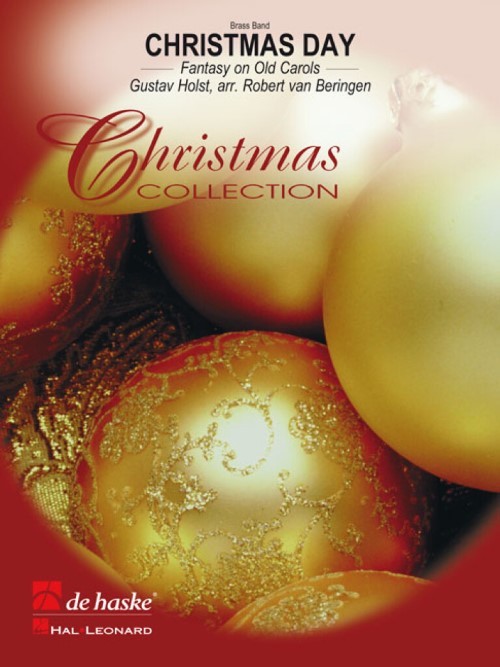
Christmas Day (Brass Band with Optional Choir - Score and Parts) - Holst, Gustav - Beringen, Robert van
Gustav Holst composed almost 200 works, one being a very elegant and charming fantasy on the old English christmas carols: Good Christian Men, Rejoice; God Rest You Merry, Gentlemen; Come Ye Lofty, Come and The First Nowell. The fantasy called Christmas Day was originally written for mixed choir with orchestra or organ accompaniment. Robert van Beringen has arranged this work for concert band exactly 100 years later. His arrangement can be performed as an instrumental piece or with a choir, making it suitable for any occasion.Duration: 5:45
Estimated dispatch 7-14 working days
-
 £60.99
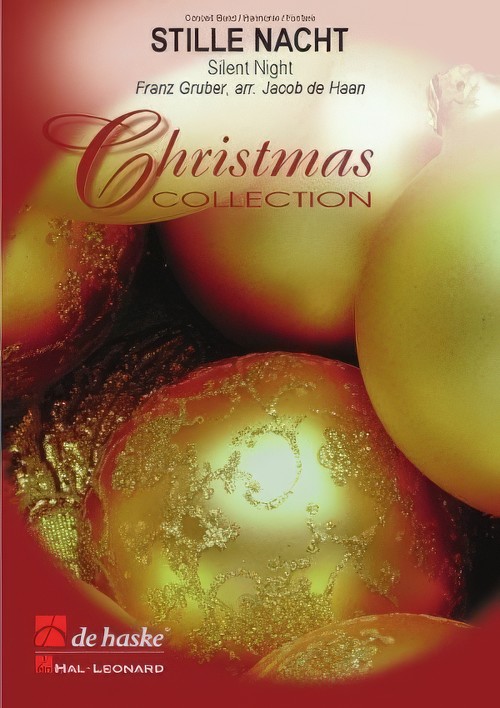
Stille Nacht (Silent Night) (Brass Band with Optional Male Voice Choir - Score and Parts) - Gruber, Franz - De Haan, Jacob
Jacob de Haan wrote this arrangement for concert band, fanfare band and brass band and optional male voice choir. The original carol was written by the Austrian composer and organist Franz Gruber (1787-1863). He was asked to write Silent Night) on the 24th of December 1818 by the priest of the Church of St. Nicolas in Oberndorf, who had himself written the text. It is a romantic carol, with nuances of contemporary Austrian folk and Italian pastorale music.Duration: 4:45
Estimated dispatch 7-14 working days
-
 £35.00
Carol of the Bells (Brass Band - Score and Parts) - Littlemore, Phillip
This popular Christmas piece was composed by Mykola Leontovych around 1916. It is based on a Ukrainian folk chant known as 'Shchedryk', a New Year's carol. However, it was not until after the composer's death in 1921 that it was first introduced to Western audiences, when the Ukrainian National Choir included it on their tour of Europe and the Americas that same year. The film composer John Williams incorporated it into the score for the 1990 film Home Alone and he is credited for bringing it to a wider audience still, although it had been released on Christmas albums by a number of popular artists before that. This transcription for brass band has been adapted from the arrangement by Robert Prizeman, who created it for Libera, the world famous boys choir that he both founded and directs. Their unique, enchanting and, some say, heavenly sound delights audiences throughout the world through extensive concerts, recording and TV broadcasts. This brass band transcription introduces this skilled choral arrangement to a new genre and a whole new audience as well. Duration: 3.00
Estimated dispatch 7-14 working days
-
 £139.99
Missa Brevis Brass Band (Score & Parts)
Missa Brevis is a major work for choir and brass band for performance in church or in the concert hall. For this mass, there are many performance possibilities depending on the musicians available. In addition to the standard orchestration of choir and band a brass quartet can also play the choral parts. For this it is desirable for the brass quartet to be positioned separately from the rest of the band (on a gallery, for example), so that the idea of two choirs is heard. It is also possible to perform the work with brass band and organ. A truly flexible religious masterpiece. 20:00
Estimated dispatch 7-14 working days
-
£74.95
SONG OF FREEDOM (Brass Band - Score and Parts) - Arnold, Malcolm
Children's Voices SA parts available separately. Op.109 Song of Freedom was commissioned by the National School Brass Band Association to commemorate the Association's 21st Anniversary. The first performance was given on 12th May 1973 at the Harlow Sportscentre by the Netteswell School Band and Choir, conducted on that occasion by the composer. The idea sprang out of a desire by the N.S.B.B.A. to mark it's 'coming of age' by bringing into being a work for chorus and Brass Band which was within the scope of an average School Band and Choir. The four movements are: Prelude; Hymn; Intermezzo; Postlude. Duration: 19:00
Estimated dispatch 7-14 working days
-
£37.95
SONG OF FREEDOM (Brass Band - Score only) - Arnold, Malcolm
Children's Voices SA parts available separately. Op.109 Song of Freedom was commissioned by the National School Brass Band Association to commemorate the Association's 21st Anniversary. The first performance was given on 12th May 1973 at the Harlow Sportscentre by the Netteswell School Band and Choir, conducted on that occasion by the composer. The idea sprang out of a desire by the N.S.B.B.A. to mark it's 'coming of age' by bringing into being a work for chorus and Brass Band which was within the scope of an average School Band and Choir. The four movements are: Prelude; Hymn; Intermezzo; Postlude. Duration: 19:00
Estimated dispatch 7-14 working days
 View Music