
Results
-
 £60.99
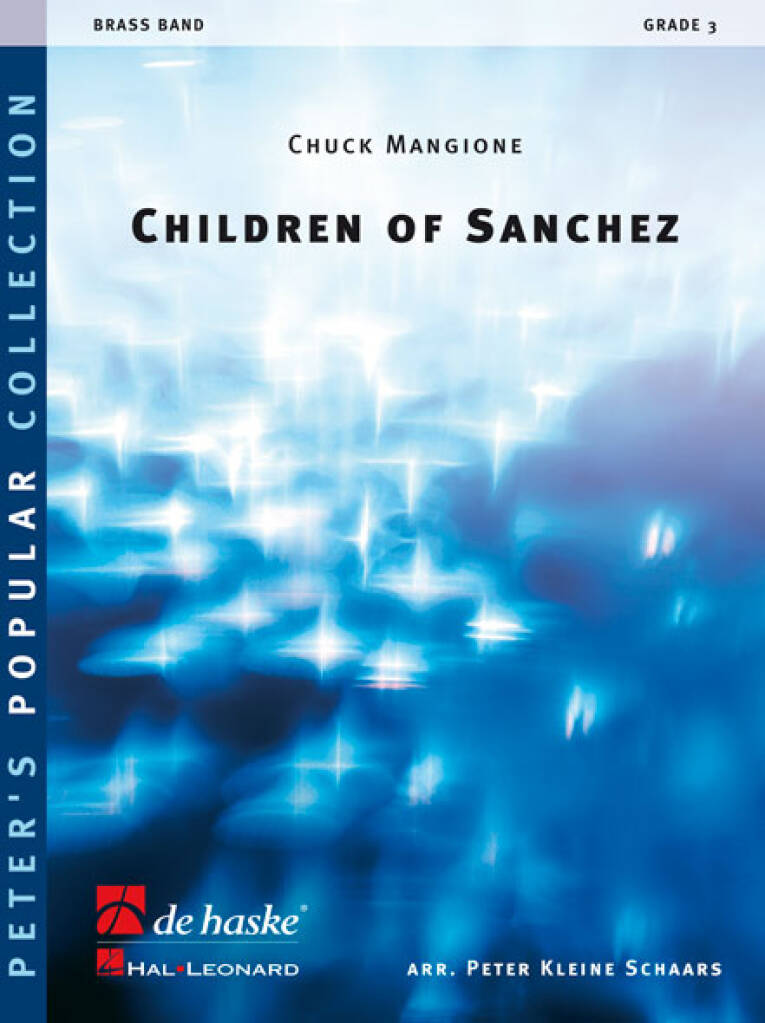
Children of Sanchez - Chuck Mangione - Peter Kleine Schaars
The title track to the film of the same name was originally composed by Chuck Mangione. The well-known melody helped make this 1970's jazz and pop legend so famous and popular. Peter Kleine Schaars skillfully transforms this classic film theme into an excellent arrangement for concert band featuring the fl ute and trumpet.
Estimated dispatch 5-14 working days
-
 £29.50
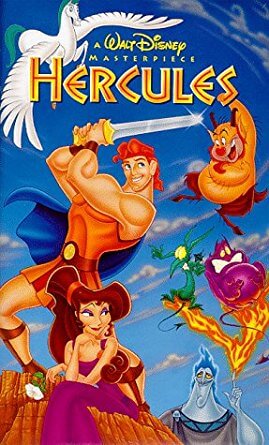
I Wont Say (I'm In Love) - Alan Menken - Richard Rock
A great piece to give the horn players of your band something to get stuck into. Music from the animated Disney film "Hercules" is based upon the Greek mythology (albeit, slightly altered to be suitable for children!) telling the story of Hercules. This piece is sung by Meg as she realizes she is falling in love with him. The music for the film by composer Alan Menken was nominated for an Academy award, however sadly, was released at the same time at "Titanic" where James Horner's score won instead. Now arranged by Richard Rock as a grand feature for your bands horn section, pleasing to play and to listen too.
In Stock: Estimated dispatch 1-3 working days
-
 £79.95
Neverland - Christopher Bond
"All children, except one, grow up" wrote J.M. Barrie about Peter Pan in 1911; the first line and an expression of beautiful melancholy and fantasy, coming to represent one of the best-loved children's stories of the twentieth century. 'Peter & Wendy', as the book was first released, has subsequently been transformed into adaptations for film and stage, with subsequent books based on this iconic tale. In writing this new work for brass band, the composer has taken three of the main themes from J. M. Barrie's book, and used these themes to create new musical material, forming a work in three contrasting sections. I. Journey to Neverland The opening of the work, mysterious in its style, reflects the opening chapters of the story - a leafy London street, still in the dead of night - with the music transforming quickly as it builds in texture and momentum - a Journey to Neverland through the night sky; Second Star to the Right and straight on 'til morning. "Then Peter knew that there was not a moment to lose. 'Come,' he cried imperiously, and soared out at once into the night, followed by John and Michael and Wendy. Mr & Mrs Darling and Nana rushed into the nursery too late. The birds were flown." II. The Windows that Closed The central section of the work takes its inspiration from the sense of longing throughout the book, mainly by Peter Pan, the Darling Children & The Lost Boys. Distant memories of life before Neverland, memories of the Lost Boys' mothers, and regret at what the children have missed. Peter says "Long ago, I thought like you that my mother would always keep the window open for me; so I stayed away for moons and moons and moons, and then flew back; but the window was barred, for mother had forgotten all about me, and there was another little boy sleeping in my bed." III. Aboard the Pirate Ship The final section of the work takes its inspiration from the Pirate Ship, and Peter Pan's ultimate battle with its infamous Captain Hook. "In person, he was cadaverous and blackavized, and his hair was dressed in long curls, which at a distance looked like black candles, and gave a singularly threatening expression to his handsome countenance. His eyes were the blue of the forget-me-not, and of a profound melancholy, save when he was plunging his hook into you, at which time two red spots appeared in them and lit them up horribly."
Estimated dispatch 10-14 working days
-
 £95.00
A Wartime Sketchbook (Brass Band - Score and Parts)
Early in 1941 William Walton, 39, received his call-up papers. He was by then one of the most eminent of British composers and was exempted from military service on condition that he provided music for films deemed to be of 'national importance'. Scoring Lawrence Olivier's Shakespeare epic Henry V in 1943 was the most substantial of these wartime projects. His role in patriotic films from 1941 and 42 like The Foreman went to France, Next of Kin, Went the day Well and The First of the Few was to provide appropriate title music and some underscoring at key moments. Walton extracted the most substantial portions of the latter as the popular Spitfire Prelude and Fugue for orchestra. The remaining music remained unpublished until 1990, when Christopher Palmer assembled the highlights into A Wartime Sketchbook. I was intrigued to hear these examples of Walton's wartime music and having discovered that they would fit naturally and idiomatically onto the brass band, I arranged six of the numbers into a suite for Besses o' th' Barn Band, which I was conducting at the time.In 1995 the brass band suite was recorded by the famous Black Dyke Mills Band as part of an all Walton album which I produced for the ASV label (ASV CD WHL 2093). This award- winning CD also included Walton's First Shoot, in the edition by Elgar Howarth, my transcription of movements from Music for Children and two substantial brass versions by Edward Watson of the suite from Henry V (with narrator) and the March and Siegfried Music from The Battle of Britain music.Prologue: This is the stirring title music from Went the day Well, a screen play by Graham Greene about a German airborne invasion of an English village. The main theme leads toBicycle Chase: Characteristic musical high-jinks for J.B.Priestley's The Foreman went to France.Refugees: From the same film, this is a poignant accompaniment to the long march of refugees. As Ernest Irving, the film's musical director, put it, "this really makes your feet sore and your knees sag."Young Siegfrieds: This lively movement comes from the music that Walton composed for The Battle of Britain in 1968, with the assistance of Malcolm Arnold, but which the film's producer rejected. It portrays first the Berliners, cheerfully ignoring the black-out and then, in the trio, the Young Siegfrieds of the Luftwaffe, courtesy of a parody of Siegfried's horn call from Wagner's opera.Romance: A soldier and a Dutch refugee snatch a few tender moments together in Next of Kin.Epilogue: At the end of The Foreman went to France, the French look forward with hope and optimism to eventual liberation.- Paul HindmarshDuration: 14.00
Estimated dispatch 7-14 working days
-
£40.00
A Wartime Sketchbook (Brass Band - Score only)
Early in 1941 William Walton, 39, received his call-up papers. He was by then one of the most eminent of British composers and was exempted from military service on condition that he provided music for films deemed to be of 'national importance'. Scoring Lawrence Olivier's Shakespeare epic Henry V in 1943 was the most substantial of these wartime projects. His role in patriotic films from 1941 and 42 like The Foreman went to France, Next of Kin, Went the day Well and The First of the Few was to provide appropriate title music and some underscoring at key moments. Walton extracted the most substantial portions of the latter as the popular Spitfire Prelude and Fugue for orchestra. The remaining music remained unpublished until 1990, when Christopher Palmer assembled the highlights into A Wartime Sketchbook. I was intrigued to hear these examples of Walton's wartime music and having discovered that they would fit naturally and idiomatically onto the brass band, I arranged six of the numbers into a suite for Besses o' th' Barn Band, which I was conducting at the time.In 1995 the brass band suite was recorded by the famous Black Dyke Mills Band as part of an all Walton album which I produced for the ASV label (ASV CD WHL 2093). This award- winning CD also included Walton's First Shoot, in the edition by Elgar Howarth, my transcription of movements from Music for Children and two substantial brass versions by Edward Watson of the suite from Henry V (with narrator) and the March and Siegfried Music from The Battle of Britain music.Prologue: This is the stirring title music from Went the day Well, a screen play by Graham Greene about a German airborne invasion of an English village. The main theme leads toBicycle Chase: Characteristic musical high-jinks for J.B.Priestley's The Foreman went to France.Refugees: From the same film, this is a poignant accompaniment to the long march of refugees. As Ernest Irving, the film's musical director, put it, "this really makes your feet sore and your knees sag."Young Siegfrieds: This lively movement comes from the music that Walton composed for The Battle of Britain in 1968, with the assistance of Malcolm Arnold, but which the film's producer rejected. It portrays first the Berliners, cheerfully ignoring the black-out and then, in the trio, the Young Siegfrieds of the Luftwaffe, courtesy of a parody of Siegfried's horn call from Wagner's opera.Romance: A soldier and a Dutch refugee snatch a few tender moments together in Next of Kin.Epilogue: At the end of The Foreman went to France, the French look forward with hope and optimism to eventual liberation.- Paul HindmarshDuration: 14.00
Estimated dispatch 7-14 working days
-
 £30.00
KirkFeld - Grant Kirkhope
Grant Kirkhope is a BAFTA nominated British composer who has created the soundtrack for video games that have sold in excess of 30 million copies. From "GoldenEye" to "Banjo-Kazooie", "Viva Pinata" to "Donkey Kong", "Kingdoms of Amalur: Reckoning" to "Civilization: Beyond Earth" and "Perfect Dark" to "Castle of Illusion starring Mickey Mouse". He has also recently scored the feature film "The King's Daughter" starring Pierce Brosnan and William Hurt and is currently working on "Yooka Laylee" and "Dropzone". Grant's score for "Viva Pinata" was nominated by BAFTA in the Original Score category in its 2007 awards. Grant is represented by the prestigious Gorfaine/Schwartz Agency by Cheryl Tiano and Kevin Korn. Grant has a degree in music from the Royal Northern College of Music, Manchester, where he majored in classical trumpet, is a green card holder and now lives in Agoura Hills, LA with his wife and two children.
-
 £46.00
Hymns at Heaven's Gate (Score only) - Elgar Howarth
A flourish: a crowd assembles at the gate of Heaven, saints and sinners. As in a film the immensity of the crowd is illustrated, and the camera zooms to focus onparticular groups and individuals. Monks sing a 'medieval' hymn, interrupted by the fanfares of mischievous seraphim; gradually the whole crown join in. The fanfares grow wilder, and grubby, naughty children enter, singing mock fanfares, making jazzy gestures and trying to sing a chirldren's hymn. They are joined by roughnecks who take up the fanfare idea. The camera zooms again at the entrance of Jesus. A commanding flourish causes consternation. Separate groups react, interrupted by mysterious percussion effects. Then, as the whole panorama explodes in sound, William Booth (founder of the Salvation Army) approaches awestruck. A triple Alleluia is followed by the third hymnand further Alleluias. A dance finale begins using material from the whole piece. A tumultuous climax preceds sudden quiet Alleluias, and the crown exits into Heaven to the music of the monks, reharmonised and transformed. The camera shots extend to the heavens and the stars. Duration: 15:00
Estimated dispatch 7-9 working days
-
 £58.00
Hymns at Heaven's Gate (Parts only) - Elgar Howarth
A flourish: a crowd assembles at the gate of Heaven, saints and sinners. As in a film the immensity of the crowd is illustrated, and the camera zooms to focus onparticular groups and individuals. Monks sing a 'medieval' hymn, interrupted by the fanfares of mischievous seraphim; gradually the whole crown join in. The fanfares grow wilder, and grubby, naughty children enter, singing mock fanfares, making jazzy gestures and trying to sing a chirldren's hymn. They are joined by roughnecks who take up the fanfare idea. The camera zooms again at the entrance of Jesus. A commanding flourish causes consternation. Separate groups react, interrupted by mysterious percussion effects. Then, as the whole panorama explodes in sound, William Booth (founder of the Salvation Army) approaches awestruck. A triple Alleluia is followed by the third hymnand further Alleluias. A dance finale begins using material from the whole piece. A tumultuous climax preceds sudden quiet Alleluias, and the crown exits into Heaven to the music of the monks, reharmonised and transformed. The camera shots extend to the heavens and the stars. Duration: 15:00
Estimated dispatch 7-9 working days
-
 £95.00
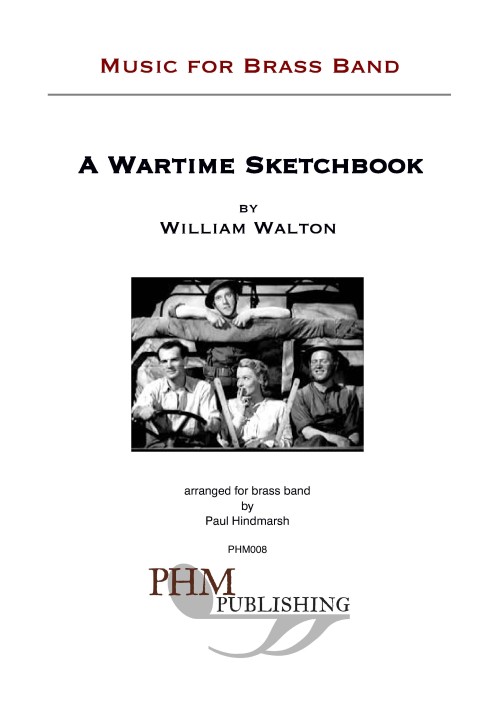
A Wartime Sketchbook (Brass Band - Score and Parts) - Walton, William - Hindmarsh, Paul
Early in 1941 William Walton, 39, received his call-up papers. He was by then one of the most eminent of British composers and was exempted from military service on condition that he provided music for films deemed to be of 'national importance'. Scoring Lawrence Olivier's Shakespeare epic Henry V in 1943 was the most substantial of these wartime projects. His role in patriotic films from 1941 and 42 like The Foreman went to France, Next of Kin, Went the day Well and The First of the Few was to provide appropriate title music and some underscoring at key moments. Walton extracted the most substantial portions of the latter as the popular Spitfire Prelude and Fugue for orchestra. The remaining music remained unpublished until 1990, when Christopher Palmer assembled the highlights into A Wartime Sketchbook. I was intrigued to hear these examples of Walton's wartime music and having discovered that they would fit naturally and idiomatically onto the brass band, I arranged six of the numbers into a suite for Besses o' th' Barn Band, which I was conducting at the time.In 1995 the brass band suite was recorded by the famous Black Dyke Mills Band as part of an all Walton album which I produced for the ASV label (ASV CD WHL 2093). This award- winning CD also included Walton's First Shoot, in the edition by Elgar Howarth, my transcription of movements from Music for Children and two substantial brass versions by Edward Watson of the suite from Henry V (with narrator) and the March and Siegfried Music from The Battle of Britain music.Prologue: This is the stirring title music from Went the day Well, a screen play by Graham Greene about a German airborne invasion of an English village. The main theme leads toBicycle Chase: Characteristic musical high-jinks for J.B.Priestley's The Foreman went to France.Refugees: From the same film, this is a poignant accompaniment to the long march of refugees. As Ernest Irving, the film's musical director, put it, "this really makes your feet sore and your knees sag."Young Siegfrieds: This lively movement comes from the music that Walton composed for The Battle of Britain in 1968, with the assistance of Malcolm Arnold, but which the film's producer rejected. It portrays first the Berliners, cheerfully ignoring the black-out and then, in the trio, the Young Siegfrieds of the Luftwaffe, courtesy of a parody of Siegfried's horn call from Wagner's opera.Romance: A soldier and a Dutch refugee snatch a few tender moments together in Next of Kin.Epilogue: At the end of The Foreman went to France, the French look forward with hope and optimism to eventual liberation.- Paul HindmarshDuration: 14.00
Estimated dispatch 7-14 working days
-
£40.00
A Wartime Sketchbook (Brass Band - Score only) - Walton, William - Hindmarsh, Paul
Early in 1941 William Walton, 39, received his call-up papers. He was by then one of the most eminent of British composers and was exempted from military service on condition that he provided music for films deemed to be of 'national importance'. Scoring Lawrence Olivier's Shakespeare epic Henry V in 1943 was the most substantial of these wartime projects. His role in patriotic films from 1941 and 42 like The Foreman went to France, Next of Kin, Went the day Well and The First of the Few was to provide appropriate title music and some underscoring at key moments. Walton extracted the most substantial portions of the latter as the popular Spitfire Prelude and Fugue for orchestra. The remaining music remained unpublished until 1990, when Christopher Palmer assembled the highlights into A Wartime Sketchbook. I was intrigued to hear these examples of Walton's wartime music and having discovered that they would fit naturally and idiomatically onto the brass band, I arranged six of the numbers into a suite for Besses o' th' Barn Band, which I was conducting at the time.In 1995 the brass band suite was recorded by the famous Black Dyke Mills Band as part of an all Walton album which I produced for the ASV label (ASV CD WHL 2093). This award- winning CD also included Walton's First Shoot, in the edition by Elgar Howarth, my transcription of movements from Music for Children and two substantial brass versions by Edward Watson of the suite from Henry V (with narrator) and the March and Siegfried Music from The Battle of Britain music.Prologue: This is the stirring title music from Went the day Well, a screen play by Graham Greene about a German airborne invasion of an English village. The main theme leads toBicycle Chase: Characteristic musical high-jinks for J.B.Priestley's The Foreman went to France.Refugees: From the same film, this is a poignant accompaniment to the long march of refugees. As Ernest Irving, the film's musical director, put it, "this really makes your feet sore and your knees sag."Young Siegfrieds: This lively movement comes from the music that Walton composed for The Battle of Britain in 1968, with the assistance of Malcolm Arnold, but which the film's producer rejected. It portrays first the Berliners, cheerfully ignoring the black-out and then, in the trio, the Young Siegfrieds of the Luftwaffe, courtesy of a parody of Siegfried's horn call from Wagner's opera.Romance: A soldier and a Dutch refugee snatch a few tender moments together in Next of Kin.Epilogue: At the end of The Foreman went to France, the French look forward with hope and optimism to eventual liberation.- Paul HindmarshDuration: 14.00
Estimated dispatch 7-14 working days
 View Music