
Results
-
£54.99
Yesterday - John Lennon - Ben Haemhouts
This song is of course one of the most famous ballads of all time. The pure simplicity of the melody is precisely what makes this number so unforgettable. Ben Haemhouts has made an arrangement that can be played by every orchestra and every soloist, and by different instruments. The arranger also played this gem himself on the "I've Got the Music" CD, with the band that he played with for 10 years.
Estimated dispatch 5-14 working days
-
£60.99
Centennial Prelude - Jan Van der Roost
This short opening music was composed on commission of the symphonic band of Jan Van der Roost's village (= Kontich near Antwerp / Belgium). In 1991, this community band celebrated its 100th anniversary. After composing commissioned pieces from different countries (even from Japan), this was the most 'near' commission he ever received indeed!It is a short but varied piece, featuring all sections of the band. After a short introduction, played by the brass instruments, a crisp rhythm starts and boxes the main theme. After a second theme, played by brass and percussion, a short melodical passage brings some 'rest'. At the end, the fanfare of the introductionreoccurs.Although this "Centennial Prelude" isn't a really demanding piece, it sounds colourful and energetic. It has been recorded on CD by the band of the 'Royal Dutch Airforce' and the 'Desford Colliery Brass band'.
Estimated dispatch 5-14 working days
-
 £76.99
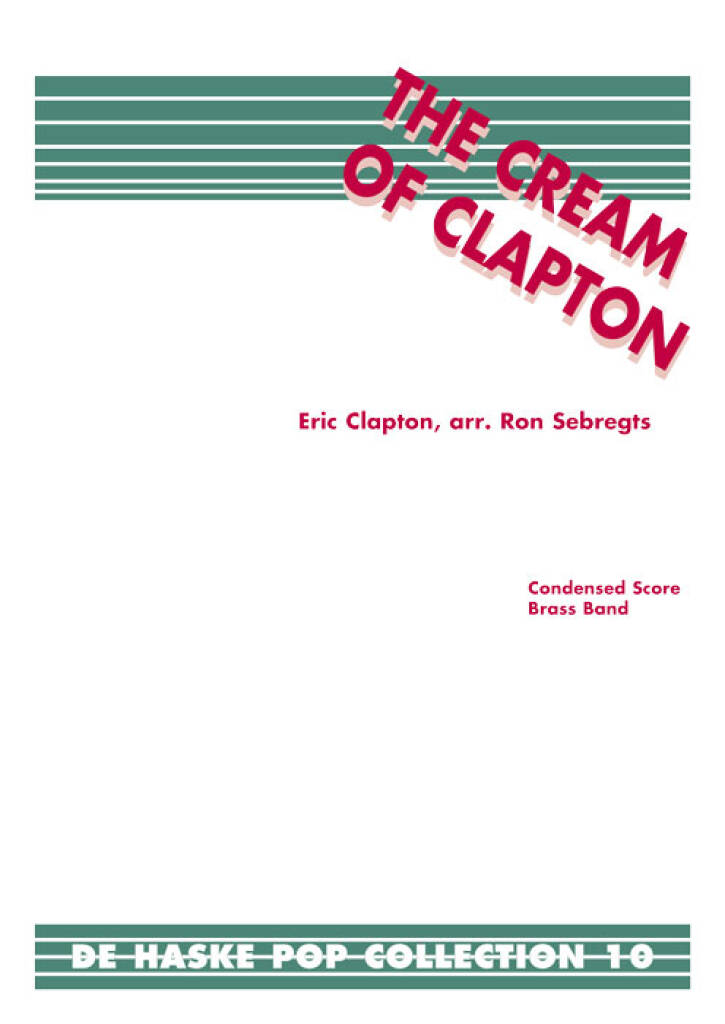
The Cream of Clapton - Eric Clapton - Ron Sebregts
Eric Clapton's CD Unplugged is one of the top-selling albums of all time. The collection of hits inspired Ron Sebregts to create the medley The Cream of Clapton. It consists of Sebregts favourite songs by this legendary blues and rock guitarrist, singer and songwriter. This medley is guaranteed to be an audience and band favorite for many years to come!
Estimated dispatch 5-14 working days
-
 £55.00
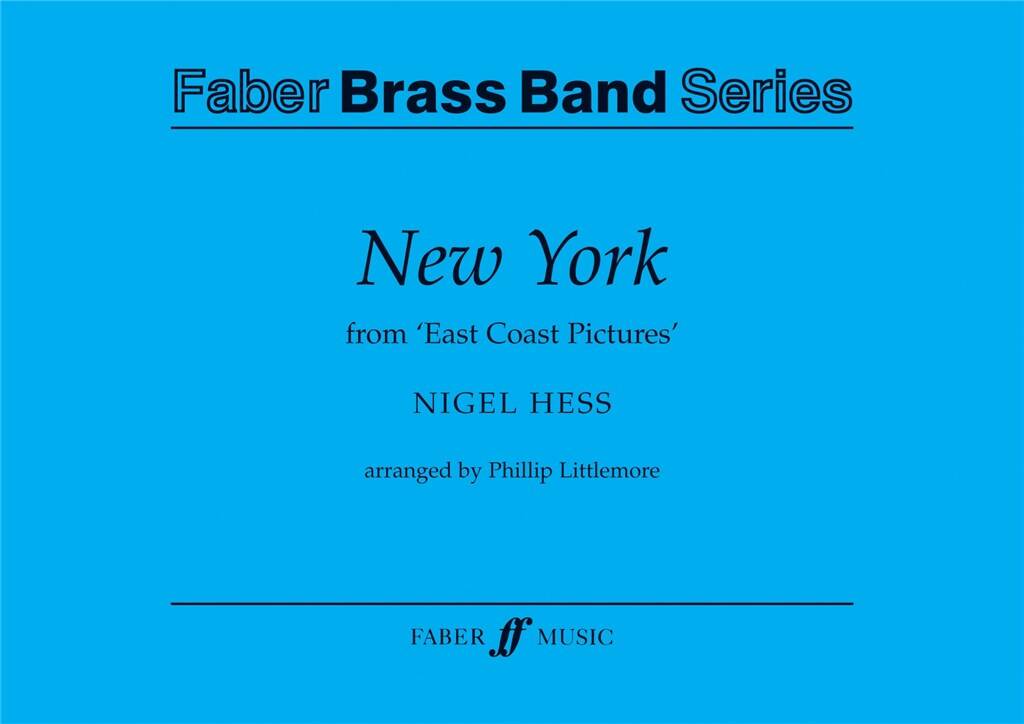
New York. - Nigel Hess
'New York'... or to be more precise, Manhattan. For anyone who is familiar with this bizarre and wonderful city, this piece needs no explanation. This brass band transcription has been made by Phillip Littlemore and provides adriving and punchy 4 minute work for brass band. 'New York' is the third movement of 'East Coast Pictures', originally written for wind band, commissioned in 1985 by the British Youth Wind Orchestra with funds from NationalWestminster Bank plc. These three short 'pictures' were inspired by several visits by the composer to a small part of the USA's East Coast, an area that provides great extremes in the geography and thepeople.This work has recently been recorded on the CD 'East Coast Pictures' by the Leyland Band, conducted by Michael Fowles, and is available from this site (catalogue number: 0-571-52109-6).
Estimated dispatch 5-14 working days
-
 £95.00
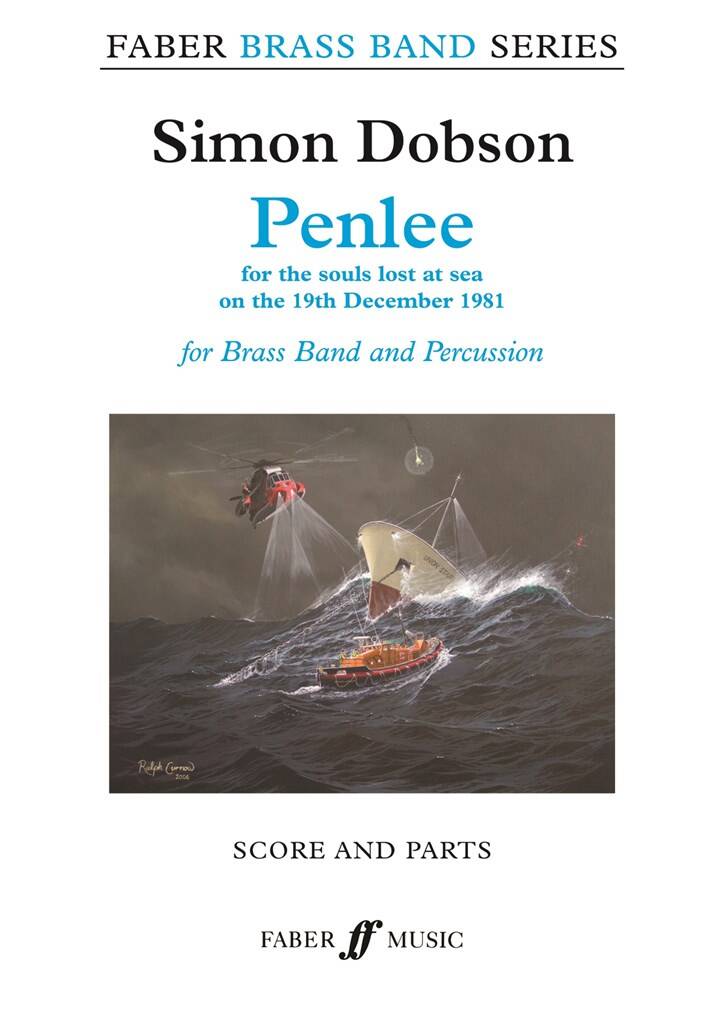
Penlee - Simon Dobson
To some, the tragic story of the Penlee lifeboat, Solomon Browne, would need no introduction, and to some the pain felt is still very much a reality. The composer, born just a few weeks before that fateful night on the19th December 1981, has created this work as a musical homage to the bravery of the souls who lost their lives and has dedicated it to their memory. Penlee was commissioned by the Cornwall Youth BrassBand using funds bequeathed by Michael Pickett. The first performance was given by the Cornish Youth Brass Band, conducted by Ian Porthouse, at St. Michael's Church, Newquay, on 30th December 2008.Penleehas been voted into the Classic FM Hall of Fame 2011 at No.106. Not only is it the first time a brass work has been featured in the Hall of Fame, but it was also thehighest new entry. The work has subsequently been recorded by the Leyland Band, conducted by Jason Katsikaris, on the CD entitled Penlee.Brass Band Grade 4: Advanced Youth and 3rd Section Duration: 13 minutes
Estimated dispatch 5-14 working days
-
 £29.95
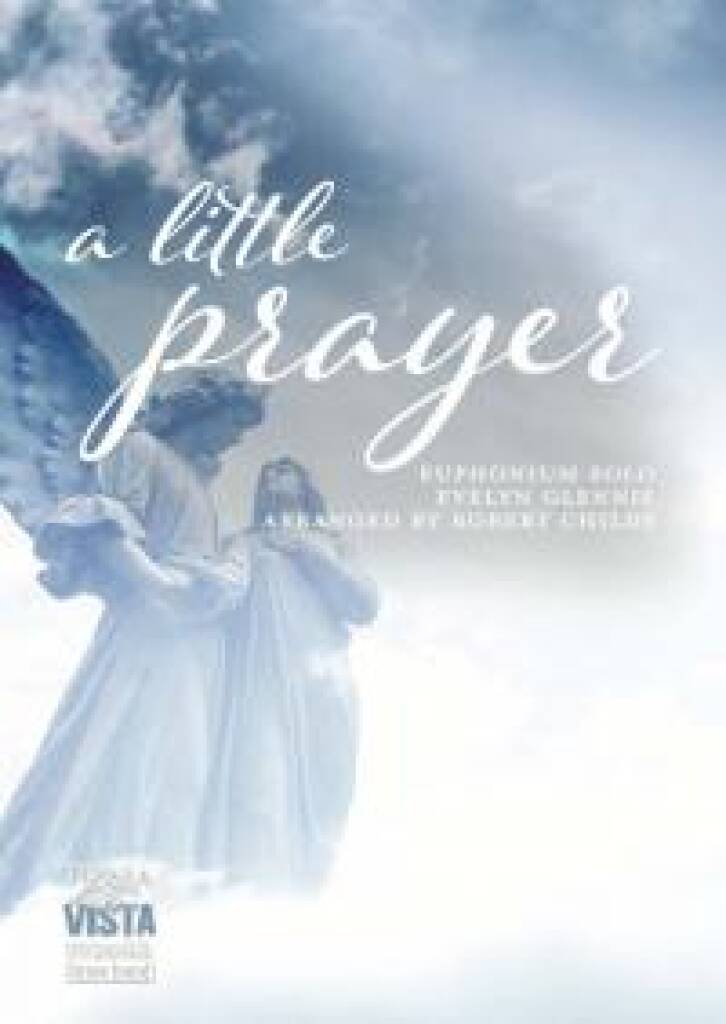
A Little Prayer - Evelyn Glennie - Robert Childs
Originally composed for solo marimba, this popular version of A Little Prayer was made in 1998 following Evelyn Glennie's collaboration with Black Dyke Band during the recording of their Grammy nominated Reflected in Brass CD. Robert Childs, then principal euphonium with Black Dyke, requested Evelyn's permission to make the arrangement for his son, David. The composer obliged, and Robert presented the score and parts to his son as a seventeenth birthday present. Evelyn Glennie revealed: "When I wrote this chorale for marimba, it expressed my spiritual feelings and displayed a pleasantly relaxed dimension of the instrument. Over the years my exposure to brass bands has filled me with wonder; their musical diversity is considerable. I had no hesitation in giving A Little Prayer to Robert Childs to bring this little melody to life." Having composed the work when she was only 13, Evelyn continued: "As a child I would never have believed that such a short and simple piece of music, would come to grow this much. A little Prayerserves to prove that one should always bet their chips on what they believe in, for nine out of ten it will be worth it!" After twenty years of exclusivity, Prima Vista Musikk is proud to make this beautiful arrangement available to all. A Little Prayer provides the perfect reflective interlude for concert or devotional use by euphonium soloists and bands of all abilities.
Estimated dispatch 5-14 working days
-
 £55.00
The Dreaded Groove and Hook - Simon Dobson
The Dreaded Groove and Hook is an up-tempo acid-jazz number that draws inspiration from bands like Jamiroquai and The Youngblood Brass Band. The groove in question is the main tune that is shared round theband, whilst the hook, in 'pop' terms, is the catchy bit of the song. The whole band joins in to play a huge 'riff' that acts as a chorus to the jazz-like verses. The piece was commissioned by JasonKatsikaris and The Leyland Band, who gave the first performance as part of their programme for the Brass In Concert Championships, held at The Sage, Gateshead on the 16th November 2008. It has now been recorded by the same bandandconductor on the CD entitled Penlee.Brass Band Grade 5: 1st SectionDuration: 4 minutes
Estimated dispatch 5-14 working days
-
 £86.70
Mr. Bojangles - Jerry Jeff Walker - Henk Ummels
'Mr. Bojangles' is a popular song written and initially recorded by Jerry Jeff Walker in 1968 and covered since by many other artists. The song was inspired by an encounter with a street performer in the New Orleans first precinct jail. Although this man could tap dance, the inspiration for the song was the famous stage and movie dancer Bill 'Bojangles' Robinson. Robbie Williams recorded it on it's bigband CD 'Swing When You're Winning'.
Estimated dispatch 5-14 working days
-
 £25.95
Heed the Word - Lucy Pankhurst
Lucy Pankhurst created this impressive work in support of a charitable project, known in 2005 as Brass Band Aid. The organisation called for original compositions to be included in a follow-up CD release - Into Africa to help raise funds for projects in Adet, Africa, and to build awareness of the Make Poverty History campaign.Lucy's creativity and imagination are very prevalent in this work - a complete mix of powerful energy and poignant emotions flow from the score. A strong use of pulsating drums are balanced with sheer tranquility and rich chords. It exudes hope and positivity and perhaps, through its title, offers a gentle warning to listen carefully to the concerns that are aired around us - not least in recognition of the challenges facing the very communities the CD was aiming to help.The work was recorded by the Prairie Brass Band, US and featured on the Brass Band Aid CD - Into Africa.
In Stock: Estimated dispatch 3-5 working days
-
 £25.95
Hymn for Africa - Peter Meechan
Part of the Brass Band Aid SeriesBrass Band Aid is a Charitable Organisation formed by members of Stanhope Silver Band, based in the North of England. From an original aim to raise awareness of the Make Poverty History campaign in their local area, a brass band CD recording was planned. The initiative took on a whole new dimension when the collection of local bands performing on CD were then joined by, what is now known as, The Brass Band Aid Celebrity Band, made up of many of the top brass musicians in the country.Following the success of this initial project the Celebrity Band has come together again to record a new CD - "Into Africa". This is a compilation of pieces especially written for the recording by some of the most esteemed brass band writers of today. 'Hymn for Africa' is one such piece, generously contributed by Peter Meechan in support of the ongoing work of the charity."Hymn for Africa is inspired by the the release of Nelson Mandela in the early 1990's and the effect it had upon not only South Africa, but all over the continent of Africa, as well as the World as a whole. The fact that one man can achieve this with peace and great dignity will always be an inspiration, not only to me, but many, many millions of humans around the globe.sense of dignity and peace the composer . A simple 8 bar melody, first heard on an unaccompanied flugel horn at the beginning, is the basis of the composition. A drone is then added, before a chorale, and finally a rousing climax when the percussion and full band enter. The piece ends at it began, with a peaceful, unaccompanied, flugel solo." (Peter Meechan).All sets sold raise money for Brass Band Aid - a charity The Music Company has continued to actively support since 25.
In Stock: Estimated dispatch 3-5 working days
 View Music