
Results
-
 £42.00
The Golden Carol. Arranged for brass band by Lynda Nicholson
Arranged for brass band by by Lynda Nicholson The Golden Carol is a traditional Old English Christmas Carol. The words tell of the Three Kings following the Star to Bethlehem to see Jesus on Christmas morning. The tune is anonymous, but has a medieval feel, similar to other carols, such as I Saw three Ships. The Golden Carol begins in a 5/4 jazz waltz rhythm with a solo Eb Bass being joined a few bars later by by a solo trombone then a solo horn, before more instruments (including percussion) are added and the tune plays out in the cornets and soprano cornet. The second section goes into 4/4 with a strong Rock/Big Band feel driven along rhythmically by the kit drummer. This section then leads to a rousing close for the full band. The Golden Carol is part of the Lynda Nicolson Collection . To hear a sound recording of The Golden Carol scroll down.
-
 £67.24
Dreams of America (Brass Band) Derek Jenkins
Dreams of America was commissioned by the National Youth Brass Band of America. The concept of the 'American Dream' is an indelible part of the American psyche. Over time, notions of success, fame, and fortune have become synonymous with this idea. Some have achieved their personal 'American Dreams', and yet for others they often remain only a dream. Dreams of America takes a look at certain, generalised aspects of the 'American Dream' and pits them against the harsh realities faced by many, both in the past and present. To heighten these dichotomies, each movement is accompanied by a slideshow of historic and modern images related to the issues at hand. Movement 1: Yearning to Breathe Free explores the anger, fear, and subjugation that seems rampant in recent years, but has been present throughout the country's founding. Movement 2: Take my Stand looks at the role that change, protest, and equality has had and continues to have in our society. Movement 3: It Beckons and Beckons examines the beauty of nature and our role in preserving and protecting this country's natural wonders while illustrating the ease of which our environment can be ruined and destroyed. Movement 4: Sweet Land of Liberty reflects onthe composer's interpretation at what truly makes the United States of America a great country - the people who call this place home. The patriotic tune America the Beautiful has been woven throughout, in part for its poetic depiction of the American landscape and its call for "brotherhood from sea to shining sea!" Sheet music available from: UK - www.brassband.co.uk USA - www.solidbrassmusic.com Difficulty Level: 1st Section + Instrumentation: 1 Soprano Cornet (Eb) 9 Cornets (Bb) 1 Flugelhorn 3 Tenor Horns (Eb) 2 Baritones (Bb) 2 Trombones (Bb) 1 Bass Trombone 2 Euphoniums (Bb) 2 Basses (Eb) 2 Basses (Bb) 4 Percussion
In Stock: Estimated dispatch 1-3 working days
-
 £42.00
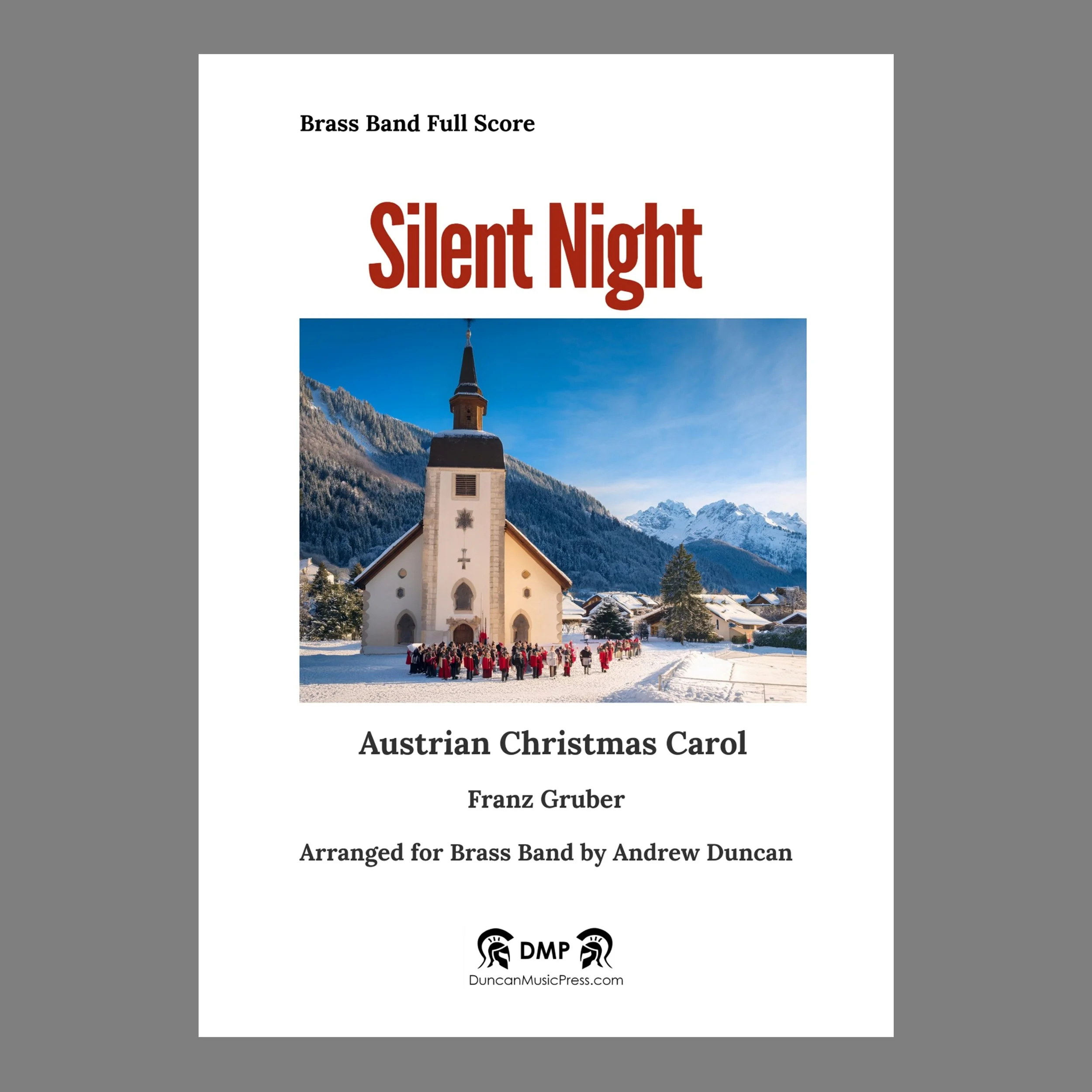
Silent Night. Franz Gruber arranged for brass band by Andrew Duncan
Silent Night is an Austrian Christmas Carol written by Franz Gruber, (1787-1863). Franz Gruber was an primary school teacher, organist and composer who lived in the village of Arndorf in Austria. Silent Night (Stille Nacht) has become one of the best loved Christmas Carols ever written. This arrangement for brass band imagines Christmas morning in a small Austrian village, such as Arndorf, with the sound of the local church bells ringing out along with the sound of a choir singing Silent Night accompanied by the local band.. The arrangement features the tubular bells playing a simple descending scale, which is also played by muted cornets (2nd and 3rd cornets). After 2 verses of the hymn the coda features a short trombone trio with a jazzy feel which leads into a final scale from the tubular bells and cornets bringing the piece to a peaceful close. To hear a sound file of Silent Night scroll down.
-
£44.95
LABOUR AND LOVE (Brass Band Set) - Percy Fletcher
Following its selection as test-piece for the 3rd Section of the Regional Brass Band Championships of Great Britain 2010, the publishers have made the following amendments to the original publication; Tenor Trombone parts are now in treble clef, percussion parts are now included in the full score.
Estimated dispatch 7-14 working days
-
 £76.00
Seashells Waltz (Trombone Solo with Brass Band - Score and Parts)
Frederick Innes (1854 - 1926) was born in London and studied at the London Conservatory Of Music. After touring as a trombone soloist around Europe he settled in USA where he was one of the featured soloists of the Gilmore Band, later forming his own touring band. He is credited with being a pioneer in demonstrating the abilities of the trombone as a solo instrument.This arrangement was prepared at the request of Brett Baker.
Estimated dispatch 7-14 working days
-
 £57.50
Happy Trombones (Trombone Trio with Brass Band - Score and Parts)
A rip-roaring romp for three trombones. Your trombone section will be begging you to let them perform this short piece that highlights the fun side of the trombone.Duration: 3:15
Estimated dispatch 7-14 working days
-
 £24.95
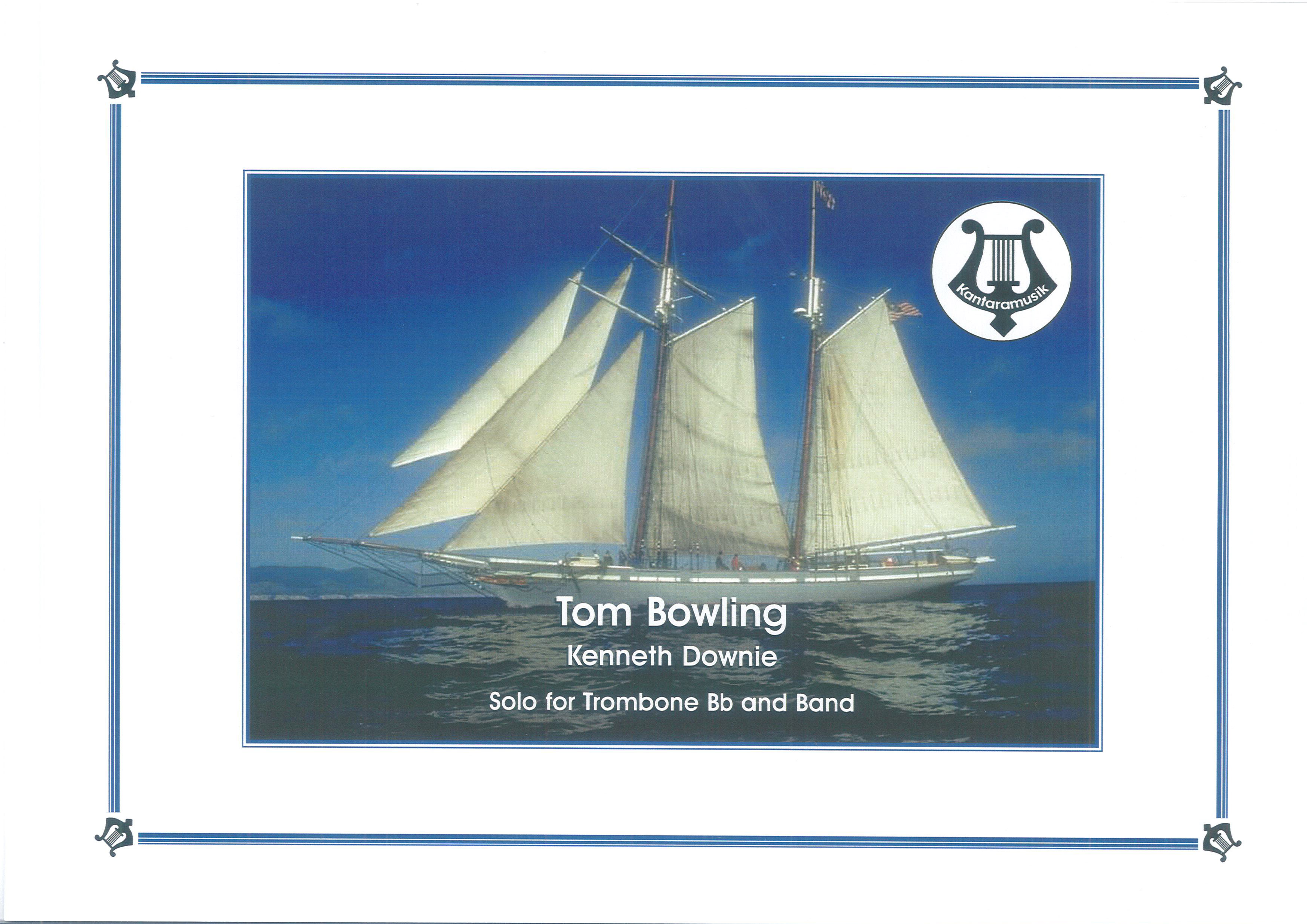
Tom Bowling - Trombone Solo (Brass Band - Score and Parts)
This wonderful song is invariably featured in the last night of the BBC Promenade Concert series as it is included in Henry Wood's Fantasia on British Sea Songs. It is played as a cello solo and always provides one of the most sensitive, melancholic moments of the evening. It the trombone soloist rises to the challenge, there will not be a dry eye in the concert hall!
Estimated dispatch 7-14 working days
-
 £39.95
When Thunder Calls (Brass Band - Score and Parts)
When Thunder Calls was commissioned by Dr Nicholas Childs and the Black Dyke Band for their performance at the Gala Concert of the Swiss Open Championships in September 2011. When composing this piece, I decided to focus on both the music and the stage presentation. The way the piece has been composed and designed makes it a very effective way of starting a concert or a second half of a concert.At the start of the piece, the percussion enter the stage and take their positions in their usual place behind the band. They begin playing the piece without a conductor. They keep repeating the opening section while the Basses, Horns, Baritones and Euphoniums march onto the stage.This group of musicians take their seats with the Horns, Baritones and Euphoniums sitting where they usually sit in the band but the Basses sit where the solo cornets usually sit, forming an inner semi-circle of lower brass. When seated and when the music gets to the end of bar 4 the piece continues onto section A. All performers keep repeating this next 4-bar phrase until the trombones march onto stage and stand at the front of the stage with the Bass Trombone standing in between the other two trombones.All performers then play from figure B to C with the trombones taking the lead at the front. When the performers get to rehearsal figure C they repeat this section (the same as section A) while the trombones move from the front of the stage and take their positions where the Basses would normally sit (between the horns and the percussion) and remain standing. Meanwhile, the flugel enters the stage and stands at the front of the stage (standing where the trombones did). When in position the flugel soloist picks up into rehearsal figure D.When the flugel soloist finishes playing, just before rehearsal figure F they then move to their normal seat in the band. At figure F the cornets march onto the stage from either side, they turn and stand side by side each other facing outward towards the audience forming two 'fanfare' lines either side of the lower brass. The conductor follows the cornets on stage and on cue they lift their instruments at the same time and perform when the piece gets to figure G.There is no more moving around from this point on other than the solo cornet to move forward with the solo euphonium and perform their duet at letter H. Also the horns are required to stand and play at letter I and then sit just before J.When performed with all the choreography, this piece makes for an exciting addition to any concert repertoire both for the performer and the audience.Suitable for 3rd Section Bands and Above
Estimated dispatch 7-14 working days
-
 £77.00
General Series Brass Band Journal, Numbers 2238 - 2241, December 2023
2238: Fanfare and allegro on the Doxology (Steve Kellner)The Doxology, set to the tune Old Hundredth (T.B. 31), is used widely around the world by Christian denominations, including Salvationists. This concert opener is based on the short but powerful hymn of praise to the Triune God.2239: To the endless day (Kenneth Downie)This is a meditation on the hymn tune Ruth (T.B. 191), written by Samuel Smith. It is a particular favourite of Don Jenkins, whose late wife was also called Ruth. This music is dedicated to Don, a distinguished trombone soloist and former Band master of Bristol Easton Corps Band.The music is always associated with the hymn by William Walsham How, whose words begin 'Summer suns are flowing over land and sea' (S.A.S.B. 59) with the title coming from the end of the final verse.2240: Euphonium Solo - He giveth more grace (Ray Steadman-Allen)This 1996 arrangement of Blacklands (T.B. 527), the composers own hymn tune written in 1963, is being published posthumously. The hymn tune sets the words 'He giveth more grace as our burdens grow greater' (S.A.S.B. 30) with an emphasis on the generosity of God.2241: The Calvary effect (Ian Clarke)Around AC 30, on a hill often refered to as Mount Calvary, an event took place that was to change the world forever. The Calvary effect is a reflection, in musical form, on that event and what it still means to people today. If features two tunes: first, in a quiet reflective mood, we hear the highly emotive Healing Stream, associated with the words 'Jesus, keep me near the cross; There is a precious fountain' (S.A.S.B. 178). This then makes way for the chorus; 'Lord, make Cavalry real to me' (S.A.S.B. 182), which is at times indistinct and almost lost in its surroundings, reflecting the sentiments of the chorus. A return to the main tune follows, this time in a positive, passionate setting. The music finishes with a triumphant 'Hallelujah!'.
Estimated dispatch 7-14 working days
-
 £42.95
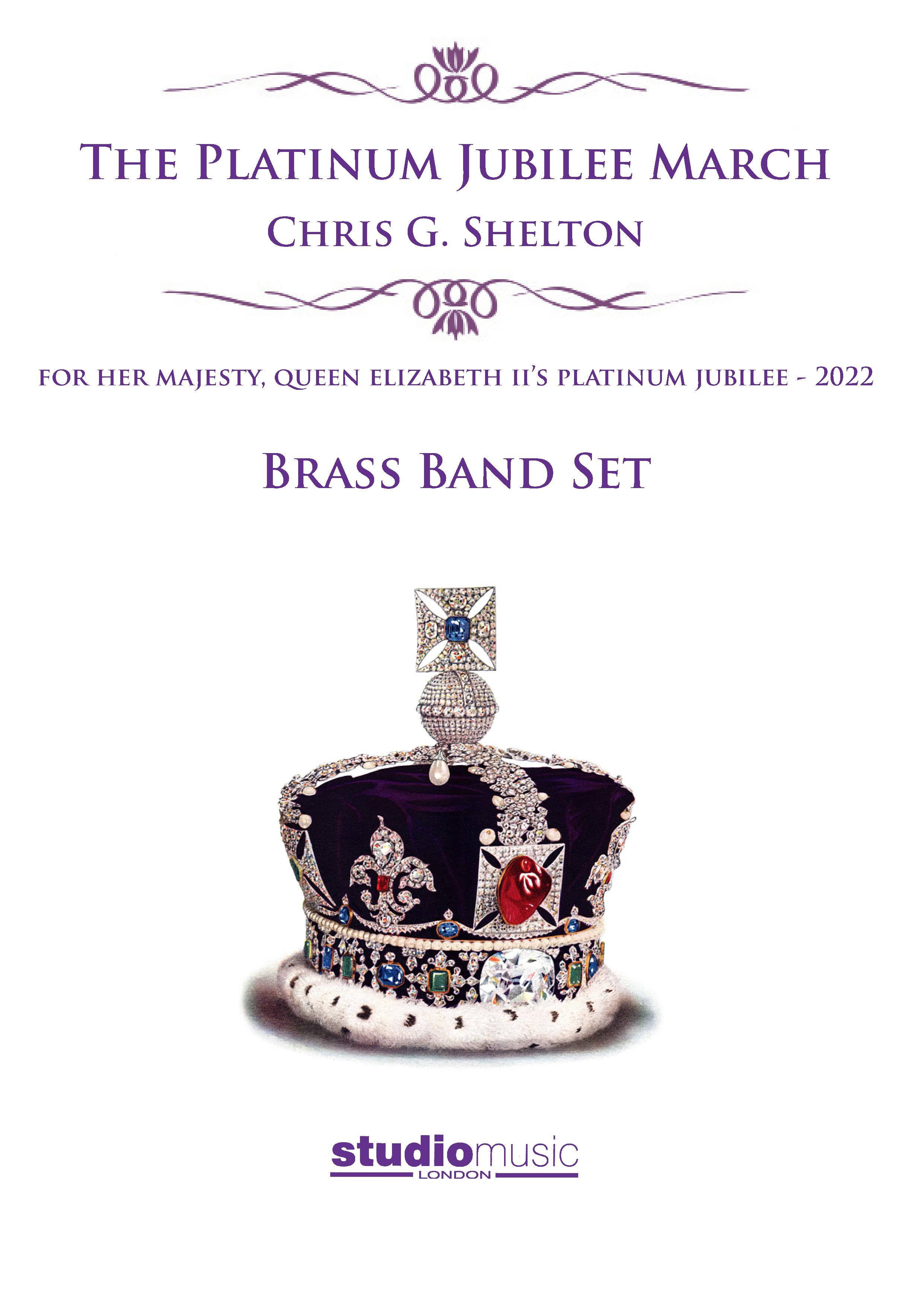
The Platinum Jubilee March (Brass Band - Score and Parts)
The Platinum Jubilee March was written to celebrate Her Majesty, Queen Elizabeth II's seventy-year reign as monarch of the United Kingdom. Its premiere was televised live around the world as part of the Queen's Birthday Parade which marked the start of the national Platinum Jubilee celebrations.The Queen's Birthday Parade 2022 saw the First Battalion of the Irish Guards trooping their colour. To reflect this, the march begins in a celebratory style and features a melody based around the opening motif of Let Erin Remember - the regimental slow march of the Irish Guards. In traditional style, the march develops excitement both harmonically and melodically, creating a strong sense of drive before reaching a stately trio. This section has a very regal and noble feel, lending subtle harmonic nods to two of the most quintessentially British composers, Gustav Holst, and Sir William Walton. The march culminates in a bold grandioso, featuring semi-quaver lines that are underpinned by a driving trombone countermelody. A forthright restatement of the introductory fanfare brings the march to a very definite and resolved ending.
Estimated dispatch 7-14 working days