
Results
-
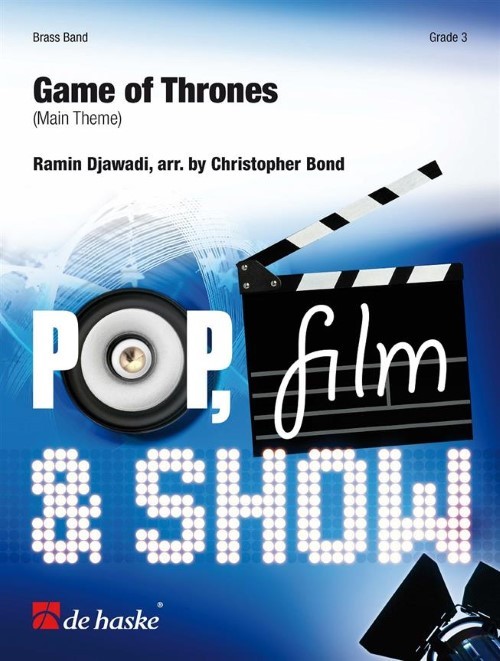 £60.99
Game of Thrones (Main Theme) (Brass Band - Score and Parts) - Djawadi, Ramin - Bond, Christopher
The dark and dramatic theme from the popular HBO series Game of Thrones is one of the most distinctive and effective themes for TV or film to come along in several years. Arranged in a powerful setting for brass band, this is sure to be a hit with your musicians.Duration: 2.30
Estimated dispatch 7-14 working days
-
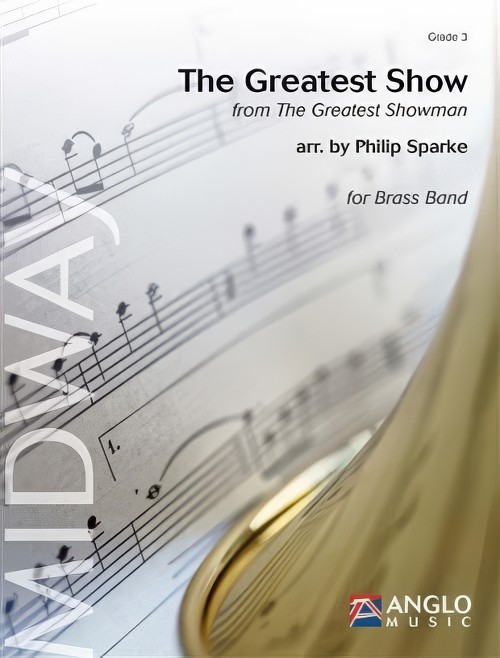 £69.99
The Greatest Show (from The Greatest Showman) (Brass Band - Score and Parts) - Pasek & Paul - Sparke, Philip
The Greatest Showman is definitely one of the most popular movie musicals of recent years. The film's stunning lead performance by Hugh Jackman and its touching score have made this picture an instant classic. The mind-blowing theme song The Greatest Show is here arranged for brass band by Philip Sparke.Duration: 03:45
Estimated dispatch 7-14 working days
-
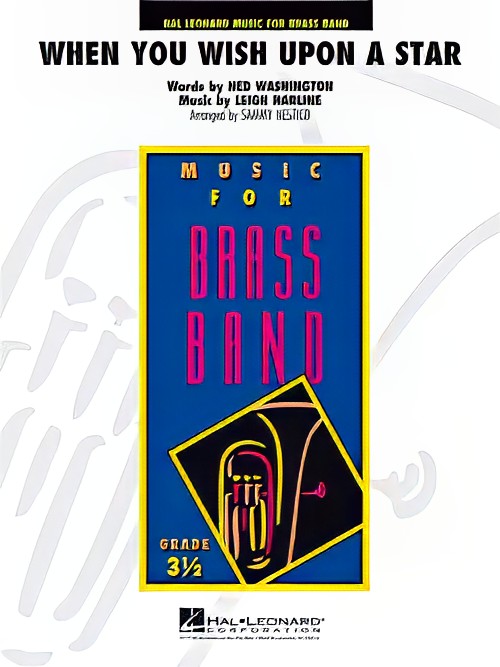 £59.99
When You Wish Upon a Star (Brass Band - Score and Parts) - Harline & Washington - Jeanbourquin & Nestico
Out of all Disney productions, 'Pinocchio' may be the most famous. The beautiful song When you wish upon a Star is not only popular from the animation film itself, but also as a separate song. It has been covered by many big artists throughout the years. It is perfect for brass band. Will your nose grow whilst playing?
Estimated dispatch 7-14 working days
-
 £100.00
Handel in the Band (Brass Band - Score and Parts) - Downie, Kenneth
Handel in the Band is a virtuoso set of symphonic variations on one of Handel's best known keyboard dances, the Sarabande from his Suite in D minor, HWV 437, based on the Spanish traditional dance La Folia. Kenneth Downie's work was commissioned by Brass Band Treize Etoiles, for performance at the 2013 Swiss National Brass Band Championships, where it was conducted by James Gourlay. The title is a reference to Percy Grainger's popular Handel in the Strand, and is indicative of the witty and theatrical nature of the music, which is more playful than conventional competition pieces and as such offers different challenges to brass bands as well as being thoroughly entertaining for audiences.Kenneth Downie is one of the most respected and experienced brass band composers. His music has been widely performed and published throughout the brass band world since the 1960s.Handel in the Band was selected as the set work for the Championship Section final of the 2018 National Brass Band Championships of Great Britain, which took place at the Royal Albert Hall, London, on 6th October 2018.Duration: 15.00
Estimated dispatch 7-14 working days
-
£19.99
Handel in the Band (Brass Band - Score only) - Downie, Kenneth
Handel in the Band is a virtuoso set of symphonic variations on one of Handel's best known keyboard dances, the Sarabande from his Suite in D minor, HWV 437, based on the Spanish traditional dance La Folia. Kenneth Downie's work was commissioned by Brass Band Treize Etoiles, for performance at the 2013 Swiss National Brass Band Championships, where it was conducted by James Gourlay. The title is a reference to Percy Grainger's popular Handel in the Strand, and is indicative of the witty and theatrical nature of the music, which is more playful than conventional competition pieces and as such offers different challenges to brass bands as well as being thoroughly entertaining for audiences.Kenneth Downie is one of the most respected and experienced brass band composers. His music has been widely performed and published throughout the brass band world since the 1960s.Handel in the Band was selected as the set work for the Championship Section final of the 2018 National Brass Band Championships of Great Britain, which took place at the Royal Albert Hall, London, on 6th October 2018.
Estimated dispatch 7-14 working days
-
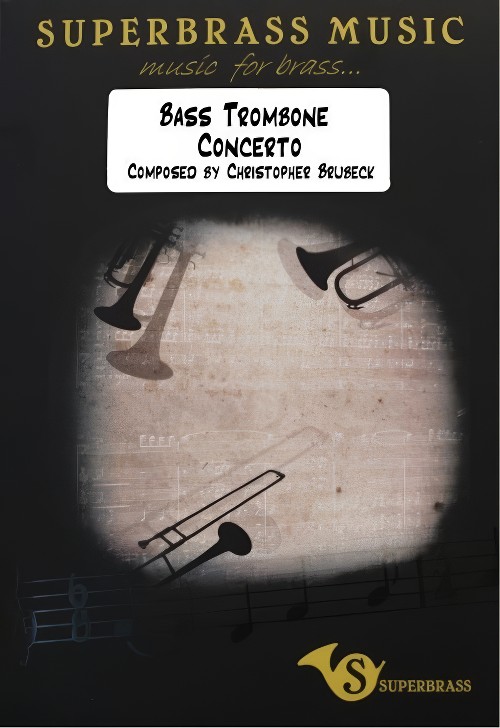 £88.00
Bass Trombone Concerto (Bass Trombone Solo with Brass Band - Score and Parts) - Brubeck, Christopher
"As a bass trombonist, I spent many years of my adolescence playing in youth orchestras, engaging in musical daydreams. I would visualize myself jumping up from the back of the orchestra to unleash improvisations much to the conductor's horror. The resultant three-movement, thirteen-minute work has enjoyed a robust life with performances by notable orchestras all around the world. Happily, the concerto works well as a recital piece, with many accomplished college players having won concerto competitions performing it. Jazz elements were inescapable, and realizing my old nightmare/dream, quite a bit of the trombone solo is meant to be improvised. I made a recording of the concerto with the London Symphony Orchestra, which was included on a CD called Bach to Brubeck released on Koch International Classics. Having already become popular as a bass trombone work with orchestra accompaniment, renowned British Bass Trombonist and publisher Roger Argente suggested he release a special Brass Band arrangement of my concerto. Roger knew the piece well because years ago he played the European premiere of the concerto with the Royal Philharmonic Orchestra at the Royal Albert Hall." - Chris Brubeck. Duration: 13.00. Suitable for 1st Section Bands and above.
Estimated dispatch 7-14 working days
-
 £100.00
Danceries (Set II) (Brass Band - Score and Parts) - Hesketh, Kenneth
Danceries Set II, arranged for brass band, was first commission by Keith Allen for the Birmingham Symphonic Winds. This second set of Danceries continues the format, established in the popular Danceries (Set I), of using tunes and dances from Playford's Dancing Master (17th century) to form the basis of an extended dancesuite. In this set, the melodies have become more abstracted and project only a distant echo of their original forms. As before, each movement is self-contained, colourful and direct, with its own distinct mood. The outer movements - Jennie's Bawbee and Peascod's Galliarda - share driving percussion with a military air. Tom Tinker's Toye and Heart's Ease (movements two and three) are both settings of original melodies. All movements are more extended than in the first set, with a freer use and approach to the material; melodies now occur in various keys and are supported by a greater variety of harmonic colouring. The result is a richer, even more exhilarating set of dances. Suitable for 1st Section Bands and above. Duration: 15.00
Estimated dispatch 7-14 working days
-
 £34.99
Love Divine (Brass Band - Score and Parts) - Goodall, Howard - Wainwright, Andrew
One of Howard Goodall's most popular choral settings, Love Divine has been skilfully arranged for brass band by Andrew Wainwright, with the approval of the composer. This version is based on the setting with piano and strings and can be performed as a self-standing concert work or as an accompaniment for performance by a large choir.
Estimated dispatch 7-14 working days
-
 £39.00
El Capitan (Brass Band - Score and Parts) - Sousa, John Philip - Wilkinson, Keith M.
El Capitan was originally an operetta which was first produced in Boston in 1896. It was initially very popular and there are occasional revivals even to this day. The march of the same title uses themes from the opera and was also published in 1896. One notable feature - resulting from the use of themes from the operetta - is the abrupt transition from 6/8 to 2/4 half way through the march.This arrangement was prepared for the 2013 Summer concerts of Brass Band of the Western Reserve, musical director Dr Keith M Wilkinson.
Estimated dispatch 7-14 working days
-
 £34.95
Ave Maria (Cornet Solo with Brass Band - Score and Parts) - Bach, Johann Sebastian - Gounod, Charles
An arrangement of Bach/Gounod's popular song, originally performed by ITV's Britain's Got Talent star Faryl Smith. Here it is arranged for solo cornet with brass band accompaniment.
Estimated dispatch 7-14 working days
 View Music