Results
-
 £44.95
Panic on Pudding Lane - Jonathan Bates
DURATION: 5 minutes. DIFFICULTY: Championship. Panic on Pudding Lane was composed for the 2016 RNCM Festival of Brass, for the Black Dyke Band and Prof. Nicholas Childs. The work was composed to mark the 350th anniversary of the Great Fire of London in 1666. Following the frantic panicking, and hustle and bustle of the emergency service vehicles, a moment of reflection and tranquility is found in the core of the work, with a feature for Soprano Cornet and Flugelhorn in a section that almost pleads and mourns over the damage and devastation which surrounds them, as they stand amongst the burning rubble and debris (enhanced by a CD sound effect backing track). Whilst this section proves to be the calming point of the piece, the chaos and destruction is still never far from the ear, with distant echoes of sirens in the background towards the section's close. . Panic once again returns as the piece builds to a chaotic and driving close, with a huge sweeping recapitulation of the 'London's Burning' motif taking the lead before a wild,dischordant and frenzied finale brings the work to it's end. .
In Stock: Estimated dispatch 1-3 working days
-
 £31.40
African Adventure - Darrol Barry
An upbeat, fun piece which exudes positive-vibes from the outset. This original composition by Darrol Barry for brass band is a great addition to concert repertoire. A nice balance of strong rhythm, touches of featured obligato and a catchy melody.Darrol Barry composed this work in support of a charitable project, known in 2005 as Brass Band Aid. The organisation called for original compositions to be included in a follow-up CD release - Into Africato help raise funds for projects in Adet, Africa, and to build awareness of theMake Poverty History campaign. African Adventure was featured on the CD with a recording by the Black Dyke Band.Now that the original BBA projects are complete, funds raised by the titles we publish from the Brass Band Aidseries continue to support other music-related projects on a regular basis.Look and Listen (performance courtesy of Bertnes Brass 2016):
In Stock: Estimated dispatch 3-5 working days
-
 £20.00
The Terracotta Army of Mount Li - Steve Robson
Composed by Steve Robson specifically for our Flexi-Collection World Tour Series. Inspired by this wonder of the world, the piece embraces the Chinese style of music which often uses the pentatonic scale. It's a sequence which is something quite unusual to our ears in the western world and can be quickly demonstrated by playing only the black notes on the piano. Luckily for the players, this version has been put into an easier key, but still retains the distinctive sounds.The Terracotta Army of Mount Li is part of the Flexi-Collection World Tour Series.Our Flexi-Collection Series:Flexible scoring tailored to your needs - a perfect solution for expanding the repertoire of Junior/Youth brass bands and ensembles. The Flexi-Collection currently offers two series and these will be regularly expanded to offer groups an even wider variation of music. Based on four-part harmony, these collections provide brass groups with the advantage of complete flexibility when may not be balanced.Added Extras:Each part of The World Tour Series also includes rudimentary theory reference sheet andLearn Together Moments(warm-up passages which relate to each of the styles of pieces included in the whole series). The score also includes background/programme notes andCheck It Outideas to encourage the players to find out more about the music style and/or inspiration behind the piece.If players or instruments are missing, the show can still go on! The thoughtful scoring and arranging by Steve Robson now means that groups of all abilities have access to a truly flexible set of music for their needs.Available for Brass Band (with world parts included), pieces included in our World Tour Series offer flexibility in every sense of the word.(Available individually or as part of the completeFlexi-Collection World Tour Series Album).
In Stock: Estimated dispatch 3-5 working days
-
 £37.35
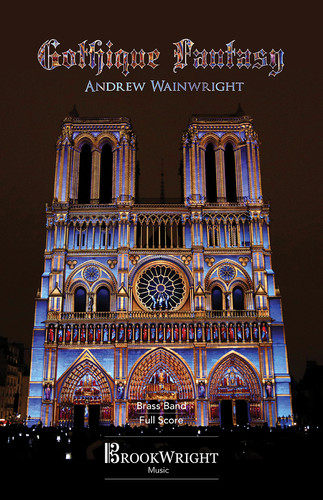
Gothique Fantasy - On a theme by Boellmann (Brass Band Score) Andrew Wainwright
This magnificent work was commissioned by The Illinois Brass Band for the 2024 North American Brass Band Championships. It is also the title track of the 2026 CD by Black Dyke Band, featuring the music of Andrew Wainwright. Please note this PDF download is for the full score. The full set can be purchased here. Based on Leon Boellmann's epic organ work Suite Gothique, the 3rd movement of which is entitled Priere a Notre-Dame (A Prayer for Notre Dame), it pays tribute to the nearly 700-year-old Notre-Dame de Paris after the fire which did so much damage to this iconic building. Notre-Dame stands out for its three pipe organs (one historic) and its immense church bells, which are referenced at various times in Gothique Fantasy. Two of the other movements from Boellmann's work also provide inspiration for the piece, firstly the Introduction - Choral, and the famous Toccata, snippets of which appear at various times in the piece. Gothique Fantasy opens with the Choral, a solo offstage cornet sounding the opening statement. A quintet, stood to the side of the stage, takes up the Choral, while the rest of the band enters on held muted notes, creating a sustained effect evoking the harmonies spreading across the vast cathedral. Colossal organ-like sounds announce themselves as the full band takes on the theme. A lively Animato follows. Here there are continued references to the Choral, while the famous Toccata motif starts to appear. A Misterioso section ensues, which leads into a poignant Prayer for Notre Dame featuring a euphonium duet, where the music reflects upon the devasting fire and centuries of history and artefacts that were lost. A lone euphonium the sounds, representing the remaining remnants of the cathedral. A chaotic and rhythmic Presto, based on the Toccata, then follows and tests the technique of the band from top to bottom, whilst moving through various time signatures, the pulse lacking any sense of stability. A return to the Choral theme leads into a further reflective section, this time featuring the secondary theme from the Toccata with a flugel and solo horn duet. Next the music arrives at an aleatory section (Senza Misura), which depicts the remnants of the fire, followed by the grand cathedral emerging out of the ashes. Various motifs from earlier in the piece are heard across the band. At this point, various parts enter at different times on the conductor's signal, before building towards a 6/8 Presto. Here the music gathers momentum as it leads to a Grandioso finale featuring the Choral in all its glory. However, to conclude the work, the final strains of the Toccata sound, bringing the work to a glorious conclusion as Notre-Dame rises again! To view a video of The Illinois Brass Band performing the work please visit www.youtube.com/watch?v=xG3JB6Ye5aU Duration: 15.00 minutes approx. Difficulty Level: Championship Section Sheet music available from www.brassband.co.uk Instrumentation: Soprano Cornet Eb Solo Cornet Bb Repiano Cornet Bb 2nd Cornet Bb 3rd Cornet Bb Flugel Horn Bb Solo Horn Eb 1st Horn Eb 2nd Horn Eb 1st Baritone Bb 2nd Baritone Bb 1st Trombone Bb 2nd Trombone Bb Bass Trombone Euphonium Bb Bass Eb Bass Bb Percussion 1-4
In Stock: Estimated dispatch 1-3 working days
-
 £74.72
Gothique Fantasy - On a theme by Boellmann (Brass Band) Andrew Wainwright
This magnificent work was commissioned by The Illinois Brass Band for the 2024 North American Brass Band Championships. It is also the title track of the 2026 CD by Black Dyke Band, featuring the music of Andrew Wainwright. Based on Leon Boellmann's epic organ work Suite Gothique, the 3rd movement of which is entitled Priere a Notre-Dame (A Prayer for Notre Dame), it pays tribute to the nearly 700-year-old Notre-Dame de Paris after the fire which did so much damage to this iconic building. Notre-Dame stands out for its three pipe organs (one historic) and its immense church bells, which are referenced at various times in Gothique Fantasy. Two of the other movements from Boellmann's work also provide inspiration for the piece, firstly the Introduction - Choral, and the famous Toccata, snippets of which appear at various times in the piece. Gothique Fantasy opens with the Choral, a solo offstage cornet sounding the opening statement. A quintet, stood to the side of the stage, takes up the Choral, while the rest of the band enters on held muted notes, creating a sustained effect evoking the harmonies spreading across the vast cathedral. Colossal organ-like sounds announce themselves as the full band takes on the theme. A lively Animato follows. Here there are continued references to the Choral, while the famous Toccata motif starts to appear. A Misterioso section ensues, which leads into a poignant Prayer for Notre Dame featuring a euphonium duet, where the music reflects upon the devasting fire and centuries of history and artefacts that were lost. A lone euphonium the sounds, representing the remaining remnants of the cathedral. A chaotic and rhythmic Presto, based on the Toccata, then follows and tests the technique of the band from top to bottom, whilst moving through various time signatures, the pulse lacking any sense of stability. A return to the Choral theme leads into a further reflective section, this time featuring the secondary theme from the Toccata with a flugel and solo horn duet. Next the music arrives at an aleatory section (Senza Misura), which depicts the remnants of the fire, followed by the grand cathedral emerging out of the ashes. Various motifs from earlier in the piece are heard across the band. At this point, various parts enter at different times on the conductor's signal, before building towards a 6/8 Presto. Here the music gathers momentum as it leads to a Grandioso finale featuring the Choral in all its glory. However, to conclude the work, the final strains of the Toccata sound, bringing the work to a glorious conclusion as Notre-Dame rises again! To view a video of The Illinois Brass Band performing the work please visit www.youtube.com/watch?v=xG3JB6Ye5aU Duration: 15.00 minutes approx. Difficulty Level: Championship Section This PDF download includes parts and score. Sheet music available from www.brassband.co.uk Instrumentation: Soprano Cornet Eb Solo Cornet Bb Repiano Cornet Bb 2nd Cornet Bb 3rd Cornet Bb Flugel Horn Bb Solo Horn Eb 1st Horn Eb 2nd Horn Eb 1st Baritone Bb 2nd Baritone Bb 1st Trombone Bb 2nd Trombone Bb Bass Trombone Euphonium Bb Bass Eb Bass Bb Percussion 1-4
In Stock: Estimated dispatch 1-3 working days
-
 £48.56
My soul, rejoice (Cornet Solo with Brass Band) Andrew Wainwright
My soul, rejoice (Andrew Wainwright) was commissioned in 2022 by Elizabeth Malovance, principal cornet of the Chicago Staff Band. A spirited and celebratory work, it is designed to showcase the dual nature of the cornet: its sparkling technical agility and its rich, vocal lyricism. The music begins in meditative fashion before transitioning into a joyful caprice featuring playful syncopations which are handed around the band. This is followed by a reflective section based on the much-loved worship song I love you Lord by Laurie Klein. The work concludes with a reprise of the original theme, building in momentum and intensity. Through a series of brilliant runs and virtuosic flourishes, the soloist leads the charge toward a majestic and triumphant finale, bringing the work to a ringing, glorious close. The solo was recorded by Richard Marshall on the 2026 CD Gothique Fantasy - The Music of Andrew Wainwright, which was his last solo recording of his 20-year tenure as principal cornet of Black Dyke Band. Technical Requirements & Electroacoustic Integration This work features an optional digital delay effect for the soloist, indicated in the score by "pedal on" and "pedal off" markings. If the required equipment is unavailable, the piece can be performed entirely acoustically. To listen to Beth Malovance performing the work with the Chicago Staff Band please visit https://on.soundcloud.com/c8IoU3CF3srTD4z0wX Duration: approx. 8 minutes Difficulty Level (Band): 2nd Section + Soloist: Advanced This PDF download includes the full score and parts. Sheet music available at www.brassband.co.uk (UK) or https://satradecentral.org (USA) Instrumentation: Soprano Cornet Eb Solo Cornet Bb 1st Cornet Bb 2nd Cornet Bb Flugel Horn Bb Solo Horn Eb 1st Horn Eb 2nd Horn Eb 1st Baritone Bb 2nd Baritone Bb 1st Trombone Bb 2nd Trombone Bb Bass Trombone Euphonium Bb Bass Eb Bass Bb Timpani & Bass Drum Percussion 1-3
In Stock: Estimated dispatch 1-3 working days
-
£50.00
The Bartered Bride - Smetana, B - Broadbent, D
Fast and furious, in fact there is very little let-up in this overture. Broadcast by Black Dyke Band and recorded by Fairys. Lots and lots of notes, that needs lots and lots of practice. Well worth the effort in developing the technique of the players in the band (all players!).Championship (very difficult)
In Stock: Estimated dispatch 1-3 working days
-
 £34.95
By Trevone Bay (Flugel Horn Solo with Brass Band - Score and Parts))
By Trevone Bay was composed for Flugel Soloist Zoe Hancock and the Black Dyke Band to celebrate both their Double Champion Victory at the British Open and National Championships 2014 and Zoe's unique achievement in winning the Best Soloist Award in both contests - an accomplishment never done before. The world premier was performed by Zoe and the band at Birmingham's Symphony Hall on February 8th 2015.By Trevone Bay is a lovely lyrical slow melody that utilises the full range and colour of the flugel horn. Starting with an atmospheric opening the soloist performs the main theme, which repeats with more colour in the accompanying parts and solo line. After introducing a second theme from the ensemble, the solo cornets perform the main melody with the soloist enjoying a lyrical counter melody. The piece develops with a tranquil middle section from the soloist that builds for the second theme to return, performed by the ensemble while the soloist soars over the top. Ending as it starts, the piece dies away to leave the soloist performing the opening melodic phrase to a tranquil close.As for the title: Trevone Bay is a beautiful tiny bay in Cornwall, close to Zoe's home town of Roche. Its tranquil waters lead out to the Celtic Sea and provide a picturesque landscape. The views there can be enjoyed all year round but they are particularly beautiful at sunset.
Estimated dispatch 7-14 working days
-
£85.00
The Alchymist's Journal - Kenneth Hesketh
The Alchymist's Journal (Variants for Brass Band) was commissioned by Faber Music Band Consultant Paul Hindmarsh in 2001, with the support of the Brass Band Heritage Trust, as a substantial concert/contest challenge that would be within the compass of the country's most able youth and first section bands. It received its first performance in January 2002, by Black Dyke Band under Nicholas Childs, as part of the Royal Northern College of Music Festival of Brass.Since its original publication, composer Kenneth Hesketh has made a number of revisions to the work. Most of these were included in the recording made by Foden's Band (Bramwell Tovey) for NMC Recordings (NMC D142). This definitive new edition, including all the composer's revisions, has been specially prepared for the 2015 National Brass Band Championships of Great Britain and is the text that all bands performing will be required to use.Brass Band Grade 5: 1st SectionDuration: 12 minutes.
In Stock: Estimated dispatch 1-3 working days
-
You're My World - Umberto Bindi, Gino Paoli, Carl Sigman - Len Jenkins
"You're My World" is a ballad originally recorded in 1963 as "Il Mio Mondo" ("My World") by Umberto Bindi, who co-wrote the Italian-language version with Gino Paoli. Although the original Italian version was not a hit, even in Italy, the song came to the attention of UK record producer George Martin, who commissioned an English version to be recorded by his protegee Cilla Black. The English lyrics were written by Carl Sigman. Cilla's recording at Abbey Road Studios was made with Johnny Pearson conducting his orchestra and The Breakaways providing background vocals. Her road manager and future husband Bobby Willis also sang on the track. "You're My World" reached No. 1 in Britain on the chart dated 30 May 1964 and remained there for a total of four weeks, one week more than Cilla's preceding single "Anyone Who Had A Heart" (Also available as a Brass arrangement from Wobbleco Music). Although Cilla returned to the UK Top Ten eight times, "You're My World" was her final No. 1 hit. Two quite different arrangements are available; one for Full Brass Band and one for Brass Quintet with optional Glockenspiel. Both attempt to retain the style of the original recording.
 View Music